English
 Français
 Türkçe
 Español
 Русский

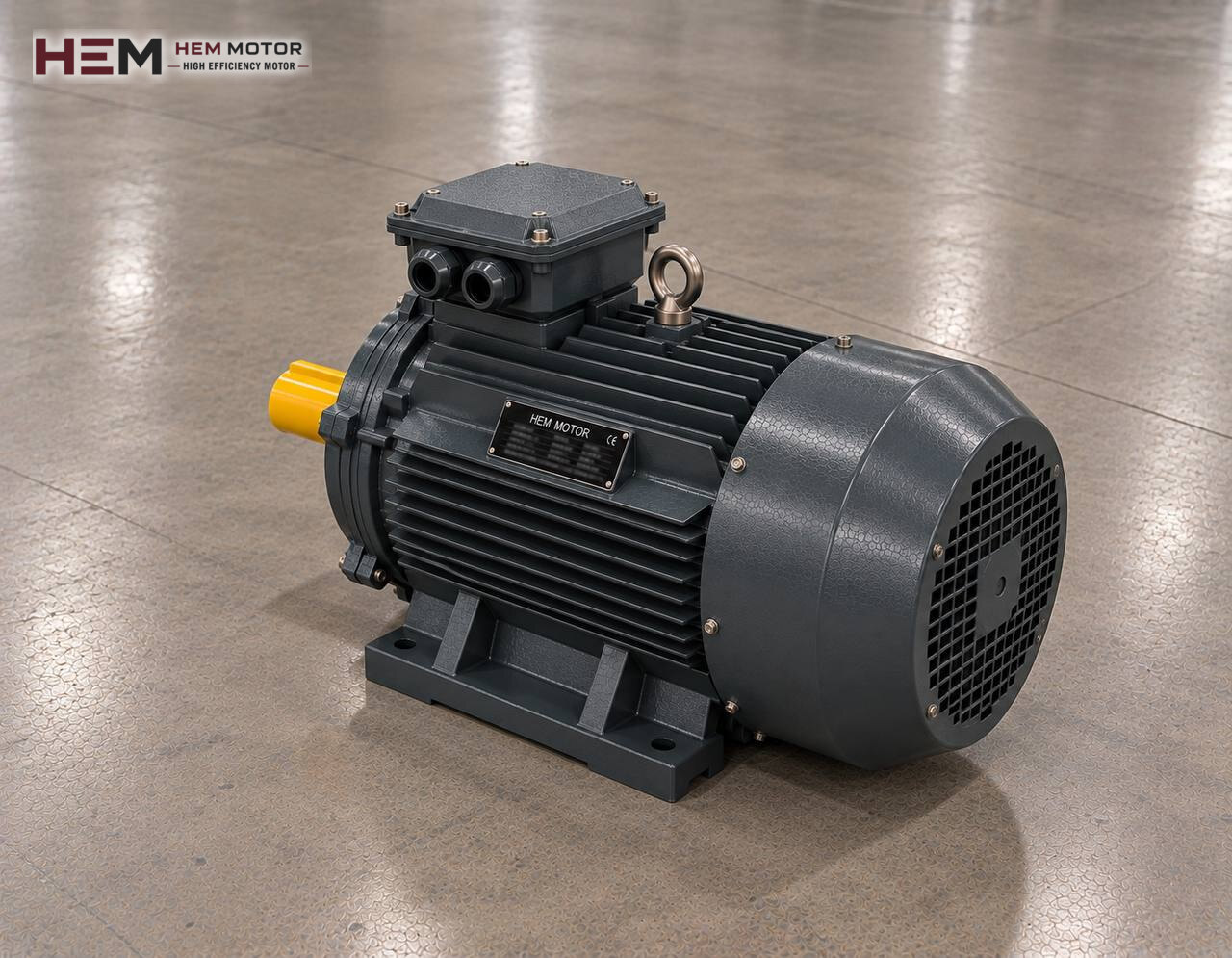
Machines that cut salami, cheese, bread or vegetables into slices of equal thickness have one thing in common: they turn or oscillate a sharp cutter at a steady speed. This article is one of the sub-topics of our electric motors for food processing machines page and looks only at the electric motor in slicing machines.

Slicer Families and How the Cutter Moves
On a delicatessen counter slicer a circular blade rotates and the product is moved back and forth past the blade on a sliding carriage. On factory-type automatic slicers the blade turns much faster, the product log is pushed towards the blade by a feed belt or pusher, and the cut slices are dropped as portions onto a conveyor belt.
In a bread slicer, instead of a rotating blade, a frame carrying thin blades side by side moves up and down through an eccentric mechanism. In vegetable cutters, the part the motor turns is a horizontal cutting disc or an impeller that throws the product against fixed knives by centrifugal force. In all four families the motor load has a different character.
Blade Motor Load and Speed
With a rotating blade, cut quality is determined by the speed at the blade rim. If this speed drops, the slice tears or is crushed; if it is too high, fatty product may stick to the blade. Motor speed, belt ratio and blade diameter together create this speed. A replacement motor should therefore have the same number of poles as the old one; otherwise blade speed changes and the machine builder's setting is lost.
The load rises briefly each time the blade enters the product. A hard, nearly frozen salami or a rinded cheese block loads the motor noticeably more than fresh, soft product. Power selection should therefore be based not on the average but on the current seen while cutting the hardest product. A dull blade has the same effect: a blade that is sharpened late heats the motor.
Feeding, Portioning and the Oscillating Frame
On automatic slicers slice thickness depends on how far the product advances towards the blade. The feed drive providing this advance is low-powered but needs precise, repeatable motion. On new machines this is mostly done by servo drives; simpler machines use a geared asynchronous motor and a frequency converter. The outfeed belt carrying the portions has its own motor as well; the geared drive approach applies to such belts.
In a bread slicer the eccentric shaft moves the blade frame up and down once per revolution. This motion puts a rhythmic load on the motor; the swing becomes more pronounced as frame weight and blade tension increase. Because the machine vibrates, motor mounting bolts and belt tension should be checked regularly.
Blade Stopping and Safety
When power is cut on a slicing machine, the blade keeps turning freely for a while. Shortening this stopping time belongs, together with the blade guard, cover interlock and emergency stop circuit, to the machine builder's safety design. On converter-driven machines the drive's braking function can shorten the stop. If your machine requires a brake motor, please state this in your order.
Hygiene, Washing and Where the Motor Sits
Food slicing machines are cleaned at the end of every shift and often washed with wet methods. The IP55 protection of HEM motors is for dust and splashing water; it is not designed for washing with pressurised water or foam, direct food contact or hygienic design requirements. The motor must therefore sit in a separate, closed compartment away from the product zone and be protected during washing. This protection is the machine builder's job; if the machine will work in a washdown area or a special motor is needed, state this in your order.
On slicers working in cold rooms, the motor may suffer condensation as it warms and cools during stops. An anti-condensation heater and a PTC/PT100 winding sensor are order options. How the motor attaches to the machine depends on frame size: foot-mounted B3, flange B5 and B14, foot-and-flange B34 and B35, and V1, V3, V5, V6, V15 for vertical operation; flange and shaft dimensions are confirmed at order time.
Single-Phase Option for Small Slicers
Most slicers on delicatessen, butcher and bakery counters run on a 230 V supply. For shops without three-phase power, HEM Motor's single-phase series offers ratings from 0.18 kW up to 5.5 kW; details are on the single-phase 220 V motor page. Factory slicing lines, on the other hand, prefer a three-phase motor with converter speed control where needed; for operating conditions on a converter, see the inverter-compatible motors page.
Example HEM Models for Slicing Machines
| Machine | Motor movement | Watch for | Example HEM model |
|---|---|---|---|
| Counter-top deli slicer | Turns the circular blade by belt | Supply voltage, blade speed | 0.25 kW, 1,340 rpm, 71M1-4 aluminium |
| Bread slicing machine | Oscillates the blade frame via an eccentric | Vibration, belt tension | 0.55 kW, 1,400 rpm, 80M1-4 aluminium |
| Vegetable slicing and dicing | Turns the cutting disc or impeller | Disc speed, product hardness | 1.5 kW, 1,445 rpm, 90L-4 aluminium |
| Automatic meat and cheese slicer | High-speed blade drive | Cutting speed, inverter, stopping time | 3 kW, 2,895 rpm, 100L-2 aluminium |
The models in the table are examples only; the final choice depends on the machine's load, the required blade speed, the mounting arrangement and the operating environment. The machine builder's nameplate values are always the first reference.
What Information Should Your Motor Request Include?
Tell us which machine you need the motor for (deli slicer, bread slicer, vegetable cutter, automatic slicing line), the power (kW) and speed (rpm) of the existing motor, the supply voltage (230 V or 400 V), the mounting type and how many units you want. Also state whether the motor drives a blade pulley or the blade shaft directly. A nameplate photo of the old motor usually answers all these questions.
You can see product prices on the model pages in our electric motor shop. Our WhatsApp and phone details for quotes and questions are on the contact page.
Frequently Asked Questions
Why are the slices coming out torn?
The most common cause is a dull blade; the second is a drop in blade speed. If the belt slips or a motor of the wrong speed has been fitted, the blade rim speed falls. Sharpen the blade, check the belt and make sure the motor's nameplate speed matches the old one.
Can I fit a three-phase motor to my deli slicer?
Yes, if the shop has three-phase power; however, the on-off switch and protective devices are replaced along with the motor. Leave this job to an electrician who knows the machine's wiring; if there is no three-phase supply, the single-phase series is suitable.
Can I hose down the slicing machine's motor?
No. IP55 protects against splashing water but is not suitable for pressurised water or foam washing. Keep the motor compartment closed during washing; if washdown is unavoidable, state it in your order.
Is it possible to adjust the blade speed on an automatic slicer?
By driving the blade motor with a frequency converter, speed can be adjusted to the product. If it will run at low speed for long periods, evaluate motor cooling separately, and an output filter if the cable is long, and tell us about these conditions in your order.