English
 Français
 Türkçe
 Español
 Русский

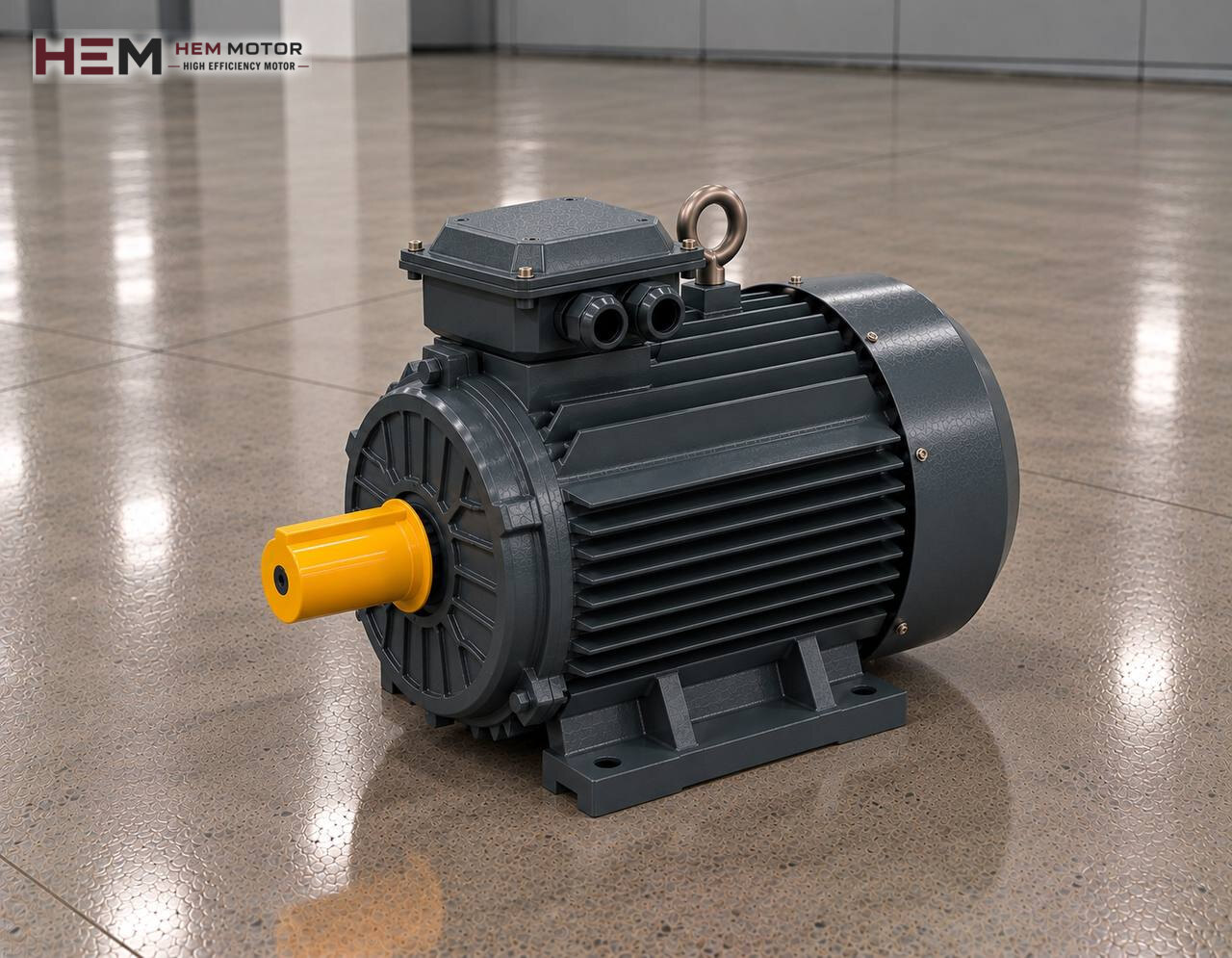
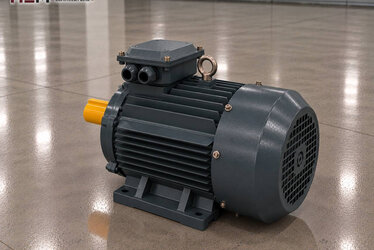
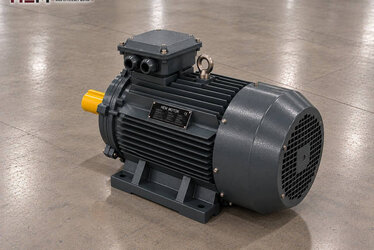
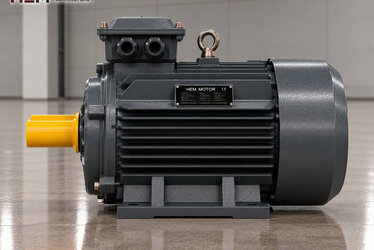
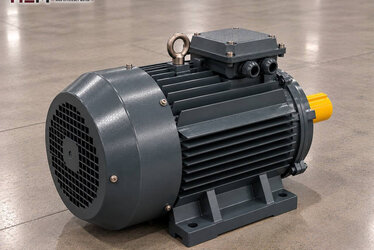
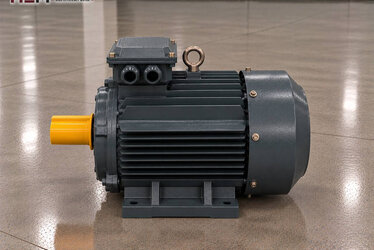
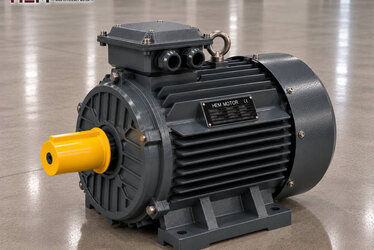
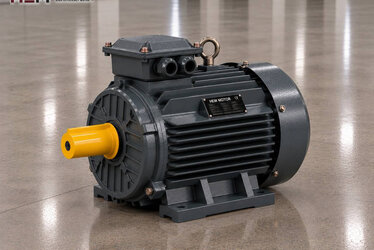
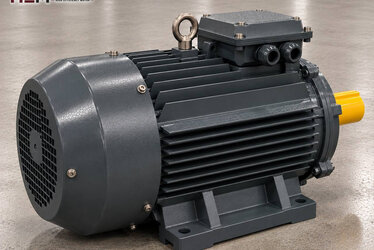
What the machines that cut chops at a butcher's counter and split frozen carcasses in a meat plant have in common is an endless band stretched between two large wheels. The wheel that pulls the band is turned by an electric motor. On this page we cover only that motor; for other food machines, our parent page Electric Motors for Food Processing and Preparation Machines is the guide.

Wheels, band and table: how the machine is arranged
A bone saw has one wheel at the bottom and one at the top of its upright body. The motor drives the lower wheel; the upper wheel idles and sets the band tension. The operator pushes the meat along a sliding table, and the downward-running teeth of the band do the cutting.
Band speed decides cut quality. A band that is too slow shatters bone and leaves bone dust, while a band that is too fast heats the meat and smears the surface. That speed comes from wheel diameter multiplied by motor speed. Fitting a motor with a different number of poles to the same machine changes band speed directly.
On small counter-top types the motor is usually connected to the lower wheel directly or through a short gear set. On large floor-standing machines the motor sits in the lower compartment and drives the wheel by belt and pulley; in this layout the pulley ratio is one way to set band speed.
Teeth hitting bone: the load seen by the motor
In soft meat the band runs almost idle. When a tooth enters bone or a frozen block, resistance jumps at once and falls again as it leaves the bone. The motor goes through these ups and downs all day. Even if the average load stays low, enough torque margin is needed so that band speed does not drop at the peaks.
In businesses that cut frozen carcasses the load is heavier and lasts longer. These machines usually carry a higher nameplate power than counter-top types; the plate of the existing motor in the machine is the most reliable source for the right power.
Starting is light: band and wheels start unloaded, and the machine reaches speed before meat is placed on the table. However, the machine is switched on and off frequently during the day. Each start causes brief heating in the winding; in shops with many starts per hour it is worth stating this in the order.
Stopping, braking and operator safety
The most critical point on a band saw is how long the band takes to stop after the button is pressed. Heavy wheels keep turning by inertia. The stopping arrangement (mechanical brake, door interlock, emergency stop circuit) belongs to the machine builder's safety design. Brake motors are not included in HEM Motor's 2026 catalogue; if your machine requires a brake motor, state this special requirement clearly in your order.
If the machine is driven by a frequency inverter, the drive's braking functions can also shorten stopping. Our three-phase series are suitable for inverter operation. For businesses that want to adjust band speed to the product being cut this route adds flexibility; if the motor will run at full load at low speed for long periods, an additional cooling fan should be considered, and a dv/dt or sine filter if the drive cable is long. For details, see the inverter-compatible motors page.
Sample models by saw type
| Saw type | Typical product cut | Point to watch on the motor | Sample HEM motor |
|---|---|---|---|
| Small counter-top band saw | Chops, small bone-in pieces | Frequent starts, single-phase need | 0.75 kW 1,500 rpm 80M2-4 (aluminium) |
| Floor-standing butcher's saw | Leg, ribs, bone-in meat | Holding band speed on entry into bone | 1.5 kW 1,500 rpm 90L-4 (aluminium) |
| Large-frame meat processing saw | Frozen block, fish block | Heavy cutting over long periods | 2.2 kW 1,500 rpm 100L1-4 (aluminium) |
| Carcass splitting saw | Frozen half carcass | High peak torque, rigid mounting | 3 kW 1,500 rpm 100L2-4 (cast iron) |
The listed motors are for orientation. The final decision is made by considering together the load carried by the band, the desired band speed, the way the motor is attached to the frame and the conditions in the room.
In the catalogue, the 80M2-4 is rated 5.04 Nm at a nominal 1,420 rpm, the 90L-4 9.91 Nm at 1,445 rpm, and the 100L2-4 19.8 Nm at 1,450 rpm. If the old motor is 4-pole, choosing a 4-pole replacement keeps band speed unchanged.
Mounting inside the frame and the hygiene limit
In a bone saw the motor usually sits inside the lower cabinet, attached either by a flange to the frame or by its feet to a base plate. Depending on frame size, B3, B5, B14, B34, B35 and vertical V1/V3/V5/V6/V15 versions are possible; we finalise shaft and flange dimensions at the order stage. For versions that combine feet and flange, the B34/B35 motors page explains more.
During cutting, bone dust, meat scraps and fat fall under the table. The motor compartment must be separated from this debris; debris blocking the cooling fan inlet raises winding temperature. All our models on sale are IP55. This protection is not intended for pressure washing, direct food contact or hygienic design. The enclosure covering the motor compartment is the machine builder's protective measure; if a washdown or stainless special motor is needed, state it in your order.
On saws working in cold rooms, condensation can form inside a motor that is switched off overnight. A condensation heater and PTC/PT100 winding sensors are order options.
Single-phase supply in a butcher's shop
Many butcher's shops have no three-phase supply. For counter-top bone saws, our separate single-phase series in the 0.18–5.5 kW range can be considered; for information see the 220 V single-phase motor page. A single-phase motor starts with a capacitor; on a saw that is switched on and off often, the capacitor's condition should be checked during maintenance.
In large rooms with three-phase power a three-phase motor is preferred; options are in the aluminium frame motors and cast iron frame motors categories.
Information to prepare before ordering
Send us the machine type (counter-top, floor-standing, carcass saw), the power (kW) and speed (rpm) of the existing motor, the voltage at your site (230 V or 400 V), the mounting type and the quantity you need. If the motor is coupled directly to the wheel, shaft diameter and flange type also matter.
The most practical way is to send a photo of the old motor's nameplate. All models on sale are in the shop section; the current price is shown on the product page. To reach us by WhatsApp or phone, use the contact page.
Frequently Asked Questions
The band slows down when it enters bone; is the motor the cause?
First check band tension, tooth sharpness and belt slip. If these are fine and the current approaches the nameplate value, the motor power may be insufficient.
What changes if I fit a 6-pole motor to my saw?
Band speed drops by roughly a third; cutting through bone becomes harder and the surface may suffer. Unless the pulley ratio changes, stay with the same number of poles as the old motor.
Can I get the saw motor with a brake?
Brake motors are not included in HEM Motor's 2026 catalogue. If your machine's safety arrangement calls for a brake motor, state it in your order as a special requirement.
Why does the saw motor heat up quickly?
The most common cause is bone dust and fat clogging the fan cover. After that, look at the number of starts per hour and the band tension.