Renewing the Dry-Installed Electric Motor of a Wastewater Pump

Renewing the Dry-Installed Electric Motor of a Wastewater Pump

In wastewater lifting stations and in the pump buildings of treatment plants, a large share of pumps is installed in a dry well. The pump stands in a dry room separated by a wall from the wet well where the wastewater collects; the suction pipe passes through the wall, and the motor runs above or beside the pump as a conventional air-cooled electric motor. Over the years these motors reach the point of replacement because of bearing, winding or moisture-related failures. In this article we explain which information to gather when renewing the motor of a dry-installed wastewater pump, which risk points must not be overlooked, and where a standard motor is sufficient and where it is not.
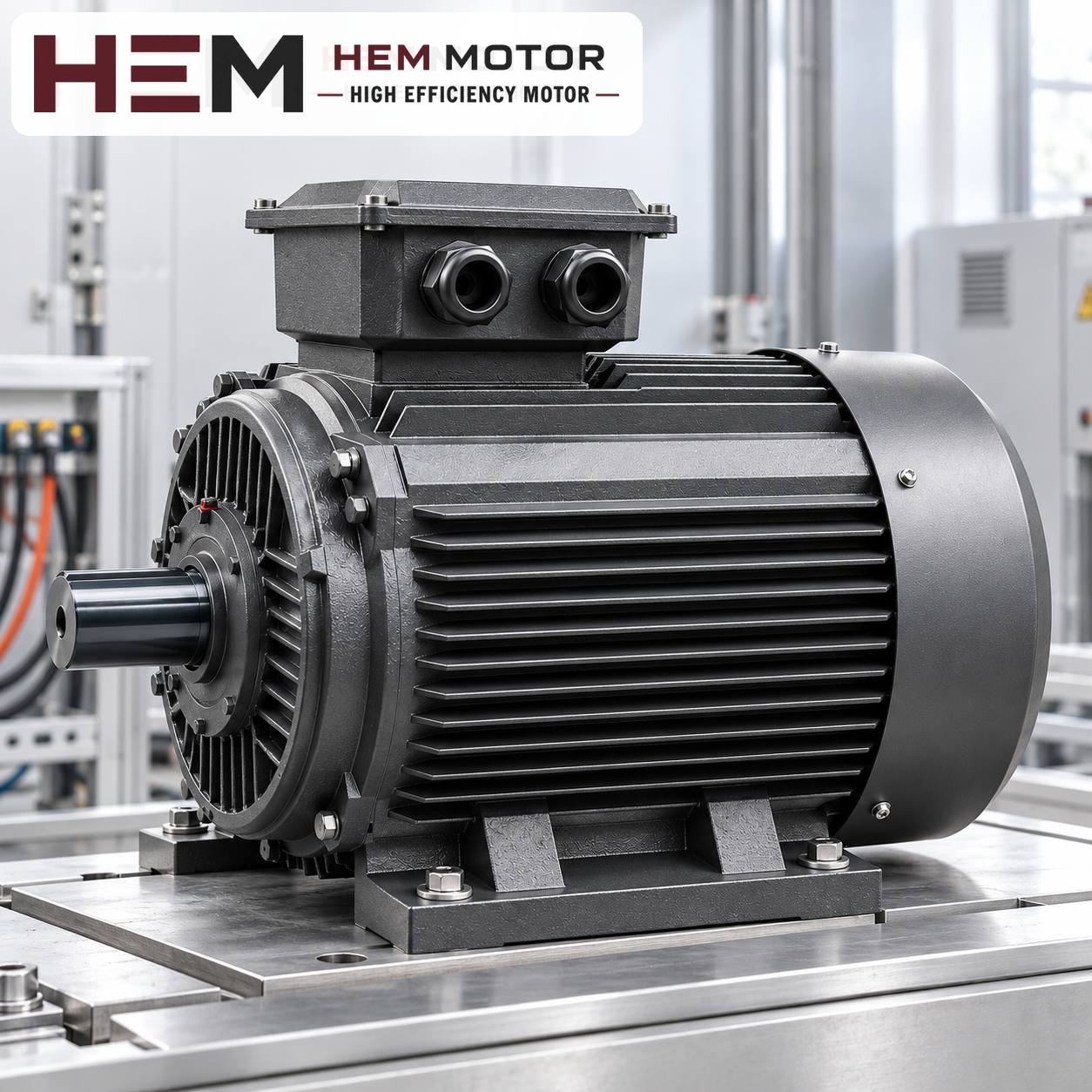
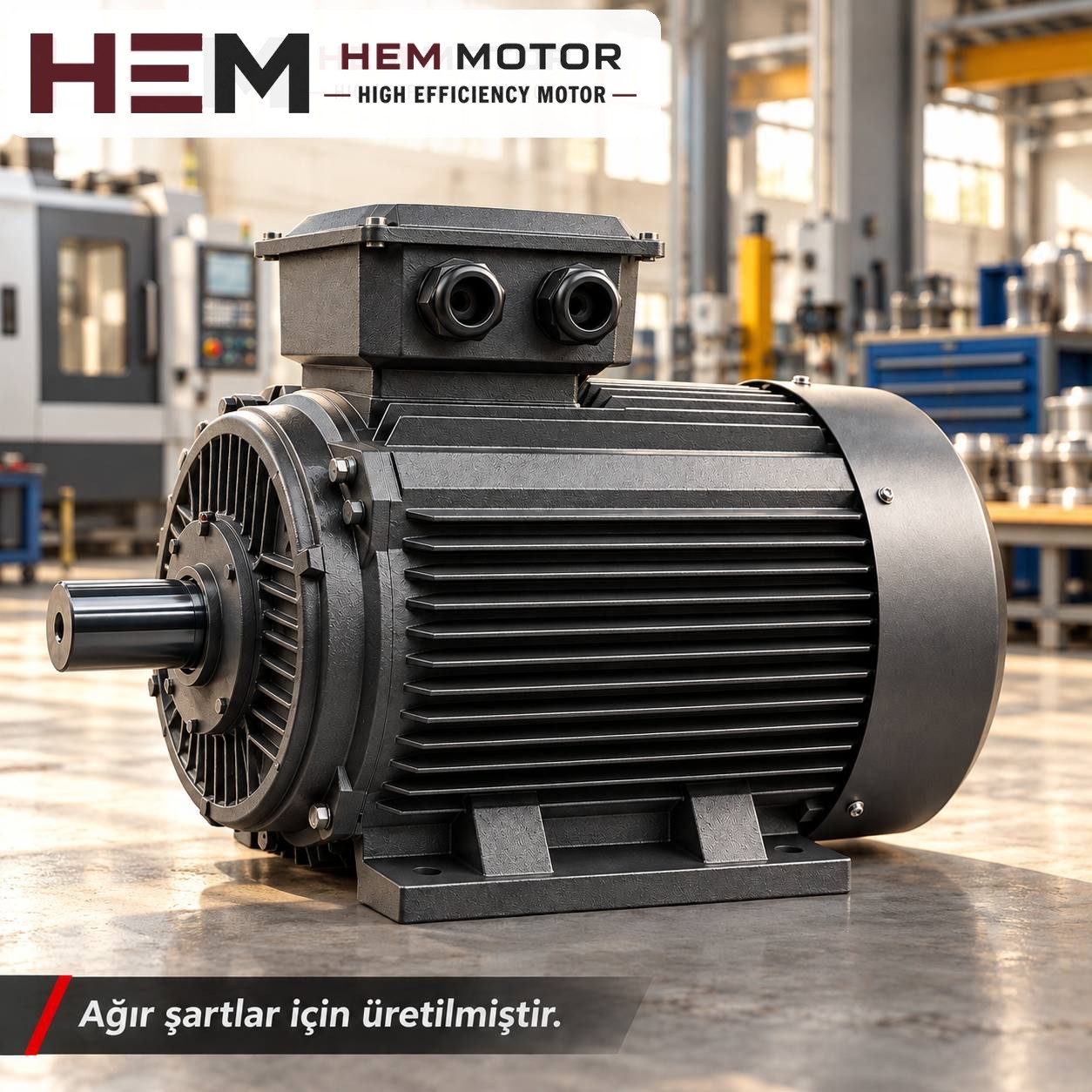
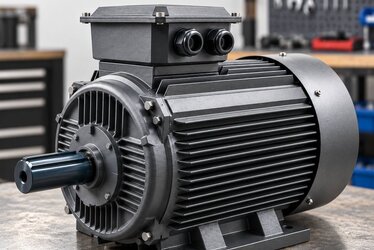
Three-phase electric motor on a test bench
In dry well pumps the motor runs outside the wet area and is cooled by air (representative image).

What is a dry well arrangement, and where does the motor stand?

The basic idea of dry installation is to keep the electric motor where it never comes into contact with wastewater. The wet well holds only the water and the suction inlet; the pump and motor are in the dry room. This makes the motor easy to reach for maintenance, keeps its winding and bearings out of the wastewater, and cooling is provided from the ambient air by the motor's own fan. This arrangement is exactly the subject of this article: a three-phase asynchronous motor standing at the surface or in the dry room, cooled by air over the fins of its frame.

Submersible pumps lowered into the wet well and running under water are a completely different construction. Their motor is designed to be sealed for operation immersed in water. A standard-frame motor with IP55 protection does not replace such a pump and cannot be operated in water. If a station wants to remove a submersible pump and install a dry well arrangement instead, this is not a motor replacement but a pump and pipework project.

Horizontal and vertical dry installation

  • Horizontal arrangement: The pump and motor stand side by side on a common baseplate with a coupling between them. The motor is foot-mounted (B3). In a replacement, the shaft height, the foot hole spacing and the coupling alignment are decisive.
  • Vertical arrangement: The pump stands on the floor of the dry room and the motor above it on a support stool or lantern piece, shaft facing down. In some stations the motor stands on an upper floor as protection against flooding and is connected to the pump through an intermediate shaft. In this arrangement the flange size, the shaft end and the axial load on the motor bearings become important.

We have covered the general details of vertical mounting separately in our article on shaft-down vertical mounting. In intermediate-shaft arrangements, the weight of the shaft and the hydraulic thrust of the pump can bear on the motor bearing; the value of this load should be obtained from the pump manufacturer and stated with the order.

Information to gather from the existing installation before renewal

On wastewater pumps, power and speed are set from the outset by the pump impeller and the head of the station. The power of the new motor is therefore chosen on the basis of the value given by the pump manufacturer and the nameplate of the removed motor; proposing a standard power by looking at the type of machine is not correct. On site, note the following:

  • Power, speed, voltage, current and IEC frame code on the old motor's nameplate
  • Speed and model information on the pump nameplate
  • Mounting arrangement: horizontal foot-mounted, vertical flange-mounted, or an arrangement using foot and flange together
  • Coupling type, shaft diameter and key size (to compare with the technical drawing)
  • Starting method: direct, star-delta, soft starter or frequency inverter
  • Condition of the pump room: humidity, condensation, ventilation, flood history

Wastewater pumps often run with 4-pole or 6-pole motors; wide-channel impellers that can pass large solids without clogging behave better at low speed. Still, the decision is the pump's, not yours: a 4-pole motor is connected to a pump marked about 1,450 rpm, and a 6-pole motor to a pump marked about 970 rpm.

Effects of the wastewater environment on the motor

Although they are called dry rooms, the pump rooms of wastewater stations are not always dry. The following effects must be taken into account when choosing and placing the motor.

  • Humidity and condensation: In underground rooms, the day-night temperature difference and a frame that cools while the pump is off can cause condensation inside the motor. The risk is higher for standby pumps with long idle periods. An anti-condensation heater and a winding temperature sensor (PTC or PT100) are options that can be selected at the ordering stage.
  • Corrosive gases: Hydrogen sulphide released from wastewater and humid air gradually corrode painted surfaces, the terminal box and the cable connections. Ventilation of the room is at least as important for motor life as the choice of motor.
  • Flooding: A leaking pump seal, a burst pipe or heavy rain can leave the dry room under water. IP55 protection is against dust and water splashes; the motor is not protected against submersion. In critical stations it is advisable to raise the motor and to have a level float switch and a drainage pump in the room.
  • Clogging and locked rotor: Rags, rope and fibrous waste can jam the impeller. When the pump jams, the motor draws a very high current; a correctly set motor protection circuit breaker or the current limit of the drive protects the winding. For protective devices, see the article on choosing thermal relays and fuses.


Prices and technical data are on the product pages; choose a model and order online.

Explosive atmosphere risk: the limit of a standard motor

In wastewater stations, methane and similar flammable gases can accumulate as a result of biological decomposition. For this reason, in some plants the wet well and the areas open to it are classified as explosive atmosphere zones in the operator's risk assessment. A motor that will run in such a zone must be of an explosion-proof (Ex) design suited to that classification; this is not a matter of an ordinary protection class.

The standard three-phase series described in this article is a general-purpose series with IP55 protection and class F insulation, and it is not offered as a series defined for explosive atmospheres. Find out from the plant's zone classification document whether the room where the motor will be installed counts as an explosive atmosphere zone, and be sure to state it with the order. If a classified zone is involved, the standard series may not be suitable; the motor is then assessed separately as a special product suited to that zone. In plants where the dry room is completely separated from the wet well and left outside the classification, the standard motor can be used under normal conditions.

Example models and where they are used

The cast iron frame models below are examples of power ratings and speeds often seen on dry-installed wastewater pumps. All have IP55 protection, class F insulation and a 400/690 V (Δ/Y), 50 Hz supply; on a 400 V network they are connected in delta. The cast iron frame is a mechanically robust option in humid and corrosive rooms.

  • 132M2-6: 5.5 kW (7.5 HP), 6 poles, 968 rpm, IEC 132M, 12.0 A at 400 V, rated torque 54.3 Nm. For small low-speed lifting pumps with wide channels.
  • 132M-4: 7.5 kW (10 HP), 4 poles, 1,460 rpm, IEC 132M, 14.3 A at 400 V, rated torque 49.1 Nm.
  • 160L-4: 15 kW (20 HP), 4 poles, 1,465 rpm, IEC 160L, 27.3 A at 400 V, rated torque 97.8 Nm.
  • 180L-4: 22 kW (30 HP), 4 poles, 1,470 rpm, IEC 180L, 39.7 A at 400 V, rated torque 142.9 Nm.

Mounting arrangements are offered according to the frame and the flange size is confirmed with the order; the options are listed in the mounting arrangements question. You can compare shaft, flange and foot dimensions in the 2026 technical and product catalogue. For an overview of pump applications, see the pump electric motors page.

Hypothetical example: renewing the motor of a horizontal dry well pump

The situation in this section is not a real plant record but an example built to show the sequence. Suppose that in a municipal lifting station the motor of the horizontal pump in the dry room has been removed after bearing noise. The motor nameplate reads 15 kW, 1,465 rpm, 160L frame, 400/690 V; the pump nameplate shows 1,450 rpm. According to the plant's zone classification document, the room is outside the classification. In this case the candidate model is the 160L-4. The foot hole spacing and the shaft diameter are compared with the technical drawing, and the coupling is realigned. Because condensation is seen in the room in winter, an anti-condensation heater is requested separately with the order. Had the document shown the room as an explosive atmosphere zone, the standard model would not have been considered even with the same power and speed, and the case would have been discussed separately.

Points to watch during commissioning and operation

  • Before the first start, check the direction of rotation against the arrow on the pump casing; a wastewater pump turning the wrong way delivers low pressure and leads to a wrong diagnosis.
  • Measure the winding insulation resistance of standby motors that have been idle for a long time; a motor kept in a humid room may need drying before commissioning.
  • If it is to run on a frequency inverter, the general rule is explained in the inverter use question; state long operation at low speed and long cables with the order.
  • Seat the terminal box cover gasket and the cable glands tightly; in corrosive air, a box left open becomes the weakest point of the motor.

What to send us with the order

So that we can identify the right motor for your dry-installed wastewater pump, send the following information together:

  • A photo of the removed motor's nameplate (power, speed, voltage, frame code)
  • The pump nameplate information and speed
  • Mounting arrangement: horizontal foot-mounted, vertical flange-mounted or intermediate-shaft arrangement; if vertical, the axial load information
  • Network voltage and starting method
  • Ambient conditions of the pump room: humidity, condensation, ventilation and the explosive atmosphere classification of the zone

You can see the standard models and current prices on the buy electric motors page. If you have the nameplate of your old motor, send us a photo of it; we will assess suitability together with the environmental information. For other questions, reach us through the contact page.

HEM Motor Models Related to This Article

The cards show example models related to the topic. A suitable motor is not chosen by power alone: compare speed, voltage, mounting, shaft and connection dimensions on the product page; if unsure, send a photo of the existing motor’s nameplate on WhatsApp.

5.5 kW 1000 rpm Cast Iron Frame Electric Motor 132M2-6

132M2-6

5.5 kW · 1000 rpm

  • Cast iron frame · IEC 132M
  • 968 rpm · IP55
  • Mounting: B3 foot; flange (B5/B14/B35) depending on frame — confirmed with the order

US$420.34 (€375.13)

View product
7.5 kW 1500 rpm Cast Iron Frame Electric Motor 132M-4

132M-4

7.5 kW · 1500 rpm

  • Cast iron frame · IEC 132M
  • 1460 rpm · IP55
  • Mounting: B3 foot; flange (B5/B14/B35) depending on frame — confirmed with the order

US$392.38 (€350.17)

View product
15 kW 1500 rpm Cast Iron Frame Electric Motor 160L-4

160L-4

15 kW · 1500 rpm

  • Cast iron frame · IEC 160L
  • 1465 rpm · IP55
  • Mounting: B3 foot; flange (B5/B14/B35) depending on frame — confirmed with the order

US$673.81 (€601.33)

View product

Similar Articles