Choosing an Electric Motor for the Circulation Pump of a Fabric Dyeing Machine

Choosing an Electric Motor for the Circulation Pump of a Fabric Dyeing Machine

The motor for the circulation pump of a fabric dyeing machine is chosen not by looking at the machine's capacity but according to the pump's own data: flow, head, pump speed and the nameplate power of the existing motor. Two dyehouse conditions are then checked. First, the range over which the flow is adjusted with an inverter; second, the steam, hot surfaces and splashing the motor sees next to the vessel.

On jet, overflow and package dyeing machines, the circulation pump continuously passes the dye bath through the fabric or yarn. Level dyeing depends largely on this flow; the pump runs without stopping throughout recipes lasting hours. For this reason, the motor should be selected with the logic of a continuously running process pump rather than a short-duty drive.

What determines the pump's load on a dyeing machine?

The power a centrifugal pump draws from the shaft is the combined result of flow, head, liquid density and pump efficiency. On a dyeing machine these values do not remain constant throughout the recipe:

  • Fabric load and type: Heavy, densely woven fabric creates more resistance in the jet nozzle and in the fabric rope; the head increases.
  • Liquor ratio: As the bath volume changes, the level at the pump suction and the flow conditions in the circuit change.
  • Nozzle setting and valve positions: Valves that reverse the flow direction (inside-out / outside-in) and the nozzle opening shift the pump's operating point.
  • Temperature: As water heats up its density decreases; at the same speed the power drawn by the pump falls somewhat.

There is no need to calculate all these variables on site. If the existing motor has worked on the same machine for years, the most solid reference is its nameplate power and the operating point on the pump nameplate. If you have the machine manufacturer's pump data, even better.

Cold fill and starting

The recipe usually begins with cold or lukewarm water being taken into the machine. At this stage the pump moves the densest water, and since the fabric has not yet wetted out and settled, the flow in the circuit is irregular. Once process temperature is reached the load decreases somewhat. Selecting the motor for hot running conditions can cause the thermal relay to trip during filling and heating.

A centrifugal pump does not require high torque at start; torque increases with speed. So in choosing the starting method, the deciding factor is the supply and circuit side rather than mechanical strain. On large pumps, direct-on-line starting can create a sudden pull on the fabric rope and a pressure surge in the circuit; on most modern machines the pump is in any case started with a ramp by a frequency inverter. If star-delta is to be used, bear in mind that a motor rated 400/690 V runs in delta on a 400 V supply.

Flow adjustment: over what range does the inverter operate?

In dyehouses, pump flow is changed according to the type of fabric; low flow is wanted for delicate knits and high flow for heavy wovens. This adjustment is mostly made with an inverter. Since the power demand of a centrifugal pump changes close to the cube of speed, two extremes need attention:

  • Above rated frequency: Raising the frequency above 50 Hz to increase flow quickly increases the load on the motor and the pump impeller. If the machine is known to be run this way, the motor power should be assessed for this operating point.
  • Long periods at low frequency: Load falls at low speed, but the motor's own fan also blows less air. In the hot surroundings next to the vessel, this can raise winding temperature.

HEM Motor's three-phase ranges are suitable for speed control with a frequency inverter. According to the general rule in the inverter question, an external fan may be required if the motor is to run at low speed with full torque for long periods; if the cable between drive and motor is long, a dv/dt or sine filter is considered. State these conditions in the order.

To see HEM Motor models suitable for pump drives and their current prices, you can go to the buy electric motors page.

The dyehouse environment: steam, hot vessels and splashing

The circulation pump usually stands below or beside the pressure vessel; the motor is also a few steps from the vessel's hot surface. Dyehouse floors are washed often, and steam and chemical odours are never absent. All HEM Motor models have IP55 protection and class F insulation. IP55 protects against dust accumulation and water sprayed from any direction; continuous pressurised water jets, condensation dripping onto the motor or long exposure to chemical vapour push the limits of this protection.

  • If water drips onto the motor from the vessel, pipes or ceiling, consider a drip guard or a change of layout.
  • During floor washing, a hose must not be aimed directly at the motor; this should be written into the maintenance instructions.
  • There should be air circulation between the hot surface of the vessel and the motor; the front of the motor's fan cover must not be blocked.
  • Where chemical vapour is dense and condensation is constant, describe the ambient conditions clearly in the order; the ambient temperature is stated with the order.

In this environment, a cast iron frame is preferred as a more rigid option against impact and harsh conditions.

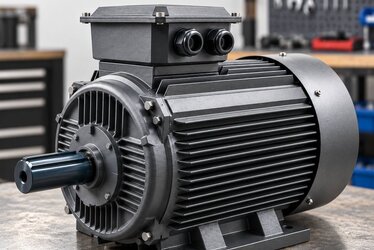
Prices and technical data are on the product pages; choose a model and order online.

Mounting and pump connection

Two layouts are common on dyeing machines: a horizontal layout where the motor stands on a foot-mounted base and is connected to the pump by a coupling, and a close-coupled layout where the motor flange seats directly on the pump casing. The first calls for a B3 motor, the second for a flanged (B5 or B35) motor. HEM Motor provides mounting arrangements according to the frame; the flange size is confirmed with the order, and writing only "B5" does not show that the connection fits. Compare the shaft and flange dimensions with the 2026 catalogue. On close-coupled pumps, the shaft size is critical because the motor shaft end carries the pump impeller. Models used in pump applications are collected on the pump electric motors page.

Example motors

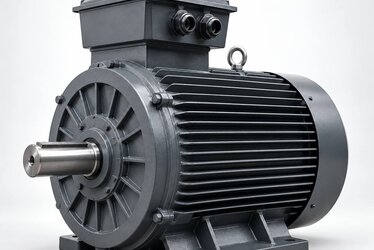
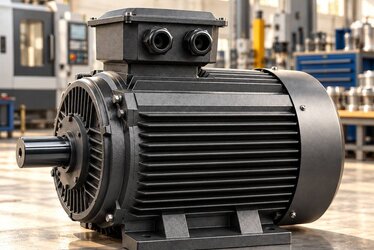
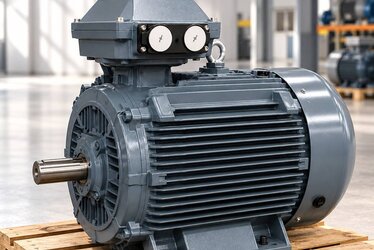
The correct power comes from the pump data and the existing motor's nameplate; the cast iron models below show the range that may be found on medium and large dyeing machines:

ModelPowerPoles / rated speedIEC frameVoltage
160L-415 kW4 / 1,465 rpm160L400/690 V
180L-422 kW4 / 1,470 rpm180L400/690 V
200L-430 kW4 / 1,475 rpm200L400/690 V
160L-218.5 kW2 / 2,940 rpm160L400/690 V

If the pump was designed to run with a 2-pole motor, it cannot be replaced with a 4-pole motor; the impeller diameter and pump curve were selected for that speed.

Hypothetical example: renewing a pump motor

The following situation is hypothetical. Suppose the winding of a 22 kW, 4-pole pump motor on a jet dyeing machine has burnt out. The maintenance team reads the nameplate and sees that it has a 180L frame and is rated 400/690 V; the motor runs on an inverter.

  • The 180L-4 model with the same power and number of poles is identified; the pump speed does not change.
  • The inverter records show that for heavy fabrics the frequency was often raised to 52–53 Hz. It becomes clear that the motor was running very close to its nameplate power at this point; this operating point is assessed with the machine manufacturer.
  • It is noticed that drops were falling onto the motor from the vessel flange; the gasket is renewed.
  • Since the motor is B3 foot-mounted with a coupling, the foot hole spacing is compared with the technical drawing.

Conclusion and information before ordering

The right motor for a dyeing machine pump is chosen by assessing together the pump's operating point, the existing motor's nameplate values, the frequency range the inverter is used in and the ambient conditions next to the vessel. For a quote, send us: photos of the motor and pump nameplates, the number of poles, the mounting arrangement and flange details, voltage and starting method, the inverter frequency range, and whether there is steam or dripping in the environment. You can reach the models in the standard range and their prices via buy electric motors. Upload a photo of your current motor's nameplate, its speed and mounting details to our send nameplate page and request a quote for the right model; to reach us directly, you can use our contact details.

Frequently Asked Questions

Can I calculate the pump motor power from the dyeing machine's capacity?

No; two machines of the same capacity can need very different power with different nozzle and pump designs. The pump nameplate and the existing motor's power should be used as the basis.

Why does the pump motor draw more current at the first fill in the morning?

Cold water is denser, and the flow is irregular because the fabric has not yet settled. As the bath heats up the load falls a little; the motor must stay within its nameplate limit during this period too.

Is an IP55 motor sufficient in a dyehouse?

It is sufficient against water spray and dust; continuous pressurised washing, condensation dripping onto it or dense chemical vapour push the limit. State these conditions in the order.

Can I raise the frequency above 50 Hz to increase flow?

Because pump power rises close to the cube of speed, even a small increase in frequency can overload the motor. If this mode of operation is needed, the motor power and the impeller's speed limit should be assessed together.

HEM Motor Models Related to This Article

The cards show example models related to the topic. A suitable motor is not chosen by power alone: compare speed, voltage, mounting, shaft and connection dimensions on the product page; if unsure, send a photo of the existing motor’s nameplate on WhatsApp.

15 kW 1500 rpm Cast Iron Frame Electric Motor 160L-4

160L-4

15 kW · 1500 rpm

  • Cast iron frame · IEC 160L
  • 1465 rpm · IP55
  • Mounting: B3 foot; flange (B5/B14/B35) depending on frame — confirmed with the order

US$673.81 (€601.33)

View product
22 kW 1500 rpm Cast Iron Frame Electric Motor 180L-4

180L-4

22 kW · 1500 rpm

  • Cast iron frame · IEC 180L
  • 1470 rpm · IP55
  • Mounting: B3 foot; flange (B5/B14/B35) depending on frame — confirmed with the order

US$913.59 (€815.32)

View product
30 kW 1500 rpm Cast Iron Frame Electric Motor 200L-4

200L-4

30 kW · 1500 rpm

  • Cast iron frame · IEC 200L
  • 1475 rpm · IP55
  • Mounting: B3 foot; flange (B5/B14/B35) depending on frame — confirmed with the order

US$1,227.13 (€1,095.13)

View product

Similar Articles