English
 Français
 Türkçe
 Español
 Русский


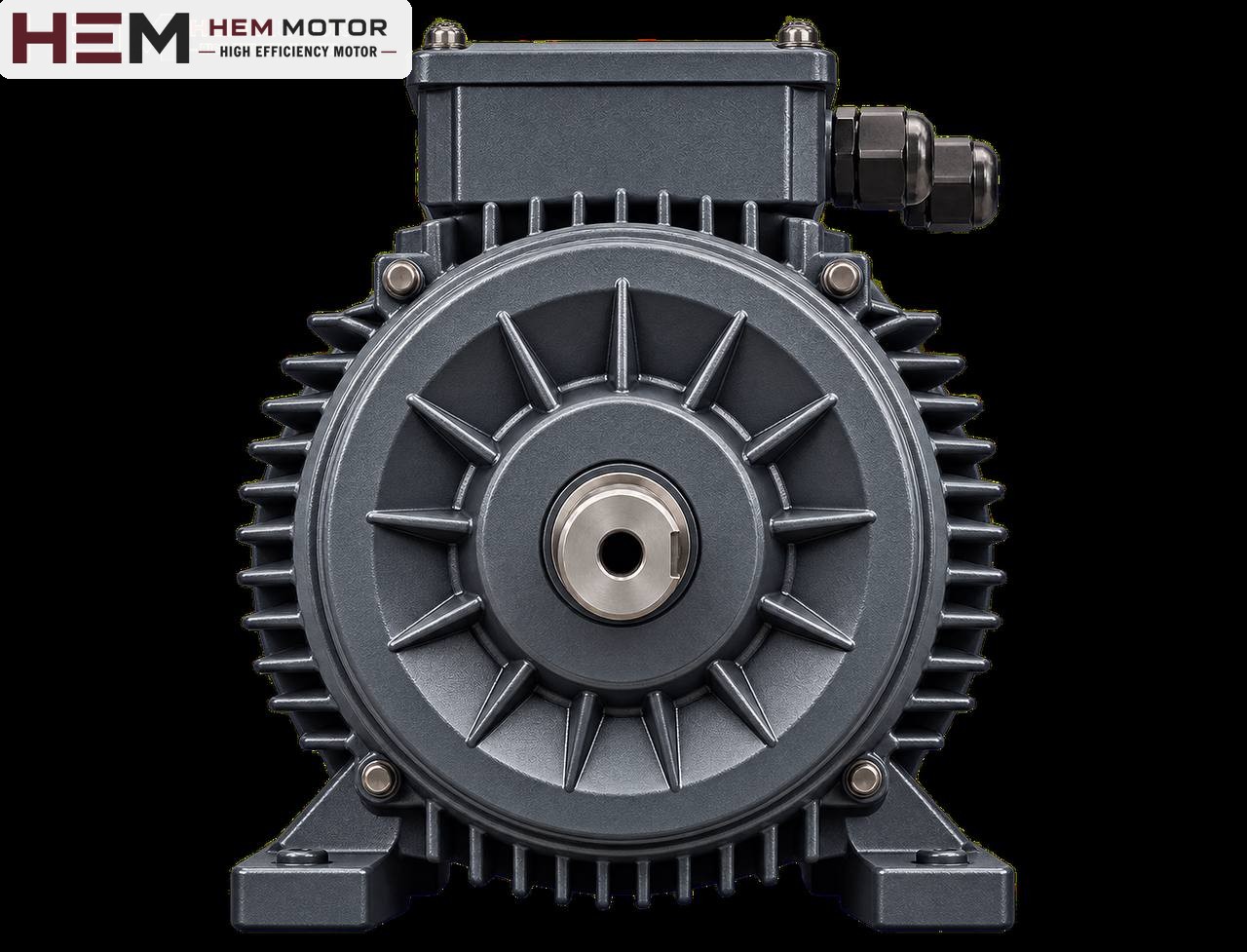

A standard three-phase motor is the right choice for the hot air fan of a shrink packaging machine only if the motor frame stays outside the hot zone of the tunnel. The fan impeller turns in the hot air next to the heaters, while the motor stands outside the tunnel wall and reaches the impeller through an extended shaft or a belt. Before power and speed, one question must be answered: how hot is the air where the motor sits?
In this article we look at the circulation fan in shrink tunnels: the position of the motor, starting in a cold tunnel, choice of speed and mounting, and the information needed for a replacement.
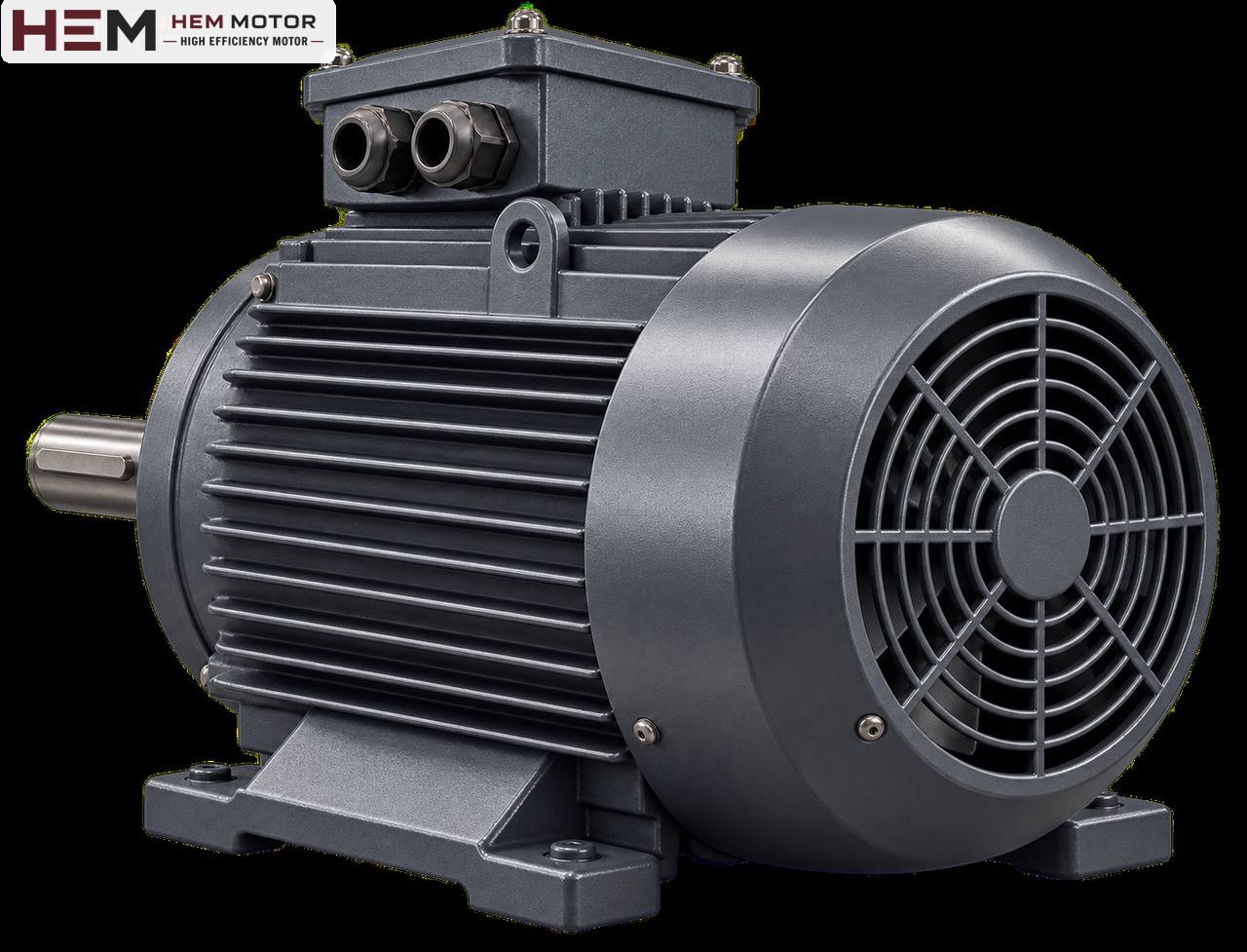
How are the fan and motor arranged in a shrink tunnel?
In the tunnel, the film shrinks around the product with heat. Heating elements warm the air, and the circulation fan moves this air around the tunnel and directs it at the product. There are two common arrangements:
- Direct-coupled arrangement with an extended shaft: The motor stands outside on the tunnel roof or side wall; the impeller is fitted to the end of the motor shaft or to an intermediate shaft with its own bearings, and the shaft passes through the wall.
- Belt arrangement: The fan shaft runs in separate bearings, the motor is placed a little further away at a cooler point and power is transmitted by pulleys.
In both arrangements the motor does not run in the hot gas. Placing a standard-frame motor inside the tunnel, next to the heating elements, is outside the scope of this article; that task requires a special motor rated for high temperature and may fall outside the standard range in HEM Motor's 2026 catalogue.
Where does the temperature the motor sees come from?
Even when it stands outside, the motor is not completely free of heat. Three paths need attention on site:
- Conduction through the shaft: If the impeller is mounted directly on the motor shaft, the heat of the hot impeller travels along the shaft to the front bearing. Bearing grease and bearing life are affected by this path.
- Through the wall and leaks: Hot air escaping through the gap at the shaft passage and through tunnel covers is drawn in by the motor's fan cover. Since the motor is cooled by its own fan blowing the surrounding air, cooling weakens if the air drawn in is hot.
- Radiation: As the tunnel body heats up, it also heats the nearby motor frame.
So, when replacing, measure the air temperature at the point where the motor sits or obtain it from the machine manufacturer, and state it in the order. Instead of guessing the temperature and relying on IP55 and class F insulation, a solution should be discussed if it is high: an intermediate shaft moving the motor a little further away, a heat barrier in between, a clean air supply around the motor, or a switch to a belt arrangement. These layout decisions are part of the machine design.
Starting in a cold tunnel: why is the load higher in the first minutes?
The power a fan draws at a given speed changes in direct proportion to the density of the air it moves. Cold air is denser than hot air. When the tunnel is started cold in the morning, the fan moves heavier air than in a warmed-up tunnel and the motor is more heavily loaded. As the tunnel heats up, the air becomes lighter and the power drawn by the fan falls.
As a result, the motor should be assessed not for hot running of the tunnel but for the cold start and warm-up period. If the old motor ran without trouble, its nameplate power is the safest reference. If the thermal relay trips during warm-up, the cause may be a changed impeller or a different filter or duct layout as much as an undersized motor; check these first. For the thermal relay setting, see our motor protection article.
When shutting down the tunnel, cutting the heaters and keeping the fan running for a while longer is a method used on many machines; this way the accumulated heat does not travel towards the motor. If your machine's control includes this delay, it should be kept after the replacement as well.
Speed and speed adjustment
In direct-coupled fans, the motor speed is the fan speed; when replacing, the same number of poles as the old motor must be kept. Fitting a 4-pole model in place of a 2-pole motor clearly reduces the air flow, while doing the opposite overloads the impeller and the motor. With a belt arrangement, adjustment is possible through the pulley ratio, but the permitted speed of the impeller must not be exceeded.
Plants that want to change the air speed for different film thicknesses use a frequency inverter. Our three-phase ranges are suitable for speed control with a frequency inverter; for long periods of full-torque operation at low speed an external fan may be required, and if the cable between drive and motor is long a dv/dt or sine filter is considered; these conditions are stated with the order. Details are in the inverter question. Remember that at low speed the motor's own fan blows less air, which matters in a hot environment.
Review suitable HEM Motor models and current prices on the buy electric motors page.