English
 Français
 Türkçe
 Español
 Русский


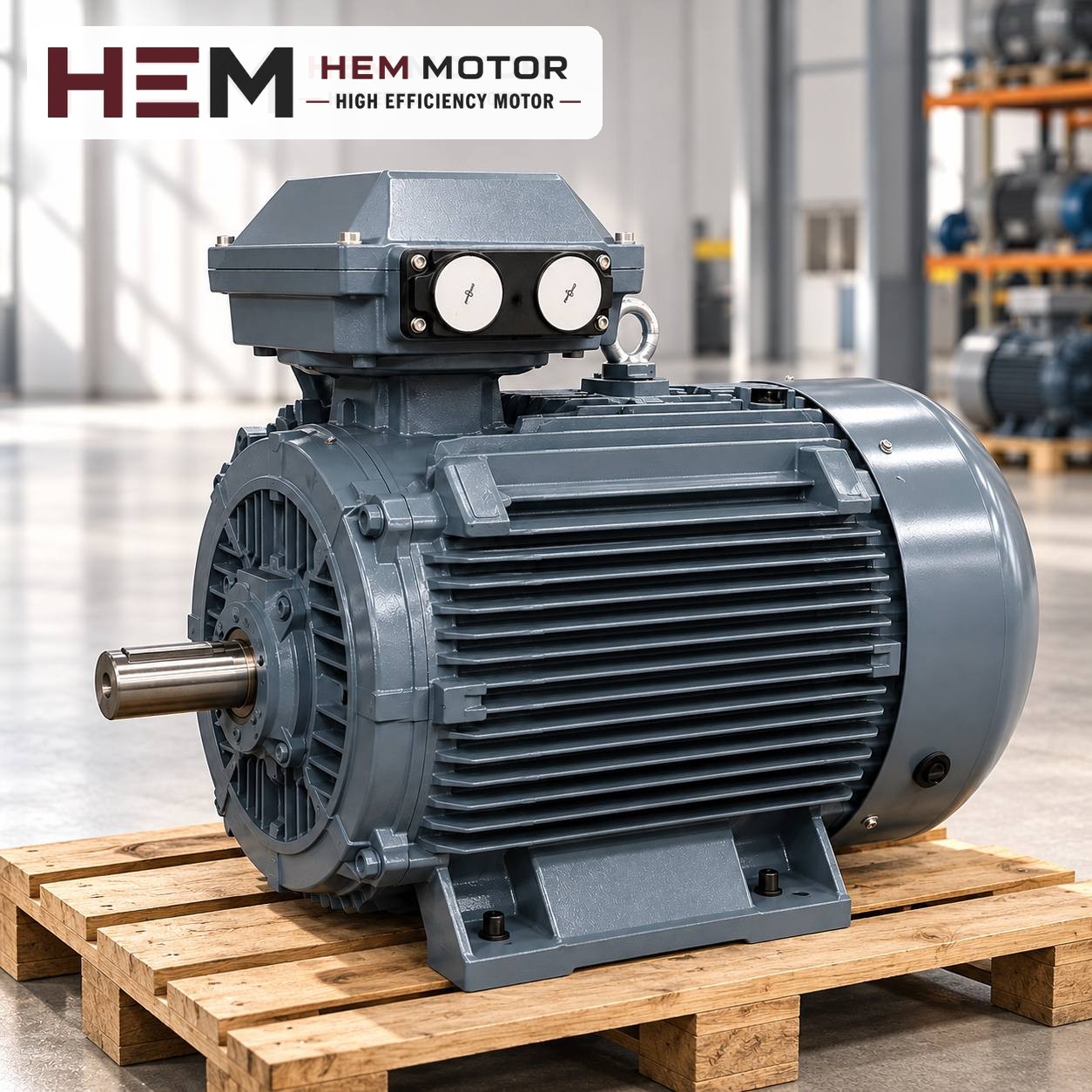

When selecting a circulation pump motor for a pasteuriser, first separate which circuit the pump works in: is it the hygienic pump carrying the product, or the service-circuit pump that pushes hot water through the plate heat exchanger? For a pump in the hot water circuit, a standard three-phase induction motor is often the right choice; what decides is the pump's flow–head point, continuous operation and how much heat the motor picks up from the hot pump casing. In hygienic pumps that contact the product and are washed, however, the motor itself is part of the hygienic design.
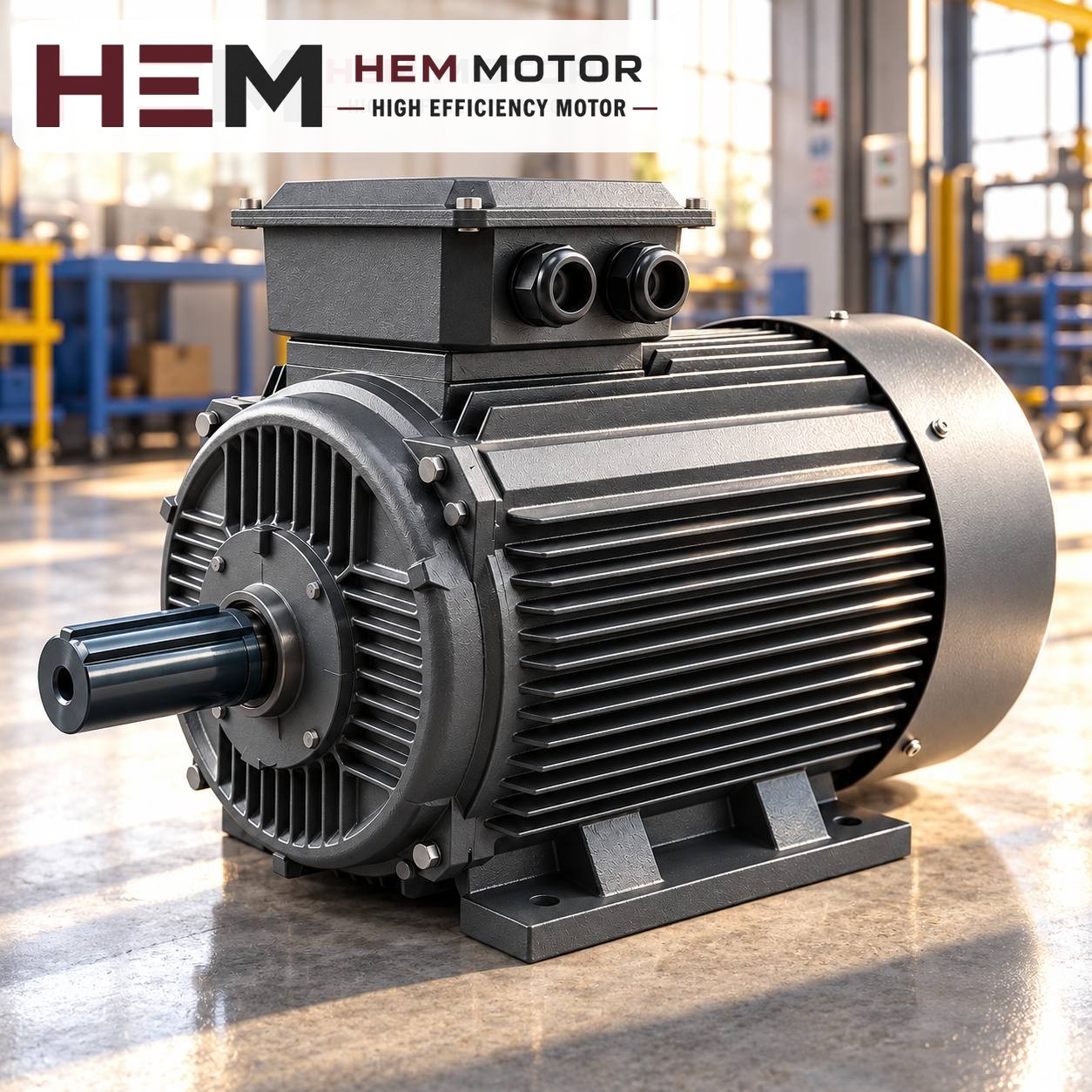
Which pumps are there in a pasteuriser?
A plate or tubular pasteurisation unit usually has more than one pump, and each has a different motor requirement:
- Product feed pump: Pushes milk, juice or sauce from the balance tank to the heat exchanger. Because it contacts the product, it is a stainless hygienic pump cleaned by CIP.
- Booster pump: Used in the regeneration section to keep the pressure on the pasteurised product side above the raw product side; it is also a product pump.
- Hot water circulation pump: Circulates water heated by steam or a boiler through the heating section. It does not contact the product and runs continuously in a closed water circuit.
- Cooling water or ice water pump: Pushes water to the cooling section; it is mostly part of the plant's general cooling circuit.
The subject of this article is the hot water circuit pump, which is what most plants mean by “circulation pump”. Product pump motors are chosen according to the pump manufacturer's hygienic design; if a washable stainless-covered or hygienic-type motor is required, this duty requires a special motor; it may fall outside the scope of the standard series in HEM Motor's 2026 catalogue, so ask us with the nameplate and application details.
What sets the power: flow, head and circuit resistance
A circulation pump does not lift water upwards; it moves it around a closed loop. The head is therefore not a static height but the friction loss of the circuit: exchanger plates, pipes, valves, the steam injector or the hot water heater. The pump's operating point is where this circuit resistance curve crosses the pump curve; motor power is determined by the shaft power the pump demands at that point.
In practice, three situations change the motor load:
- Fouling of the plates: As scale and deposits build up, circuit resistance rises and the pump moves to the left on its curve; in a centrifugal pump, shaft power usually drops as flow falls.
- New and clean exchanger: Resistance is low; the pump moves to the right of the curve, and flow and shaft power rise. The motor should be selected for the highest power that occurs in the clean circuit.
- Fully opened by-pass valve: Circuit resistance drops and the pump reaches its highest flow; this is the condition in which the motor is loaded most.
The right starting point is the flow–head values on the pump nameplate and the power line on the pump manufacturer's curve. If no curve is available, the nameplate power of the existing motor and the current measured during operation are a good reference.
Temperature: where is the motor relative to the hot water?
In a hot water pump the motor does not touch the water, but it picks up heat in two ways. First, in close-coupled (monobloc) pumps the pump casing is attached directly to the motor flange, and heat passes from the hot casing to the motor side by conduction. Second, the area where the pasteuriser stands is often hot and humid because of steam lines and hot surfaces.
- In coupling-driven (separate baseplate) pumps the motor is away from the hot casing; heat transfer is lower.
- The suction of the motor's cooling fan must not be blocked, and the motor should not be placed right next to steam discharge points and hot pipes.
- If the ambient temperature is high, this is stated with the order; the nameplate values of a standard motor apply to a defined ambient temperature.
HEM Motor's standard models have class F insulation and IP55 protection. Hot water leaking from the mechanical seal and dripping onto the motor is a matter to be solved by pump maintenance; IP55 is not designed for continuous wetting.
Continuous operation and speed
The hot water circulation pump runs without interruption as long as production continues, and often during CIP as well. The motor must therefore stay within its rating under continuous, not short-term, load. If the current stays close to the rated value all the time, the motor is at its limit.
Pumps of this class usually run with 2-pole (3,000 rpm synchronous) motors; there are also circulation pumps with 4-pole motors. Because the pump impeller is designed for the motor speed, the pole count must be kept on replacement. Fitting a 4-pole motor in place of a 2-pole motor reduces the flow to roughly half and the head to roughly a quarter, and the heating section cannot reach the target temperature.
For plants that want to adjust flow with a frequency inverter instead of a valve, the general statement on our site applies: our three-phase series are suitable for speed control with a frequency inverter; for long periods of full-torque operation at low speed a separately driven fan may be needed, and if the cable between drive and motor is long a dv/dt or sine filter is considered; these conditions are stated with the order. You can review suitable HEM Motor models and current prices on the buy electric motors page.