English
 Français
 Türkçe
 Español
 Русский

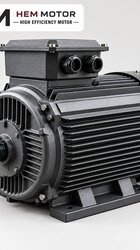
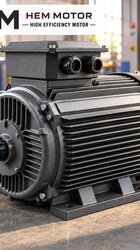
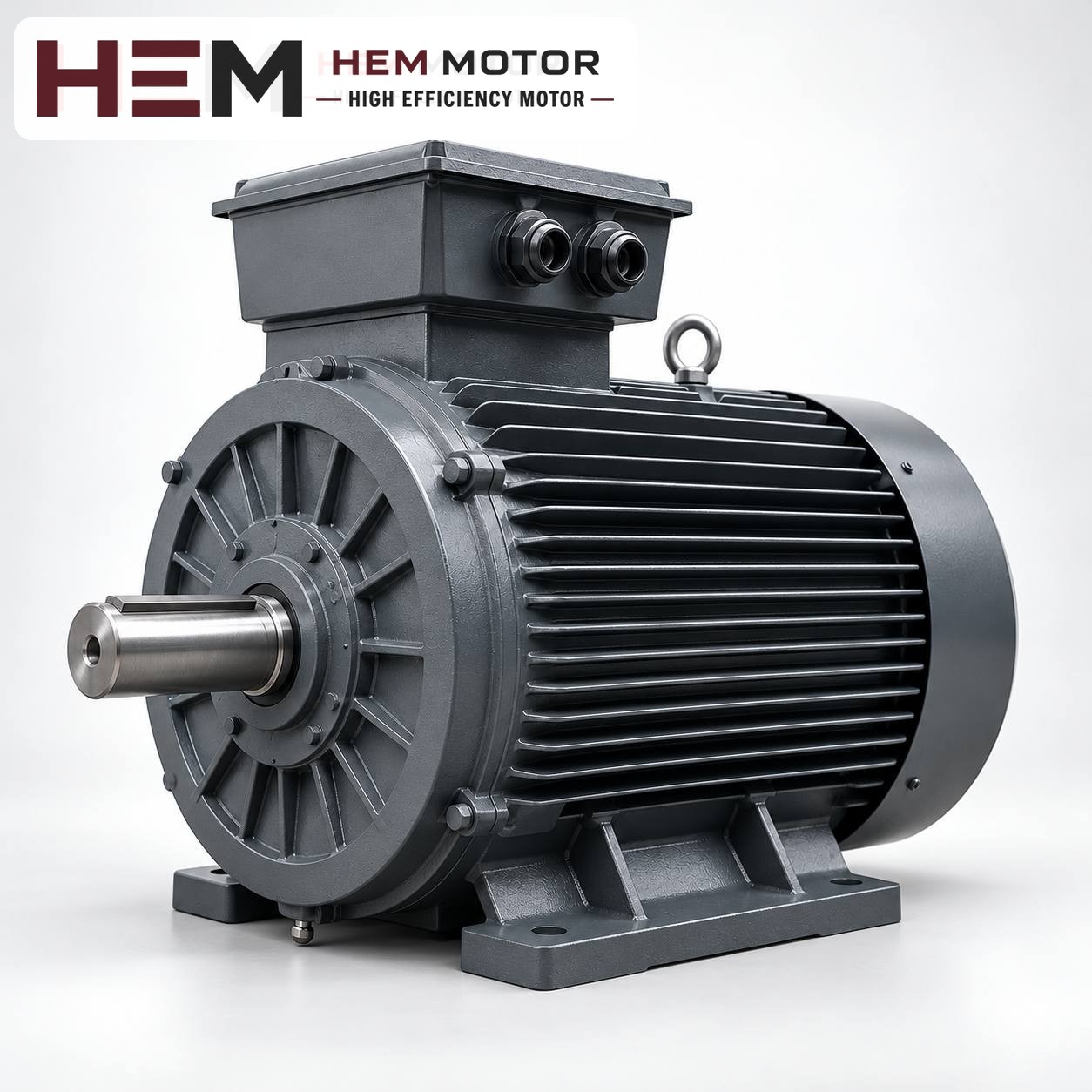

On a cold storage condenser, a standard three-phase motor can be used if the fan propeller is fitted to the shaft of a separate IEC-frame motor or driven by a belt. In external-rotor fans, where motor and propeller form a single unit, and in electronically controlled EC fans, a standard motor does not directly replace the old motor. In short, what decides is not the power but the design of the fan.
A cold store has two groups of fans: the evaporator fans inside the room and the condenser fans outside. This article deals only with the condenser side; the cold, humid indoor conditions of evaporator fans are a separate subject.
First, identify the fan type
Before starting the replacement, determine the design of the existing fan. Three situations are found on site:
| Fan design | How to recognise it | Can a standard motor be used? |
|---|---|---|
| External-rotor axial fan | The propeller is attached directly to the motor's rotating outer casing; no separate shaft end is visible. The unit hangs on the fan guard as one piece. | Not directly; the fan unit is assessed as a whole. |
| EC fan | There is an electronic board or control box on the motor and a control cable such as 0–10 V. | Not directly; the speed control system also changes. |
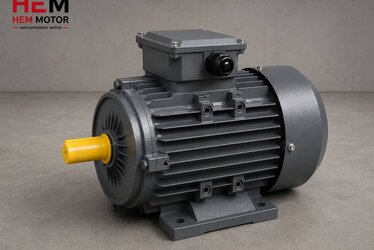
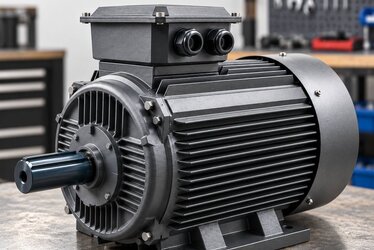
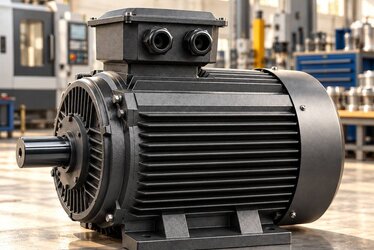
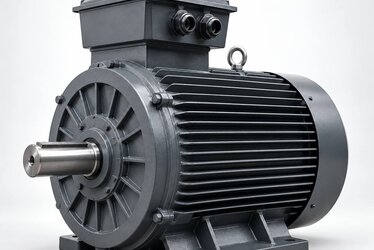
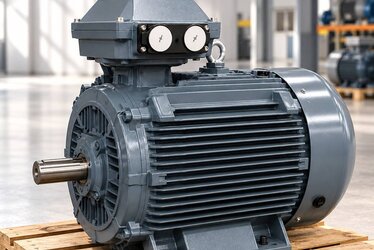
| Fan driven by an IEC-frame motor | The motor's nameplate shows a frame code such as 90L or 100L; the propeller is fitted to the shaft with a keyed hub or connected by a belt. | Yes, after checking frame, shaft and mounting compatibility. |
Most small and medium packaged condenser units have external-rotor fans. On large field-erected condensers, air-cooled chillers and some evaporative condensers, fans with IEC-frame motors are more common.
Why is direct replacement not possible on external-rotor and EC fans?
In an external-rotor motor, the stator is inside and the rotor outside; the propeller blades are bolted directly to the rotating rotor. In a standard induction motor, the rotor turns inside and power is taken from the shaft end. These two designs do not share mounting dimensions. If you want to use a standard motor, the propeller hub, motor support foot or bridge and the fan guard must be redesigned; this is not a motor replacement but a rebuild of the fan unit, and it should be carried out with the fan manufacturer's data.
In EC fans, the motor comes with its own drive and receives a speed command from the refrigeration controller. If a standard motor is fitted instead, a separate frequency inverter is needed for speed control and the control signal must be rewired. External-rotor and EC motors belong to the special motor class and may fall outside the standard range in HEM Motor's 2026 catalogue; you can ask us with a photo of the nameplate.
What should be checked where a standard motor can be used?
If the fan is driven by an IEC-frame motor, the replacement can be made with a few concrete checks:
- Number of poles and propeller speed: Condenser propellers usually turn slowly for low noise; that is why 6-pole (about 950 rpm) and sometimes 8-pole motors are used. The new motor must have the same number of poles. Fitting a 4-pole model in place of a 6-pole motor raises the propeller speed by about half; according to the fan law, the power demand grows several times over and the motor is overloaded.
- Shaft direction and mounting arrangement: On horizontal condensers, the motor usually runs vertically with the shaft up or down. In vertical mounting, the side of the motor exposed to rain changes; the terminal box and drainage direction are planned accordingly.
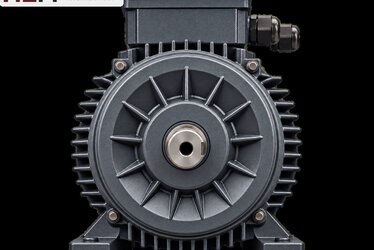
- Shaft end and propeller hub: The bore diameter and keyway of the hub that seats on the shaft must match the new motor's shaft end. Check the dimensions on the 2D technical drawings.
- Voltage: Models up to 3 kW are rated 230/400 V and are connected in star on a 400 V supply. Read the nameplate and position the terminal links accordingly.
Mounting options (B3, B5, B14, B34, B35 and vertical V1/V3/V5/V6/V15) are offered according to the frame and the flange size is confirmed with the order; for details on vertical mounting, see our vertical mounting article.
You can find standard models suitable for condenser fans and their current prices on the buy electric motors page.
Outdoors: sun, rain and hot discharge air
The condenser rejects the heat removed from the store. So the motor works both outdoors and in or right next to the condenser's heated air. On the hottest summer days, when the condenser is most heavily loaded, the air around the motor is also at its hottest.
- IP55 and rain: HEM Motor models have IP55 protection, which protects against water sprayed from any direction. In vertical shaft-up mounting, rainwater falls straight onto the shaft area and fan cover; a rain cover should be used and the motor must not sit in a pocket where water collects.
- Condensation: A motor that cools down at night can draw in moisture in the morning. The terminal box gasket and cable glands must be sound; this is even more important for standby condenser fans that do not run for long periods.
- Sun and hot discharge: The highest air temperature at the motor's location is stated in the order. The airflow direction must be kept so that hot air is thrown off by the propeller, not over the motor frame.
- Dirt and leaves: Like the condenser fins, the motor's fan cover can be blocked by dust and leaves; cleaning should be part of the maintenance plan.