English
 Français
 Türkçe
 Español
 Русский

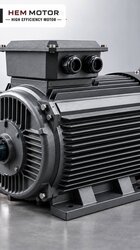
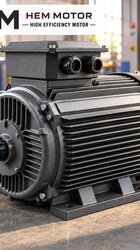
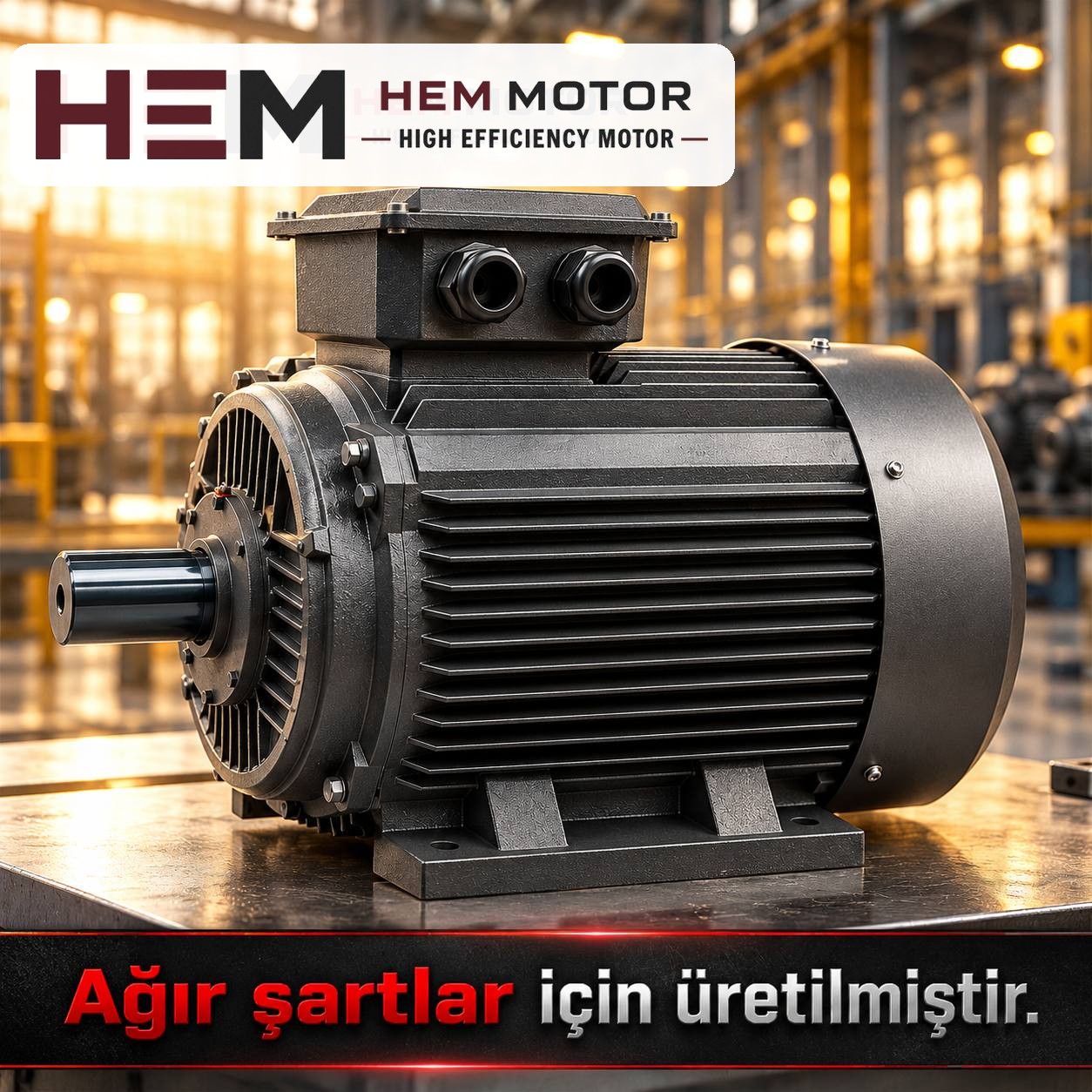

In drying, baking, paint curing and heat treatment ovens, the fan that circulates hot air is one of the parts of the line that never stops. When the electric motor driving the fan fails, the first question is usually "will a motor of the same power do?" In an oven application, however, there is another issue as important as power: how the motor is protected from heat. In this article we go step by step through what to look at when choosing a standard three-phase motor for an oven fan, which topics are the responsibility of the fan design rather than the motor, and what information is needed with the order.

Where does the motor sit on an oven fan?
In a typical oven circulation fan, the impeller is inside the oven, in the volume where hot gas circulates; the motor stands outside the oven wall or roof. The shaft passes through the insulated wall and turns the impeller. A standard asynchronous motor is not placed inside the hot gas and is not designed to operate that way. The motor's job is to turn the shaft from a point outside the oven where it can take in cooling air.
The arrangements that keep heat away from the motor are solved on the fan side:
- Extended shaft and bearing arrangement: The distance between the impeller and the motor is provided by the fan's own bearing unit. The motor shaft is not expected to extend directly into the oven.
- Cooling disc (heat slinger): A finned disc fitted on the shaft throws off part of the heat travelling along the shaft.
- Heat barrier and insulation: Insulation and an air gap between the motor mounting plate and the oven wall reduce the heat arriving by conduction.
The dimensions and materials of these parts are a matter for the fan manufacturer. As a motor supplier, what we look at is the condition of the surface the motor is mounted on and of the air around it.
The temperature the motor sees: ambient, radiation and conduction
A motor standing outside the oven can still be affected by heat. Three sources need to be considered separately:
- Ambient air: The top of the oven or an enclosed roof space can be noticeably hotter than the rest of the workshop.
- Radiation: A motor frame standing close to hot oven sheet metal picks up heat from outside.
- Conduction: The shaft and the mounting plate carry part of the heat from the oven side to the motor; that is why the cooling disc and heat barrier matter.
HEM Motor's standard models cool themselves by drawing in outside air with their own fan. If the air the motor takes in is hot, cooling also weakens. For this reason, the ambient temperature at the point where the motor will operate is stated with the order. Class F insulation describes the temperature class the winding can withstand; it does not mean the motor can run in any environment. For details of cooling methods, see our article on IC411 and IC416 cooling.
Power and speed: starting with a cold oven
The power a fan draws changes with the density of the air it moves. Cold air is denser than hot air; that is why a fan started while the oven is cold demands more power than at operating temperature. If the power given on the fan nameplate or data sheet is calculated for operating temperature, the motor may be overloaded at a cold start. Ask the fan manufacturer for these two figures: the shaft power at operating temperature and the shaft power when running in cold air. Motor power is determined from these values; power is not chosen by looking at the machine's name.
On the speed side, the decision depends on the speed the impeller was designed for. If the impeller is coupled directly to the motor shaft, the motor's rated speed sets the impeller speed. In a belt-and-pulley arrangement, the pulley ratio sets the speed. When replacing, keep the speed on the old motor's nameplate; putting a 3,000 rpm model in place of a 1,500 rpm motor seriously changes the fan's air flow and the power it draws.
Mounting and frame selection
On oven fans the motor is usually connected in one of three ways: foot-mounted (B3) on a base with a belt drive, flanged to the fan housing (B5 or foot-and-flange B35), or in a vertical position with the shaft facing down on roof fans. Mounting options are offered according to the frame; the flange size is confirmed with the order. Use the 2026 technical and product catalogue for shaft and flange dimensions.
The area around an oven is often dusty and subject to vibration; the motor may take knocks during maintenance. For this reason, cast iron frame models are often preferred for oven fans of 5.5 kW and above. All models have IP55 protection and class F insulation.