English
 Français
 Türkçe
 Español
 Русский


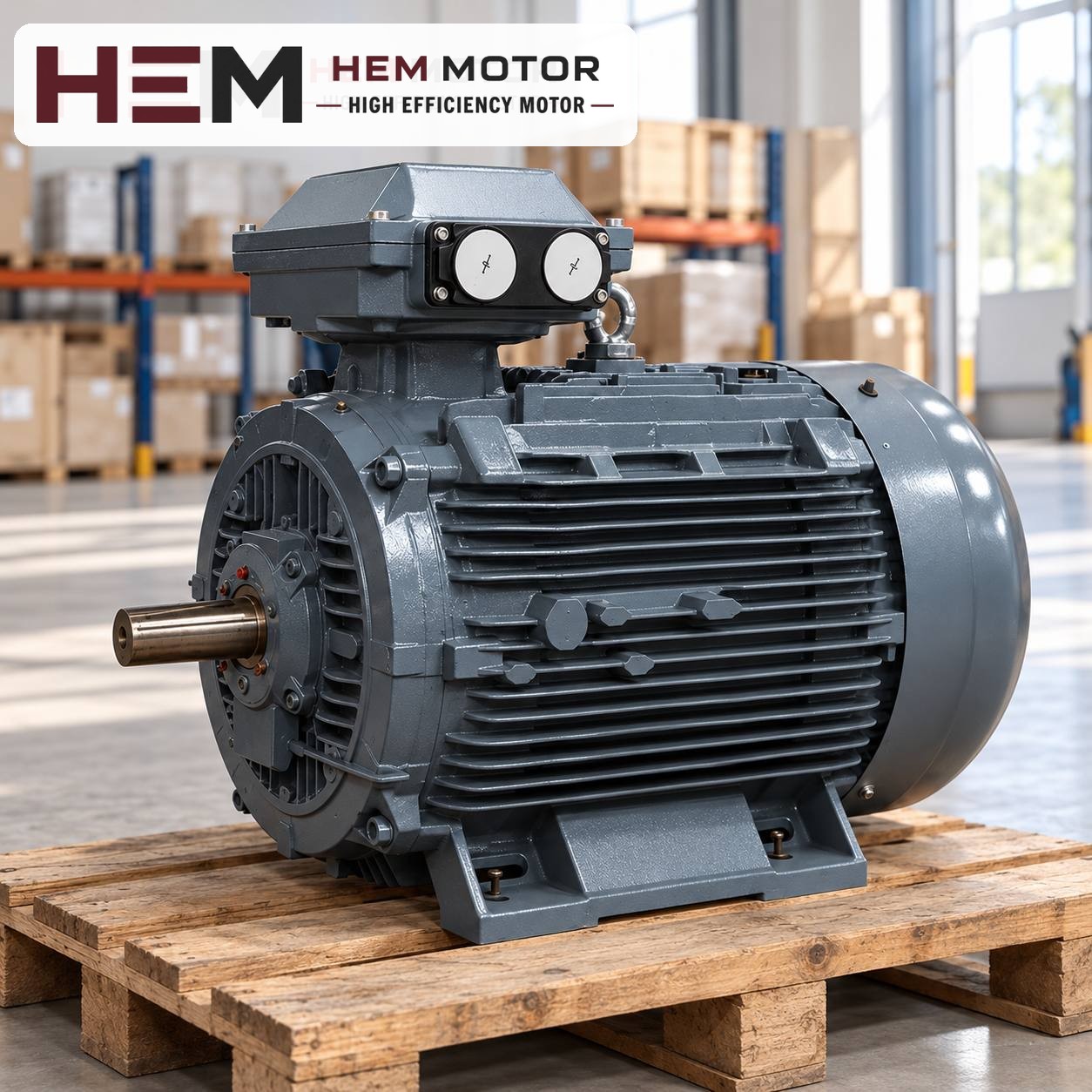

If a conveyor will not start under load, the first step is not to fit a bigger motor or change the gear ratio but to find out what is preventing the start. In most cases the problem is voltage drop, a wrong starting setting or a mechanical blockage, and neither a power nor a ratio change is needed. If the cause really is insufficient torque, the decision depends on one question: can the belt speed drop? If it can, the gear ratio is discussed; if it cannot, the motor power (and the gearbox's torque capacity) is.
First, read the symptom correctly
"It will not start" can mean different things, and each points to a different cause. When describing the fault, note which of these is happening:
- The motor does not turn at all and hums: The motor is energised but not enough torque builds up at the shaft, or a phase is missing. In this case do not leave the motor energised for more than a few seconds; the winding heats up quickly.
- The belt moves slowly but cannot accelerate: The motor stays stuck at low speed. This is common in the star stage of star-delta starting or during the starting ramp of a drive.
- The belt starts but the thermal relay trips after a few minutes: This is not a starting problem but a continuous overload problem. Capacity may have increased, the incline may have changed or friction may have grown.
- It fails to start only after a long stop: Material may have settled, stuck or frozen on the belt; cold gearbox oil also increases resistance at the first start.
Checks to make without touching the motor
A power or ratio change is a costly decision. Before that, finish the cheap and quick checks:
- Voltage at the moment of starting: A long cable or a weak transformer lowers the voltage while the starting current is drawn. Since the torque of an asynchronous motor varies with the square of the voltage, a small voltage drop means a noticeable loss of torque. Have the measurement taken at the motor terminals during starting.
- Starting arrangement: Star-delta starting reduces starting torque to about one third. On a loaded, inclined belt the motor may not reach sufficient speed in star; the timer may also be switching over too early or too late.
- Phases and connection: A loose terminal or a blown fuse leaves the motor on two phases. Confirm that a motor rated 400/690 V is connected in delta on the 400 V supply.
- Mechanical resistance: Idlers that do not turn, an over-tensioned belt, scrapers pressing too hard and material built up under the pulley multiply the starting resistance.
- Gearbox: Check the oil level, the oil's viscosity in the cold and gear wear. A worn gearbox puts shock loads on the motor and couplings.
If one of these checks explains the problem, fix that first. With the same motor and the same ratio, the belt will often start normally again.
If torque really is insufficient: comparing the two options
If the checks are clean and there is a permanent load increase such as higher capacity or a change of incline, there are two routes. The comparison below uses hypothetical values and only illustrates the method: the existing motor is 5.5 kW, 4-pole (rated torque 36 Nm, 1,460 rpm), the gear ratio is 1:30 and the gearbox efficiency is taken as 0.9.
| Option | Gearbox output torque (approx.) | Belt speed | Point to watch |
|---|---|---|---|
| Current situation: 5.5 kW, ratio 1:30 | 36 × 30 × 0.9 ≈ 970 Nm | Unchanged | Reference |
| Increase the ratio: 5.5 kW, ratio 1:40 | 36 × 40 × 0.9 ≈ 1,300 Nm | Falls by about 25% | Conveying capacity falls together with speed |
| Increase the power: 7.5 kW, ratio 1:30 | 49.1 × 30 × 0.9 ≈ 1,325 Nm | Unchanged | Check the gearbox rated torque and the motor frame |
The table shows that both options can give a similar torque increase at the output; the difference lies in the price paid. A ratio change sacrifices speed, while a power increase puts more strain on the gearbox and the connection.
When does changing the gear ratio make sense?
- When there is margin in belt speed and the capacity target can also be met with a slower belt.
- When motor power is already sufficient in continuous running and the problem is only starting under load.
- When a gear set with a different ratio for the existing gearbox housing, or a gearbox with a different ratio and the same connection dimensions, is available.
Remember: as the ratio increases, the belt slows down and the material conveyed per minute decreases. On a belt that will not start because of a capacity increase, raising the ratio will still miss the target capacity.
When does increasing the motor power make sense?
- When the belt speed must stay constant for process reasons.
- When the motor draws borderline current not only at start but also in continuous running.
- When the gearbox's rated output torque and service factor can handle the larger motor. If the gearbox nameplate does not give this information, the gearbox manufacturer should be asked.
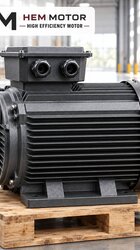
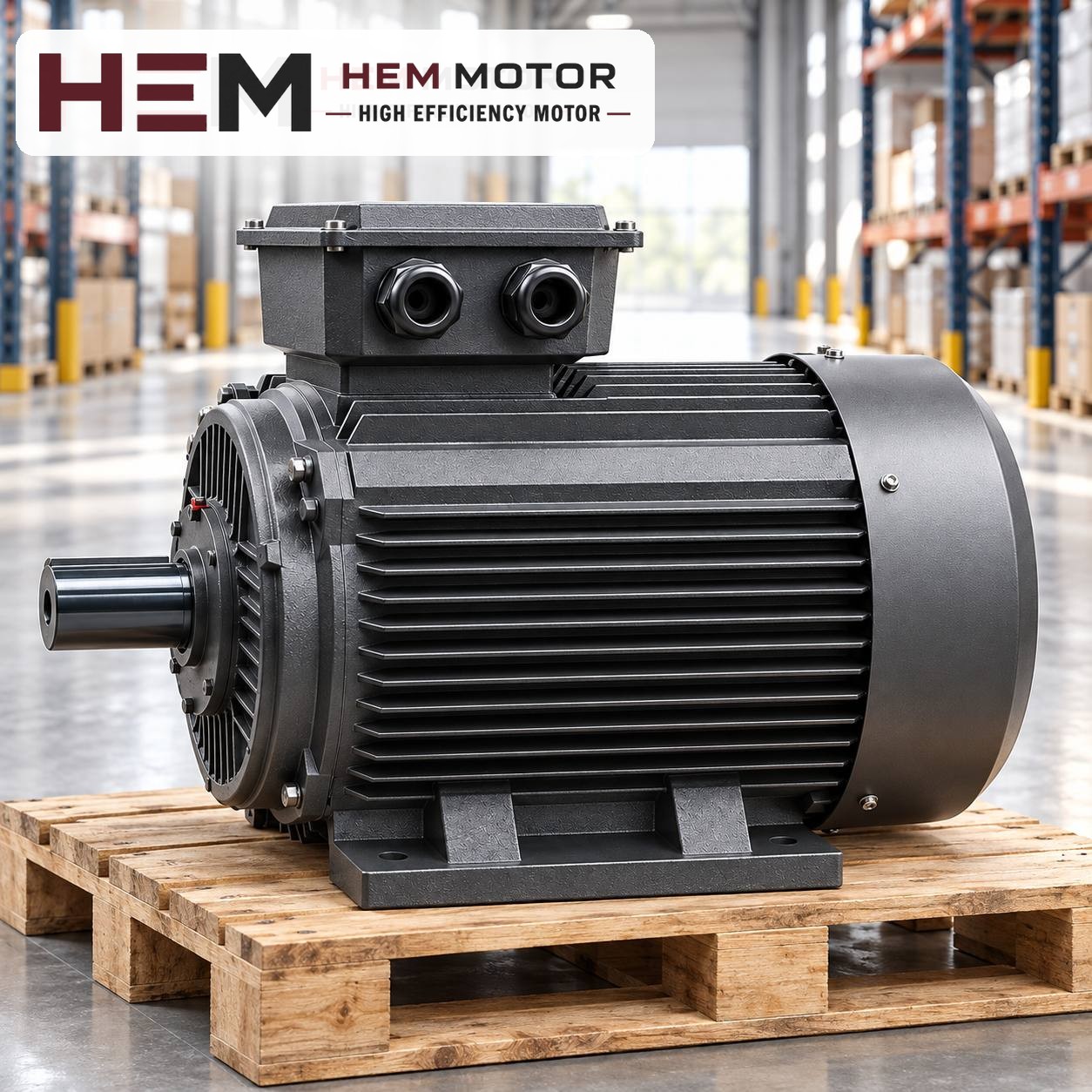
A power increase often also means a frame change. The 5.5 kW 4-pole model is in a 132S frame and the 7.5 kW 4-pole model in a 132M frame; although the shaft height is the same, the foot hole spacing is different. With a flange connection, it must also be confirmed that the gearbox input flange and shaft bore fit the new motor.