English
 Français
 Türkçe
 Español
 Русский

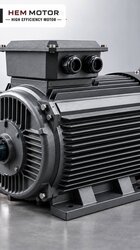

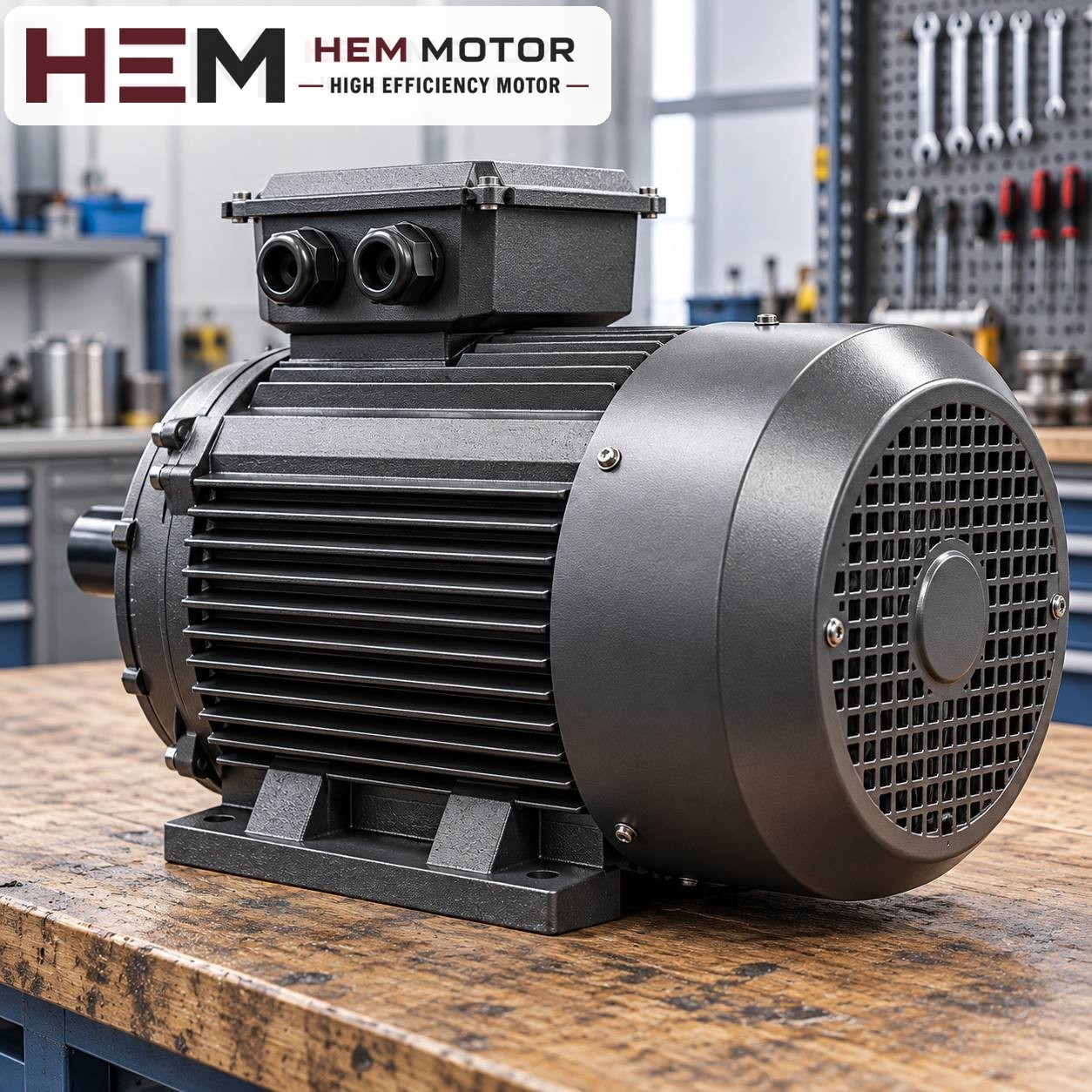

In a milking system, when the vacuum pump stops, milking stops too. Because cows have to be milked at set times, a pump motor failure is one of the jobs on a farm that cannot wait. In this article we look at what information you need to collect when replacing the motor of a milking vacuum pump, how to check the connection according to pump type, how the barn environment affects the motor, and what farms with a single-phase supply can do.

Vacuum pump types and motor connection
There are three pump arrangements most often found in milking installations. Motor selection starts with how the pump is connected to the motor:
- Rotary vane vacuum pump: The most common type on farms. The motor usually stands foot-mounted on a common baseframe and is connected to the pump by belt and pulleys. On some models the pump is directly coupled to the motor.
- Lobe vacuum pump: Found in larger milking parlours. It generally runs with a standard foot-mounted motor, by belt or coupling.
- Liquid ring pump: Less common; pump and motor are often a single unit joined by a flange.
In a belt-and-pulley arrangement the pump speed is set by the pulley ratio; so the new motor must have the same number of poles as the old one. In a coupled arrangement the motor's rated speed is directly the pump speed. In units where the pump and motor are joined by a common flange, the flange and shaft fit decide whether the replacement is possible. If the shaft end on a flanged unit is non-standard, a standard motor cannot be used; in that case, ask about the special motor requirement with the nameplate and technical information.
Information to collect for the replacement
The soundest way to replace a motor is to start from the old motor's nameplate. Note the following fields from the nameplate:
- Power (kW or HP) and rated speed (e.g. 1,420 or 1,445 rpm)
- Voltage and connection (230/400 V Δ/Y; if only one voltage is written, it may be single-phase)
- IEC frame code and mounting arrangement (B3 foot-mounted, B5 or B35 flanged)
- Degree of protection (IP) and insulation class
If the nameplate cannot be read, look at the pump's nameplate; the pump manufacturer usually states the required motor power and speed. If you have increased the number of milking units, the pump capacity and therefore the motor power requirement may also have changed; in that case the power is determined according to the calculation of the company that installed the milking system. An exact power cannot be recommended by looking at the machine's name.
If the frame code cannot be read, measure the foot hole spacing, shaft height and shaft diameter and compare them with the technical drawings.
The barn environment: humidity, wash water and ammonia
The vacuum pump usually stands in the machine room next to the milking parlour. Although this room is more sheltered than the rest of the farm, it still has conditions that are demanding for a motor:
- Humidity and wash water: Water splashes and steam occur during washing after milking. IP55 protection guards against dust and water jets from any direction; however, washing the motor directly with pressurised water is not appropriate.
- Ammonia and manure gases: Gases coming from the barn speed up corrosion on metal surfaces. Ventilating the machine room and separating it from the barn is important for motor life.
- Pump exhaust and oil mist: On lubricated rotary vane pumps, oil mist comes out of the exhaust. If the motor fan draws in this air, oily dust builds up on the frame and cooling weakens. The exhaust needs to be discharged outside.
- Winter conditions: In unheated machine rooms, night cold and daytime warming can cause condensation inside the frame.
In an enclosed, clean machine room an aluminium frame is sufficient and its light weight makes replacement easier. Where the risk of dust, knocks and corrosion is high, a cast iron frame can be considered. All our models on sale have IP55 protection and class F insulation.
Operating time and starting
The vacuum pump runs without interruption for one to several hours at each milking, and stays on during washing after milking. As the motor is under continuous load throughout this time, a motor designed for continuous duty, with S1 on its nameplate, is suitable. Rotary vane and lobe pumps do not generally create a heavy starting load; however, oil that thickens in cold weather can increase the load on the shaft at start-up.
In some new milking systems the pump speed is adjusted with a frequency inverter according to the vacuum level. Our three-phase series are suitable for speed control with a frequency inverter; for prolonged operation at low speed with full torque a separately driven fan may be needed, and if the cable between the drive and the motor is long a dv/dt or sine filter is considered; these conditions are stated with the order.