English
 Français
 Türkçe
 Español
 Русский




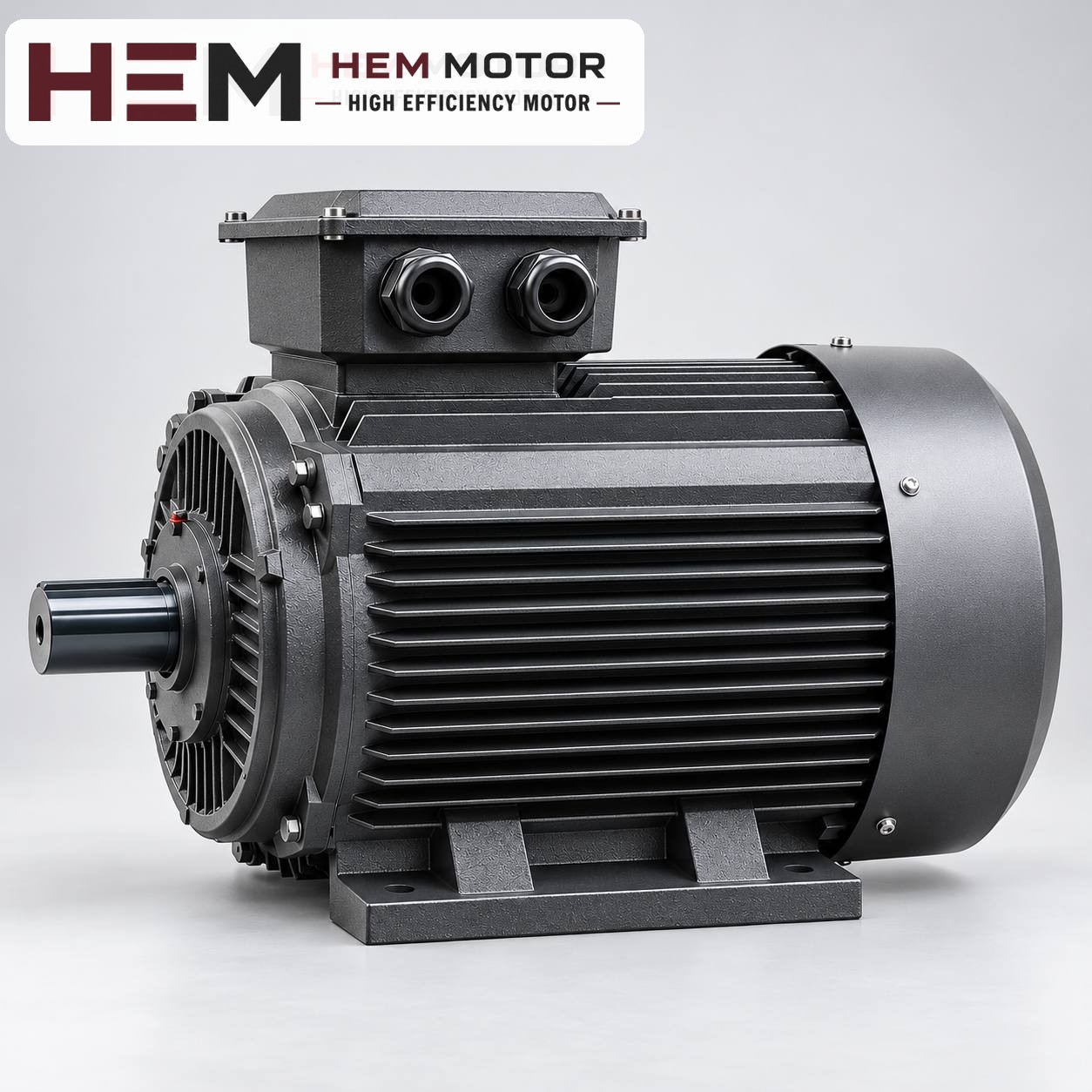

Motor selection for a hot oil (thermal oil) circulation pump rests on two facts: the pump is under the most strain at a cold start, when the oil is thick, and the motor sees the heat of the hot line through the shaft, the flange and the surrounding air. That is why the motor power is checked not against the hot operating point but against the cold commissioning condition, while the motor itself must stand outside the hot zone in a well-ventilated place. A standard three-phase motor can be used in this layout, but it is not correct to place it inside or on top of the hot casing as if it were a special high-temperature motor.
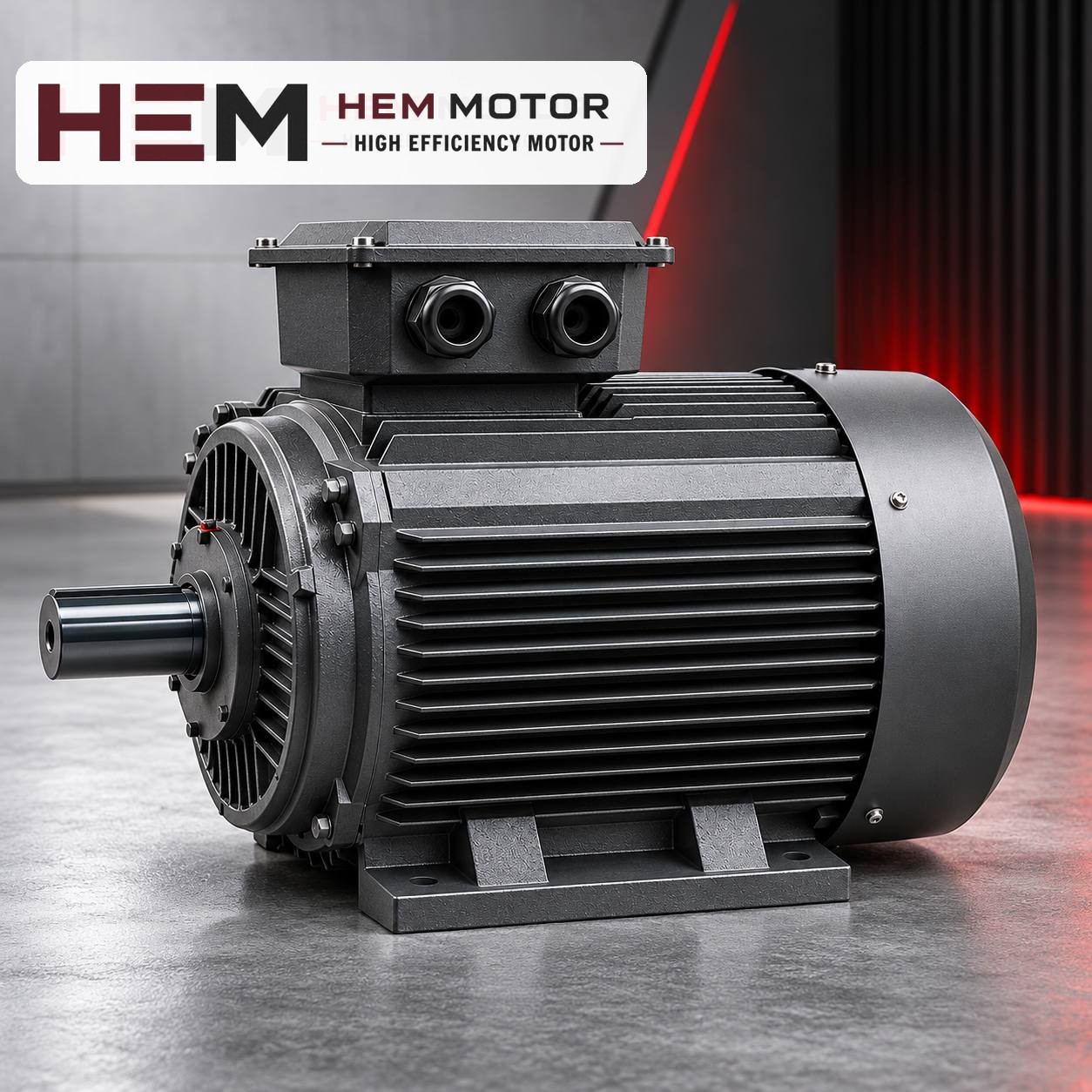
Why is a hot oil pump motor assessed differently?
Thermal oil systems carry heat to processes such as presses, paint drying, reactors, asphalt tanks and textile stenters. The heat transfer oil is pumped from the heater to the process by a circulation pump. If the pump stops, the oil can overheat in the heater; that is why the circulation pump is one of the most critical auxiliary items in the system.
Most of these pumps have a long cooling neck or a finned bearing housing between the pump casing and the motor. Its job is to reduce the heat passing from the hot casing to the shaft and the motor. This is also where the issues that really affect motor selection begin.
Cold start: the motor's hardest moment
The viscosity of heat transfer oils rises markedly as the temperature falls. When the system is commissioned cold after a long stop, the pump has to move thick oil. In a centrifugal pump, this affects the motor in two ways:
- As viscosity rises, pump efficiency falls and more shaft power is needed for the same flow.
- Cold oil is denser than hot oil, which also increases the power drawn.
At the hot operating point, the load seen by the motor is often below its rated power; at a cold start, however, the motor may approach or exceed its rated current. When replacing, ask the following questions:
- Did the old motor's thermal relay trip when the system was commissioned cold?
- Does the commissioning procedure start the pump with a throttled valve, or is the oil warmed up at low speed with a drive?
- Does the pump manufacturer give a separate power value for cold oil viscosity?
If the old motor ran without problems in this condition, the same power is kept. If the thermal relay trips at cold start, the first solution is often the commissioning method, not a bigger motor.
Three ways heat reaches the motor
- Conduction through the shaft: Heat passing from the pump shaft through the coupling to the motor shaft warms the motor's drive-end bearing. This is why the cooling neck and the coupling gap matter; the distances of the old layout must be kept.
- Conduction through the flange and lantern: If the motor is flange-mounted directly to the pump, the heat of the hot casing passes through the lantern to the motor end shield. On this type of pump, the lantern and neck length specified by the manufacturer must not be changed.
- Surrounding air and radiation: Uninsulated pipes, valves and heater surfaces warm the air around the motor. The motor's own fan cools it by drawing in this warm air; the hotter the surrounding air, the weaker the cooling. The ambient temperature is stated with the order.
The models HEM Motor sells come with class F insulation and IP55 protection. Class F insulation gives the winding a certain thermal margin, but it does not make up for the motor running right next to hot surfaces. Ventilating the pump room, insulating hot pipes and giving the motor's fan side free air are as important as the motor selection itself.
Mounting layout and checklist for replacement
Thermal oil pumps are usually installed in one of two layouts. The checks differ for each:
| Layout | Motor connection | Point to watch when replacing |
|---|---|---|
| Baseplate-mounted, coupled pump | B3 foot-mounted motor, flexible coupling | Shaft height, foot hole spacing, re-checking coupling alignment at operating temperature |
| Close-coupled (inline) pump | B5 flange motor with lantern | Flange spigot diameter, shaft diameter and length, keeping the lantern length |
There is an important detail in the coupled layout: as the pump casing heats up it expands, and the shaft axis may rise slightly from its cold position. So even if alignment is done cold, it must be checked again once the system reaches operating temperature. Misalignment puts extra load on the drive-end bearing and, combined with the heat, shortens bearing life.
At HEM Motor, B3, B5, B14, B34, B35 and vertical V1/V3/V5/V6/V15 mounting arrangements are offered according to the frame; the flange size is confirmed with the order. You can find the dimensions in the 2026 catalogue. For general information on how motors are cooled, see our cooling methods article.