English
 Français
 Türkçe
 Español
 Русский

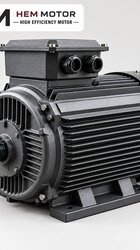
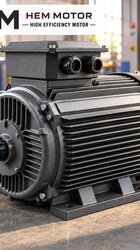
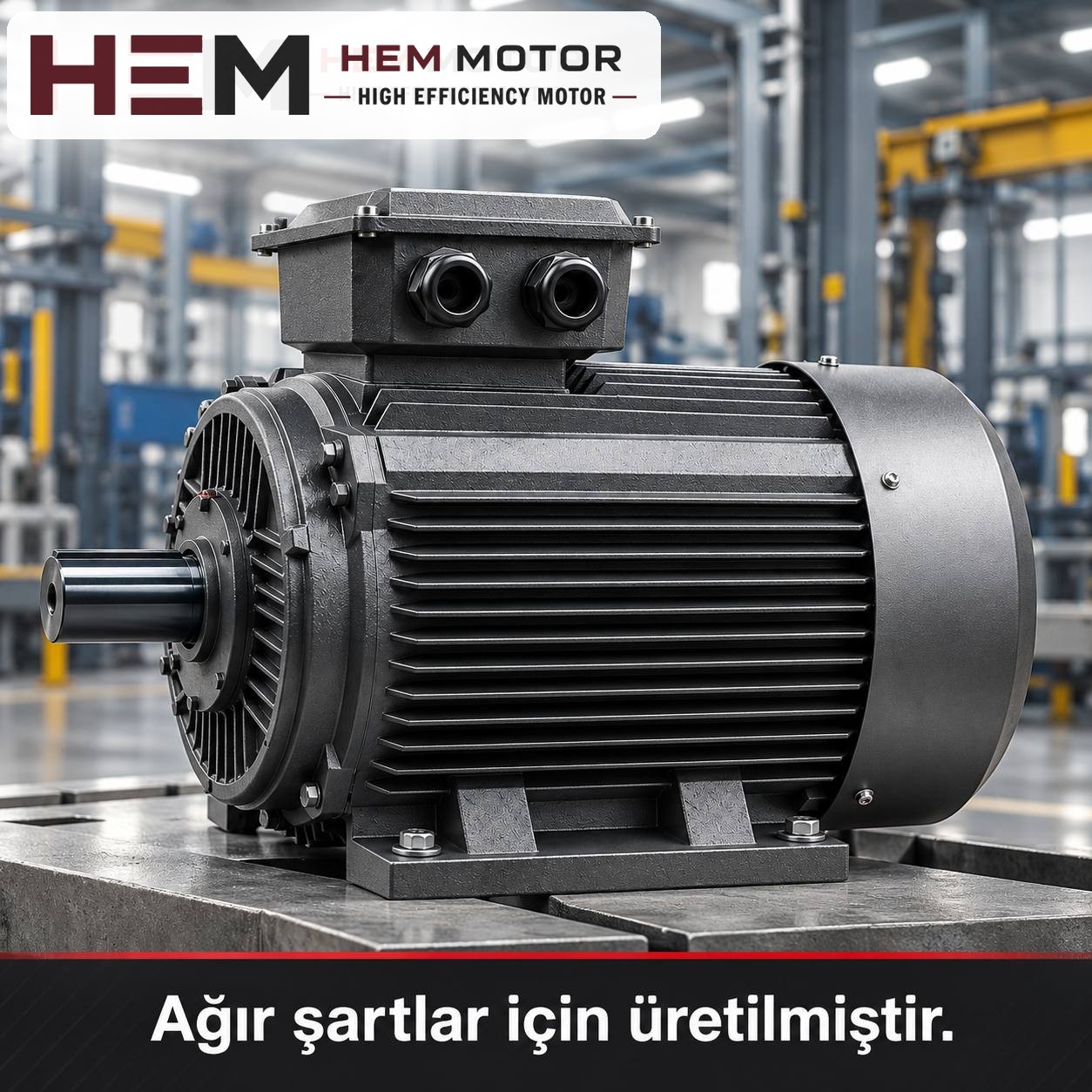

To replace a burnt-out motor on an axial fan, fit a motor with the same power, the same number of poles, the same shaft diameter and length, and suitable for the same mounting orientation. What sets an axial fan apart from other fans is that the impeller is often fitted directly to the motor shaft. In that case the motor bearings carry the weight of the impeller, the vibration caused by its imbalance and the axial force produced as it pushes the air. So when replacing, the shaft end, bearing load and the motor's position in the airflow must be checked as carefully as power and speed.
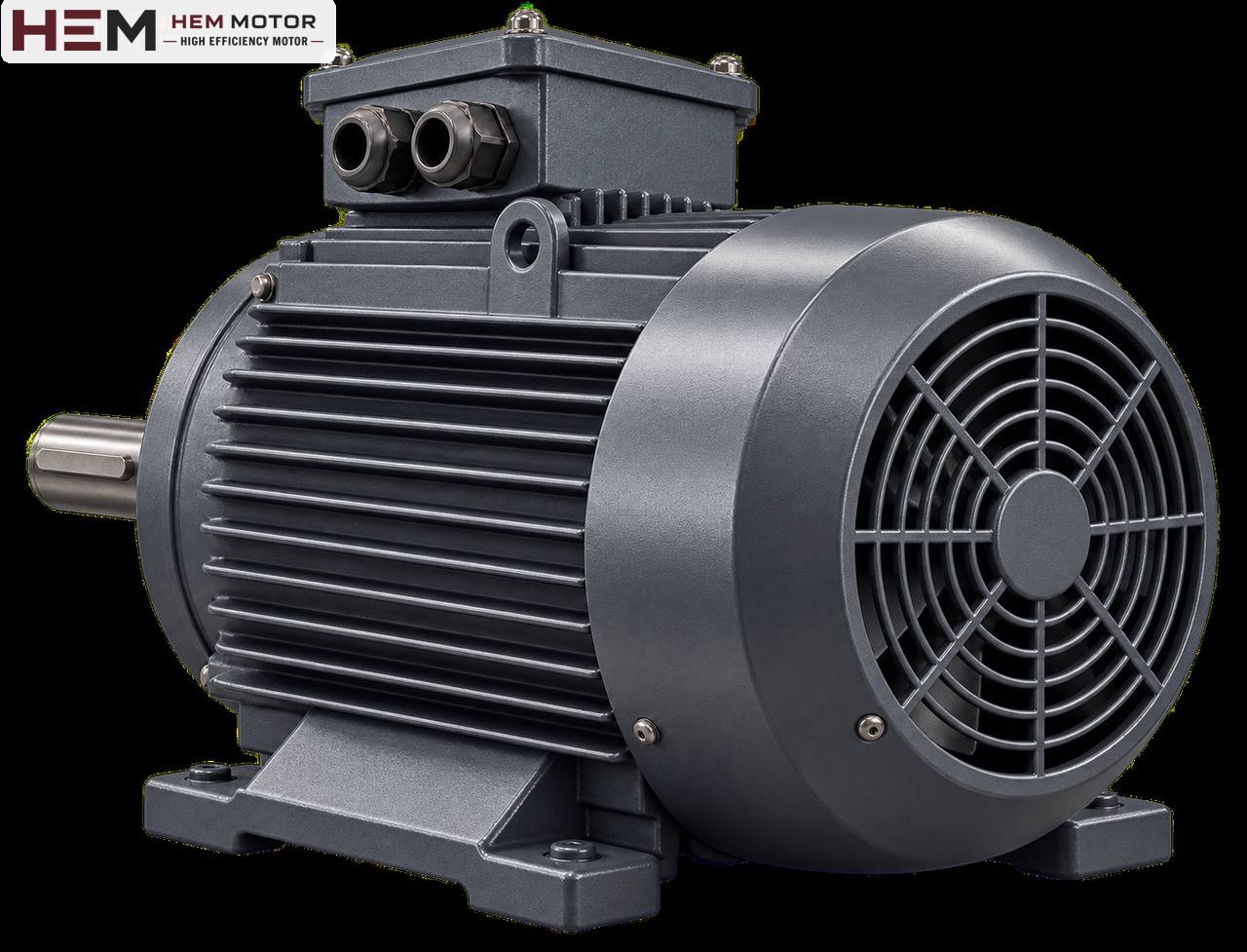
Where does the motor sit in an axial fan?
In axial fans, air flows along the shaft axis. In duct-type (tube) axial fans, the motor sits in the middle of the duct on feet or a motor stand, and the impeller is fitted directly to the motor shaft. In wall-type fans, the motor is attached to a guard or frame by its flange or feet. In large cooling and ventilation fans, the impeller is mounted on its own bearing shaft and the motor drives it through belts and pulleys.
Before replacing, determine which layout your fan has, because where the load is carried depends on it:
- Impeller on the motor shaft (direct drive): The impeller's weight, balance error and axial thrust are on the motor bearings. This layout needs the most careful checking.
- Impeller on a separate bearing shaft, belt-driven: The impeller load is on the fan's own bearings; the motor carries the radial load from belt tension.
How does the impeller load affect the motor bearing?
An impeller fitted directly to the motor shaft puts three types of load on the motor bearings:
- Weight: On a horizontal shaft, the impeller behaves like a mass hanging at the end of the shaft and puts a radial load on the drive-end bearing. The heavier the impeller and the further it is from the shaft end, the greater the load.
- Axial thrust: As the impeller pushes the air, a reaction force of equal size pulls or pushes the shaft in the opposite direction. This force grows with blade angle and pressure. On vertical fans, the impeller's weight adds to this force.
- Imbalance: Dust build-up on the blades, a missing balance weight or a damaged blade creates a vibration force repeated with every revolution. This force grows rapidly with speed.
The bearings of a standard motor are selected to carry a certain radial and axial load. If the impeller is of the size the fan manufacturer specified for that motor frame, a standard motor carries this load. However, if the impeller has been enlarged, a heavy metal impeller has been fitted, or the old motor had reinforced bearings specific to the fan manufacturer, the bearing life of a standard motor may be shortened. In that case this duty may require a special motor; it may fall outside the scope of the standard series in HEM Motor's 2026 catalogue, so ask us with the nameplate and application details.
Checklist for replacement
| Check | Why it matters |
|---|---|
| Power and number of poles | The impeller is selected for a specific speed; if the poles change, flow and power demand change together |
| Shaft diameter, length and key | The impeller hub must fit the shaft exactly; if the shaft length differs, the impeller's position in the duct shifts |
| Mounting arrangement and orientation | Foot-mounted, flange-mounted or vertical (shaft up/down) operation must be stated in the motor order |
| Direction of rotation | An axial fan turning in reverse moves air the wrong way or very weakly |
| Motor cooling type | A motor with its own fan (IC411) is not the same as a motor without its own fan, cooled by the airflow |
| Terminal box and cable entry | Cable routing inside the duct is limited; the entry direction should be the same as on the old motor |
Watch out for motors without their own fan
On some duct fans the motor has no cooling fan of its own; it sits in the airflow pushed by the impeller and is cooled by that air. Such a motor is not equivalent to a standard self-ventilated motor. When a standard motor is fitted in this layout, its cooling fan and fan cover take up extra space in the duct; also, the motor's cooling changes when the airflow stops or the duct is blocked. If your old motor has no fan cover at the rear, be sure to state this with the order. Motor cooling types are explained in our cooling methods article.
Why is the speed not changed?
An axial fan's impeller is set, by its blade angle and diameter, to deliver a certain amount of air at a certain speed. For fans, according to the approximate relationships, flow varies with speed, pressure with the square of speed and shaft power with the cube of speed. For example, if a 4-pole motor (about 1,450 rpm) is fitted in place of a 6-pole fan motor (about 960 rpm), the speed rises by about 50% and power demand rises about 3.4 times. A motor of the same power cannot handle this load; moreover, the impeller may not be suitable for that tip speed.
The reverse is also a problem: if speed falls, the fan does not ventilate enough. That is why the old motor's number of poles is kept. If the air volume needs adjusting, the blade angle is changed according to the fan manufacturer's instructions, or a frequency inverter is used. Our three-phase series are suitable for speed control with a frequency inverter; for long periods of full-torque operation at low speed an external fan may be needed, and if the cable between drive and motor is long a dv/dt or sine filter is considered; these conditions are stated with the order. Because torque demand also falls at low speed on fans, this situation is less common.