Two things determine motor power in a tomato paste machine (pulper/passatore): how thick and fibrous the incoming product is, and the hole diameter of the screen through which the rotor is trying to force it. The same machine may handle juicy tomatoes easily with a coarse screen, yet push the motor to its limit with a fine screen and a thick pepper paste. Motor selection should therefore start not from the machine name but from the heaviest product and the finest screen scenario to be processed.
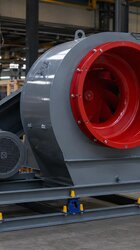
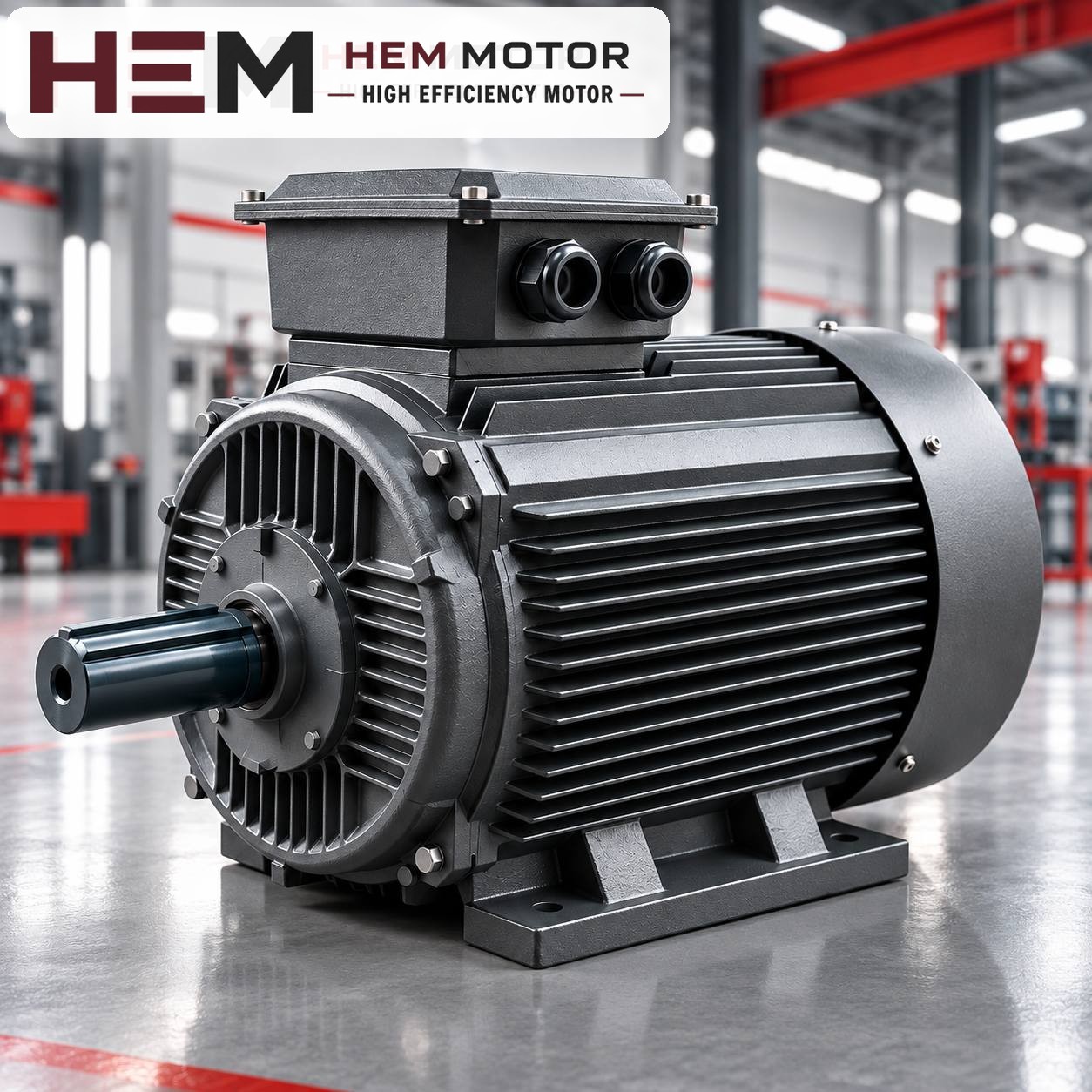
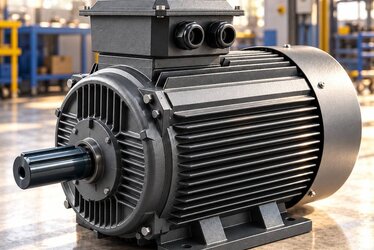
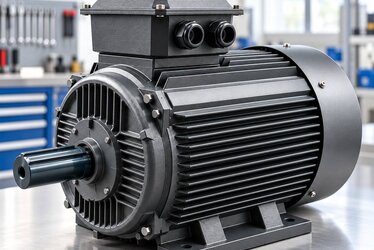
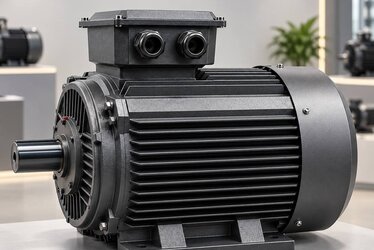
On a paste line, separate motors are planned for the pulper and the finisher (representative image).
Where does the power go in a passatore?
The heart of a tomato paste machine is a bladed rotor turning inside a cylindrical or conical screen. The rotor throws the cooked product against the inner surface of the screen and rubs it; the purée passes through the holes, while skins and seeds are discharged at the end. Most of the energy delivered by the motor goes into this friction and shearing work; the share spent merely on turning the product is small.
This design shows that the motor load depends on three variables:
Product consistency: As the dry-matter content rises, the purée sticks to the screen and the rotor blades meet more resistance.
Screen hole diameter: The smaller the holes, the more friction is needed to pass the same amount of purée.
Blade-to-screen gap and blade angle: As the gap narrows and the blade pitch increases, separation improves and motor current rises too.
Hourly capacity is added on top of these three variables. When the feed is increased to raise capacity, the screen fills up, the rotor carries a thicker layer of product and the power demand rises.
How does product density change the motor load?
Tomatoes, peppers, apricots and apples can all go through a passatore, but they are not the same load for the motor. Juicy, ripe tomatoes cling little to the screen. Fibrous red pepper, thick-skinned products and fruit with a high seed ratio, on the other hand, form a harder cake in front of the rotor blades.
Temperature matters as well. Product coming from hot break is more fluid; cooled or stored product thickens and the current rises on the same machine. A plant that processes different products through the season should choose the motor knowing which product loads it most. A practical method is to measure the current with a clamp meter on the existing machine while the heaviest product is being processed and compare that value with the rated current on the motor nameplate.
Points to watch when measuring
Read the current not in the first minutes but after the screen surface has filled with product and steady operation has settled.
Repeat the same measurement separately with a fine and with a coarse screen; the difference between the two is often surprisingly large.
If the current stays close to the rated value all the time, the motor is running at its limit; the next power size is considered.
Screen load: clogging, cake and the starting moment
The moment that strains a passatore motor most is not normal operation but screen clogging. When the holes close with skins or fibre, the purée cannot pass, product builds up in front of the rotor and the torque demand rises within a short time. The motor must be able to carry that moment but should not stay at that load continuously; this is where thermal protection and operator discipline come in.
Starting is a separate matter. The rotor is usually a light part; if the machine is started with an empty screen and the product is fed afterwards, starting is easy. Restarting a passatore that was stopped full of product at the end of a shift and has cooled and thickened, however, demands high starting torque from the motor. The established rule in operation is: no full start without cleaning or emptying the machine. With star-delta starting a full start is even harder, because motor torque drops markedly in the star position.
On two-stage lines the motors are considered separately
On many paste lines the product first passes through a coarse-screen pulper and then through a fine-screen finisher. Even if these two machines share the same body, they do not require the same motor. The fine-screen stage produces more friction and in most cases runs with a larger motor. When planning a spare motor, check the nameplates of the two stages separately; fitting one stage's motor in place of the other causes problems if there is a power difference.
Rotor speed may also vary by stage. On direct-coupled machines the motor speed is the rotor speed; on belt-driven machines the pulley ratio comes into play. Changing the speed affects separation quality and capacity, so the new motor should keep the speed of the old one. You can review suitable HEM Motor models and current prices on the buy electric motors page.
Prices and technical data are on the product pages; choose a model and order online.
In a paste plant, load is not the motor's only enemy. Steam from the blanching unit, hose cleaning and hot purée splashing onto the floor keep the area around the motor damp. HEM Motor's standard series comes with IP55 protection and class F insulation; this class protects against harmful dust deposits and low-pressure water jets, not against a high-pressure washing jet or a flow that keeps the motor wet. The motor must be placed where it is not the target of pressure washing, and the motor frame should not be washed directly during cleaning.
If the position involves product contact or calls for a hygienic, washable stainless frame, this duty requires a special motor; it may fall outside the scope of the standard series in HEM Motor's 2026 catalogue, so ask us with the nameplate and application details. Because the plant environment is subject to vibration and impact, cast iron frame models are often preferred in this power range.
Example models
The models below are taken from the 1,500 rpm class commonly found in belt- or coupling-driven passatore drives. The actual power is determined by the existing machine's nameplate and the measurement described above.
The general rule applies to mounting options: B3, B5, B14, B34, B35 and vertical V1/V3/V5/V6/V15 are offered according to the frame; the flange size is confirmed with the order. Shaft and foot dimensions are in the 2026 technical and product catalogue. The current price of each model is on its product page.
Hypothetical example: current rise with a fine screen
The following case is not a real customer application but an example for explanation. Suppose a finisher with an 11 kW nameplate draws around 14–15 A while processing tomatoes with a coarse screen at the start of the season. When the plant switches to a finer screen and begins processing pepper paste on the same line, the current approaches 20 A, that is, the 20.4 A rated current of the 160M-4 model. The thermal relay trips from time to time.
In this situation the mechanical side is checked first: has the blade-to-screen gap been narrowed too much, is the feed steady, has the product temperature dropped? If, after these are corrected, the current still stays at the rated value, the motor power is increased by one step. The new motor must keep the same speed, and because the frame grows, base compatibility must be checked against the technical drawing.
Conclusion and what to send us
On a tomato paste machine, the right motor is the one that can stay below its rated current when the thickest product meets the finest screen. Starting with an empty machine, spotting screen clogging early and keeping the motor away from washing water are as important as choosing the right power. For a quotation, send the following:
Power, speed and a nameplate photo of the existing motor
Whether the machine is a pulper or a finisher, and the screen hole diameters used
The products processed and the current measured on the heaviest one
Drive type (belt, coupling), mounting arrangement and starting method
Review suitable models and current prices on our online sales page. Send your existing motor's nameplate photo, speed and mounting details via the nameplate submission page and request a quotation for the right model. For other questions you can use our contact page.
Frequently Asked Questions
Can a 3,000 rpm motor be used instead of a 1,500 rpm motor on a paste machine?
Not without recalculating the belt ratio. If the rotor speed changes, separation quality and capacity change; the new motor must be chosen to keep the rotor speed the machine was designed for.
Is a thermal relay tripping when the screen clogs a motor fault?
Usually not; the relay is protecting the motor from overcurrent. If clogging happens often, the screen, the feed and the blade gap are checked first.
What happens if the passatore motor gets wet during washing?
An IP55 motor is protected against low-pressure water jets, not against a high-pressure washing jet. Do not wash the motor frame directly and place the motor outside the splash line.
Is the same spare motor enough for the pulper and the finisher?
Yes, if the nameplate power and speed of the two stages are the same. On most lines the fine-screen finisher runs with a larger motor, so check the nameplates separately.
HEM Motor Models Related to This Article
The cards show example models related to the topic. A suitable motor is not chosen by power alone: compare speed, voltage, mounting, shaft and connection dimensions on the product page; if unsure, send a photo of the existing motor’s nameplate on WhatsApp.
On a textile winding machine, what determines the motor choice is how the load changes as the roll grows. If fabric is wound at constant speed and constant tension, when the roll d... More Details
When choosing the turntable motor of a pallet stretch wrapper, the real compatibility is between the motor and the gearbox: the motor speed and the gearbox ratio determine the tabl... More Details
On a diamond wire saw, the main motor sets the cutting speed of the wire by turning the drive wheel. That is why three questions are answered together when choosing the motor: how ... More Details
When replacing the motor on a pillar drill, the easiest route is to choose a motor with the same power, the same number of poles and the same shaft diameter as the old one and to m... More Details
The main motor of a universal lathe is chosen to match the power and speed on the lathe's nameplate, preferably with the same number of poles and the same mounting arrangement. All... More Details
When you replace the motor on a metal band saw, the way to keep the blade speed unchanged is to choose the new motor with the same number of poles (usually 4 poles, the 1,500 rpm c... More Details
We use necessary and optional cookies to improve your experience, enhance content and analyse traffic. Under the GDPR, optional (analytics/marketing) cookies are only used with your explicit consent. Please choose your preference below.
Cookie Policy
 English
 Français
 Türkçe
 Español
 Русский