English
 Français
 Türkçe
 Español
 Русский

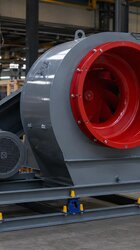
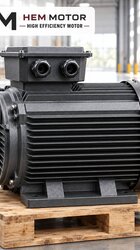
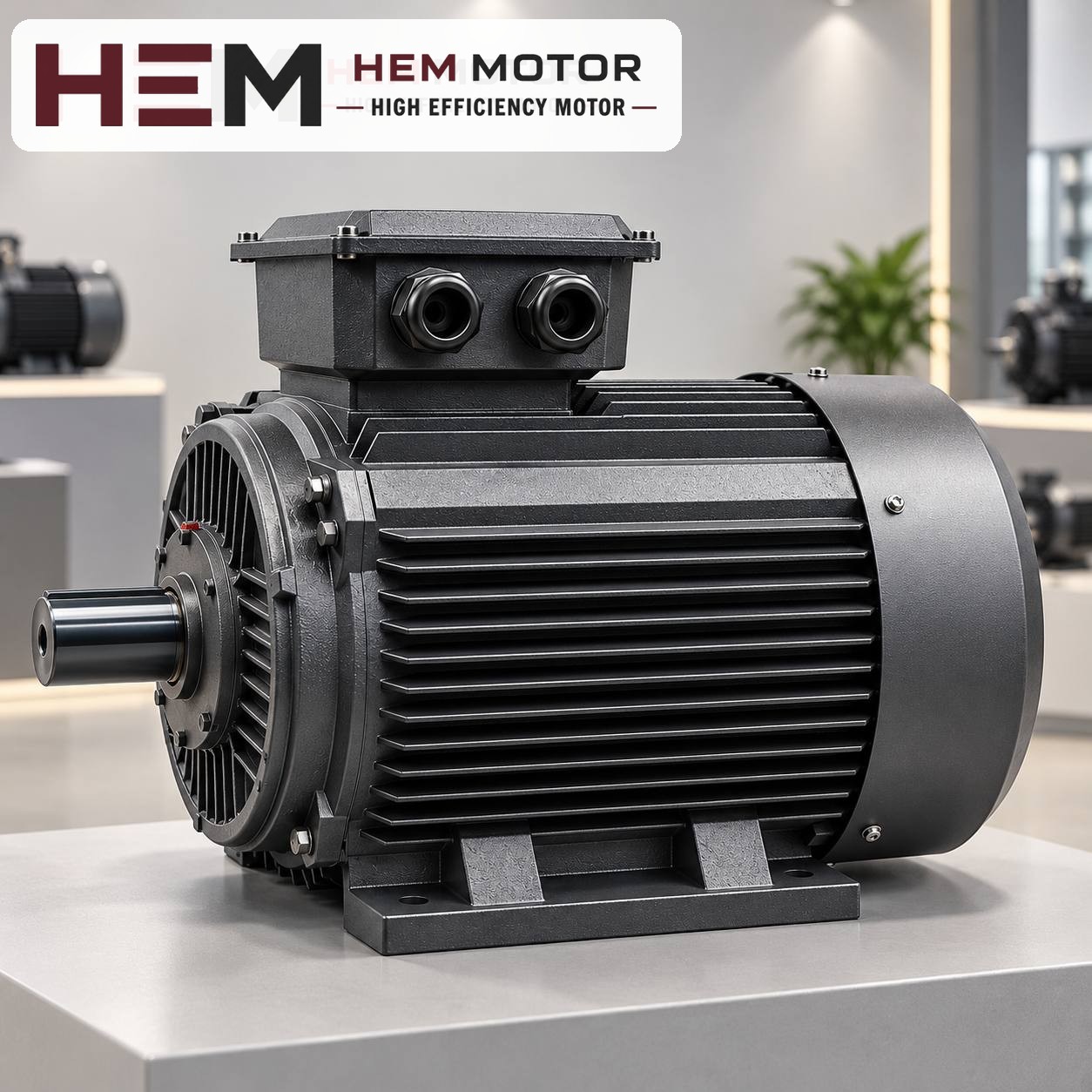

For an industrial meat mincer, motor selection starts with the plate (perforated disc) size and the amount of meat processed per day, but what makes a replacement successful is reading the connection correctly rather than the power. The motor turns the feed screw and knife through a gearbox or belt; if speed, direction of rotation, flange and shaft are not matched exactly, the machine will not work efficiently even with the right power. This article covers these three mincer-specific topics in turn: power, speed and connection.
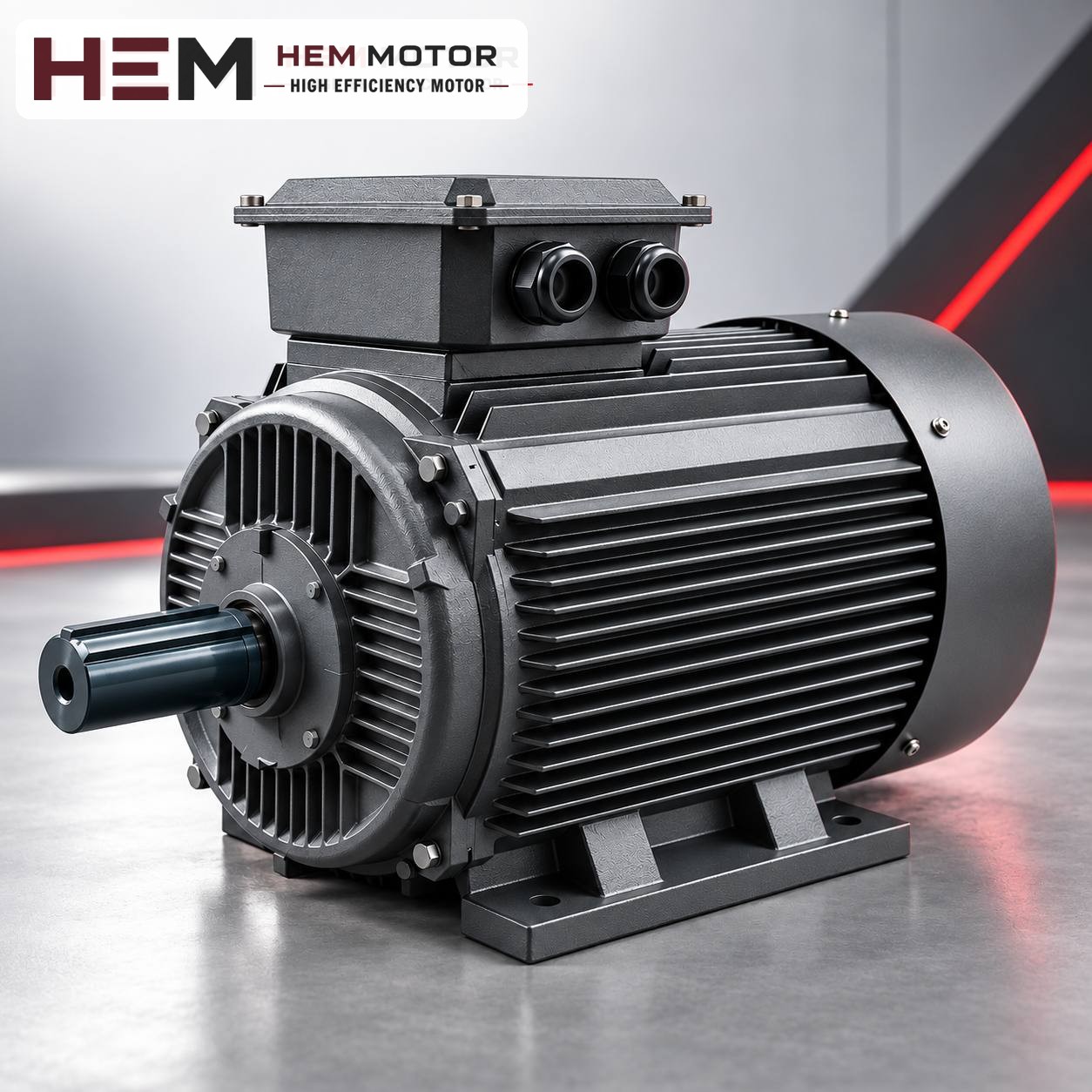
What does the motor do in a meat mincer?
In a mincer, the feed screw (worm) pushes meat from the hopper along the barrel and presses it between the knife and the plate. The knife cuts the meat at the plate holes and the mince comes out through them. The motor's job is to continuously supply the screw with torque that overcomes this pushing and cutting resistance.
The main factors that increase resistance are:
- Plate hole diameter: the smaller the hole, the more the meat is compressed, and the higher the resistance and motor current. On the same machine a fine plate creates noticeably more load than a coarse plate.
- Meat temperature: frozen or semi-frozen blocks create much harder resistance than fresh meat. Some machines are designed for frozen meat; processing frozen blocks on a standard machine strains the motor.
- Sinew and bone fragments: sinew wrapping around the knife increases cutting resistance, and current rises over time.
- Knife and plate wear: a blunt knife crushes rather than cuts the meat; the motor uses more power and the mince heats up.
So if the motor trips the thermal relay often, the first place to look is not the motor itself but the condition of the plate, the knife and the meat being processed.
Power: plate size, capacity and type of use
Industrial mincers are usually classified by plate diameter (mouth size); the larger the mouth, the larger the screw and motor. However, two machines with the same mouth size can have different motor powers depending on the gear arrangement and intended use. The most reliable reference for power is the nameplate of the existing machine.
If power is being considered for a new application, the following questions should be answered: How many hours a day will the machine run? Will fresh, chilled or frozen block meat be processed? What will the finest plate be? Will many starts be made one after another? Choosing power from the mouth size alone without these answers can result in either an unnecessarily large or an insufficient motor.
Some mincers used in butcher shops and small businesses run on a single-phase supply. HEM Motor's single-phase motors cover the 0.18–5.5 kW range; if you need single-phase, ask us with the nameplate details. On industrial machines three-phase motors are common; the examples in this article are also three-phase.
Speed: where does the screw speed come from?
In a mincer the screw turns far below the motor speed. This speed reduction is achieved in two ways:
- Gearbox: the motor is flange-mounted to a gearbox, which reduces the motor speed to the speed the screw needs. Most industrial machines have this arrangement.
- Belt and pulley: the motor turns a larger pulley through a belt; sometimes there is a further gear stage after the belt.
In both cases the ratio was calculated for the speed of the existing motor. If a 2-pole motor (around 2,900 rpm) is fitted instead of a 4-pole motor (around 1,450 rpm), the screw turns twice as fast. Although capacity may seem to increase, the meat is pushed before the knife can cut it, so it is crushed and heats up; the quality of the mince deteriorates and the motor is overloaded. The pole count must be kept in a replacement.
The opposite mistake is also possible: fitting a 6-pole motor slows the screw and reduces capacity by about one third. If the speed really needs to change, this must be planned together with the gear or pulley ratio.
Connection fit: flange, shaft and direction of rotation
The mechanical connection is the part of a mincer motor replacement that most often causes problems. The table below summarises the points to check before the replacement.
| Check point | Why it matters | How to check |
|---|---|---|
| Flange type and diameter | The motor must seat on the gearbox with full centring | Measure the old motor's flange or read the frame code on the nameplate |
| Shaft diameter and key | Must fit the gearbox input bore without play | Measure shaft diameter and key width, compare with the technical drawing |
| IEC frame code | A different frame at the same power means a different flange and shaft | Match the code on the old nameplate (e.g. 90L, 100L) to the new model |
| Direction of rotation | If the screw turns backwards, meat is pushed back into the hopper instead of forward | Check the direction on the empty machine at first start |
| Supply voltage | Motors rated 230/400 V and 400/690 V are connected differently on a 400 V supply | Make the terminal connection according to the nameplate |
Mounting arrangements (B3, B5, B14, B34, B35 and vertical V1/V3/V5/V6/V15) are offered according to the frame and the flange size is confirmed with the order. Compare the dimensions with the frame drawings on the technical drawings page, not by estimation.
Many industrial mincers have a reverse button to back out meat jammed in the screw. On a three-phase motor the direction changes when two phases are swapped; this is done by reversing contactors in the panel. Reversing must be done after the motor has come to a complete stop; a sudden change of direction while running strains the winding and gears.
If the connection dimensions are clear, review suitable HEM Motor models and current prices.