In an oven circulation fan, heat reaches the motor in three ways: by conduction through the fan shaft and mounting plate, by radiation from the hot oven casing, and through the warmed air drawn in by the motor's own cooling fan. This heat mainly wears the winding insulation, the bearing grease and the cables in the terminal box. A standard three-phase motor is therefore operated outside the hot zone, at a point where it can draw cool air; the air temperature at the motor location matters as much as the power rating.
Rather than repeating the general selection of an oven fan motor, this article focuses on what heat damages in the motor, how to recognise it on site and how the findings translate into motor selection.
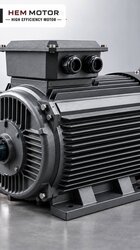
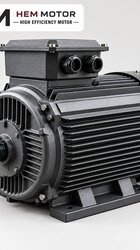
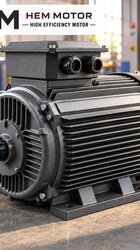
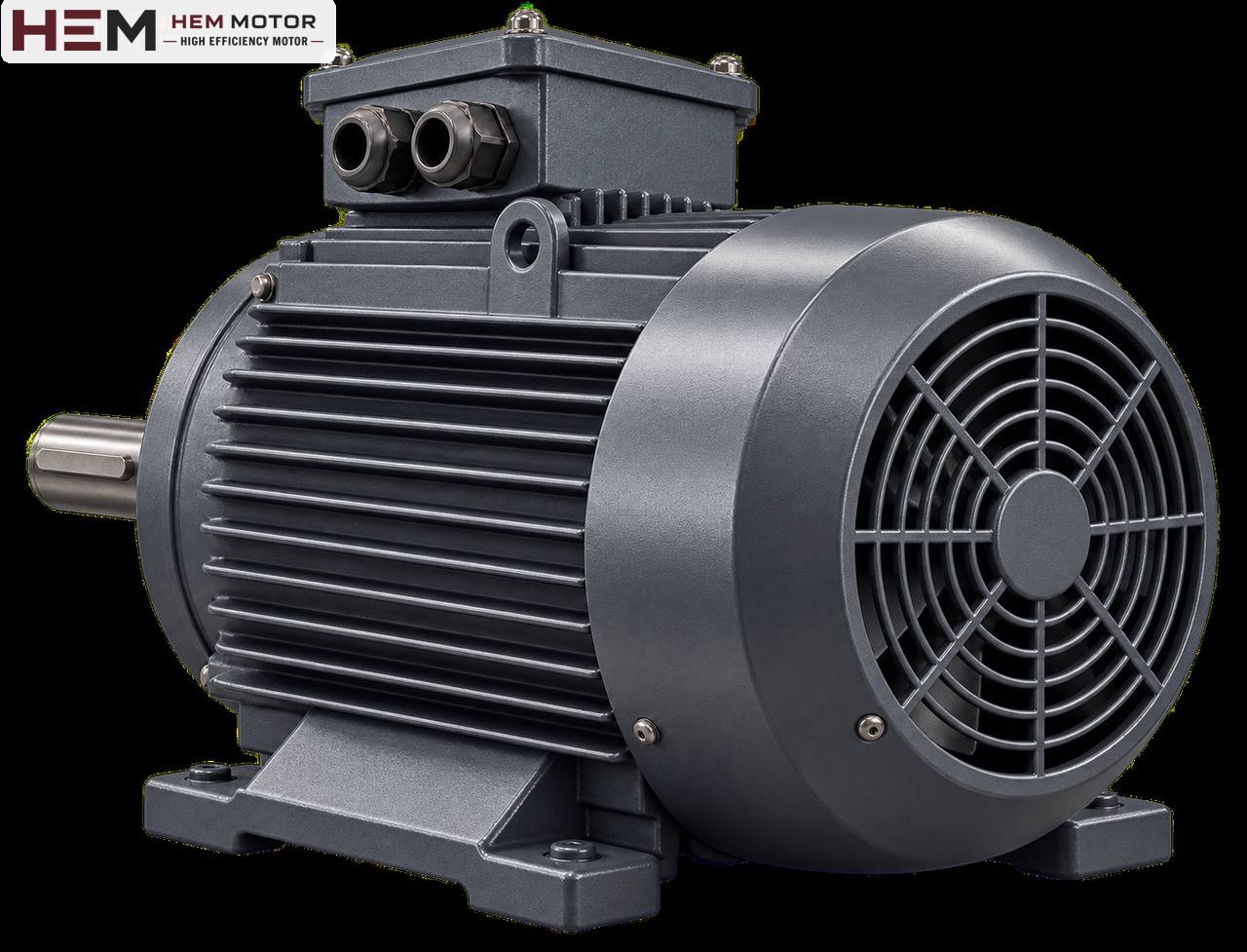
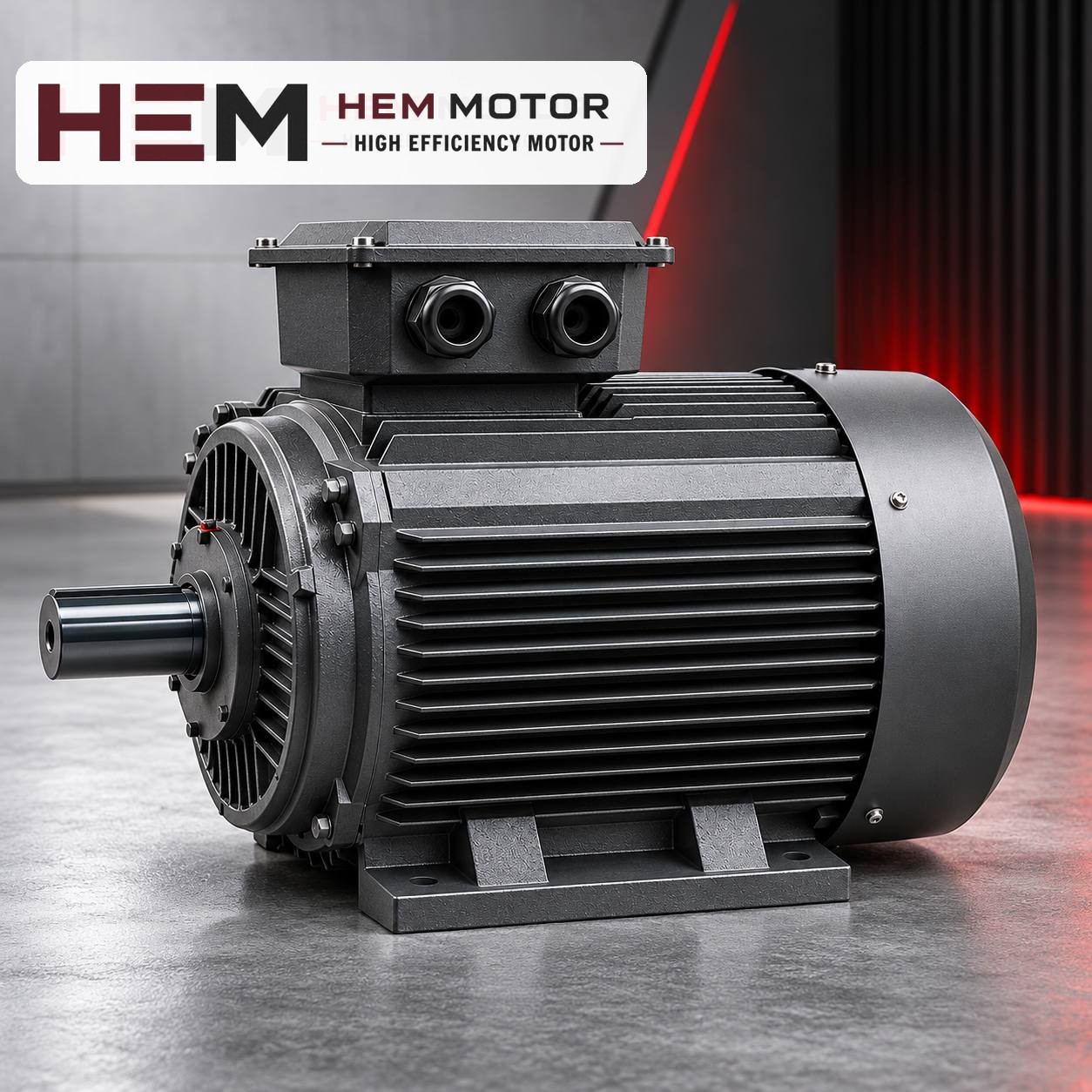
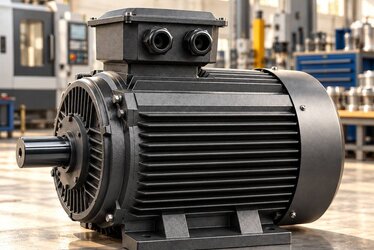
The life of an oven fan motor is often decided by the air around it (representative image).
Which part of the motor does heat affect, and how?
Not all parts of the motor are affected equally. Knowing where a failure starts makes it easier to tell whether the problem lies in the motor or in the fan arrangement.
Part
Effect of heat
Symptom seen on site
Winding insulation
The insulating material ages with temperature and loses its flexibility and dielectric strength.
Falling insulation resistance, eventually a phase-to-frame or inter-turn short circuit
Bearing and grease
The grease thins, loses its oil and dries out; the lubricating film weakens.
Increasing noise at the front end shield, grease leakage, bearings failing quickly
Shaft and front end shield
Heat coming from the fan side travels along the shaft and reaches the front bearing first.
Front end shield noticeably hotter than the rear one
Terminal box and cables
Cable sheaths harden and seals lose their elasticity.
If the air drawn in by the motor is hot, the frame's ability to reject heat drops.
Excessive frame temperature even at normal current, thermal protection tripping
The key point in the table is this: most symptoms suggest that the motor is overloaded, yet the current may be below the nameplate value. In that case the problem is not a lack of power but heat being carried into the motor from outside.
What does class F insulation tell you, and what does it not?
The three-phase models sold by HEM Motor have class F insulation and IP55 protection. Class F defines the maximum temperature class that the winding materials can withstand (155 °C in the standard). This limit applies to the hottest point inside the winding, not to the air around the motor.
Winding temperature is the sum of two parts: the temperature of the motor's cooling air and the temperature rise the motor produces itself under load. As the air next to the oven gets hotter, the first part grows and, at the same load, the winding approaches its class limit. According to a common engineering rule of thumb, every permanent rise of roughly 10 degrees in winding temperature shortens insulation life markedly, by roughly half. So even if the motor keeps running, its life quietly shrinks at a hot location.
Nameplate values are given for standard ambient conditions. If the air at the motor location is hotter than that, derating or a larger frame may be needed. For this assessment you need to state the ambient temperature with the order; a value measured on site gives a far better result than an estimate. For details of the cooling arrangement, see the article on IC411 and IC416 cooling methods.
How can you tell on site whether heat is reaching the motor?
Before ordering a new motor, a few simple measurements show where the problem comes from. Take them after the oven has reached operating temperature and the motor has run for at least an hour.
Intake air: Measure the air temperature behind the motor's fan cover, where the air is drawn in. Note how much hotter it is than the workshop in general.
Front and rear end shield comparison: Use a non-contact thermometer on the front end shield at the shaft side and the rear end shield at the fan side. If the front one is clearly hotter, heat is being conducted through the shaft.
Current measurement: Measure the current in all three phases both with the oven cold and at operating temperature, and compare it with the nameplate current.
Frame surface: If there is a clear difference between the side of the frame facing the oven and the opposite side, radiation is involved; a heat shield can be placed in between.
Visual check: Look for hardened cable sheaths, cracked terminal box seals and grease traces around the bearings.
If the frame and front end shield are still very hot while the current is below the nameplate value, buying a larger motor alone will not solve it. First the heat barrier, the cooling disc on the fan side and the airflow around the motor must be corrected.
Prices and technical data are on the product pages; choose a model and order online.
How do the measurements translate into motor selection?
Once the findings are clear, the decision sequence is as follows:
Location and airflow: If the air drawn in by the motor can be cooled (ventilation opening, a bracket that raises the motor, a radiation shield), this is always the first step.
Power margin: If the air temperature cannot be lowered, the next power rating or frame size is considered. A less loaded motor produces less heat of its own; however, this does not change the temperature of the air it draws in.
Cold start: When the oven is cold the air is denser, so the fan draws more power. Ask the fan manufacturer for the shaft power in cold operation; the selection must also cover this value.
Speed: The speed the impeller was designed for is kept. On a direct-drive fan the number of poles is not changed.
Speed control: Running the fan slowly while the oven heats up also slows the motor's own fan. Our three-phase series are suitable for speed control with a frequency inverter; during long periods of full-torque operation at low speed an external fan may be required, and if the cable between drive and motor is long a dv/dt or sine filter is considered; these conditions are stated with the order. Details are given in the question on use with an inverter.
If the motor is to run directly in the hot gas or inside the oven chamber, this is not a job for a standard motor; a special high-temperature motor is required, and such motors may fall outside the scope of the standard series in HEM Motor's 2026 catalogue. Ask us with your application details.
Example cast iron models in the power range commonly found on oven circulation fans:
112M-4 cast iron: 4 kW (5.5 HP), 4 poles, 1,450 rpm, IEC 112M, 400/690 V (Δ/Y), 7.95 A. For small drying and curing ovens.
132M-4 cast iron: 7.5 kW (10 HP), 4 poles, 1,460 rpm, IEC 132M, 400/690 V (Δ/Y), 14.3 A, 49.1 Nm.
160L-4 cast iron: 15 kW (20 HP), 4 poles, 1,465 rpm, IEC 160L, 400/690 V (Δ/Y), 27.3 A, 97.8 Nm. For the main circulation fan of large-volume ovens.
Hypothetical example: a fan motor whose front bearing keeps failing
This example has been constructed to show the order of checks; it is not a real customer application. Suppose that on the circulation fan in the side wall of a curing oven, the front bearing of a 7.5 kW, 1,460 rpm motor with a 132M frame is being replaced at short intervals.
The measurement shows the current below the nameplate value, but the front end shield is much hotter than the rear one. Heat is being conducted through the shaft.
On the fan side it turns out that the cooling disc was not refitted during an earlier repair; the disc and the heat insulation at the mounting plate are renewed.
The old motor, whose winding has been worn by heat, is replaced with the 132M-4 cast iron model of the same power, speed and frame; the measured air temperature at the motor location is stated with the order.
After commissioning, the same measurements are repeated and the front end shield temperature continues to be monitored.
Conclusion: information to send before ordering
On an oven fan, the motor's problem is often not power but the heat carried into it. For the right model, send the following together:
Motor power, speed and the fan's shaft power in cold operation
The measured temperature of the air drawn in by the motor and the motor's position relative to the oven
Mounting arrangement (foot, flange or vertical), direct-drive or belt connection
Supply voltage, starting method and drive details, if any
A photo of the old motor's nameplate
You can see suitable models and current prices on our shop page. Send a photo of your current motor's nameplate, its speed and mounting details via the nameplate submission page and request a quote for a suitable model. For other questions, use our contact page.
Frequently Asked Questions
Can a motor with class F insulation run inside the oven?
No. Class F describes the internal temperature limit of the winding; a standard motor is operated outside the oven chamber, at a point where it can draw cool air.
Why does the front bearing of an oven fan motor fail before the rear bearing?
Heat from the fan side travels along the shaft, reaches the front bearing first and dries out the grease. Check that the cooling disc and heat barrier are in place.
Does fitting a larger motor solve the overheating problem?
Partly. A less loaded motor produces less heat of its own, but if the air it draws in is hot, cooling stays weak. Correct the motor's location and the airflow first.
How should I state the ambient temperature with the order?
Give the air temperature you measured behind the motor's fan cover while the oven is at operating temperature; send a measured value rather than an estimate.
HEM Motor Models Related to This Article
The cards show example models related to the topic. A suitable motor is not chosen by power alone: compare speed, voltage, mounting, shaft and connection dimensions on the product page; if unsure, send a photo of the existing motor’s nameplate on WhatsApp.
When replacing the drying fan motor of a glass washing machine, three things must stay the same as on the old motor: the number of poles (and therefore the fan speed), the motor's ... More Details
On a cold storage condenser, a standard three-phase motor can be used if the fan propeller is fitted to the shaft of a separate IEC-frame motor or driven by a belt. In external-rot... More Details
The motor for the circulation pump of a fabric dyeing machine is chosen not by looking at the machine's capacity but according to the pump's own data: flow, head, pump speed and th... More Details
When a stenter fan motor is replaced, two conditions are decisive: the temperature where the motor sits must be at a level a standard IP55, class F motor can work in, and the new m... More Details
A standard three-phase motor is the right choice for the hot air fan of a shrink packaging machine only if the motor frame stays outside the hot zone of the tunnel. The fan impelle... More Details
What strains the pump motor on a bottle washing machine is often not the electrical load but the motor's surroundings: steam rising from hot caustic solution, label pulp stripped o... More Details
We use necessary and optional cookies to improve your experience, enhance content and analyse traffic. Under the GDPR, optional (analytics/marketing) cookies are only used with your explicit consent. Please choose your preference below.
Cookie Policy
 English
 Français
 Türkçe
 Español
 Русский