English
 Français
 Türkçe
 Español
 Русский

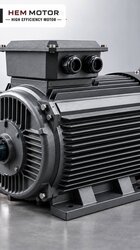
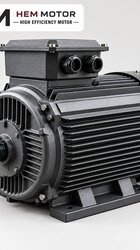
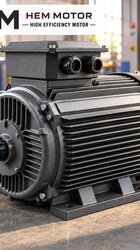
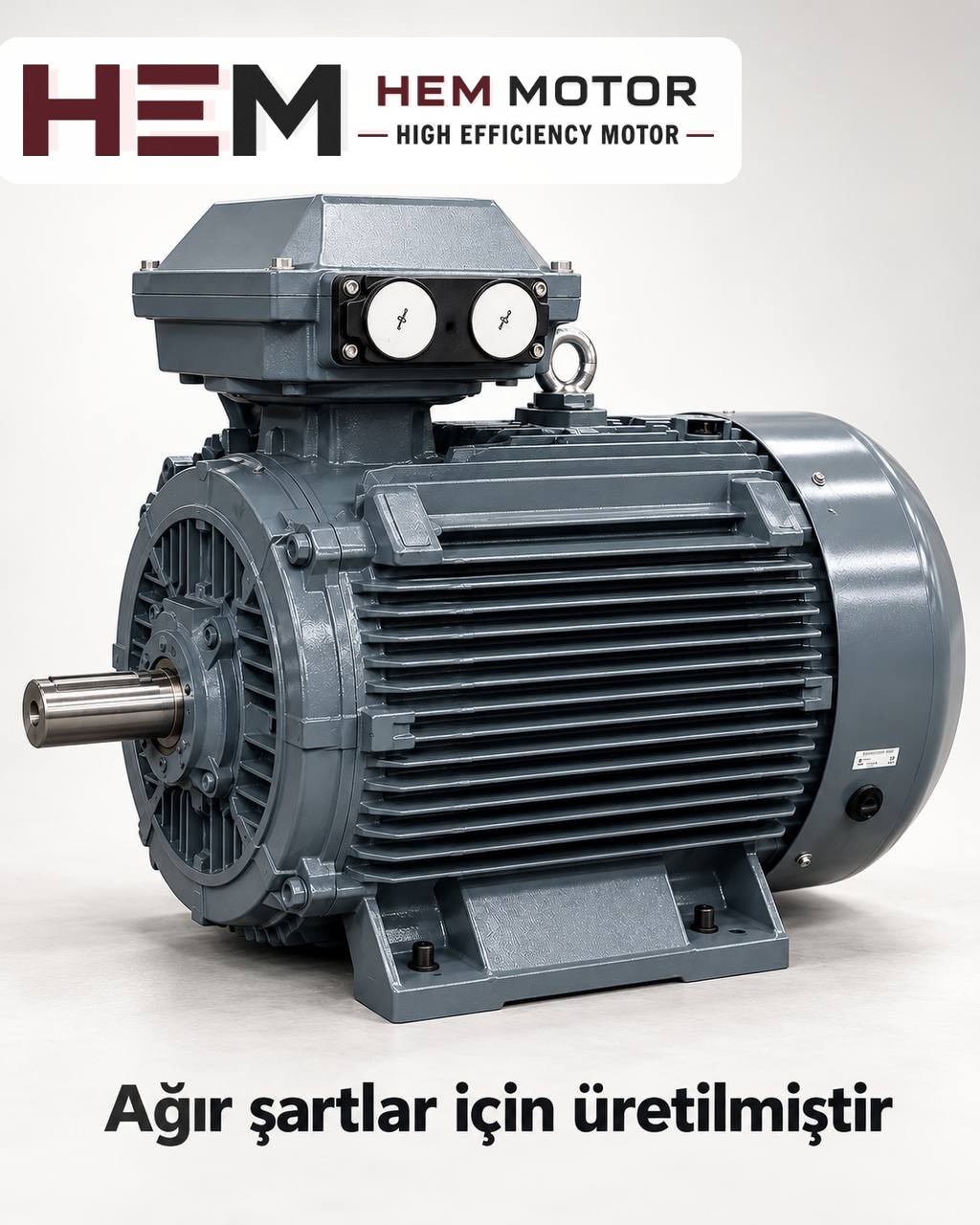

When replacing the motor of a multistage high-pressure pump, the three most critical points are these: the new motor's speed must be very close to the old one, because as the number of stages grows a small speed difference causes a noticeable pressure difference; the motor's flange and shaft must match the pump lantern and coupling exactly; and on vertical pumps you need to know whether the hydraulic thrust acting along the shaft axis is carried by the motor bearing. If these three points are checked correctly, the motor of most standard flanged multistage pumps can be replaced without trouble.
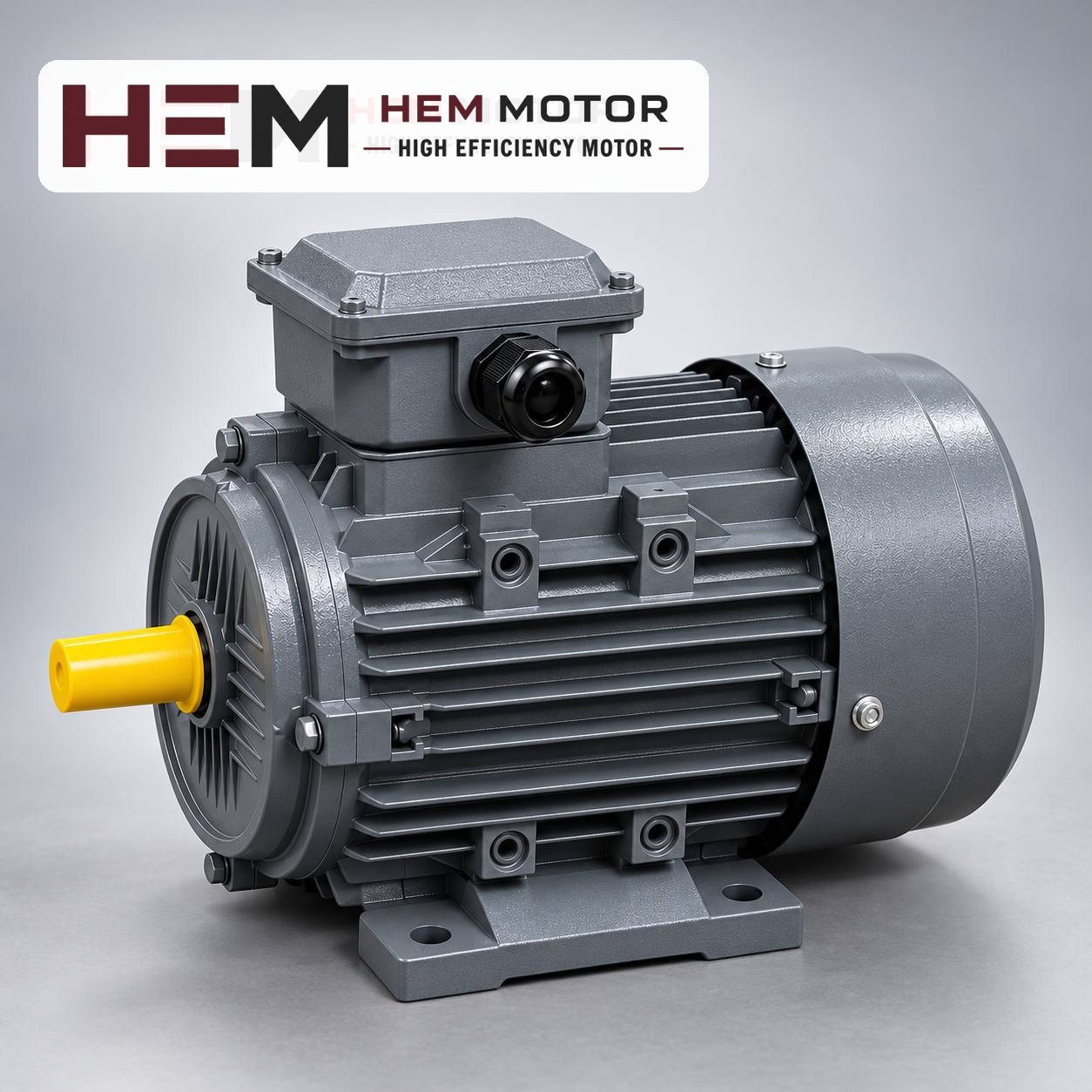
What makes a multistage pump different?
In a single-stage centrifugal pump, a single impeller gives energy to the water. In a multistage pump, several impellers are lined up one after another on the same shaft, and each adds pressure on top of the outlet pressure of the previous one. This design achieves high pressure in a small casing, which is why it is common in boiler feed, reverse osmosis, pressure washing, pressure boosting in tall buildings and irrigation lines.
For the motor, this design has three consequences. The pump usually runs with a 2-pole motor, that is, at a synchronous speed of about 3,000 rpm. Because pressure varies with the square of speed, a speed deviation affects all stages at once. On vertical types, depending on the pump design, the axial force produced by the impellers may be transferred to the motor bearing.
Speed: why do a few rpm matter for pressure?
For centrifugal pumps the approximate relationships are: flow is proportional to speed, pressure varies with the square of speed and shaft power with the cube of speed. Since pressure is already high in a multistage pump, even a small percentage difference becomes noticeable in bar.
The calculation below is hypothetical and only illustrates the method. Suppose the old motor's nameplate shows 2,850 rpm and the new motor fitted is the 4 kW 112M-2 with a rated speed of 2,905 rpm:
| Quantity | Ratio | Approximate change |
|---|---|---|
| Speed | 2,905 / 2,850 | 1.9% increase |
| Pressure (head) | (2,905 / 2,850)² | 3.9% increase |
| Shaft power | (2,905 / 2,850)³ | 5.9% increase |
If the pump delivers 16 bar, this difference amounts to about 0.6 bar. If the system has a safety valve, membrane equipment or a reverse osmosis module, this increase matters. The 5.9% increase in power, on the other hand, can push the new motor to its limit if the old motor was already running at its limit. So when replacing, compare not only the number of poles but also the nameplate speed, and measure pressure and current at the first start.
The reverse is also true: if the new motor's speed is lower than the old one, pressure falls. Users often notice this as "the pump doesn't deliver as much as before" and look for the problem in the pump.
Power: look at the end of the pump curve
The shaft power of multistage pumps rises as flow increases. So the moment that strains the motor most is when the system draws the most water: the hour when all taps are open, a leak that drops line pressure, or filling an empty tank.
- If the old motor ran without problems, keep the same power.
- If the old motor burnt out often, first find out in which region of the curve the system runs the pump. The pump is often working against lower pressure than expected, that is, at high flow.
- If stages have been added to the pump or impellers changed, the old motor nameplate may no longer be valid; look at the power value on the pump nameplate and the pump manufacturer's data.
Review suitable HEM Motor models and current prices on the buy electric motors page.
Flange, shaft and coupling setting
On most multistage pumps, the motor is flange-mounted to the pump casing through a lantern (adaptor) and the shaft is joined by a coupling. Points to check when replacing:
- Flange type and size: Whether the flange seating on the lantern is B5 (large) or B14 (small), its spigot diameter and bolt circle must be the same as the old motor's.
- Shaft diameter, length and key: The coupling hub must fit the new shaft exactly. If the shaft length is different, the coupling position also changes.
- Coupling and shaft axial setting: On some vertical multistage pumps, the height of the impeller stack is set when the coupling is fastened. If this setting is skipped, the impellers may rub against the casing or the mechanical seal may be compressed incorrectly. It must be done according to the pump manufacturer's installation instructions.
- Direction of rotation: The arrow on the pump casing is checked with a short bump at first energising. A multistage pump can still deliver some pressure in reverse, so low pressure may be a sign that the direction is wrong.
At HEM Motor, B3, B5, B14, B34, B35 and vertical V1/V3/V5/V6/V15 mounting arrangements are offered according to the frame; the flange size is confirmed with the order. For details of vertical shaft-down mounting see our vertical mounting article, and for dimensions the 2D technical drawings.