English
 Français
 Türkçe
 Español
 Русский

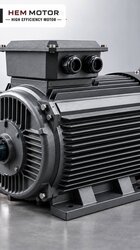
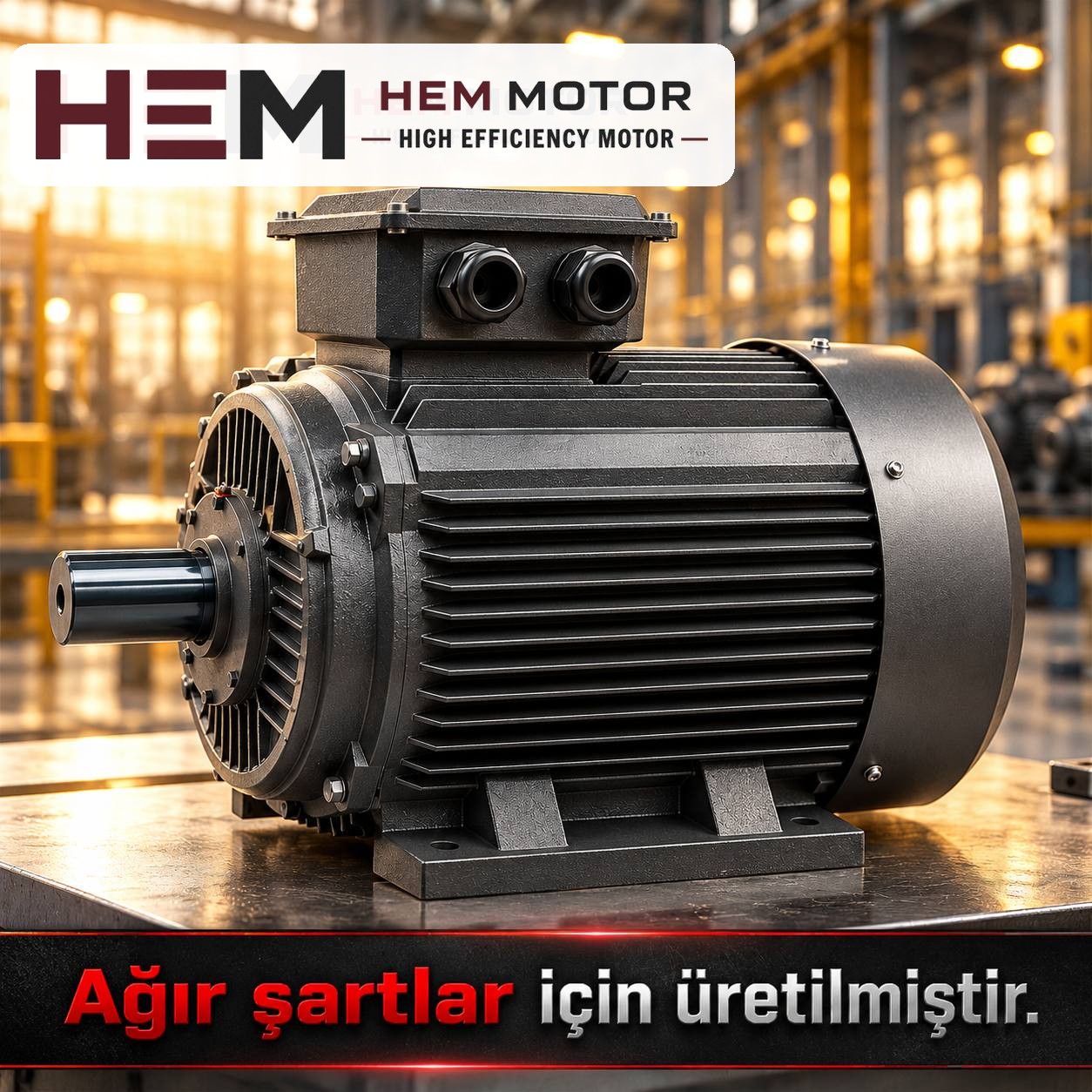

A long starting time on a large fan usually indicates not that the motor is too small, but that the impeller's inertia is large. The real question is whether the motor's winding and protection can withstand the high current drawn during that time. The right solution comes from assessing impeller inertia, the motor's starting capability and the starting method together. This article explains what the starting time depends on, what each starting method means for a fan and what to look for when selecting the motor.
What does the starting time depend on?
For a motor to accelerate a fan, the torque it produces must exceed the torque the fan requires at that speed. The difference is called the accelerating torque. The starting time is roughly given by: time ≈ total inertia × angular speed / average accelerating torque. Three conclusions follow from this relationship:
- The larger the inertia, the longer the time: On large-diameter, heavy impellers, inertia rises roughly with the square of the diameter. A slightly larger impeller diameter can lengthen the starting time markedly.
- The smaller the accelerating torque, the longer the time: If the starting method reduces motor torque, or if the fan is loaded at start with the damper open, the accelerating torque decreases.
- The higher the speed, the longer the time: Bringing the same impeller to a higher speed requires more energy.
The good side of a fan load is that its torque demand is very small at low speed; fan torque rises roughly with the square of speed. So fans do not demand a large starting torque like heavy-starting machines, but they demand a long time. The problem is less the torque than the heat that builds up in the winding during that time.
How does a long start stress the motor?
During starting, an induction motor on direct-on-line starting draws several times its rated current. This current quickly produces heat in the winding and especially in the rotor bars. How long the motor can sustain this depends on its thermal capability and is obtained from the motor manufacturer. If the starting time approaches this limit, three problems appear:
- The protection trips: A thermal relay or motor protection circuit breaker sees the prolonged high current as an overload and cuts the circuit before the motor reaches speed. The protection setting and trip class (e.g. Class 10, 20, 30) must suit the starting time; for details see our motor protection article.
- The winding ages: Every long start puts a thermal load on the insulation. If there are several starts a day, this load accumulates.
- The network is stressed: A prolonged high current causes voltage drop in the transformer and cables; as voltage falls, motor torque falls too and the start becomes even longer.
For this reason, on large fans the motor is selected not only for the operating power but also for the starting condition. Stating the fan's inertia value (J, in kgm²; found in the fan manufacturer's data sheet) and the intended starting method with the order allows an assessment of whether the motor can handle this start.
What do starting methods mean for a fan?
| Method | Starting current | Motor torque | Assessment for a fan |
|---|---|---|---|
| Direct-on-line | Highest | Full starting torque | Shortest start; the simplest solution if the network and protection allow. At high powers, voltage drop is the limiting factor. |
| Star-delta | About one third | About one third | Usually sufficient, since fan torque is small at low speed. The changeover should take place when the motor is close to rated speed; an early changeover causes a current surge. |
| Soft starter | Adjustably limited | Falls with the square of voltage | Reduces current but lengthens the time; the motor heats up for longer during the start. The current limit must be set according to the fan's inertia. |
| Frequency inverter | Close to rated current | High even at low speed | The gentlest start on high-inertia fans; the current is kept low by extending the ramp time. It also provides flow control in operation. |
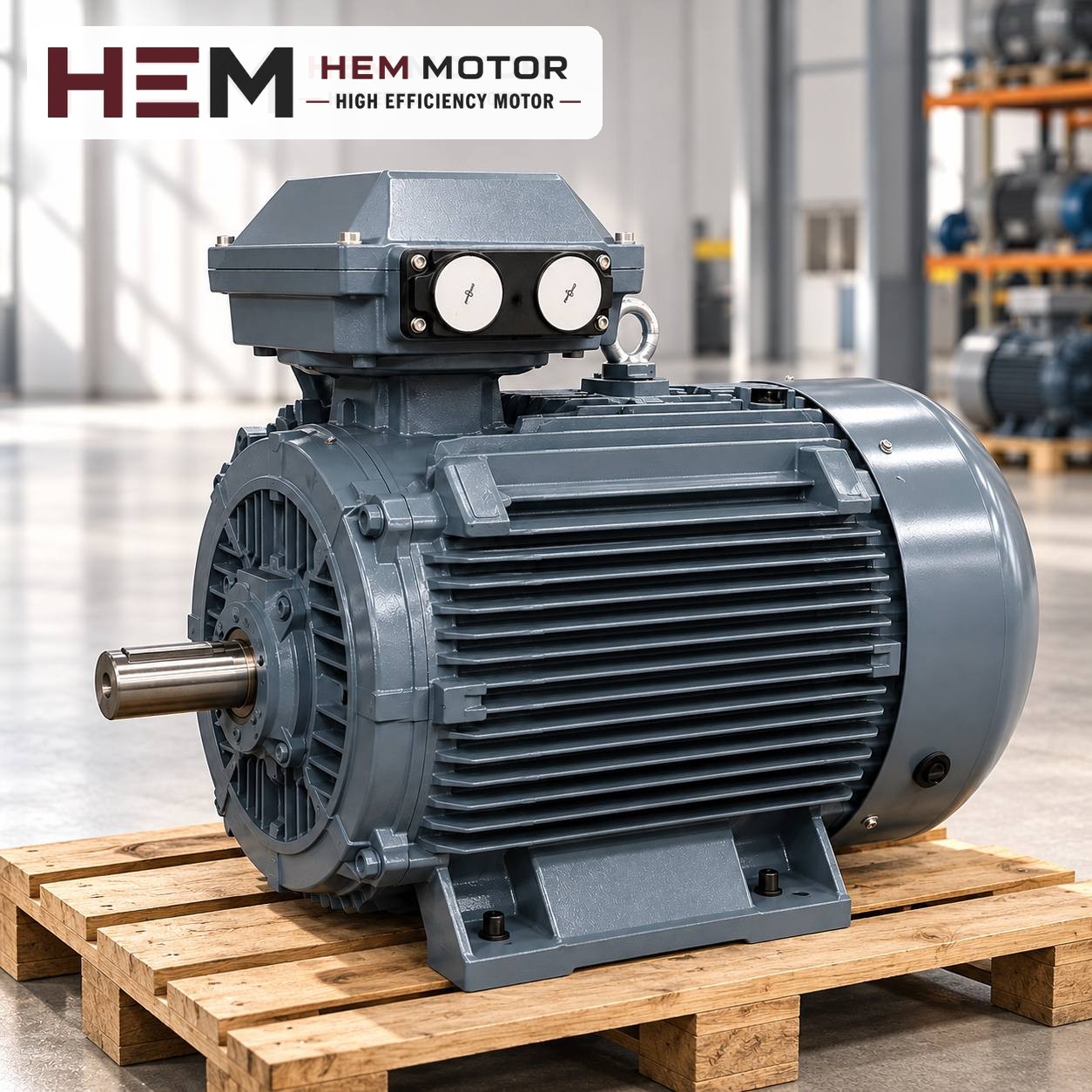
For star-delta, the motor nameplate is decisive. HEM Motor's three-phase models of 4 kW and above are rated 400/690 V (Δ/Y); on a 400 V network they run in delta and are suitable for star-delta starting. If a frequency inverter is used, the general statement on the site applies: our three-phase series are suitable for speed control with a frequency inverter; during long periods of full-torque operation at low speed an external fan may be required, and if the cable between drive and motor is long a dv/dt or sine filter is considered; these conditions are stated with the order.
Fan-side measures that shorten the start
Before changing the motor or the starting method, some measures can be taken on the fan side:
- Starting with the damper: On centrifugal fans, the power drawn falls markedly with the inlet damper closed. Keeping the damper closed during the start increases accelerating torque and shortens the time. Make sure the damper control actually works.
- Prevent reverse rotation: On fans connected to a stack, a stopped fan can turn backwards due to natural draft. First stopping a reverse-turning impeller and then accelerating it lengthens the start and stresses the motor.
- Keep the impeller clean: Dust and deposits on the impeller both increase inertia and create imbalance.
- Limit the number of starts: On high-inertia fans, successive starts heat the winding without allowing it to cool. Ask the motor manufacturer how many starts per hour are permitted.