English
 Français
 Türkçe
 Español
 Русский

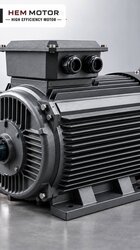
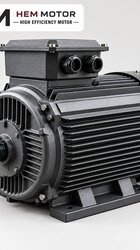
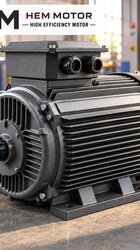
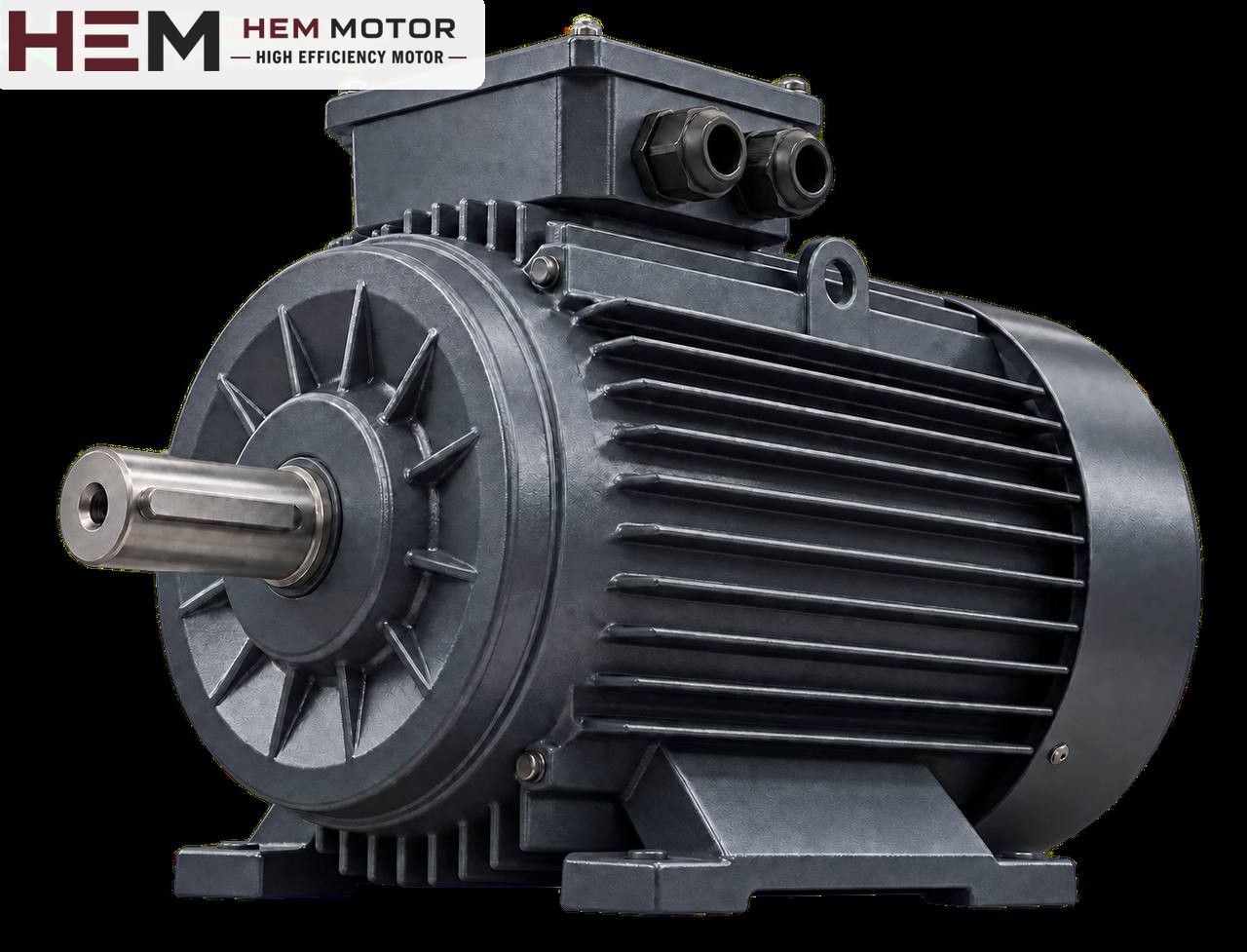

On an industrial high-pressure car wash machine, the pump motor is selected from the speed, flow and pressure the pump requires; the machine's appearance or the kW value of the old motor alone is not enough. High-pressure piston pumps are usually built for a specific speed, and the connection is made either directly or through a belt and pulleys. The second critical point is that the motor stands in a protected place, not in the water and foam mist.
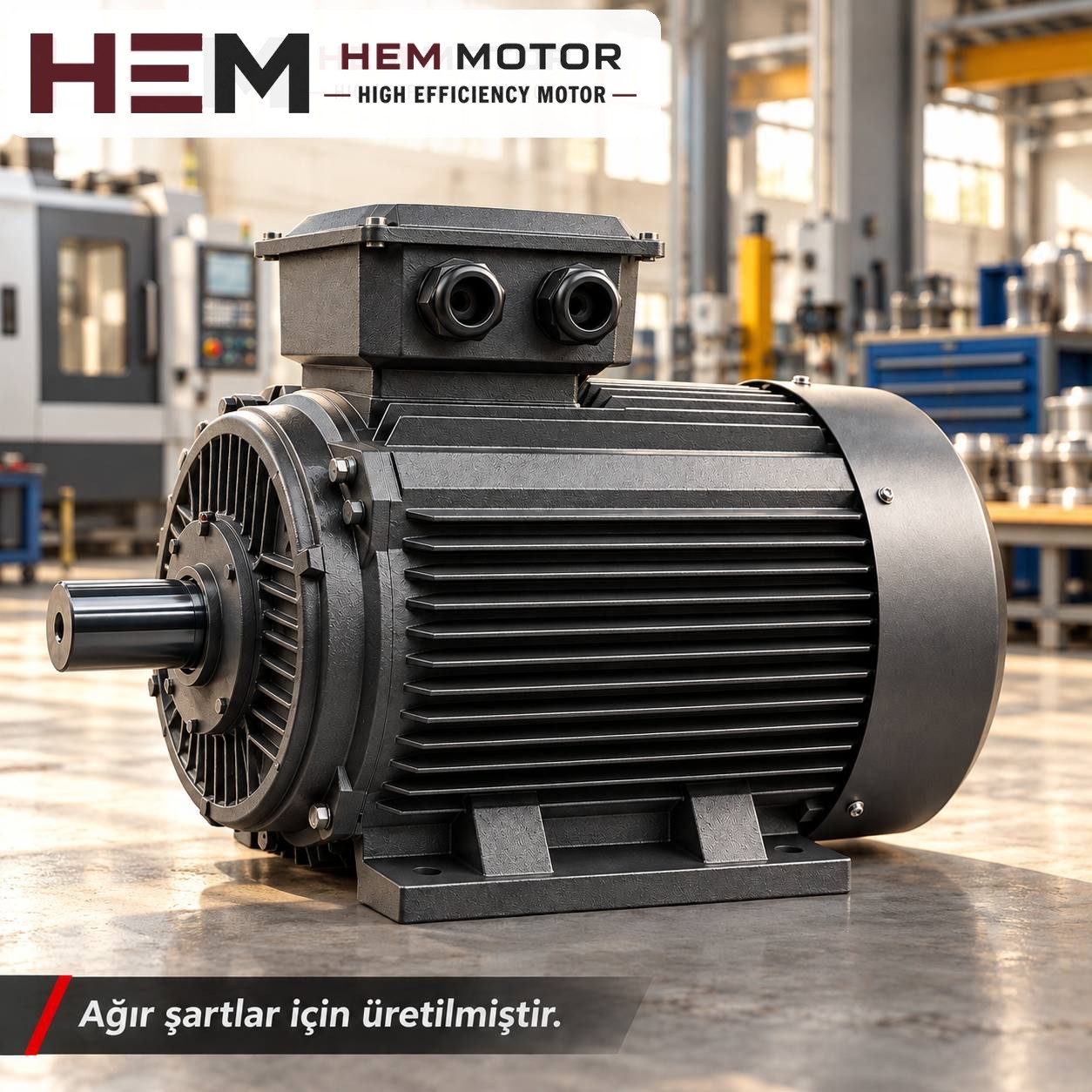
Find out the pump type and speed
Most industrial wash machines use a three-piston (triplex) high-pressure pump. The pump's nameplate or catalogue states the flow (l/min), maximum pressure (bar) and rated speed. This speed is the starting point for motor selection, because in a piston pump the flow is directly proportional to speed.
- If the pump speed is about 1,450 rpm, a 4-pole motor can be connected directly. On HEM Motor's 4-pole models, rated speed is around 1,450–1,460 rpm depending on power.
- If the pump speed is about 2,800–2,900 rpm, direct connection with a 2-pole motor comes into question; this is seen on more compact machines, and the pump must be built for this speed.
- If the pump runs at a lower speed, there is a belt and pulley drive or a reduction on the pump; the motor speed and the pulley ratio are calculated together.
Trying to raise the pressure by increasing pump speed is the wrong path. In a piston pump, speed changes the flow; pressure is determined by the nozzle size and the pressure regulating valve.
Estimating power from flow and pressure
The power the pump draws from its shaft depends on the product of flow and pressure. For a rough estimate the following relationship is used: hydraulic power (kW) ≈ flow (l/min) × pressure (bar) / 600. Dividing this value by the pump efficiency gives the shaft power. If the pump manufacturer gives the required motor power in its own table, that value is the reference.
The calculation below is a hypothetical example. For a pump running at 15 l/min and 150 bar, hydraulic power is 15 × 150 / 600 = 3.75 kW. If pump efficiency is taken as about 0.85, shaft power rises to around 4.4 kW. In this case a 4 kW motor would be at the limit; a 5.5 kW motor is a reasonable choice. If the same pump is to be set to 200 bar, the calculation must be redone.
Is the power on the nameplate always enough?
For a replacement, the old motor's nameplate power is a good reference; but if the nozzles have been enlarged, the pressure raised or the pump changed on the machine, the nameplate no longer shows the real load. Comparing the new motor's rated current with the actual operating current is the most reliable check.
What does the motor do when the gun is closed?
On high-pressure machines, when the gun is closed the water returns to the suction or the tank via the unloader valve. During this time the motor usually keeps running, but the load decreases as the pressure drops. On some machines, a pressure switch stops the motor after a certain time and restarts it when the gun is opened; this arrangement is called "total stop".
- In the continuously running (bypass) arrangement, the motor runs all day; the water heating up while idling is the pump's problem, while for the motor the issue is continuous running.
- In the total-stop arrangement, the motor starts frequently. Since high current is drawn at every start, the winding heats up more as the number of starts increases. In a busy wash bay, state this information with the order.
- If star-delta starting is used on motors of 4 kW and above, the motor must be rated 400/690 V, connected in delta on a 400 V supply.
Water, foam and chemicals: where is IP55 enough?
HEM Motor's three-phase motors have IP55 protection; this class means protection against dust and resistance to water jets from any direction. However, on a wash machine the motor's real risk is being cleaned directly with high-pressure water, constant foam mist and detergent vapour. These conditions can go beyond the limit defined by IP55.
- Place the motor in the machine's closed cabinet, on the side that water and foam spray does not reach directly.
- Do not block the front of the fan cover; the motor is cooled by its own fan and air circulation is needed in the cabinet.
- The cable entry of the terminal box should face downwards, and cable glands should be tight.
- Do not wash the motor with pressurised water. The frame should be cleaned with a damp cloth.
- If chemical vapour is heavy in the environment or the motor will stand outdoors, state this with the order; these conditions may fall outside the scope of a standard motor.
The cast iron frame is often preferred on heavy-duty wash machines because it is more rigid against impact and vibration. The aluminium frame has the same protection and insulation class; the choice depends on the machine's construction and layout.