English
 Français
 Türkçe
 Español
 Русский

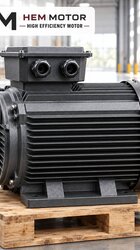
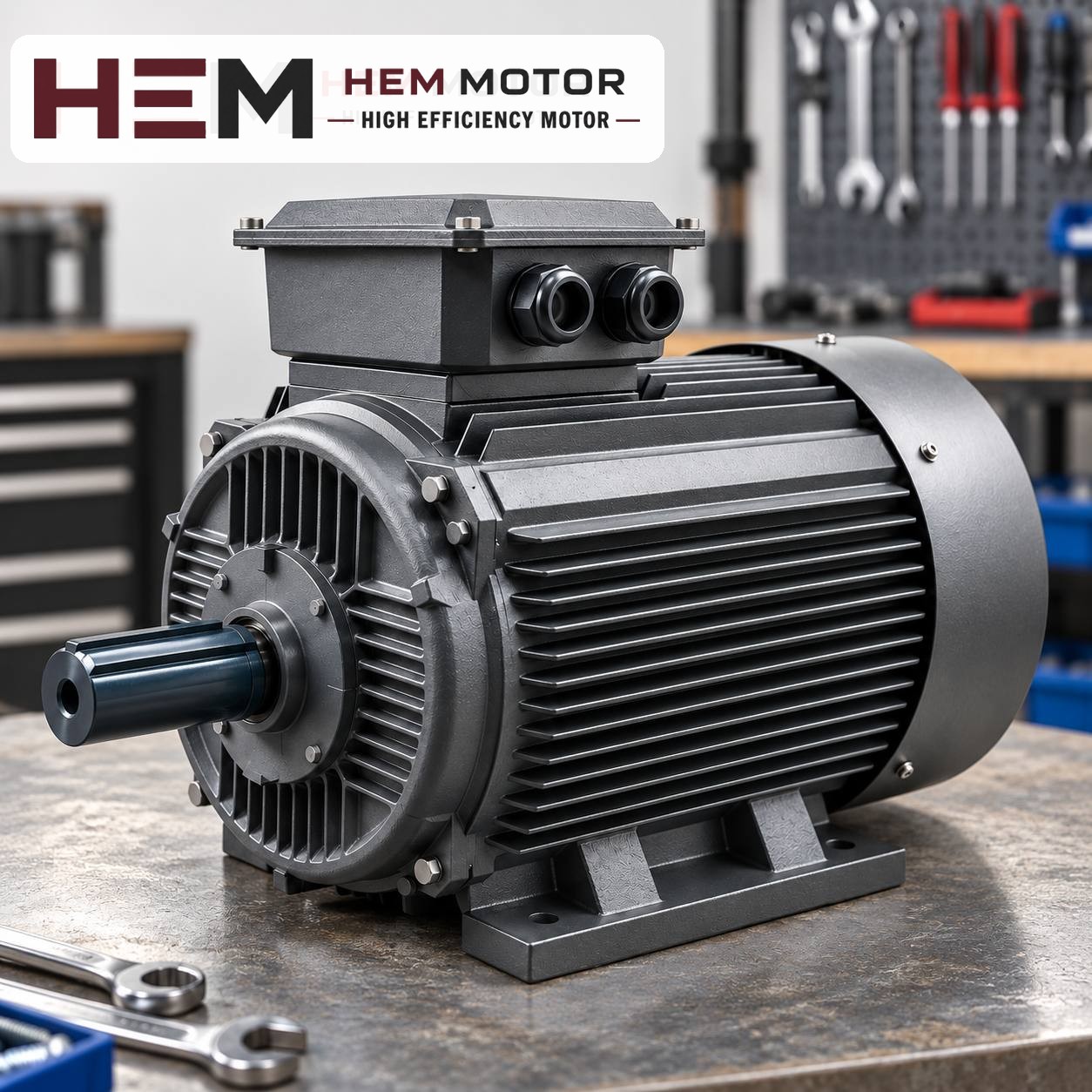

A single fixed speed is not enough on a wood lathe: a large-diameter bowl blank must turn slowly, while a thin pen or spindle job must turn fast. This wide speed range used to be obtained with stepped pulleys and today is mostly obtained with a frequency inverter. A standard three-phase induction motor can do this job with a drive; however, issues such as reduced cooling at low speed, torque falling above 50 Hz and choosing the right motor connection when the drive is fed from a single-phase supply should be known in advance.
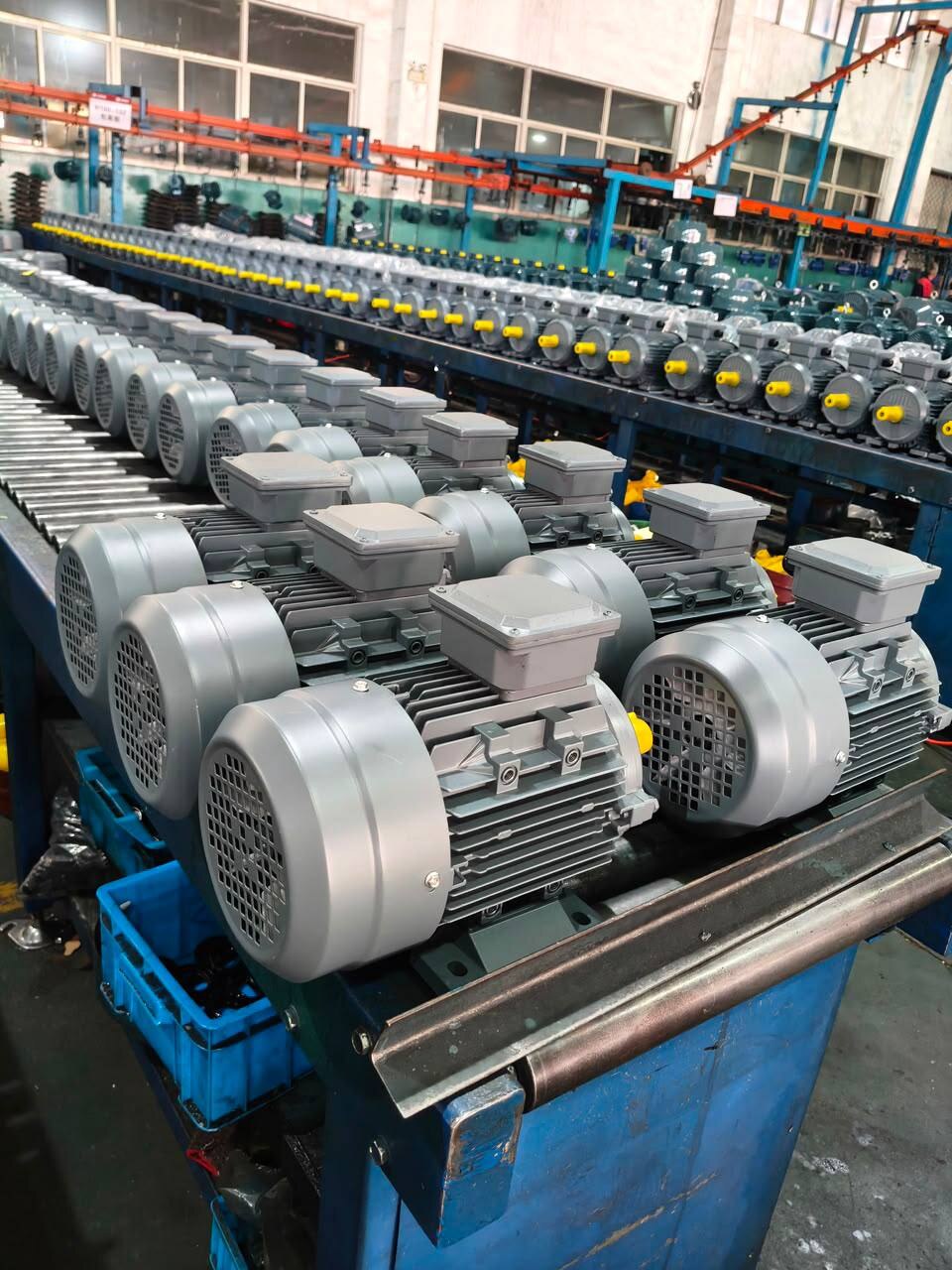
Why does speed vary over a wide range on a wood lathe?
What matters in turning is the surface speed at the circumference of the workpiece; it determines how fast the wood meets the tool. Surface speed rises with workpiece diameter and speed. To keep the same surface speed, speed must be lowered as diameter grows: a piece ten times larger in diameter is turned at one tenth of the speed for the same surface speed.
Safety and balance also limit the speed. An unbalanced, bark-covered or cracked blank is started at low speed in the roughing stage; speed is raised as the piece becomes round. Sanding and finishing stages usually need higher speed. As a result, a single lathe uses a wide speed range, from slow roughing to fast fine work. The exact values of this range are a matter for the lathe manufacturer and the workpiece; here we explain the general principle.
From stepped pulleys to a frequency inverter
On older wood lathes the motor turns at a fixed speed and the speed is changed with stepped pulleys. In this arrangement the motor runs at full speed on every step; on the low step the pulley ratio increases torque. The drawback is that changing speed requires stopping the machine and moving the belt to another groove, and the speed is limited to a few fixed values.
With a frequency inverter, motor speed is adjusted steplessly by changing the supply frequency. The drive also offers soft starting, an adjustable stopping time and the option to reverse the direction of rotation. But there is an important difference: when the pulley ratio stays fixed, low speed is obtained by lowering the motor's own speed, and the torque reaching the spindle does not increase as it does on a pulley step. That is why many lathes keep a two-step pulley together with the drive: the low step for large pieces, the high step for fine work.
HEM Motor's general statement on its site is: our three-phase series are suitable for speed control with a frequency inverter; for long periods of full-torque operation at low speed a separately driven fan may be needed, and if the cable between drive and motor is long a dv/dt or sine filter is considered; these conditions are stated with the order. Details are in the question on use with a frequency inverter.
Low speed, above 50 Hz and torque
An induction motor running on a drive behaves differently in two regions:
- Below 50 Hz: The drive lowers the voltage together with the frequency; in principle the motor can deliver its rated torque, while its power falls in proportion to speed. For example, the rated torque of the 1.5 kW 90L-4 model is 9.91 Nm; if this torque is kept at half speed, the power delivered to the shaft falls to about half.
- Above 50 Hz: The voltage can no longer rise above the supply value; the motor runs at roughly constant power and torque falls as speed rises. Bearings, fan and rotor balance also have mechanical limits. If operation above rated frequency is being considered, this must be stated separately with the order and assessed.
Cooling at low speed
The cooling fan of a standard motor is attached to the motor shaft; as speed falls, the air the fan delivers also decreases. Working a large bowl blank at low speed and high torque for a long time can therefore heat the motor more than usual. Short periods at low speed are usually not a problem; for long, heavy work a separately driven fan is considered. For those who want to monitor winding temperature, a PTC or PT100 winding sensor is an option that can be selected at the order stage.
Precise torque control or servo-like behaviour should not be expected in lathe applications; a standard induction motor and drive are used to adjust the speed steplessly. You can review suitable HEM Motor models and current prices on the buy electric motors page.
Three-phase motor on a single-phase supply via a drive
A situation often met in workshops is that only a single-phase 230 V supply is available. In that case a drive with a single-phase 230 V input and a three-phase 230 V output is used. The point to watch on the motor side is the connection:
- A motor with a 230/400 V (Δ/Y) nameplate is connected in delta (Δ) to a drive with a three-phase 230 V output. If left in star, the motor sees low voltage and its torque drops markedly.
- Motors with a 400/690 V (Δ/Y) nameplate do not work correctly with a 230 V-output drive; they need a three-phase 400 V output. In the HEM Motor series, models of 3 kW and below carry a 230/400 V nameplate, and those of 4 kW and above a 400/690 V nameplate.
- The drive rating must not be chosen smaller than the motor power and the single-phase input current limits; the drive manufacturer's values apply.
Using a single-phase motor directly is also an option; HEM Motor's single-phase series covers 0.18–5.5 kW. With a single-phase motor, however, there is no stepless speed adjustment; speed is still changed with the pulleys.