English
 Français
 Türkçe
 Español
 Русский

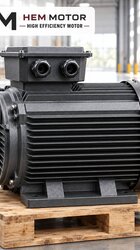

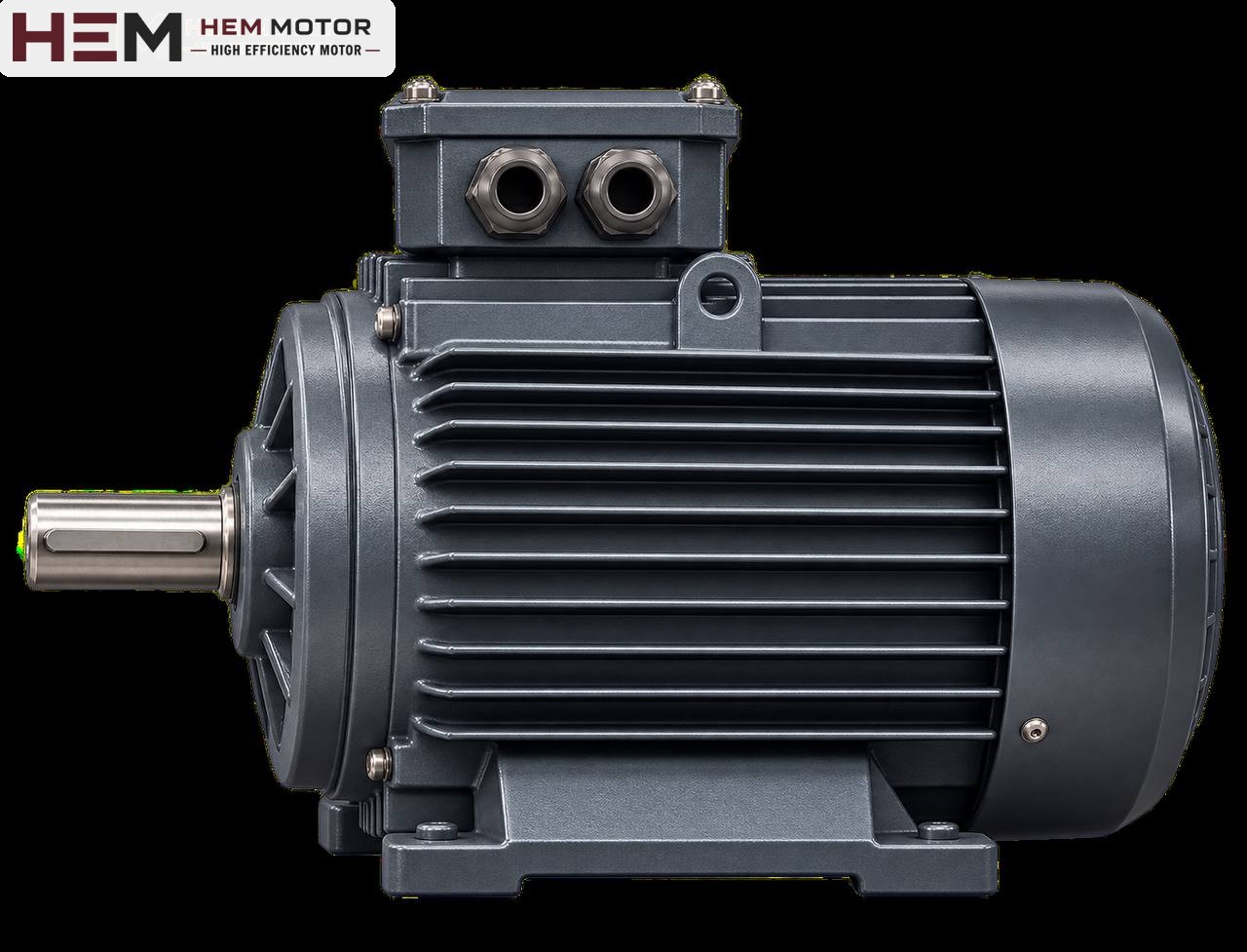

What strains the motor most in a tyre shredding machine is not the average load but the short, hard torque shocks that occur at the moments when rubber and steel wire break between the blades. These shocks come back as sudden peaks in motor current, fatigue in the shaft and bearings, and loosening of the foot fixings. The right choice means knowing which stage of the line you are working on, setting up a suitable starting method at high power, adjusting protection to the shock character and working with a firmly mounted cast iron frame motor.
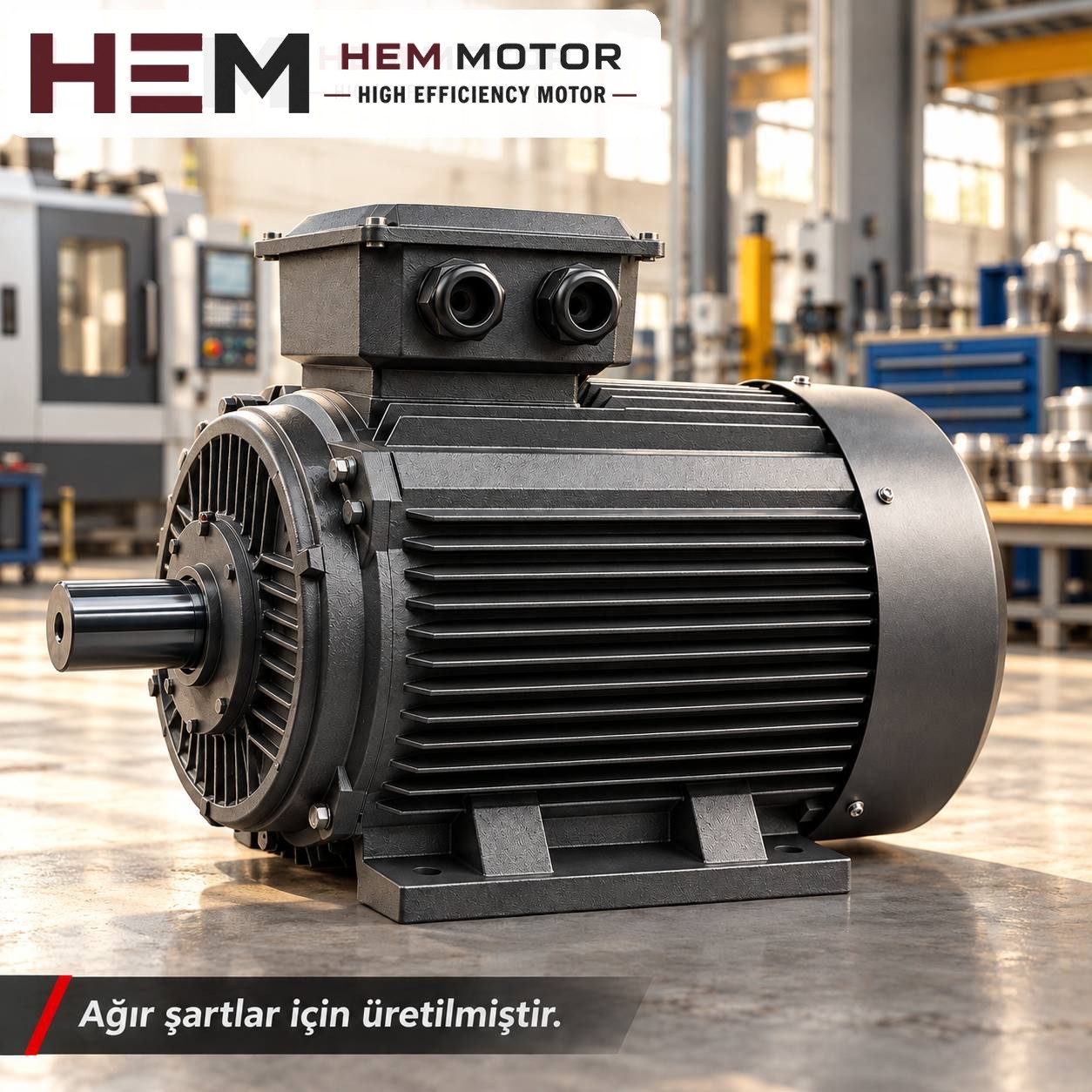
Why is a tyre a different load from plastic?
A tyre is a composite material made of elastic rubber with embedded steel wire, textile cord and hard bead wire. Under the blade, rubber first stretches and stores energy, then suddenly breaks. Steel wire is stretched between the blades before it is cut. The result is not a smooth load curve but a succession of torque spikes. When bead wire or the thick tread of a truck tyre gets between the blades, the rotor almost stops momentarily.
This load character affects the motor in three ways:
- Electrical: Every torque spike means a current peak. Frequent peaks heat the winding and can trip protection relays unnecessarily.
- Mechanical: Repeated torque shocks fatigue the shaft, keyway and coupling; the bearings carry shock radial and axial loads.
- Connections: Vibration transmitted to the frame gradually loosens the foot bolts, terminal connections and cable entries.
Motors on a tyre recycling line: load stage by stage
Tyres are usually reduced not on a single machine but in several stages. The load of each stage is different, and motor selection changes accordingly.
| Stage | Task | Shock severity | What stands out for the motor |
|---|---|---|---|
| Primary shredder | Breaking the whole tyre into large pieces | Very high, irregular | High power, frequent reversing, robust starting |
| Secondary shredder / rasper | Reducing pieces, separating part of the wire | High | Continuous load + shock, thermal capacity |
| Granulating mill (cracker mill) | Producing granules and powder | Medium, more continuous | Long periods at full load, cooling |
| Conveyor, magnetic separator, screen | Transport and separation | Low | Standard selection, dust protection |
On the primary shredder, gearbox and coupling selection are decisive; for the details of geared drives and torque calculation, the logic of our topic on plastic shredder motors also applies here. In this article we focus on how the motor copes with shock loads.
Effect of shock loads on the motor and measures to take
Thermal load: look at the peaks, not the average
Even if the average current shown on the ammeter stays below the nameplate current, frequent peaks can heat the winding. To see the motor's real thermal load, record how the current changes over time and monitor the frame temperature throughout the shift. A thermistor (PTC) embedded in the winding with a matching protection relay monitors winding temperature directly under shock loads; state this with the order if needed. For current values see the current table.
Protection setting
The thermal relay or motor protection circuit breaker is set to the nameplate current; arbitrarily raising the setting because of shock peaks leaves the winding unprotected. If nuisance trips occur on sudden current peaks, the class of the protection curve (tripping time) and the jam detection logic of the control are reviewed together.
Mechanical connection
- The motor must be fixed to a rigid, flat base that damps vibration; the foot bolts should be checked at intervals with a torque wrench.
- An elastic or fluid coupling between motor and gearbox reduces the part of the shock passed to the shaft and bearings. Coupling alignment is checked at every service.
- The cable should enter the motor with a flexible loop; a stiff, taut cable loosens the terminal connection through vibration.
Frame and environment
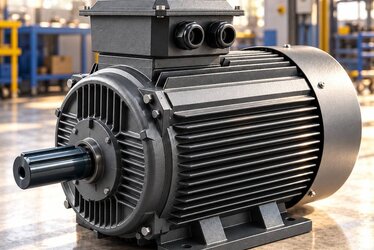
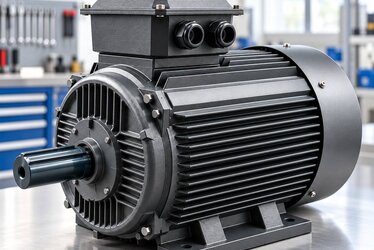
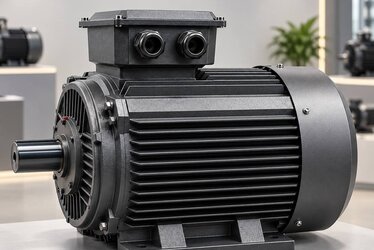
Tyre shredding produces rubber dust, wire fragments and textile fibre. Fibre and dust accumulate on the fan cover and cut off cooling. The cast iron frame stands out in this application thanks to its rigidity against shock and vibration; IP55 protection guards against dust ingress, but the fan cover must be cleaned regularly.
Starting and supply at high power
Motor powers on primary shredders are high and starting strains the supply. The options are assessed as follows:
- Star-delta: Reduces starting current but also lowers torque to about one third. If material remains in the rotor, it may fail to start in star. This method is suitable for starting with an empty rotor; a motor rated 400/690 V (Δ/Y) runs in delta on a 400 V supply and is suitable for star-delta starting.
- Soft starter: Limits starting current and mechanical shock; for starting with a loaded rotor, torque adequacy must be checked.
- Frequency inverter: The most flexible route for controlled starting with full torque and frequent reversing. HEM Motor's three-phase series are suitable for speed control with an inverter; for long periods at low speed with full torque an external fan may be required, and if the inverter-motor cable is long a dv/dt or sine filter is considered. These conditions are stated with the order; see inverter operation.
If supply capacity is limited, the plant's transformer rating and cable cross-sections should be checked for voltage drop during large motor starts.
What does a service factor of 1.15 mean?
At HEM Motor, all models of 75 kW and above have a service factor of 1.15; this means the motor carries a continuous 15% power reserve. Under shock loads this reserve is a safety margin. Selecting the motor one size smaller by counting on the reserve is not recommended; motor power is still determined by the machine's actual load and the manufacturer's data.