Roller Conveyor Electric Motor: Line Speed, Load and Gearbox Selection

Roller Conveyor Electric Motor: Line Speed, Load and Gearbox Selection

Selecting a motor for a roller conveyor rests on three questions: at what speed the line will flow, what load the rollers will carry with what friction, and by which route the drive will be transmitted to the rollers. Line speed is calculated from motor speed together with the gearbox ratio, the sprocket ratio and the roller diameter; the power required depends less on the weight of the load than on roller rolling resistance and inertia at start-up. This article explains how to set up this calculation for driven roller conveyors and how to choose the gearbox.
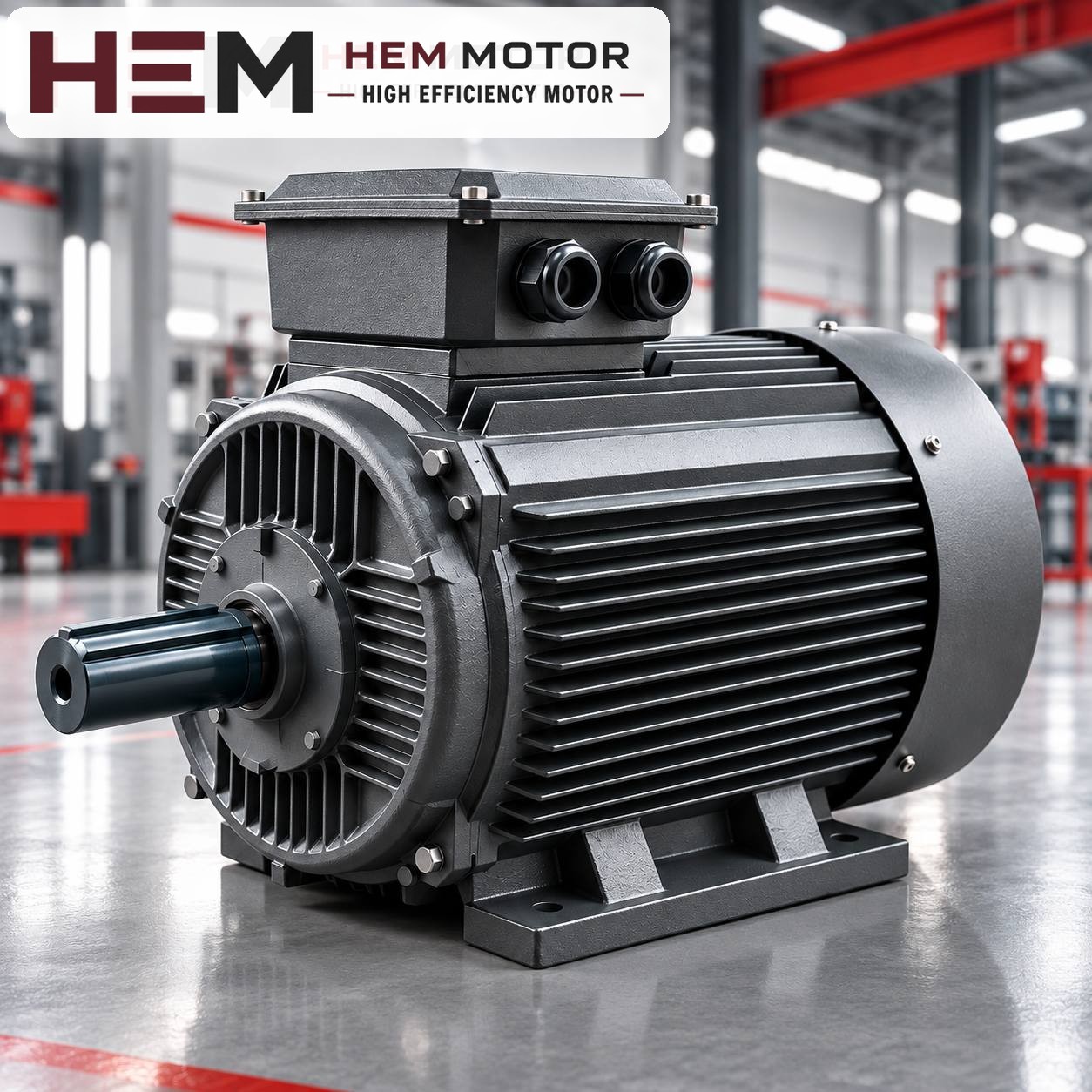
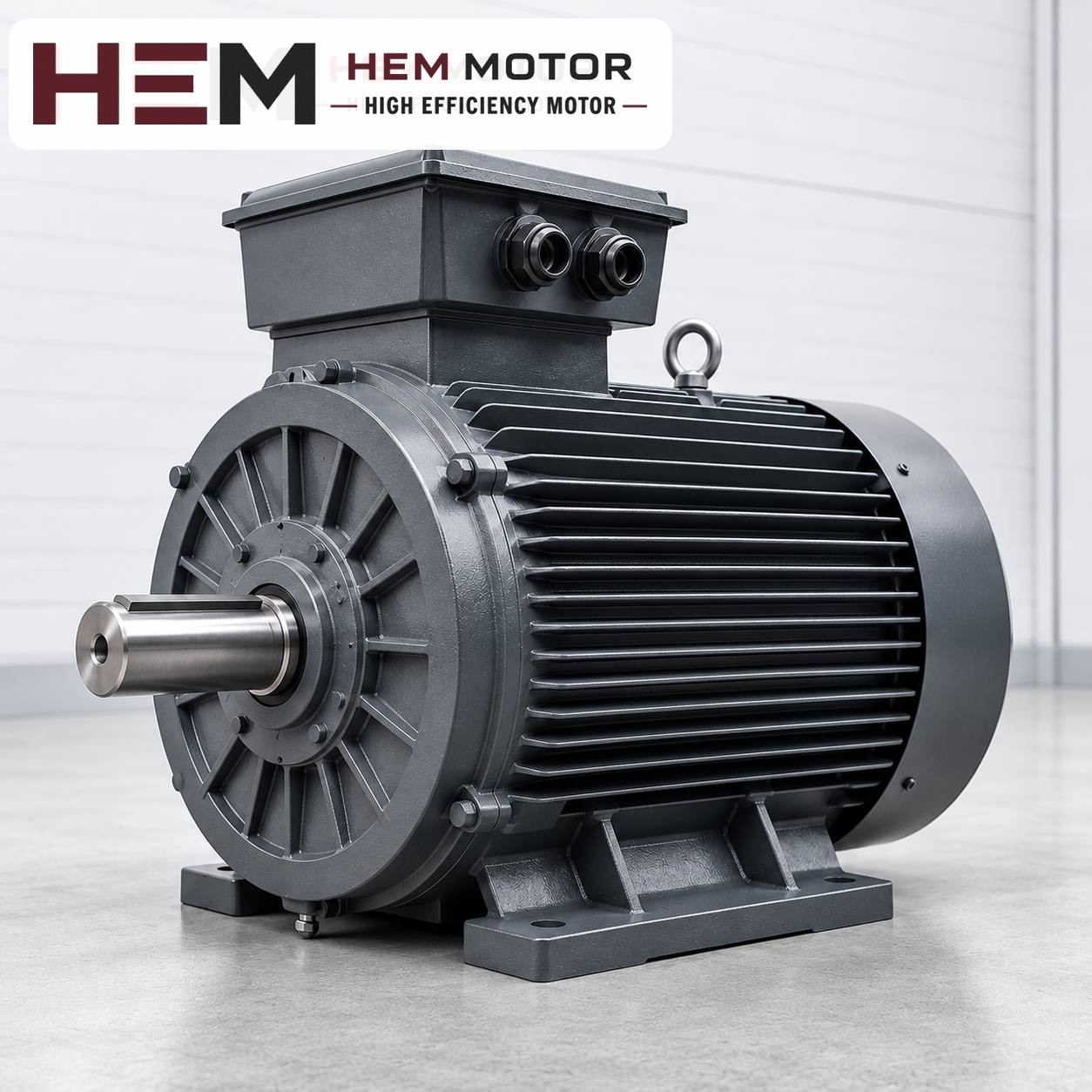
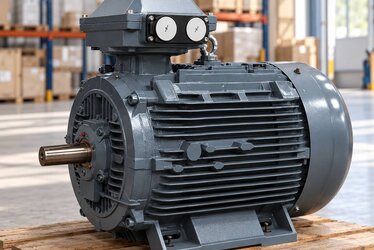
Three-phase electric motor on a factory shelf
On roller lines the motor is usually placed under or beside the line together with the gearbox (representative image).

How is power distributed to the rollers on a driven roller conveyor?

On a belt conveyor a single drum pulls the whole belt. On a roller conveyor, however, each roller carries the load above it, and the drive is shared among the rollers by a chain or belt arrangement. The arrangements most often seen on site are:

  • Roller-to-roller chain: Each roller has a double sprocket at its end, and neighbouring rollers are linked by short chains. Common for heavy loads, pallet and crate lines. Chain losses accumulate as the number of rollers increases.
  • Continuous chain: A single long chain runs beneath the roller sprockets. There are fewer parts, but chain tension needs attention along the line.
  • Line shaft and O-ring belts: Each roller is driven by flexible belts from a shaft rotating along the line. Seen on light carton and crate lines; the belts allow a certain amount of slip.

Whatever the arrangement, the motor is usually at one end or in the middle of the line, turning the main sprocket through a gearbox. Long lines are divided into several sections, each with its own motor.

Motorised rollers fitted inside the roller (drum motors or low-voltage motorised rollers) are a separate product group. This task requires a special motor; it may fall outside the scope of the standard series in HEM Motor's 2026 catalogue. A standard three-phase motor is intended for arrangements that drive the rollers from outside by chain or belt.

Calculating line speed

On a roller line the product speed equals the peripheral speed of the rollers; in a belt arrangement, slight slip reduces this speed a little. The calculation chain is: motor rated speed ÷ gearbox ratio = gearbox output speed; this speed is converted to roller speed through the sprocket ratio; roller speed × roller circumference (π × diameter) = line speed.

The values below are a hypothetical example. Let the target line speed be 20 m/min and the roller diameter 60 mm. Since the roller circumference is about 0.188 m, the roller speed must be 20 / 0.188 ≈ 106 rpm. If the gearbox output and roller sprocket have the same number of teeth (1:1), the gearbox ratio required with a 4-pole motor of 1,400 rpm rated speed is 1,400 / 106 ≈ 13.2. The nearest standard ratio on the market is chosen and the actual line speed is recalculated for that ratio.

Changing elementEffect on line speed
Roller diameter increasesAt the same speed, line speed increases in proportion to diameter.
Gearbox ratio increasesThe line slows down and torque at the roller increases.
Sprocket on the roller side gets largerThe line slows down; this is an additional reduction after the gearbox.
6-pole motor instead of 4-poleThe line slows by about one third; the ratio must be reselected.

Load, friction and starting torque

When a roller conveyor carries a load horizontally, the force the motor overcomes is a small fraction of the weight of the products: roller bearing friction, the rolling resistance of the product on the rollers and chain losses. This fraction varies greatly with the base structure of the product. A hard-based plastic crate rolls easily; a soft-based cardboard box or wooden pallet creates more resistance. That is why two lines with the same weight may need different power.

Take the friction coefficient to be used in the power calculation from the roller and chain manufacturer's data; do not invent a value by guesswork. The following information is needed to set up the calculation:

  • The total load on the line in the worst case (with the line completely full)
  • Number of rollers, roller weight and roller diameter
  • Chain arrangement and number of chains (each chain loop adds losses)
  • Line speed and the target acceleration time at start-up

At start-up the motor overcomes not only friction but also the inertia of all the rollers and products on the line. On a full, long roller line, roller mass can be close to product mass. For this reason, whether the starting torque is sufficient is checked separately from continuous running power. You can see the motor's rated torque on the product page or in the torque table.
Prices and technical data are on the product pages; choose a model and order online.

Points to watch when choosing the gearbox

The gearbox increases torque while reducing motor speed to roller speed. Worm and helical gearboxes are common on roller lines. When choosing between them, look at the following:

  • Ratio and efficiency: Worm gearboxes are compact at high ratios, but their efficiency is lower than helical gearing. This loss must be added to the motor power calculation.
  • Output torque and service factor: The gearbox's rated output torque must cover the line's starting torque and daily operating time. For lines that start frequently, the gearbox manufacturer recommends a higher service factor.
  • Input connection: The motor is usually connected to the gearbox with a B5 or B14 flange. The mounting arrangement is offered according to the frame and the flange size is confirmed with the order; compare the gearbox input flange with the 2D technical drawings.
  • Output side: A hollow-shaft gearbox can slide directly onto the main sprocket shaft; on a solid-shaft gearbox the sprocket is fitted on the gearbox shaft.

Example models for roller lines

Examples of 4-pole aluminium frame models in powers often seen on roller lines carrying light and medium loads:

  • 80M1-4: 0.55 kW, 4 poles, 1,400 rpm, 230/400 V, IEC 80M, rated torque 3.75 Nm.
  • 80M2-4: 0.75 kW, 4 poles, 1,420 rpm, 230/400 V, IEC 80M, rated torque 5.04 Nm.
  • 90L-4: 1.5 kW, 4 poles, 1,445 rpm, 230/400 V, IEC 90L, rated torque 9.91 Nm.

The power needed is determined by the line load and friction calculation; the list is a starting point. Review suitable HEM Motor models and current prices on the buy electric motors page. General information on conveyor drives is on the conveyor belt electric motors and electric motors for gearboxes pages.

If the line speed needs to be adjusted by shift, a frequency inverter can be used. Our three-phase series are suitable for speed control with a frequency inverter; for long periods of full-torque operation at low speed an external fan may be required, and if the cable between drive and motor is long a dv/dt or sine filter is considered; these conditions are stated with the order.

Conclusion and what is needed for a quotation

On a roller conveyor, first fix the target line speed and roller diameter, then calculate the gearbox ratio according to the motor's rated speed. Determine the power from the friction of the full line and the starting inertia; check the gearbox output torque and input flange separately. For a quotation we need the line length, roller diameter and number, chain arrangement, the weight and base structure of the heaviest product, target speed, gearbox information and the current motor nameplate.

You can see suitable models and current prices in our online sales section. Send the nameplate photo, speed and mounting details of your current motor through the send nameplate page and request a quotation for the suitable model. If you would like to consult us with your line data, write to us via our contact page.

Frequently Asked Questions

Is it necessary to change the motor to change line speed on a roller conveyor?

Usually not. Speed can be adjusted by changing the gearbox ratio or sprocket ratio, or with a frequency inverter; a motor change comes up if the number of poles is to change.

Should a long roller line use one motor or several?

On roller-to-roller chain lines, losses and chain load increase with length, so the line is often divided into sections. Section length is limited by the chain and roller manufacturer.

Why do products of the same weight need different motor power?

Rolling resistance depends on the product base. A hard, flat-based crate moves easily; soft cardboard or a wooden pallet shows more resistance.

Can a standard motor be used instead of a motorised roller?

A motorised roller is a special product in itself. A standard three-phase motor is suitable for roller arrangements driven from outside the line by chain or belt.

HEM Motor Models Related to This Article

The cards show example models related to the topic. A suitable motor is not chosen by power alone: compare speed, voltage, mounting, shaft and connection dimensions on the product page; if unsure, send a photo of the existing motor’s nameplate on WhatsApp.

0.55 kW 1500 rpm Aluminium Frame Electric Motor 80M1-4

80M1-4

0.55 kW · 1500 rpm

  • Aluminium frame · IEC 80M
  • 1400 rpm · IP55
  • Mounting: B3 foot; flange (B5/B14/B35) depending on frame — confirmed with the order

US$87.00 (€77.64)

View product
0.75 kW 1500 rpm Aluminium Frame Electric Motor 80M2-4

80M2-4

0.75 kW · 1500 rpm

  • Aluminium frame · IEC 80M
  • 1420 rpm · IP55
  • Mounting: B3 foot; flange (B5/B14/B35) depending on frame — confirmed with the order

US$96.68 (€86.28)

View product
1.5 kW 1500 rpm Aluminium Frame Electric Motor 90L-4

90L-4

1.5 kW · 1500 rpm

  • Aluminium frame · IEC 90L
  • 1445 rpm · IP55
  • Mounting: B3 foot; flange (B5/B14/B35) depending on frame — confirmed with the order

US$136.71 (€122.01)

View product

Similar Articles