Electric Motor Selection for a Guillotine Shear Hydraulic Pump

Electric Motor Selection for a Guillotine Shear Hydraulic Pump

On a hydraulic guillotine shear, the pump motor is selected not for the peak power at the hardest moment of the cut, but for the equivalent (thermal) load over the whole cutting cycle; the peak power is checked separately to confirm that it stays below the motor's breakdown torque. Peak power results from the flow the pump delivers at maximum pressure; the equivalent load depends on the number of cuts per minute, the duration of each phase and how long the motor runs idle. This article works through the guillotine shear's cycle step by step to show how the motor power is verified and what to watch when replacing the motor.
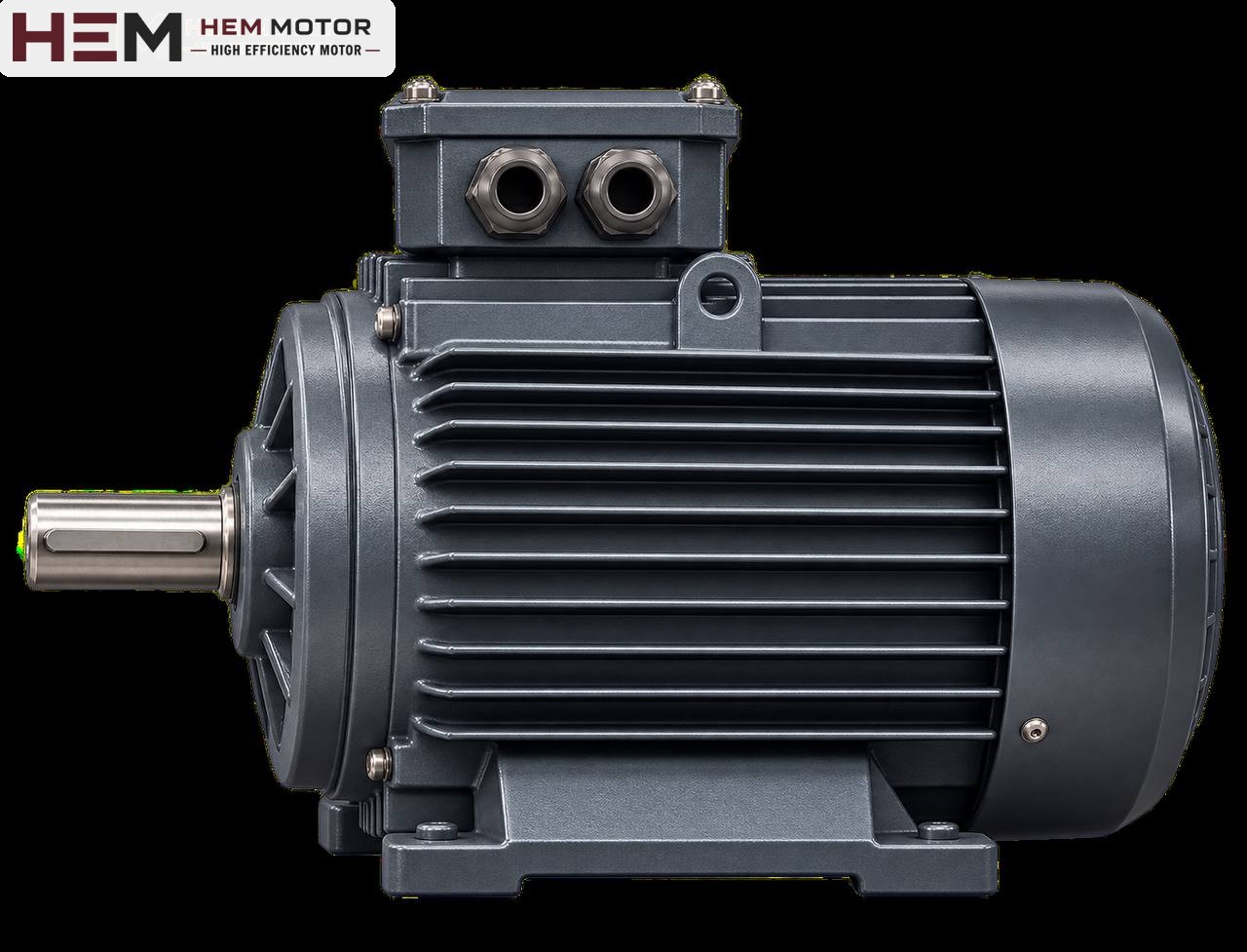
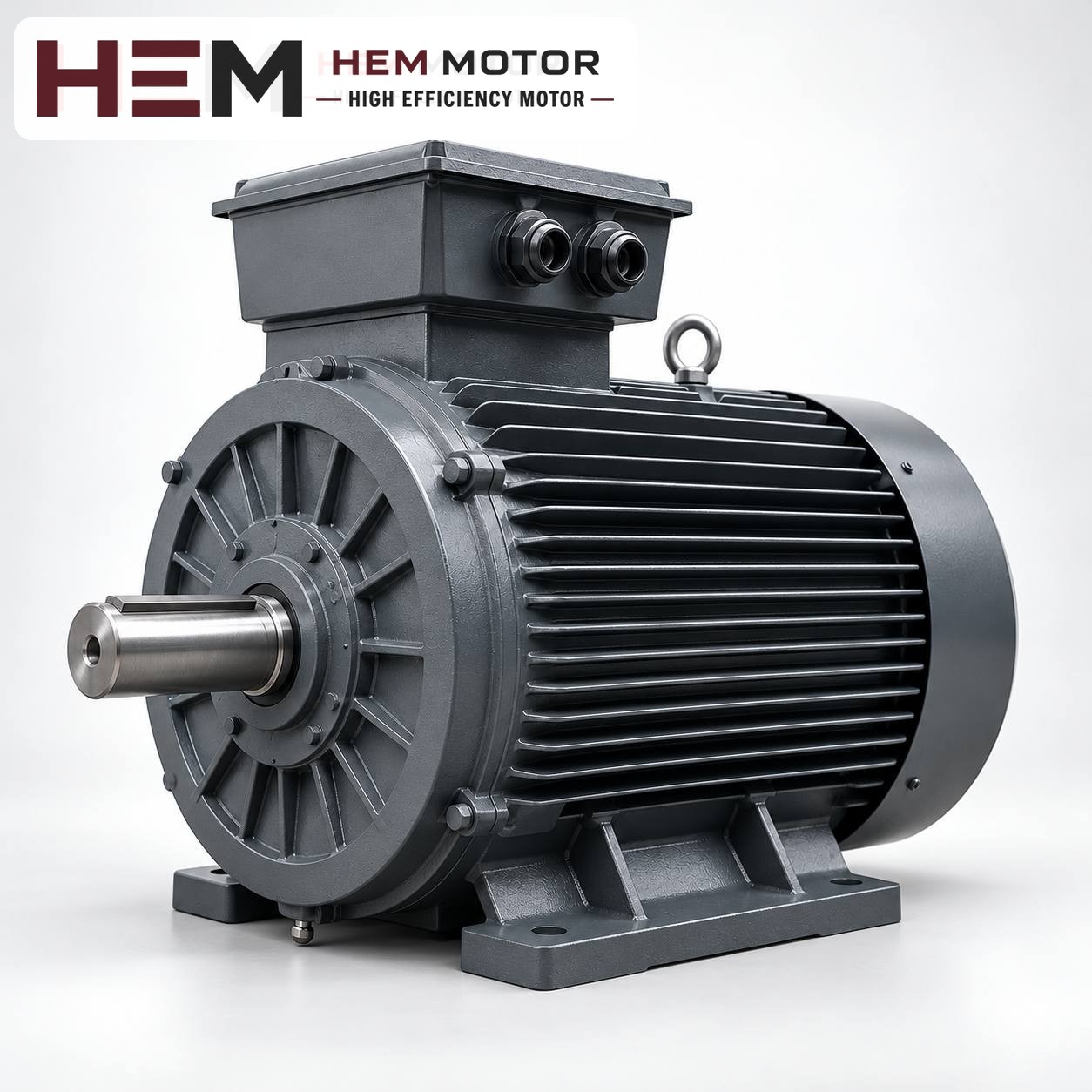
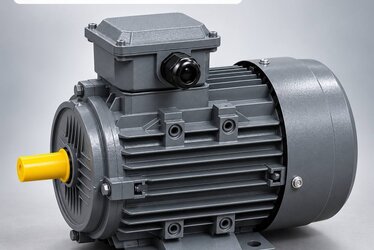
Three-phase electric motor against a black background
On a guillotine shear the motor usually runs continuously despite the intermittent load (representative image).

Hydraulic and mechanical guillotines: the motor's role differs

Guillotine shears have two drive designs, and motor selection differs accordingly:

  • Mechanical (flywheel) guillotine: The motor turns a heavy flywheel via a belt; at the moment of cutting, energy is transferred from the flywheel to the blade through a clutch. Between cuts the motor brings the flywheel back up to speed. In this design, flywheel inertia and the starting condition are decisive.
  • Hydraulic guillotine: The motor turns a hydraulic pump; the pump feeds the cylinders, first pressing the hold-downs onto the sheet and then lowering the blade. The motor load changes within seconds together with pump pressure.

This article covers the hydraulic guillotine. The blade beam, hold-downs, safety valves and hand guards are the machine manufacturer's responsibility; motor selection does not replace or change these arrangements.

What does the motor go through in a cutting cycle?

A typical hydraulic guillotine cycle has four phases. In each phase the pump pressure, and therefore the motor load, is different:

PhaseHydraulic conditionMotor load
Idle waitingPump discharges to tank, pressure is lowLow; only friction and circulation losses
Hold-downs descend and blade approachesHigh flow, medium pressureMedium
CuttingPressure rises quickly to its maximumHighest; short duration
Blade returnHigh flow to the return cylinder, low to medium pressureMedium

Cutting pressure depends on sheet thickness, material strength, cutting length and blade rake angle. On a machine cutting thin sheet, the pressure may never reach its maximum. So how often you cut the thickest sheet in the machine's capacity table directly affects the motor load.

Peak power and equivalent power: two separate checks

Peak power is the power the pump draws at maximum pressure and at the flow at that moment. An approximate calculation divides the product of pressure and flow by the pump efficiency; the value is taken from the pump manufacturer's table or the machine design. An induction motor can exceed its rated power for short loads, but this peak load must not approach the motor's breakdown torque without a safe margin. The motor's breakdown torque ratio is obtained from the motor manufacturer.

Equivalent power is the value that determines the motor's heating. A widely used method for intermittent loads is the root mean square: the square of each phase's power is multiplied by the duration of that phase, divided by the total cycle time and the square root is taken. The motor's rated power should not fall below this equivalent value. The method is an approximation; if there are long high-pressure phases or very frequent cuts, it is assessed together with the motor manufacturer.

The two checks complement each other. A motor selected only for peak power is larger than necessary and runs at low load in operation; a motor selected only for the average loses speed during the cut and slows down, in the extreme case stalls.

Hypothetical calculation example: a medium-sized hydraulic guillotine

The values below are hypothetical figures chosen only to illustrate the method; they are not data from a real machine. Let each cutting cycle of a hydraulic guillotine last 6 seconds:

  • Cutting phase: 2 seconds, pump power 14 kW
  • Approach and return: 2 seconds in total, 6 kW
  • Idle waiting: 2 seconds, 2 kW

Root mean square: (14² × 2 + 6² × 2 + 2² × 2) / 6 ≈ 78.7; its square root is about 8.9 kW. Since the equivalent load in this cycle is about 8.9 kW, the next standard rating, an 11 kW motor, is a candidate. The peak load of 14 kW is about 1.3 times the motor's rated power; whether this ratio stays safely below the motor's breakdown torque is confirmed with the motor data. If the operator waits a long time between cuts, the equivalent load falls further; if the machine cuts continuously in series, the idle phase becomes shorter and the equivalent load rises.


Prices and technical data are on the product pages; choose a model and order online.

Speed, starting and continuous running

  • Speed: Most gear and internal gear pumps run with a 4-pole motor, at about 1,500 rpm synchronous speed. The pump's permitted speed must not be exceeded; the number of poles is kept when replacing.
  • Starting: The guillotine unit starts unloaded; the valves come into action after the motor reaches running speed. Star-delta starting is suitable for this arrangement. HEM Motor's models of 4 kW and above are rated 400/690 V (Δ/Y) and are therefore suitable for star-delta; the 230/400 V (Δ/Y) models of 3 kW and below are connected in star on a 400 V network and started direct-on-line.
  • Continuous running: The motor is not stopped and restarted at every cut; it runs throughout the shift. Switching the motor off during the operator's long breaks relieves the winding but increases the number of starts per day; this balance is set according to the number of starts.
  • Back gauge and auxiliary motors: The small motors that adjust the back gauge and blade gap are separate from the main pump motor; they are often geared or drive-controlled special drives and are assessed separately.

The bell housing, coupling and flange connection between pump and motor are checked with the same logic as on press brakes and other hydraulic units: flange type, spigot diameter, shaft diameter, shaft length and coupling gap. Mounting arrangements are offered according to the frame; the flange size is confirmed with the order. The dimensions are given in the 2D technical drawings.

Example models for power ratings found on guillotine shears

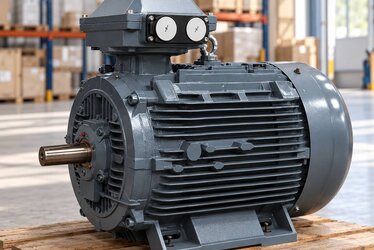
Cast iron frame, 4-pole examples to withstand vibration and shock in the workshop:

  • 100L2-4 cast iron: 3 kW (4 HP), 1,450 rpm, IEC 100L, 230/400 V (Δ/Y), 6.02 A, 19.8 Nm. For small hydraulic guillotines cutting thin sheet; connected in star on a 400 V network.
  • 160M-4 cast iron: 11 kW (15 HP), 1,465 rpm, IEC 160M, 400/690 V (Δ/Y), 20.4 A, 71.7 Nm. The power class in the hypothetical calculation above.
  • 160L-4 cast iron: 15 kW (20 HP), 1,465 rpm, IEC 160L, 400/690 V (Δ/Y), 27.3 A, 97.8 Nm. For thick sheet and long cutting lengths.

Review suitable HEM Motor models and current prices on the buy electric motors page. General information on hydraulic applications is on the hydraulic pump motors page.

Conclusion: information to send with the order

On a guillotine shear, the right pump motor is one that can carry the peak load and does not overheat over the cutting cycle. Send us the following:

  • A photo of the old motor's nameplate and the pump type plate
  • Maximum working pressure, pump flow and, if possible, phase durations
  • Average number of cuts per minute and the thickest sheet cut
  • Mounting arrangement, flange and coupling details
  • Supply voltage and starting method

You can see the models and current prices on our shop page. Send a photo of your current motor's nameplate, its speed and mounting details via the nameplate submission page and request a quote for a suitable model. Our contact page is open for other questions.

Frequently Asked Questions

If the guillotine shear motor slows down during the cut, is the motor too small?

It may be, but first check the pump pressure, the relief valve setting and whether the sheet being cut is within the machine's capacity. If the peak load approaches the motor's breakdown torque, the motor slows down.

Can I calculate motor power from the guillotine's cutting capacity?

Not directly. Power comes from the pump pressure and flow, and heating from the cutting cycle; the machine manufacturer's value is the reference.

Should the guillotine motor stop and start at every cut?

No. The motor usually runs continuously and the pump discharges to the tank between cuts; frequent stopping and starting heats the winding.

Does the same calculation apply to a mechanical flywheel guillotine?

No. On a flywheel machine the cutting energy comes from the flywheel; flywheel inertia, re-acceleration time and the starting condition are decisive in motor selection.

HEM Motor Models Related to This Article

The cards show example models related to the topic. A suitable motor is not chosen by power alone: compare speed, voltage, mounting, shaft and connection dimensions on the product page; if unsure, send a photo of the existing motor’s nameplate on WhatsApp.

3 kW 1500 rpm Cast Iron Frame Electric Motor 100L2-4

100L2-4

3 kW · 1500 rpm

  • Cast iron frame · IEC 100L
  • 1450 rpm · IP55
  • Mounting: B3 foot; flange (B5/B14/B35) depending on frame — confirmed with the order

US$202.54 (€180.76)

View product
11 kW 1500 rpm Cast Iron Frame Electric Motor 160M-4

160M-4

11 kW · 1500 rpm

  • Cast iron frame · IEC 160M
  • 1465 rpm · IP55
  • Mounting: B3 foot; flange (B5/B14/B35) depending on frame — confirmed with the order

US$565.14 (€504.35)

View product
15 kW 1500 rpm Cast Iron Frame Electric Motor 160L-4

160L-4

15 kW · 1500 rpm

  • Cast iron frame · IEC 160L
  • 1465 rpm · IP55
  • Mounting: B3 foot; flange (B5/B14/B35) depending on frame — confirmed with the order

US$673.81 (€601.33)

View product

Similar Articles