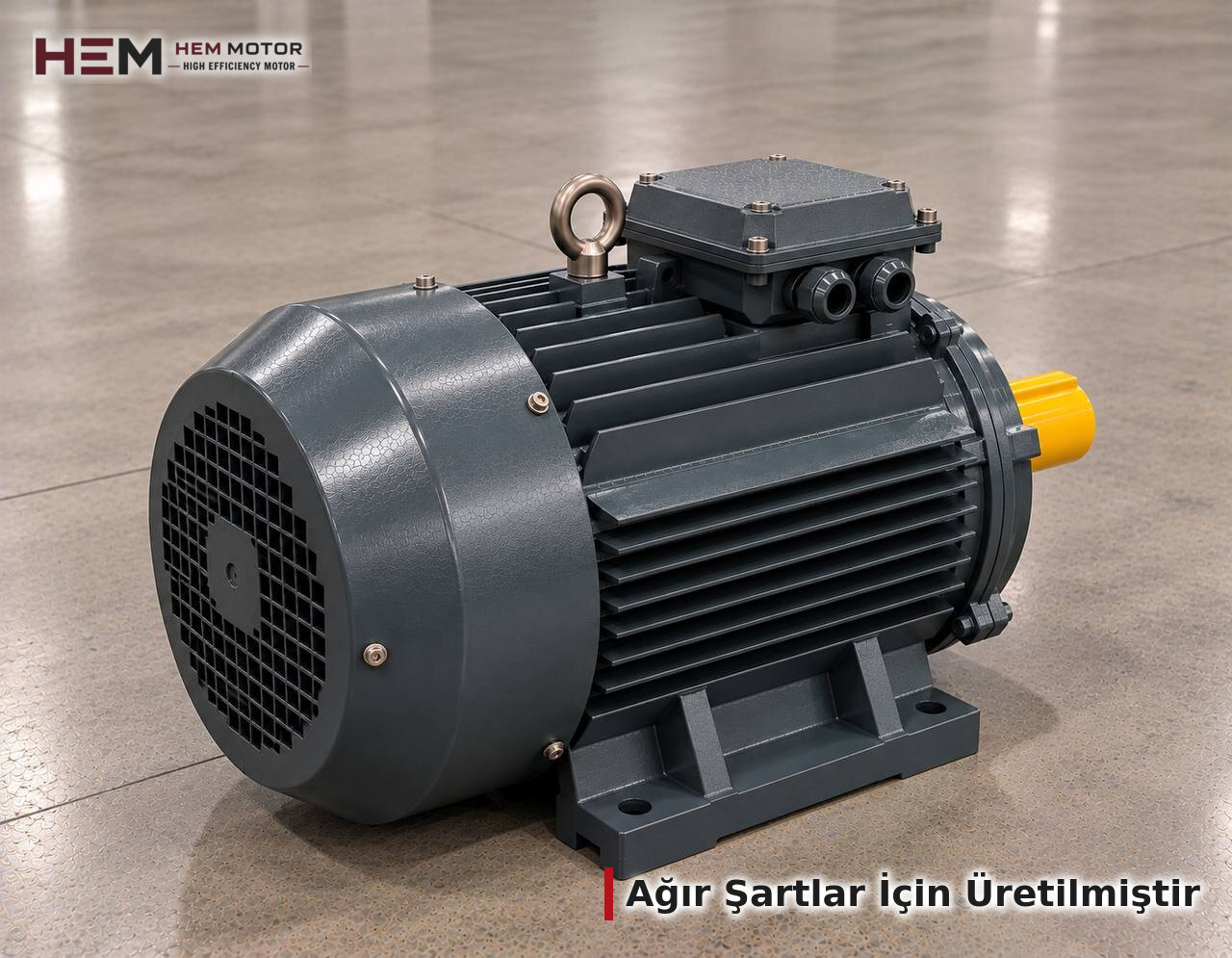
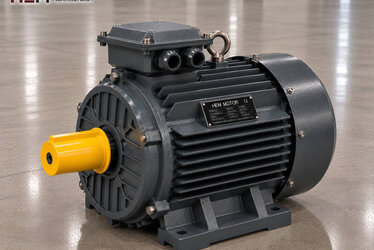
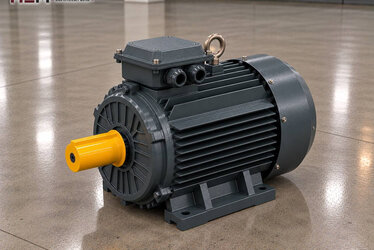
For an icing sugar mill, the electric motor is usually a 2-pole unit at about 2900 rpm, because pin and hammer mills need a high peripheral speed for fine grinding and the rotor is driven either directly or through a belt that raises speed further. On the environment side, sugar dust both spoils the motor's cooling and is a combustible dust; so whether the mill area counts as an explosive dust atmosphere has to be settled before the motor is chosen.
In which types of mill is icing sugar ground?
Turning crystal sugar into powder mostly involves a pin mill, a hammer mill or a fine grinder with an air classifier. In all three the product is broken by the impact of a fast-spinning rotor; the main factor setting fineness is the rotor's peripheral speed.
Mill type
Grinding principle
Points on the motor side
Pin mill
Impact between opposing rows of pins
High speed, belt step-up is common
Hammer mill
Impact by freely swinging hammers, screen classification
Heavy rotor, long run-up time
Fine grinder with classifier
Grinding rotor plus a separate classifier wheel
Two separate drives, speed control on the classifier
In classifier systems the main grinding motor runs at fixed speed, while the classifier wheel is often driven by a frequency converter. Fineness is adjusted through that wheel's speed.
How is speed chosen for the mill?
Speed is calculated from the rotor peripheral speed given by the mill manufacturer and from the rotor diameter. Rotor speed = peripheral speed × 60 / (π × diameter); the gap between motor speed and rotor speed is closed with the pulley ratio (general information; go by the values the mill manufacturer gives).
A hypothetical example: if the manufacturer wants about 6000 rpm for a 400 mm rotor, a 2900 rpm motor reaches it through a belt drive of roughly 2.07. Driving the same rotor with a 4-pole motor pushes the ratio towards four; on a small pulley belt wrap falls, and the belt slips and heats up.
That is why 2-pole motors are often preferred for fine grinding. For coarse crushing or low-speed rotors a 4-pole motor also does the job. Speed and torque for 2-pole and 4-pole steps of the same power are listed side by side on our shop page.
How does sugar dust affect the motor?
Sugar dust hanging in the air settles first on the fan grille, then in the cooling channels of the frame; on a humid day it absorbs moisture and cakes hard as stone. Once the channels fill up, cooling air finds no path and the frame heats up even though the mill grinds the same throughput. As winding temperature rises, insulation life shortens.
Our standard range has IP55 protection. IP5X does not stop dust entering completely, but it prevents dust getting in to an extent that would disturb operation (general information; see the IEC 60529 definition). With sticky, hygroscopic dusts such as sugar, the real problem is the layer building up outside the frame.
The practical measures are simple:
Fins and fan grille are cleaned dry at intervals tied to the shift plan; vacuum cleaning is preferred over blowing the dust into the room air with compressed air.
The terminal box cover seal and the cable glands are checked at every service; sugar dust gets through the smallest gap.
Frame temperature is logged against its value when clean; a rise of a few degrees shows cleaning is due.
Where possible, the motor is placed away from the mill outlet and the bag filter discharge point and connected by belt.
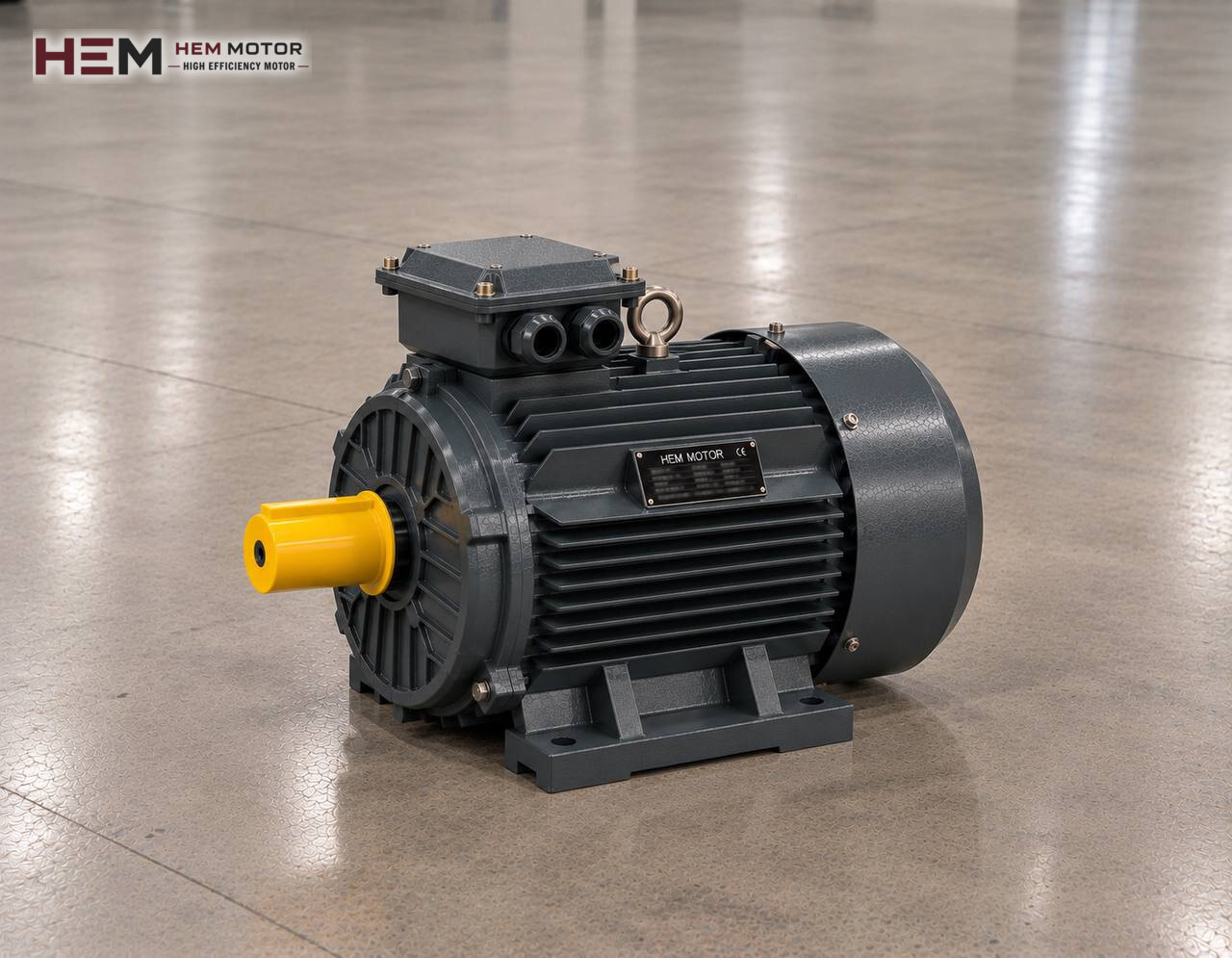
In a dusty environment, clean fins are a precondition for the motor running at normal temperature at rated load (representative image).
Prices and technical data are on the product pages; choose a model and order online.
What happens if the mill area counts as an explosive dust atmosphere?
Sugar dust can ignite when mixed with air at certain concentrations. At points such as the mill interior, cyclone, bag filter and pneumatic conveying line, the plant's risk assessment may set a zone classification. That classification is the responsibility of the operator and the competent engineer (general information; go by the plant's explosion protection document).
If the motor sits in a classified zone, a standard IP55 motor is not enough. This duty needs a special motor; it may fall outside the standard range in HEM Motor's 2026 catalogue, so ask us with the nameplate and application details.
A common solution is to move the motor out of the classified zone. The mill stays on the far side of a partition wall, and the motor drives it from outside by belt or extension shaft. A standard motor can be used in such a layout; but which side is classified is still decided by the plant document.
How are starting and protection planned?
Pin and hammer mill rotors are heavy, and running up to high speed can take longer than a few seconds. Throughout that time the motor draws starting current; if the thermal relay is not set for a long start, it trips before the mill reaches speed.
Star-delta starting is a common route when the mill starts empty. A soft starter clips the current peak, and the belts are spared the jolt of the first second. A converter allows both the start and the rotor speed to be adjusted. Our three-phase ranges are suitable for speed control with a frequency converter; for long running at low speed with full torque a separate fan may be needed; if the drive-to-motor cable is long, a dv/dt or sine filter is considered; these conditions are stated when ordering.
There is a rule on the feed side too: no product goes in before the mill reaches full speed. Interlocking the feed screw with the main motor's current or a speed signal lowers the risk of overload and choking. For protection settings, see our article on thermal relay and fuse selection.
Which HEM models suit an icing sugar mill?
Steps often met on small and medium pin mills:
132S2-2: cast iron, 7.5 kW, 2930 rpm, 13.7 A at 400 V, 24.4 Nm. For small pin mills and classifier drives.
160M1-2: cast iron, 11 kW, 2945 rpm, 19.6 A at 400 V, 35.7 Nm. For medium-capacity pin mills.
160M2-2: cast iron, 15 kW, 2945 rpm, 26.5 A at 400 V, 48.6 Nm. For hammer mills and higher capacity.
The real power comes from the figure the mill manufacturer gives for hourly throughput and fineness. Cast iron frame options are on the cast iron electric motors page and the standard range on our industrial motor page; prices and other powers are on our shop page.
If you send the mill's nameplate, rotor diameter and target fineness via our contact page, we will work out speed and pulley ratio together. All models are on the HEM Motor sales page.
Frequently Asked Questions
Can a 4-pole motor be used on an icing sugar mill?
It can, but the pulley ratio grows for the high rotor speed fine grinding needs. On a small pulley, belt slip and heating increase.
Does an IP55 motor withstand sugar dust?
In a normal dusty environment yes, provided the fins are cleaned regularly. A zone classified as an explosive dust atmosphere needs a special motor.
Why does the mill motor trip the thermal relay on starting?
The heavy rotor takes long to reach speed. A thermal relay not chosen for that run-up time trips early.
Does the classifier wheel need its own motor?
On fine grinders with a classifier, usually yes. Because fineness is set by that wheel's speed, it is mostly converter-driven.
HEM Motor Models Related to This Article
The cards show example models related to the topic. A suitable motor is not chosen by power alone: compare speed, voltage, mounting, shaft and connection dimensions on the product page; if unsure, send a photo of the existing motor’s nameplate on WhatsApp.
When choosing an electric motor for a feed dosing screw, the real goal is for every turn of the screw to carry the same amount at low flow; to achieve this, before moving on to mot... More Details
When choosing electric motors for a corrugated board line, two groups are thought about separately: the main drives that carry line speed and the many auxiliary drives around them.... More Details
In a rubber compound mixer the electric motor carries two loads at once: the continuous torque from the high viscosity of the compound and the impact peaks that occur every batch a... More Details
On a scrap metal separation belt the electric motor is chosen by the shaft power the belt load requires and by the type of magnet unit; a magnetic head pulley adds load to the belt... More Details
An electric motor for a PET bottle crusher works, in wet crushing, against a steadier load that the water cools and lubricates, and in dry crushing against a harsher, impact-heavy ... More Details
On a cable granulator the motor carries two separate loads: the continuous cutting load as the knives on the cutting rotor chop the cable, and the sudden impacts caused by cable bu... More Details
We use necessary and optional cookies to improve your experience, enhance content and analyse traffic. Under the GDPR, optional (analytics/marketing) cookies are only used with your explicit consent. Please choose your preference below.
Cookie Policy
 English
 Français
 Türkçe
 Español
 Русский
 العربية
 Deutsch
 Italiano