Electric Motor for a PET Bottle Crusher: The Difference Between Wet and Dry Crushing

Electric Motor for a PET Bottle Crusher: The Difference Between Wet and Dry Crushing

An electric motor for a PET bottle crusher works, in wet crushing, against a steadier load that the water cools and lubricates, and in dry crushing against a harsher, impact-heavy load exposed to heat and dust. For the same rotor diameter and capacity, dry crushing usually calls for a motor one size larger; in wet crushing the main risk is water splashing onto the motor and moisture collecting in the terminal box.

How do wet and dry crushing differ from the motor's point of view?

In wet crushing, water is fed continuously into the cutting chamber. The water cools the knives and rotor, washes off labels and adhesive residue at the very first stage, and stops the plastic from softening and smearing on the knife edge. As a result the motor draws a smoother current.

The price for this is a water circuit that needs its own maintenance.

Dry crushing has no such cooling. As bottle bodies and especially thick necks hit the knives, torque jumps instantly; as the knives dull, friction rises, the chamber heats up and the PET starts to soften. On a current graph this appears as a wave with frequent, sharp peaks.

The surroundings differ too.

On a wet line the area around the motor is damp and the floor is wet; in addition, water vapour from the washing tank, friction washer and centrifugal dryer circulates in the same hall and condenses on the outside of the motor frame on cold mornings. On a dry line fine PET dust and label paper fly through the air, stick to the fan cover and also clog the panel filters next to the motor. These two environments call for different protection details on the same motor.

Why does dry crushing need more power?

There are three reasons: friction, heat and knife wear. Without water, friction between plastic and knife increases, and part of the energy goes into heat rather than crushing. Knives dull faster than on a wet line; a dull knife crushes the same piece instead of cutting it.

In practice, for the same frame and rotor, manufacturers either reduce capacity for dry operation or move the motor up one size (general information; confirm with the machine manufacturer). Which route was taken is stated in the machine's catalogue.

On a machine without a nameplate, the decision is made by measuring the old motor's current under full feed.

Feed rate must be kept constant during the measurement.

If the operator alternately fills and empties the hopper, average current looks low and peak current high, and the motor is picked from the wrong size. To avoid this, the measurement is taken during a normal production hour, with the feed belt running at constant speed and the knives neither freshly sharpened nor completely dull; at least half an hour is logged and the average and peak values are noted separately. A measurement with dull knives makes the motor look larger than needed; one with freshly sharpened knives makes it look smaller.

Which motor properties does impact loading stress?

On a crusher the motor's most stressed point is breakdown torque. When a lot of bottles drop into the hopper at once or a stray metal part gets mixed in, the rotor slows and the motor briefly runs far above rated torque. If the motor cannot ride through that moment on its breakdown torque, it stalls and the thermal relay trips.

Flywheel effect helps here. On machines with a heavy rotor and a large belt pulley, the rotating mass softens the momentary impact; the motor does not carry the peak load alone. The price is starting: a heavy rotor takes a long time to accelerate, and with star-delta starting, switching to delta before the motor reaches speed causes a large current surge.

That is also why the thermal setting matters; most problems come from here. The relay is set to rated current, but on a crusher with a long run-up the relay class (for example Class 20 instead of Class 10) has to suit the starting time. The topic is covered in detail in the article on thermal relay and fuse selection.

How is the motor protected on a wet line?

The motor itself is not washed, but it is constantly exposed to splashing water. Standard IP55 protection is enough for most wet crushers, provided the terminal box is placed facing up or sideways, away from the water flow. IP56 protection and an anti-condensation heater are order options.

In addition:

  • The motor is mounted beside or above the chamber's water drain, not below it.
  • The cable entry faces down and a drip loop is left in the cable, so water does not run along the cable into the box.
  • The belt guard is of the closed type, so water flung from the pulley does not hit the motor frame.
  • If the line will stand for a long time, winding insulation resistance is measured before restarting.

The mounting arrangement is determined by the machine frame and stated with the order. On crushers the motor is usually foot-mounted (B3) on a slide rail, and belt tension is adjusted with the rail.
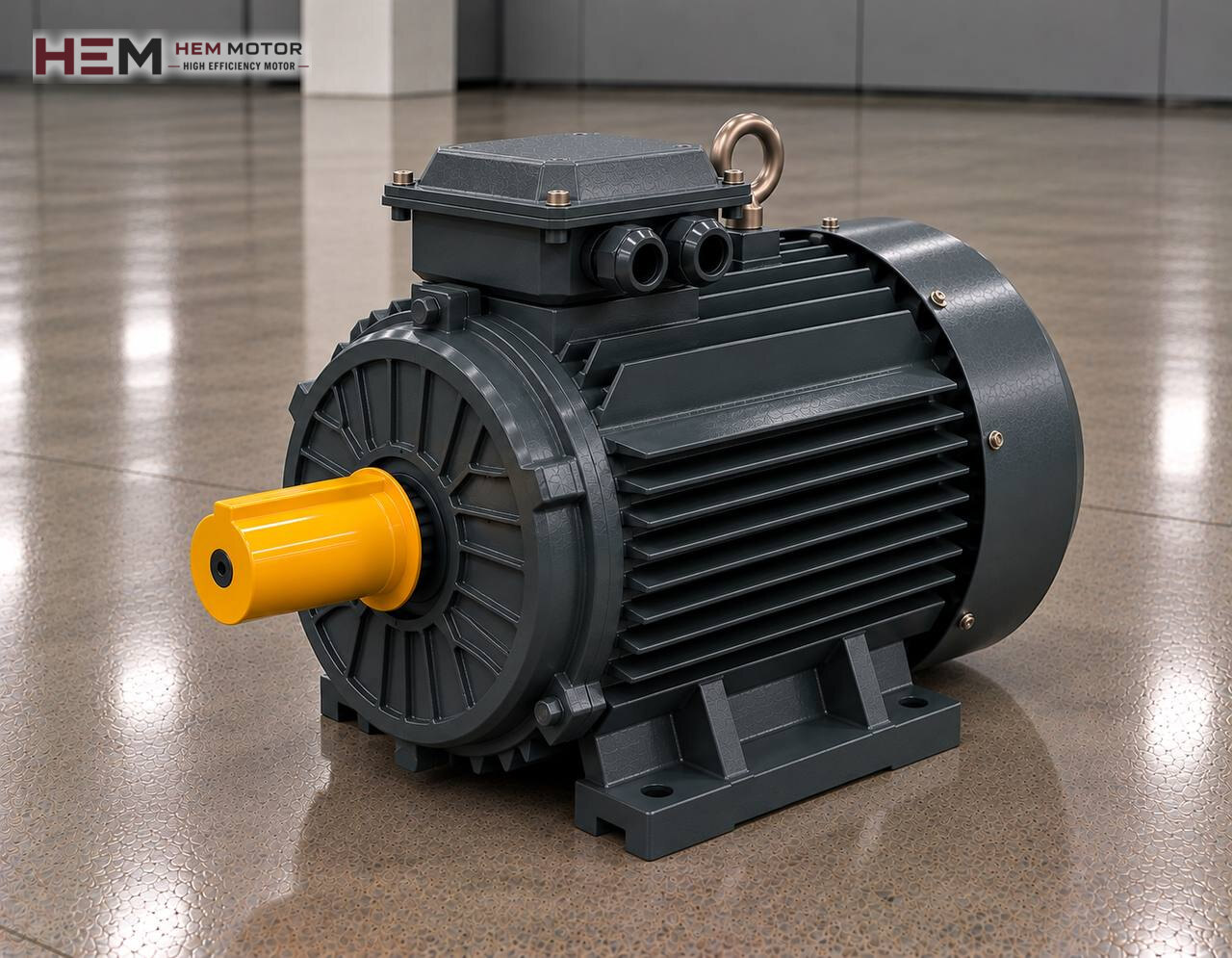

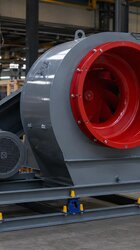
Electric motor driving a plastic crusher
On crushers the motor is usually belted to the rotor; a heavy rotor partly damps the impact load (representative image).

Prices and technical data are on the product pages; choose a model and order online.

How are dust and heat managed on a dry line?

The most common motor problem on a dry crusher is a clogged fan cover. Fine PET dust and bits of label stick to the cover grille, cooling air drops and frame temperature creeps up over weeks. Nobody notices until the thermal relay trips.

A simple routine prevents this. If there is a dust extraction system, the motor goes on the clean-air side, and hot air leaving the cutting chamber is not directed at the motor fan. At the end of every shift the fan cover is cleaned with compressed air; once a month frame temperature is read from the same spot with a non-contact thermometer and written in a log. The temperature trend gives warning long before a failure.

Right next to the extraction inlet is the worst place for a motor.

How do you read a selection table for wet and dry crushing?

The table below sets side by side the differences between the two methods that affect motor choice. The values show the general trend; for a specific machine the manufacturer's data take precedence.

TopicWet crushingDry crushing
Load characterSmoother, water coolsFrequent, sharp impacts
Power requirementCatalogue rated valueOften one size more
Knife wearSlowerFaster, raises current
Main risk for the motorWater and moisture, terminal boxDust, clogged fan cover, heating
Recommended measureCorrect box orientation, drip loop, IP56 if neededEnd-of-shift cleaning, temperature log

Which motor models suit this task?

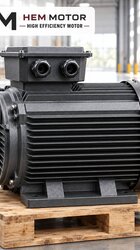
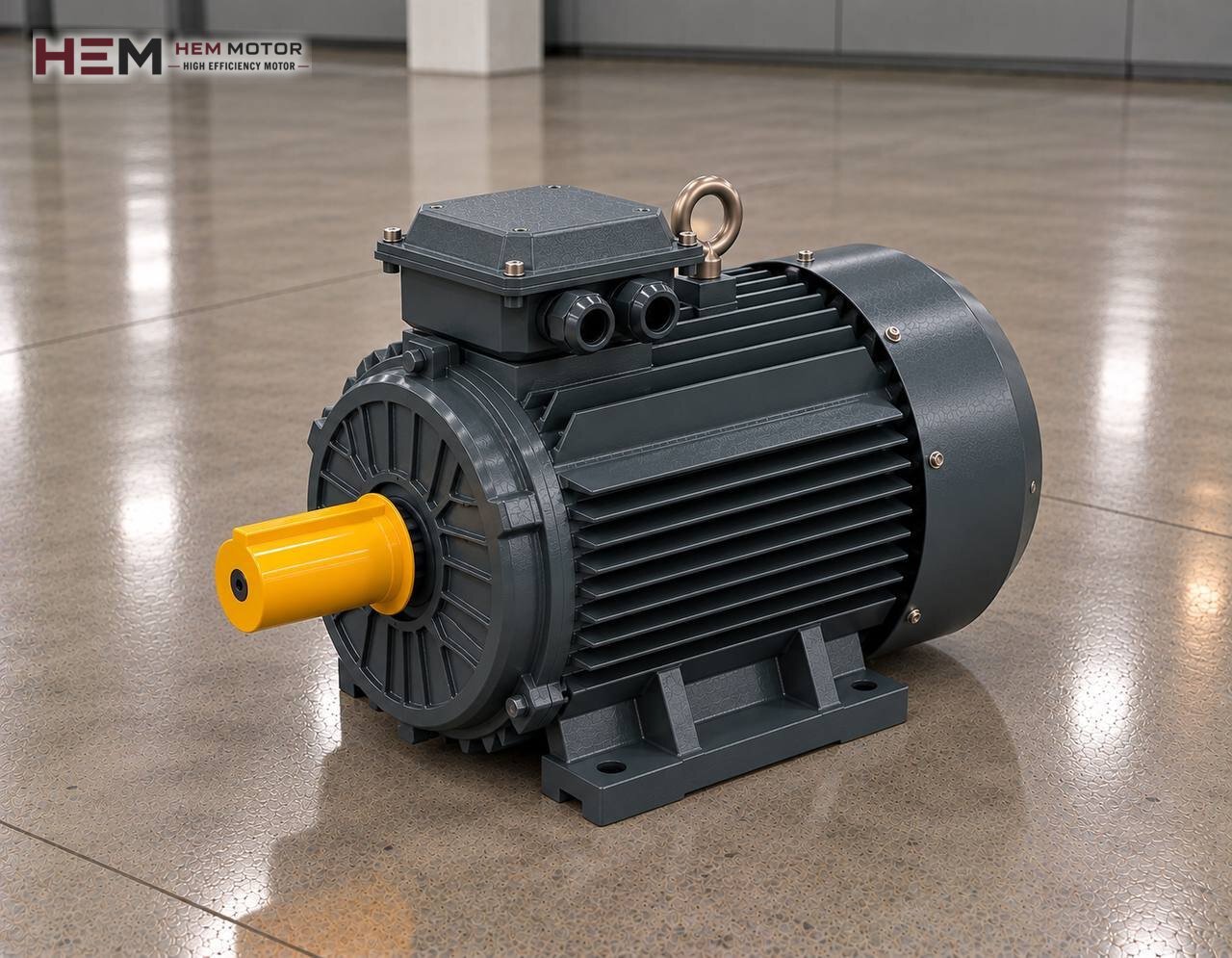
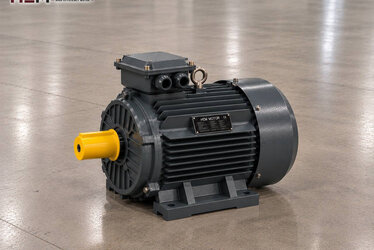
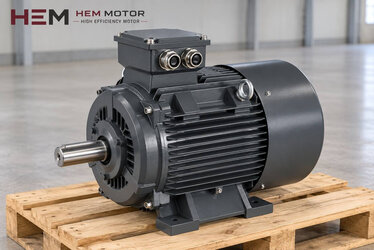
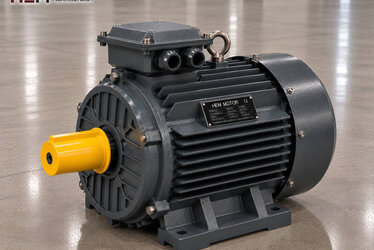
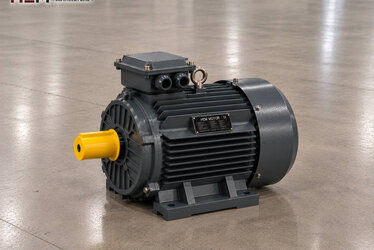
On medium-capacity PET crushers the motor is usually between 15 and 30 kW, 4-pole and belted to the rotor. Because of impact loading and vibration, a cast iron frame is preferred. The options line up as follows in our electric motor shop:

  • 160L-4: 15 kW, 1465 rpm, 97.8 Nm, 27.3 A. For small and medium lines running wet.
  • 180L-4: 22 kW, 1470 rpm, 142.9 Nm, 39.7 A. The size to look at if the same machine will run dry or capacity will be raised.
  • 200L-4: 30 kW, 1475 rpm, 194.2 Nm, 53.8 A. For lines with large rotors crushing a mix of thick-walled bottles and crates.

All have IP55 protection, class F insulation and a 400/690 V winding; connected in delta on a 400 V supply they are suitable for star-delta starting. Other powers of the cast iron series can be seen on the cast iron frame motors page, and further examples for factory machines on the industrial motor page.

If you write to us with your crusher's current motor nameplate and whether the line runs wet or dry, we will assess together whether staying with the same frame or moving up one size is right. For the full asynchronous series see three-phase asynchronous motors, and for price and stock our sales page.

Frequently Asked Questions

Can the motor be downsized if a wet system is added to a dry crusher?

It is possible, but current should first be measured in the new set-up. Once water is added, feed rate is usually raised too, which can take back the margin gained.

Why does the crusher motor trip the thermal relay so often?

The most common causes are dull knives, a clogged fan cover and irregular feeding. If the run-up time is long, the thermal relay class should be checked as well.

Are 2-pole motors used on PET crushers?

They can be seen on small direct-coupled granulators. On belted medium and large crushers a 4-pole motor is more common, because the pulley ratio and torque balance are easier to set up.

Does the motor need a roof on a wet line?

A simple splash guard is usually enough. A fully enclosed cabin, on the other hand, prevents the motor from cooling and is not recommended.

HEM Motor Models Related to This Article

The cards show example models related to the topic. A suitable motor is not chosen by power alone: compare speed, voltage, mounting, shaft and connection dimensions on the product page; if unsure, send a photo of the existing motor’s nameplate on WhatsApp.

15 kW 1500 rpm Cast Iron Frame Electric Motor 160L-4

160L-4

15 kW · 1500 rpm

  • Cast iron frame · IEC 160L
  • 1465 rpm · IP55
  • Mounting: B3 foot; flange (B5/B14/B35) depending on frame, confirmed with the order

US$665.08 (€608.69)

View product
22 kW 1500 rpm Cast Iron Frame Electric Motor 180L-4

180L-4

22 kW · 1500 rpm

  • Cast iron frame · IEC 180L
  • 1470 rpm · IP55
  • Mounting: B3 foot; flange (B5/B14/B35) depending on frame, confirmed with the order

US$901.75 (€825.30)

View product
30 kW 1500 rpm Cast Iron Frame Electric Motor 200L-4

200L-4

30 kW · 1500 rpm

  • Cast iron frame · IEC 200L
  • 1475 rpm · IP55
  • Mounting: B3 foot; flange (B5/B14/B35) depending on frame, confirmed with the order

US$1,211.23 (€1,108.54)

View product

Similar Articles