English
 Français
 Türkçe
 Español
 Русский

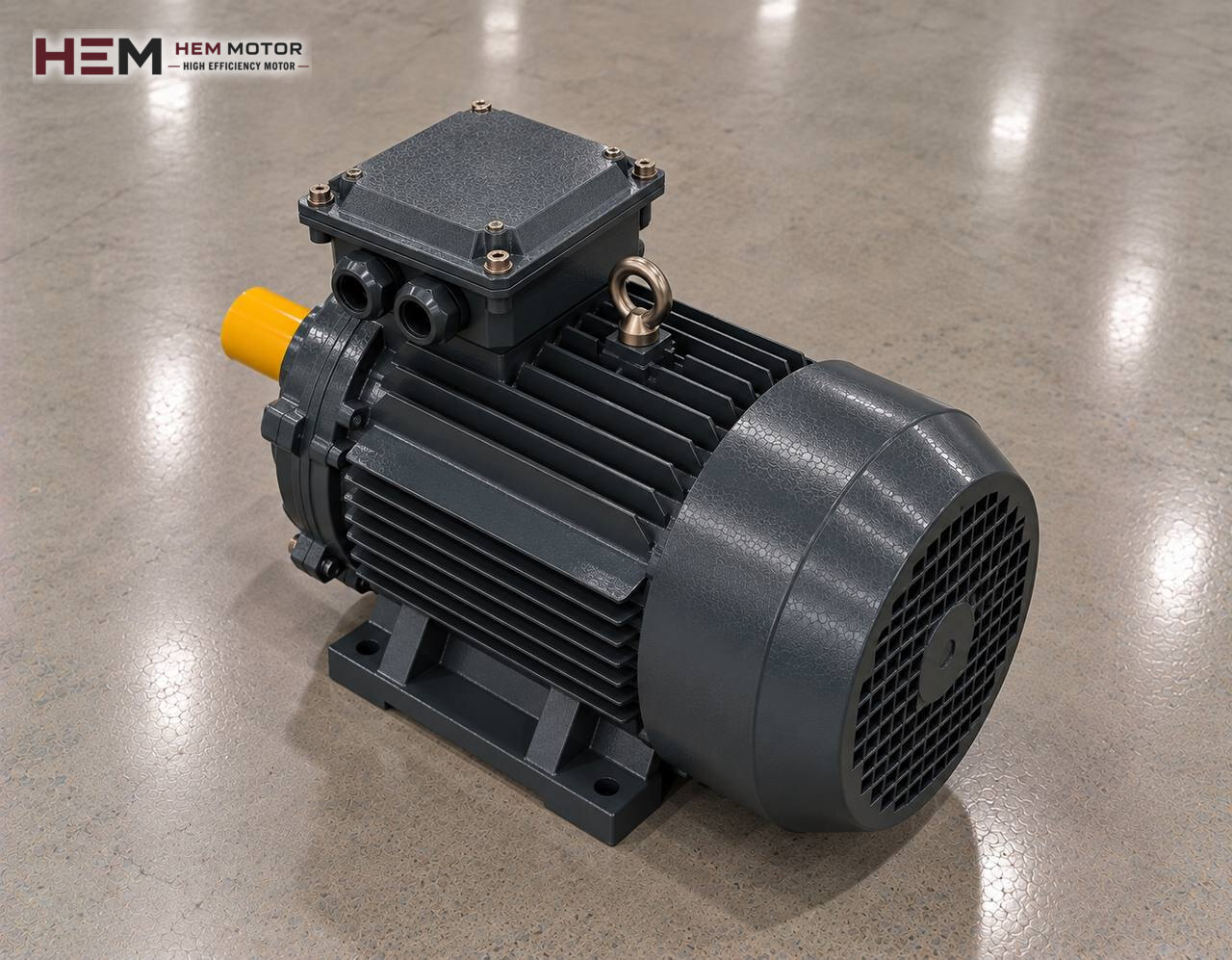
A stenter (tenter frame) holds the fabric by its selvedges on pins or clips and carries it, stretched to width, through a row of oven compartments for drying and heat setting. Inside each compartment the hot air is moved by fans and blown through nozzle ducts onto the top and bottom of the fabric. This page deals only with the three-phase motor that turns those fans; for the other drives in a textile line, see the textile machinery electric motors page.

What the Fan Motor Does in a Stenter Compartment
Each compartment has one or more circulation fans. The fan impeller turns inside the compartment, next to the heating surfaces (gas burner, thermal oil or steam heat exchanger), while the motor sits on the outer wall, outside the hot zone. The fan shaft passes through a bearing housing in the wall and is connected to the motor either directly by a coupling or by belt and pulley. Depending on the machine, the motor may be horizontal on the side wall or vertical on the roof.
Besides the circulation fans there are exhaust (stack) fans that remove the moisture driven out of the fabric and the vapour of finishing chemicals. Some lines also have a separate air section at the exit to cool the fabric. All of these fans form a continuously running load with infrequent starts.
The fan motor does not move the fabric. The main drive of the pin chain, the overfeed rollers, the width adjustment and the padder, which need speed matching across the line, are usually run by the machine builder's synchronised drive system with servo or machine-specific motors. A standard asynchronous motor is not automatically compatible with these motions; the decision there belongs to the machine builder.
Information to Collect Before Choosing a Stenter Fan Motor
The starting point is the fan, not the motor. The impeller diameter, blade type and operating speed decide how much power the motor must deliver. The number of compartments and fans per compartment shows how many motors and spares are needed. The transmission also matters: a direct-coupled fan runs at the motor's own speed, while on a belt-driven fan the pulley ratio sets the speed.
The nameplate of the existing motor provides most of this at once. Power, speed, voltage and connection on the plate, read together with the feet or flange arrangement on the frame, give a solid starting point for the new motor. Whether the fans are fed by an inverter or directly from the mains should also be known from the outset.
Where Do Fan Power and Speed Come From?
The shaft power a stenter fan needs is set by the machine or fan manufacturer; the motor covers that power with some margin. Quoting a single kW value as "right for a stenter fan" would be wrong; two machines of the same width can have fans of different diameter and speed.
Fan power changes roughly with the cube of speed. Fitting a larger pulley for more air looks like a small change, but it easily pushes the motor above its rated current. Air density also plays a role: when the oven is cold, the air inside is denser and the fan draws more power at the same speed. For this reason some machines start the fans at low speed or with the damper closed. If a change is planned, go back to the fan manufacturer's data.
On the speed side, 4-pole motors (about 1,500 rpm synchronous) are the frequent choice for stenter fans; with belt drives 2- or 6-pole motors are also used. The fan's rated speed and the pulley ratio tell which one is correct. You can browse models by speed on the 1500 rpm electric motors page.
| Stenter section | Part turned by the motor | Check first | Example HEM model |
|---|---|---|---|
| Drying/heat-setting compartment | Circulation fan impeller | Fan speed, pulley ratio, inverter use | 7.5 kW 132M-4 (1,460 rpm) |
| Stack outlet | Exhaust fan impeller | Duct resistance, oily vapour, motor position outside the air stream | 5.5 kW 132S-4 (1,460 rpm) |
| Wide-compartment lines | Large-diameter circulation fan | Current at cold start, vertical/horizontal mounting | 11 kW 160M-4 (1,465 rpm) |
| Chain and overfeed drive | Fabric transport system | Synchronised drive; servo or builder-specific motor | Line builder's decision |
The models in the table are examples only; the final choice depends on the fan data, the existing nameplate and the mounting dimensions.
Connection on the Compartment Wall: Frame, Shaft and Foot Dimensions
The first item to compare when replacing is the IEC frame size (e.g. 132M, 160M). Next comes the mounting type: foot-mounted B3 on a bracket outside the compartment, flange-mounted B5 or B14, B34/B35 with both, or vertical versions on the roof. Shaft diameter and length, key, foot hole spacing, shaft height and flange size must be compared one by one with the old motor. On the electrical side, voltage, connection (star/delta) and current are checked as well.
On direct-coupled fans coupling alignment matters; on belt-driven fans the pulley axis and the adjustment travel of the motor slide rails. You can compare dimensions with the frame size table; the available mounting arrangements are explained in the mounting arrangements answer. Even when the dimensions match, the final check is done on site.
Heat, Oil Fumes and Lint Around the Oven
Catalogue ratings apply to ambient temperatures between −15 and +40 degrees Celsius and altitudes up to 1000 m. The roof and side walls of stenter compartments can exceed this in summer; if the motor location is hotter, state it in the order. The motors come with IP55 protection and class F insulation.
Cutting off the heat that the fan shaft carries from the hot zone to the motor is the job of the bearing housing and cooling disc; this arrangement belongs to the machine. Designs where the motor shaft reaches directly into the compartment or the motor sits in the hot air stream are not intended for a standard motor.
Oily fumes from finishing chemicals leave a sticky film in the exhaust line and around the motor. Lint from the fabric clings to this film and clogs the fan cover grille. Motor cooling weakens and the winding heats up. Regular cleaning and a PTC or PT100 winding sensor (order option) make this risk visible. For lines that cool down over the weekend, an anti-condensation heater can also be requested.
Air Velocity Control, Inverter and Starting
On many stenters fan speed is adjusted by an inverter; air velocity is lowered for light knits and raised for heavy wovens. Our three-phase series are suitable for speed control with a frequency inverter; details are on the inverter-compatible electric motors page. Because fan load drops quickly at low speed, the motor usually cools itself with its own fan; however, if long low-speed running in a hot environment is planned, the need for a separate fan is assessed. With a long cable between panel and motor, the need for a dv/dt or sine filter is checked.
Stenter fans do not start and stop often during the day; the demanding moment is the first start of a large impeller in a cold oven. Where lines run directly on the mains with star-delta starting, check that the motor winding connection suits it.
Information to Send When Replacing a Failed Fan Motor
- A legible photo of the motor nameplate (power, speed, voltage, current).
- Compartment number and motor duty: circulation fan or exhaust fan?
- Mounting type and position: horizontal foot-mounted, flange-mounted or vertical on the roof.
- Transmission: direct coupling or belt and pulley; pulley diameters.
- Whether the fan is fed by an inverter or from the mains.
- Summer temperature at the motor location and altitude.
- Required quantity and spare motor needs.
You can send this information via WhatsApp; how to do it is explained in the send your motor nameplate article. For the phone and WhatsApp line, use the contact page.
Motor Groups to Review for Stenter Fans
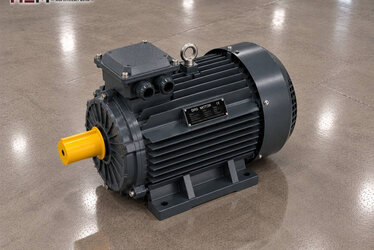
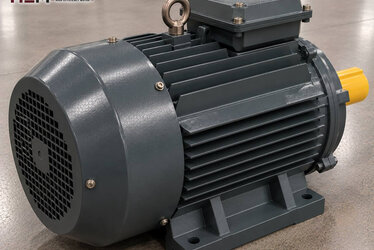
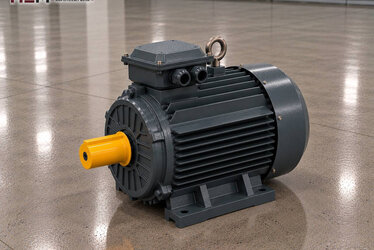
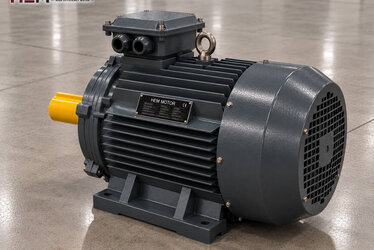
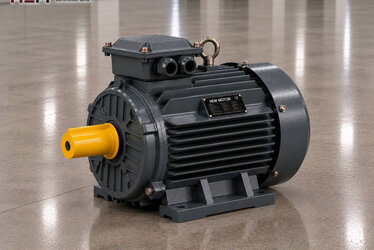
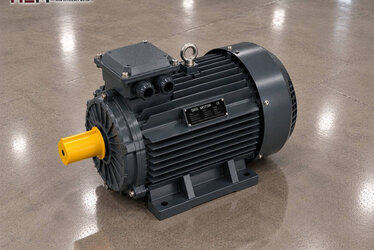
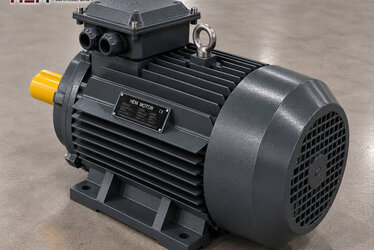
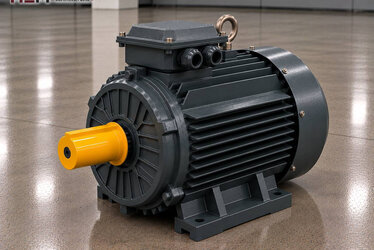
All products are listed on the buy electric motors page. For heavy duty around the oven, most users look at the cast iron frame electric motors group. As examples, the 5.5 kW 132S-4, 7.5 kW 132M-4 and 11 kW 160M-4 can be reviewed. These are examples; suitability for the machine is confirmed separately with fan data and dimensions. General information on fan drives is on the centrifugal fan electric motor page.
Frequently Asked Questions
Why do bearings wear quickly on stenter fan motors?
Heat coming from the fan shaft, an over-tensioned belt and lint clogging the fan cover are the most common causes. Checking belt tension and the cover grille regularly extends service life.
Can the same motor be used for the circulation fan and the exhaust fan?
If power, speed and dimensions are the same, the same model can be used. However, since the exhaust fan sits on the line carrying oily vapour, check separately that the motor stays out of the air stream.
Can I fit a larger pulley for more air?
Because fan power rises roughly with the cube of speed, a small speed increase can overload the motor. Check the fan manufacturer's data first; if needed, a motor one power step higher is assessed.
Can I also replace the motor driving the fabric chain with the motors on this page?
Chain and overfeed drives run synchronised to line speed and often use servo or machine-specific motors. Replacement in this section is not recommended without the machine builder's drive information.
Why does the current look high when starting in a cold oven?
Cold air is denser, so the fan draws more power at the same speed. As the oven warms up, the current falls. Assess the starting current together with the machine's damper and inverter settings.