English
 Français
 Türkçe
 Español
 Русский

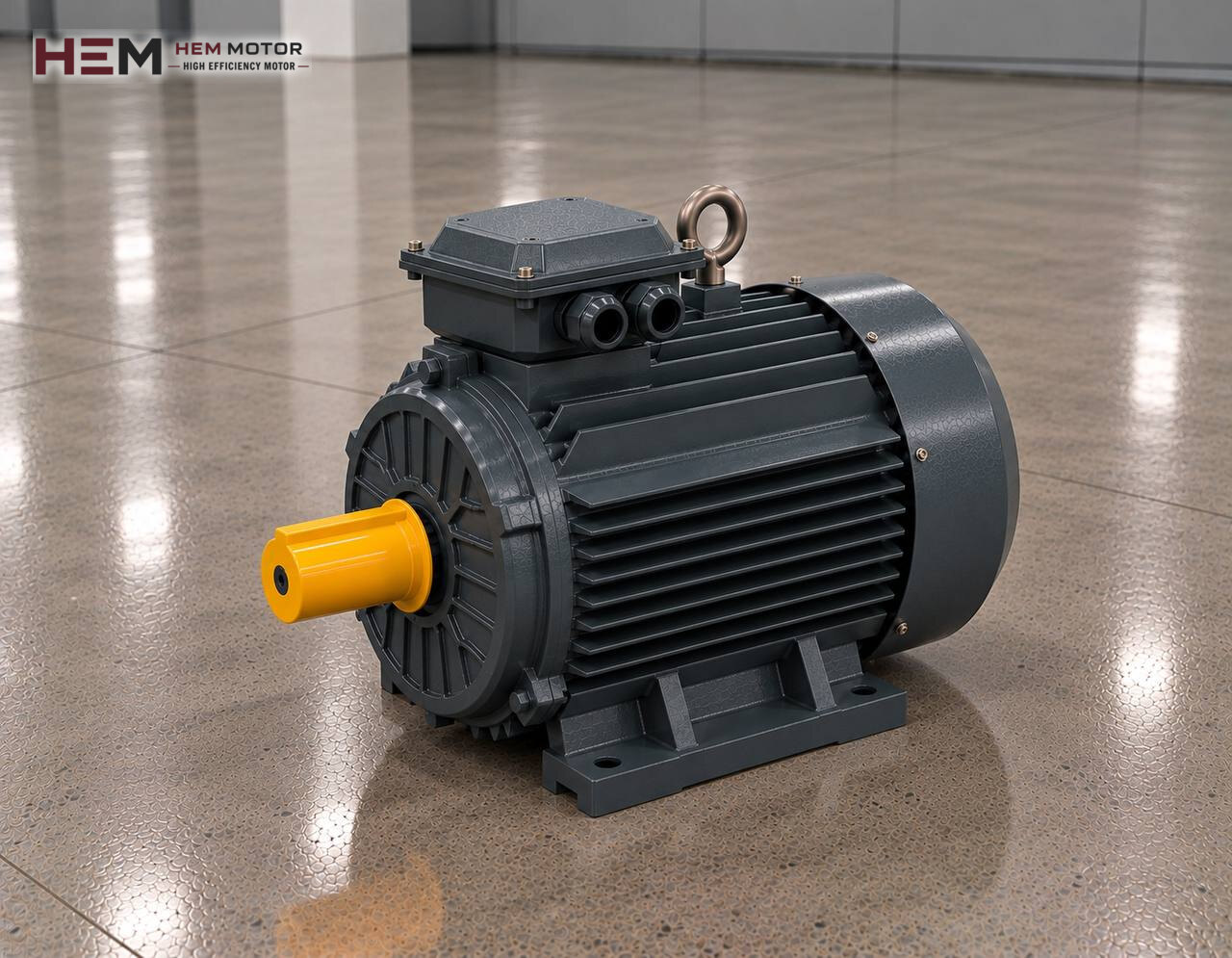
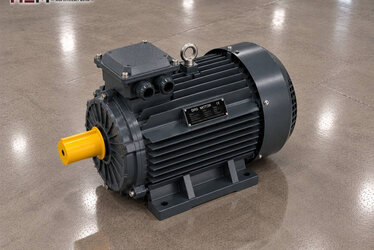
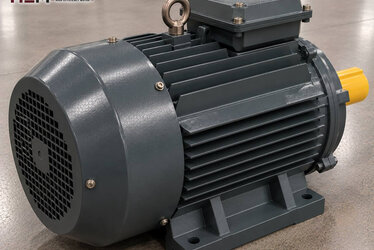
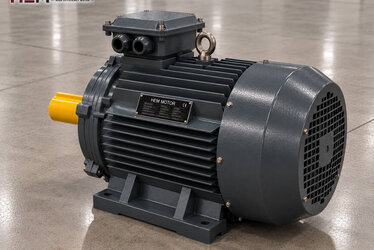
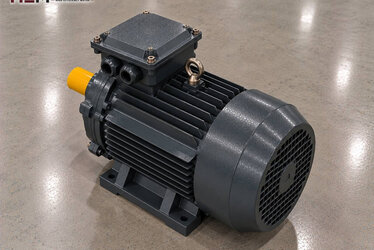
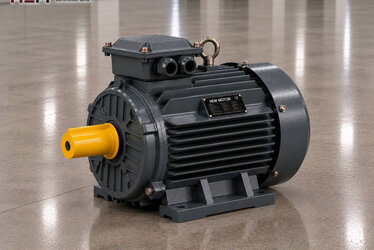
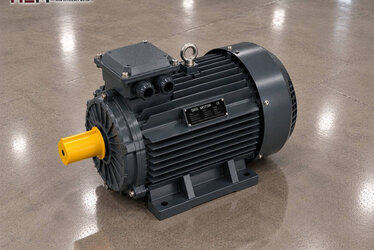
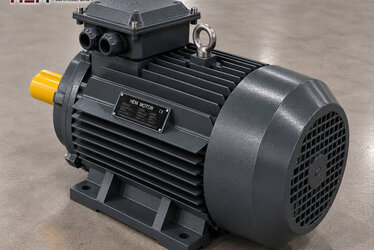
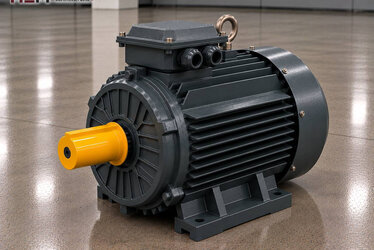
An industrial centrifuge, also called a spin extractor or hydro-extractor, spins a perforated basket at high speed to remove water mechanically from wet textile goods before they go to drying. In dye houses it handles bobbins and fabric, in garment finishing it handles washed garments, and in laundries it handles the sheets that pile up at the end of a busy day. This page covers the electric motor that turns that basket; other drives in the textile sector are gathered on the textile machinery electric motors page.

How the Basket Removes Water and What the Motor Does
The basket wall is perforated stainless sheet. As the basket accelerates, the goods are pressed against the wall and the water in them is flung through the holes into the outer tub by centrifugal force, then drains through the outlet pipe. How much water is removed depends on basket diameter, speed and spin time; the machine maker sets these three values according to the type of goods.
The motor's job differs at each stage of this cycle. First it brings the loaded basket from standstill up to running speed; this is the hardest part of the cycle. Then it holds the speed; here the load is not as heavy as in the first seconds, because the basket gets lighter as water leaves. Finally the basket is stopped and unloaded. Because a batch is short, the motor makes many starts during the day.
Drive Arrangements: Belt, Vertical and Bottom-Driven
Horizontal belt-and-pulley motor
In the most common arrangement the motor is mounted beside the housing on feet (B3) and turns the basket shaft through V-belts. The pulley ratio sets the basket speed; if the pulley is to be kept when the motor is replaced, the pole number must stay the same. The belt also softens the sudden load at start-up to some extent.
Vertical motor under the basket
On some machines the motor stands vertically under the basket and turns it directly or through a short belt. In that case the motor is fitted shaft up (V3, V6) or shaft down (V1, V5); the required position must be written clearly in the order, because bearing arrangement and axial load are assessed according to it. More on vertical mounting is in the vertical mounting motor guide.
Suspended housing
The basket, motor and housing often swing together on springs or rubber mounts. This movement passes to the motor as well; fixing bolts, cable entry and terminal box must be secured to withstand vibration. Using flexible cable and not tying the cable taut to the housing is a practical measure.
Starting, Imbalance and Stopping
A basket full of wet bobbins or fabric is a large rotating mass. A direct-on-line motor draws starting current for a long time while accelerating this mass; the larger the basket, the longer it takes. If this long start is not considered when choosing thermal protection and fuses, the protection can trip on every batch. That is why star-delta, soft starters or frequency converters are often seen on centrifuges. Which method is chosen depends on the machine maker's recommendation and on how well the supply can handle starting current.
Converter operation has an extra benefit on a centrifuge: because speed can be raised in steps, the goods spread more evenly in the basket, and if imbalance is detected at low speed the machine can be stopped. HEM's three-phase motors are suitable for converter operation; since the motor does not stay at low speed for long, cooling is usually not an issue on a centrifuge, but cable length and filter needs should still be discussed at the order stage. A summary is given in the inverter operation question.
When stopping, the energy stored in the basket has to go somewhere. This is done by the machine's mechanical brake, the converter's braking resistor or both. The lock that keeps the lid closed until the basket has fully stopped is also part of the machine's safety system. If a brake is required on the motor, state it in your order.
Because repeated starts throughout the day heat the winding, a PTC sensor fitted in the winding is a meaningful order option here; it monitors winding temperature directly, which a thermal relay cannot see.
The Motor in a Dye House or Laundry
The area around a centrifuge is wet: goods drip during unloading, steam rises from the drain channel, and in dye houses there can be chemical vapour in the air. Our motors have IP55 protection and are designed against splashing water; direct water jets or submerging the motor fall outside this rating. If the motor is under the basket, the machine's drip shield and drainage should protect it; this depends on the machine maker's design. If a different protection is needed, state it in your order.
On this machine, where vibration is pronounced, a rigid cast iron frame is an advantage; on small bench-top or laboratory centrifuges an aluminium frame may be enough. For a motor that stands for long periods in a humid environment, an anti-condensation heater is also among the order options.
Example HEM Models for Centrifuges
| Centrifuge type | Motor load | Value to check | Example HEM model |
|---|---|---|---|
| Small garment centrifuge | Short batches, frequent starts | Start time, PTC | 2.2 kW, 1,450 rpm, 100L1-4 cast iron |
| Medium laundry centrifuge | High inertia, belt-driven | Pulley ratio, brake | 5.5 kW, 1,460 rpm, 132S-4 cast iron |
| Bobbin centrifuge (dye house) | Heavy basket, long acceleration | Starting method | 7.5 kW, 1,460 rpm, 132M-4 cast iron |
| Large fabric centrifuge | Very high inertia | Converter, braking resistor | 15 kW, 1,465 rpm, 160L-4 cast iron |
The models are examples only. The final selection is based on the power given by the centrifuge maker, basket speed, pulley ratio and mounting position; for a replacement, the nameplate of the removed motor is the soundest reference.
What to Send Us With Your Order
For a quotation, send: machine type and basket diameter, motor power (kW), speed (rpm), mains voltage, mounting type (B3 foot, flange or V1, V3, V5, V6 vertical), pulley or coupling connection, brake and PTC requirement, quantity. Depending on the frame, B5, B14, B34 and B35 designs are also available; flange and shaft dimensions are confirmed at the order stage.
If you are looking for an equivalent, share the motor's nameplate photo. All models are listed on the cast iron frame motors and buy electric motors pages. For questions, reach us on WhatsApp or by phone; details are on the contact page.
Frequently Asked Questions
Why does the centrifuge motor heat up and stop on every batch?
On a centrifuge working in short batches the motor starts many times an hour, and every start heats the winding. Softening the starting method, giving the motor time to cool between batches and monitoring winding temperature with a PTC sensor reduce this problem.
Can I fit a faster motor to increase basket speed?
Do not do this. The basket, housing and suspension are designed for a certain maximum speed; a higher speed increases centrifugal load and can be dangerous. Speed changes should only be made with the machine maker's approval.
What should I specify when ordering a vertical centrifuge motor?
State whether the shaft points up or down, the flange type and size, the shaft diameter and whether the basket is connected to the motor shaft directly or by belt. This information ensures the correct mounting position and bearing arrangement are chosen.
Should the centrifuge brake be on the motor itself?
On most machines the brake is in the machine's mechanical system or in the converter's braking resistor. If a brake is needed on the motor, state it in your order; the option is evaluated at the quotation stage.