English
 Français
 Türkçe
 Español
 Русский

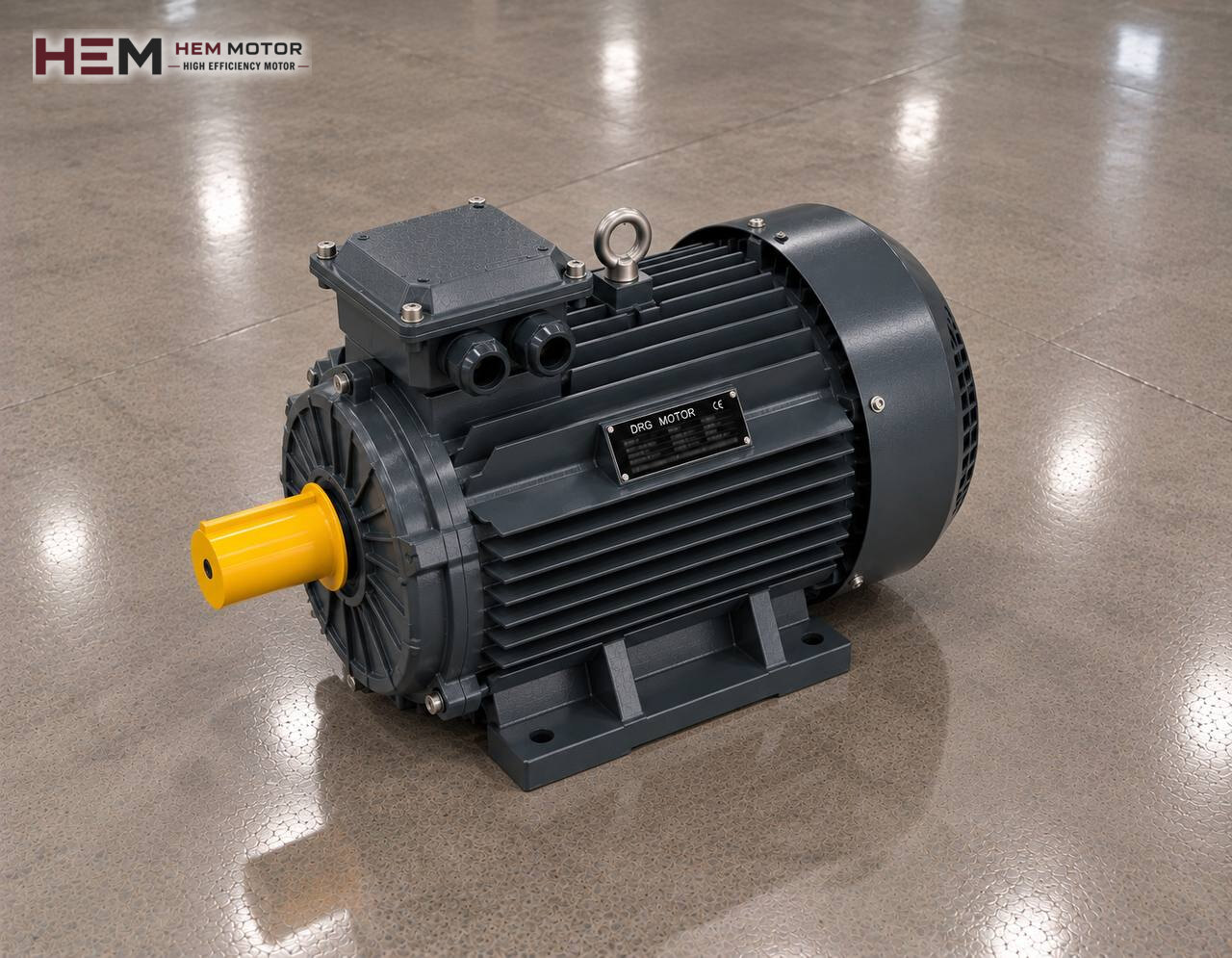
In a carpet washing workshop a rug moves through dust removal, washing, spin-drying and wrapping stations, and every station runs on its own electric motor. This page focuses on the brush and conveyor drives of the automatic carpet washing machine and then on the motor of the carpet spin dryer. For other machines in the textile field, the textile machinery electric motors page is a general starting point.

The Carpet's Route Through the Workshop
The process usually starts with the dust removal machine. Rubber or belt beaters on a rotating shaft strike the back of the rug and knock out the sand and dust trapped in the pile; an extraction fan in the same housing draws that dust into a filter. The rug then enters the automatic washing machine: a conveyor belt or rollers carry it forward while rotating brushes set across the width scrub the surface with shampoo water, and the last section rinses and squeegees it.
The wet rug then goes to the spin dryer. It is placed in the drum as a roll, and the drum spins at high speed so that centrifugal force throws the water out. At the final station a roller rolls up the dried rug and wraps it in film.
From the motor's point of view this chain means three different load types: beater and brush shafts carry a continuous but fluctuating load; the conveyor needs a slow, geared, constant torque; and the spin drum is a high-inertia load that accelerates for a long time. Each one needs to be considered separately.
Brush and Conveyor Drive in the Washing Machine
Brush shafts
The brushes are usually turned through a belt and pulley or directly through a gearbox. The friction created as the bristles press into the rug changes with pile height, wetness and pressure setting. On a thick wool rug the motor current rises clearly compared with a thin machine-made rug. Judging the brush motor by its no-load current is therefore misleading; the current measured on the heaviest rug should be compared with the 400 V rated current on the product page.
Conveyor belt and rollers
The belt that carries the rug through the machine moves slowly, so a four-pole motor is used together with a gearbox. A soaked rug is much heavier than a dry one, and the belt has to set this load in motion at every start. A frequency converter is often used to adjust belt speed to how dirty the rug is. General information on geared arrangements is on the electric motors for reducers page.
Water and shampoo pumps
The pumps that feed washing water to the brushes and draw off dirty water are low-power units. Their motor is selected from the pump maker's flow and pressure data; details are explained on the pump electric motors page.
What the Spin Drum Asks of the Motor
In a carpet spin dryer the hardest moment for the motor is the start. While the drum, full of wet carpet, comes up from standstill to running speed, the motor draws high current for a long time; depending on drum diameter and load, acceleration can take much longer than a few seconds. On a motor connected directly to the mains this heats the winding and can make the thermal relay trip early.
The second issue is imbalance. If the rug is not placed evenly in the drum, the rotating mass shifts to one side and vibration rises at the motor shaft and bearings. The drum's spring or rubber-mount suspension and its imbalance detection belong to the machine maker's design; on the motor side the task is to keep belt or coupling alignment correct and to listen to bearing noise regularly.
The third issue is stopping. Once the water is out, the drum should stop quickly; this is done by the machine's own mechanical brake or by the converter's braking resistor. If a brake is needed on the motor itself, state it in your order.
For these three reasons soft starters and frequency converters are common on spin drums: a longer acceleration time limits starting current, and because speed rises gradually, imbalance is noticed earlier. Our three-phase motors can be driven by a converter; where the motor will stay at low speed for long periods or the cable between converter and motor is long, cooling and filter needs are discussed at the order stage. More on this is on the inverter-compatible electric motors page.
Protecting the Motor in a Wet Workshop
A carpet washing workshop is wet all day: the floor is hosed down, foamy water splashes onto machine housings, and steam and condensation form above the washing section. Our motors have IP55 protection; this rating is designed against splashing water, but hosing water directly onto the motor, pressure washing or leaving the motor standing in water are outside its scope. Fitting a splash guard over the motor, placing the cable entry facing downwards and checking the terminal box gasket are measures for whoever builds or runs the machine. If higher protection is needed, state it in your order.
In a motor that is switched off in the evening and started in a cold, damp room in the morning, condensation can collect in the winding; an anti-condensation heater is an order option for this case. For a spin motor that starts many times a day, a PTC sensor can also be requested to monitor winding temperature.
For frame choice, an aluminium frame is practical for small brush and conveyor motors because of its low weight; on the spin drum, where vibration is pronounced, a rigid cast iron frame is the better fit. The difference between the two is explained in the aluminium or cast iron frame question.
Example HEM Models for a Carpet Washing Line
| Station | Motor load | Value to check | Example HEM model |
|---|---|---|---|
| Dust removal beater shaft | Continuous, impact | Belt tension, bearing load | 2.2 kW, 1,450 rpm, 100L1-4 aluminium |
| Washing brush | Continuous, fluctuating friction | Current on the heaviest rug | 1.5 kW, 1,445 rpm, 90L-4 aluminium |
| Conveyor belt | Slow, geared | Gearbox flange, speed adjustment | 0.75 kW, 1,420 rpm, 80M2-4 aluminium |
| Medium spin drum | High inertia, long start | Starting method, brake, vibration | 7.5 kW, 970 rpm, 160M-6 cast iron |
| Large spin drum | Very long acceleration | Converter, PTC | 11 kW, 1,465 rpm, 160M-4 cast iron |
These models are for guidance only; the final selection depends on the power stated by the machine maker, drum and brush speed, pulley ratio and mounting arrangement. If you are replacing a motor on an existing machine, the old motor's nameplate is the most reliable starting point.
In small workshops with a single-phase supply, the single-phase electric motor series in the 0.18–5.5 kW range can be considered for light stations; for large spin drums a three-phase motor is the right choice.
What We Need for a Replacement or Order
To suggest the right motor quickly, please send: the machine and station the motor will be fitted to (beater, brush, conveyor, spin drum), power (kW), speed (rpm), supply voltage, mounting type, pulley or coupling connection and the quantity required. Depending on frame size, B3 foot, B5 and B14 flange, B34 and B35 foot-and-flange designs and V1, V3, V5, V6, V15 vertical positions can be prepared; flange and shaft dimensions are confirmed together at the order stage.
If you send a photo of the old motor's nameplate, the equivalent model is found faster. All models are listed on the buy electric motors page, and each product page shows its current price. For questions, write to us on WhatsApp or call; the numbers are on our contact page.
Frequently Asked Questions
Why does the spin dryer motor trip the thermal relay at start-up?
A drum full of wet carpet takes a long time to accelerate and the motor draws high current throughout. Even a correctly set thermal relay can trip during a long start. Extending the acceleration with a soft starter or frequency converter, and checking that the rug sits evenly in the drum, usually solves the problem.
Can I replace the brush motor with a higher-speed motor?
It is not recommended. With the same pulley ratio the brush turns roughly proportionally faster; the pile can be damaged, the bristles wear out sooner and the motor load rises. Keeping the old motor's pole number and speed is the safest approach.
Should a four-pole or six-pole motor be chosen for the spin drum?
This depends on the drum's target speed and the pulley ratio. Keep the pole number the machine maker specified; if a different speed is chosen, the pulleys must be recalculated too. You can consult us together with the nameplate data.
Does the extraction fan of the dust removal machine run on a separate motor?
On most machines, yes; the beater shaft and extraction fan are turned by separate motors. The fan motor is selected by fan speed and air requirement, while the beater motor is judged by the impact load and belt arrangement. Sending both nameplates separately makes selection easier.