English
 Français
 Türkçe
 Español
 Русский

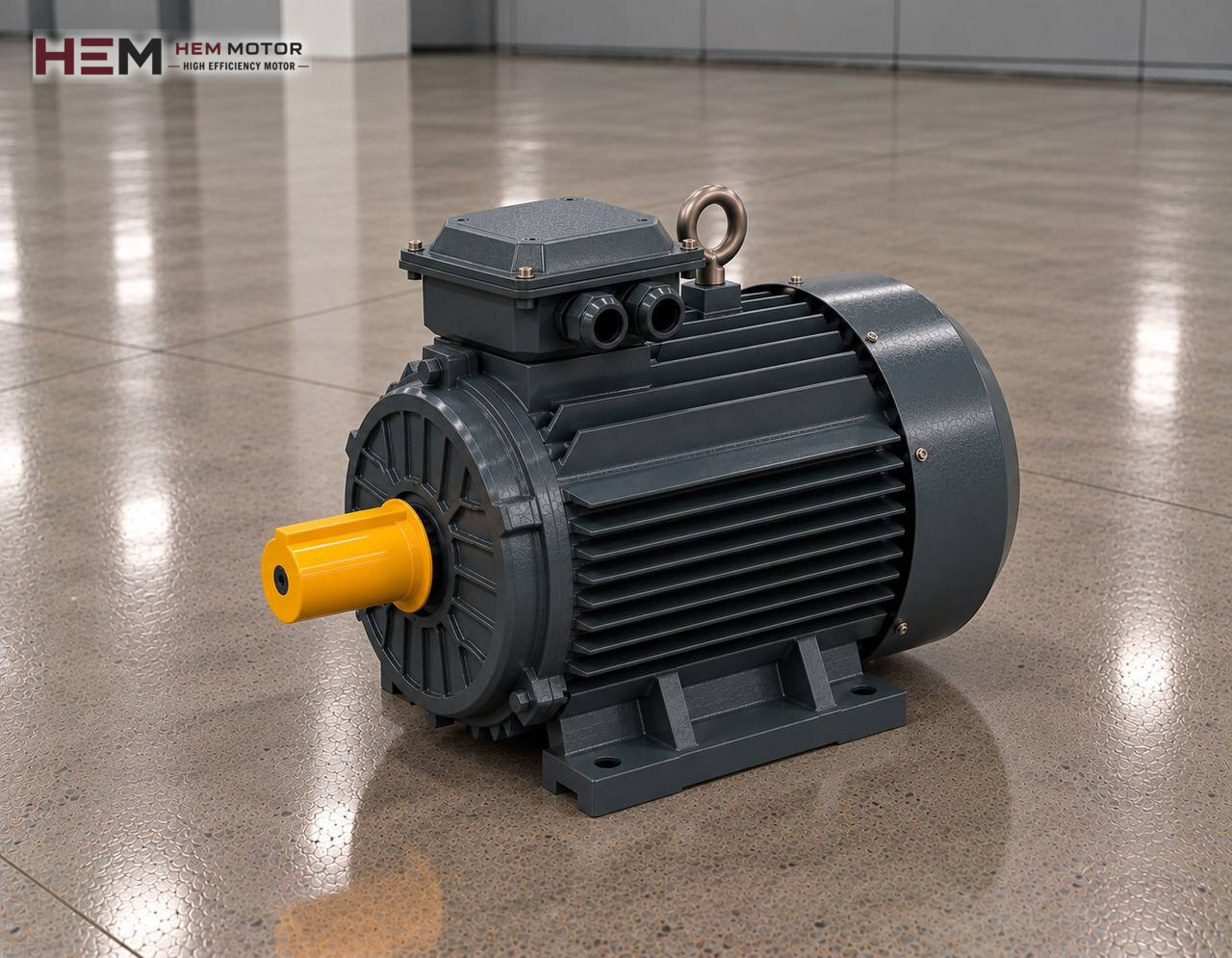
A fabric opening machine untangles tubular knitted fabric that leaves dyeing or washing in rope form, removes its twist and prepares it in open width for the next process. On many lines a slitting knife cuts the tube along its edge, opener rolls spread the fabric across its width, and a plaiter lays the fabric into a trolley. This article goes through the chain in order: which section turns with a standard three-phase motor and which motion calls for a servo or a machine-specific drive. The general framework of the textile sector is on the textile machinery electric motors page.

Tasks of the Electric Motor on a Rope Opening Line
An opening machine does not consist of a single drive; it has several successive stations, and each carries a different load.
Take-off roller: Pulls the wet rope up from the trolley or vessel. The motor turns this roller continuously through a gearbox. The rope is heavy and carries water; the load varies with wetness and fabric weight.
Detwister: A rotating basket or table is used to undo the twist of the rope around its own axis. The direction and amount of twist are monitored by a photocell or camera, and the table is turned left and right accordingly. This motion needs sensor-dependent changes in direction and speed; machine manufacturers mostly use a servo motor or a special drive of their own choice here. We do not recommend a standard induction motor as directly compatible with this table.
Opener and spreader rolls: Spiral or banana-shaped rolls open the fabric across its width and straighten the edges. These are continuous loads turning at fixed or adjustable speed.
Plaiter (folding) unit: Lays the opened fabric into the trolley by swinging back and forth. On some machines the reversal at the end points is made by a crank mechanism, on others by a positioned drive.
Tasks the motor does not perform: twist detection, edge tracking, positioning of the slitting knife and measuring fabric tension belong to the machine's sensor and control system.
Information Needed When Requesting a Motor for an Opening Machine
Before preparing a quotation we need to know which station the motor belongs to. A take-off roller motor and a plaiter motor are assessed differently, even on the same machine. We ask for:
- Station name: take-off roller, opener roll, plaiter, slitting unit.
- Condition of the fabric during processing: wet rope, squeezed or dry?
- Maximum working speed of the machine (m/min) and the range of fabric weights processed.
- Transmission between motor and shaft: gearbox, belt, chain.
- Drive status: frequency inverter, fixed speed or a control board specific to the machine manufacturer.
Determining Power and Speed for the Take-off Roller and Opener Rolls
The motor load of the take-off roller is made up of the weight of the wet rope, the lifting height from the vessel and the slip resistance between roller surface and fabric. On opener rolls the load is lighter, but the total power rises as the number of rolls grows. This calculation belongs to the machine design; on two lines with different fabric weights and speeds, the same station can carry different motors. For this reason we do not give a machine-specific kW value on this page.
When choosing a new motor, the starting point is the power and speed on the nameplate of the running motor. Because the rollers turn slowly, a gearbox is usually placed in between; the difference between motor speed (gearbox input) and roller speed (gearbox output) is set by the gearbox ratio. For gearbox options, see the electric motors for gearboxes and parallel shaft helical gearboxes pages; we remind you that we select the motor driving the gearbox, not the gearbox itself.
| Opening machine station | Load and fabric condition | Points to watch on the motor side | Relation to a standard motor |
|---|---|---|---|
| Rope take-off roller | Wet, heavy rope; continuous pull | Dripping water, gearbox flange | Can be used; verified with machine data |
| Spiral / spreader rolls | Light, continuous rotation | Speed adjustment, fluff build-up | Can be used; speed set by inverter |
| Detwister rotary table | Direction and speed changes based on sensor | Fast reversing, position | Not considered directly compatible; servo or special drive |
| Plaiter (folding) swing | Back-and-forth motion | Crank or positioned drive? | Depends on machine design; ask the manufacturer |
This table is a road map, not a final motor selection. The motor of each station is confirmed with the machine documentation and the existing nameplate.
Which Frame, Shaft and Flange Dimensions Must Match?
In a replacement job the first question is the IEC frame size (such as 80M, 90L, 112M). This value defines the motor's shaft height and dimension family, but it is not enough on its own. On motors fitted to a gearbox, the flange type (B5 large flange, B14 small flange) and the flange spigot diameter; on foot-mounted motors, the distance between foot holes; and in both cases the shaft diameter, shaft length and key width are compared with the old motor. On the electrical side, mains voltage, star-delta connection and rated current are also on the list.
B3, B5, B14, B34, B35 and vertical designs are offered depending on the frame; flange and shaft dimensions are clarified together when ordering. The dimension table is in the frame size table article; available mounting arrangements are listed on the mounting arrangements page.
Wet Rope, Steam and Fluff: the Environment of the Opening Section
The opening machine is usually installed right next to the dye house, in the wet area. Water drips under the take-off roller, the floor is washed, and steam is in the air. The IP55 frame protection of our motors is against dust and water jets; however, water running continuously onto the motor, washing with pressurised water or immersion are outside the scope of this protection. In such a position the machine manufacturer needs to provide a shield or drip guard; if necessary, write to us about the situation in your order.
The catalogue values are −15 to +40 degrees ambient and altitude up to 1000 metres; conditions outside these are stated in the order. On machines that stand idle at night or over the weekend, condensation can form in the cooling frame, so an anti-condensation heater can be requested. In the dry part, especially on the plaiter side, fluff can clog the fan cover; periodic cleaning preserves cooling.
Speed-Controlled Operation and Frequent Stops and Starts
On the opening line the take-off roller, opener rolls and plaiter must all follow the same fabric speed; otherwise the fabric either stretches or piles up between stations. This matching is usually achieved with a frequency inverter at each station. Our three-phase series are suitable for inverter use; on a roller motor that stays loaded at low speed for a long time, an independent cooling fan may be needed, and if the panel is far away a dv/dt or sine filter on the cable is considered. The subject is covered in detail on the inverter-compatible electric motors page.
When the rope knots, a trolley is changed or a seam arrives, the line stops and starts again. These frequent stops and starts heat the winding; a PTC or PT100 winding sensor can be added to the order. The inverter does the speed matching, but it is not designed to handle precise motions such as the detwister's sensor-driven reversing; that section is left to the machine manufacturer's servo or special drive solution.
When Asking for a Motor to Replace a Failed Opening Machine Motor
You can send your replacement request via WhatsApp. How to photograph the nameplate legibly is explained in the send your motor nameplate article. Check the list below before sending:
- Nameplate photo: are power, speed, voltage and current readable?
- The station where the motor sits: take-off roller, opener roll or plaiter.
- Mounting type and connection to the gearbox (foot-mounted, B5 or B14 flange).
- Shaft diameter and flange or foot dimensions.
- Whether water drips onto the motor and whether the area is wet.
- Whether it runs on an inverter; if it is a servo, state this.
- Quantity needed and request for a spare motor.
Ways to reach us are on the contact page.
Product Groups for Roller and Roll Drives on the Opening Line
All models are on the buy electric motors page. For installations close to the wet area, the cast iron frame electric motors category, and for lighter roll drives the aluminium frame electric motors category can be reviewed. For example:
- 0.75 kW 80M2-4 aluminium frame (1,420 rpm)
- 2.2 kW 112M-6 aluminium frame (955 rpm)
- 1.5 kW 90L-4 cast iron frame (1,445 rpm)
These products are examples only; their suitability for your opening machine is verified separately against the station load, gearbox ratio and mounting dimensions.
Frequently Asked Questions
The detwister table motor has failed; can a standard motor be fitted instead?
This table usually runs on a servo or a special drive that changes direction and speed according to a sensor. We do not consider a standard induction motor directly suitable for this task; the machine manufacturer's approval and control system information are required.
Which frame is more suitable for the take-off roller motor?
In wet and steamy areas a cast iron frame is often preferred; the aluminium frame is also IP55 protected. The choice is made together with the mounting dimensions and gearbox connection.
Does each station on the opening line need its own inverter?
On most lines each motor has its own drive, because the stations are matched to fabric speed separately. The machine manufacturer determines the layout.
Water drips onto the motor; is IP55 enough?
IP55 protects against water jets, but it is not designed for continuous water flow and pressure washing. A shield on the machine side is recommended; state the situation in your order.
Can the plaiter unit motor be a standard one?
On crank-type plaiters a continuously rotating motor may be sufficient; types with positioned swinging use a machine-specific drive. We assess which one it is together with the nameplate and machine information.