English
 Français
 Türkçe
 Español
 Русский

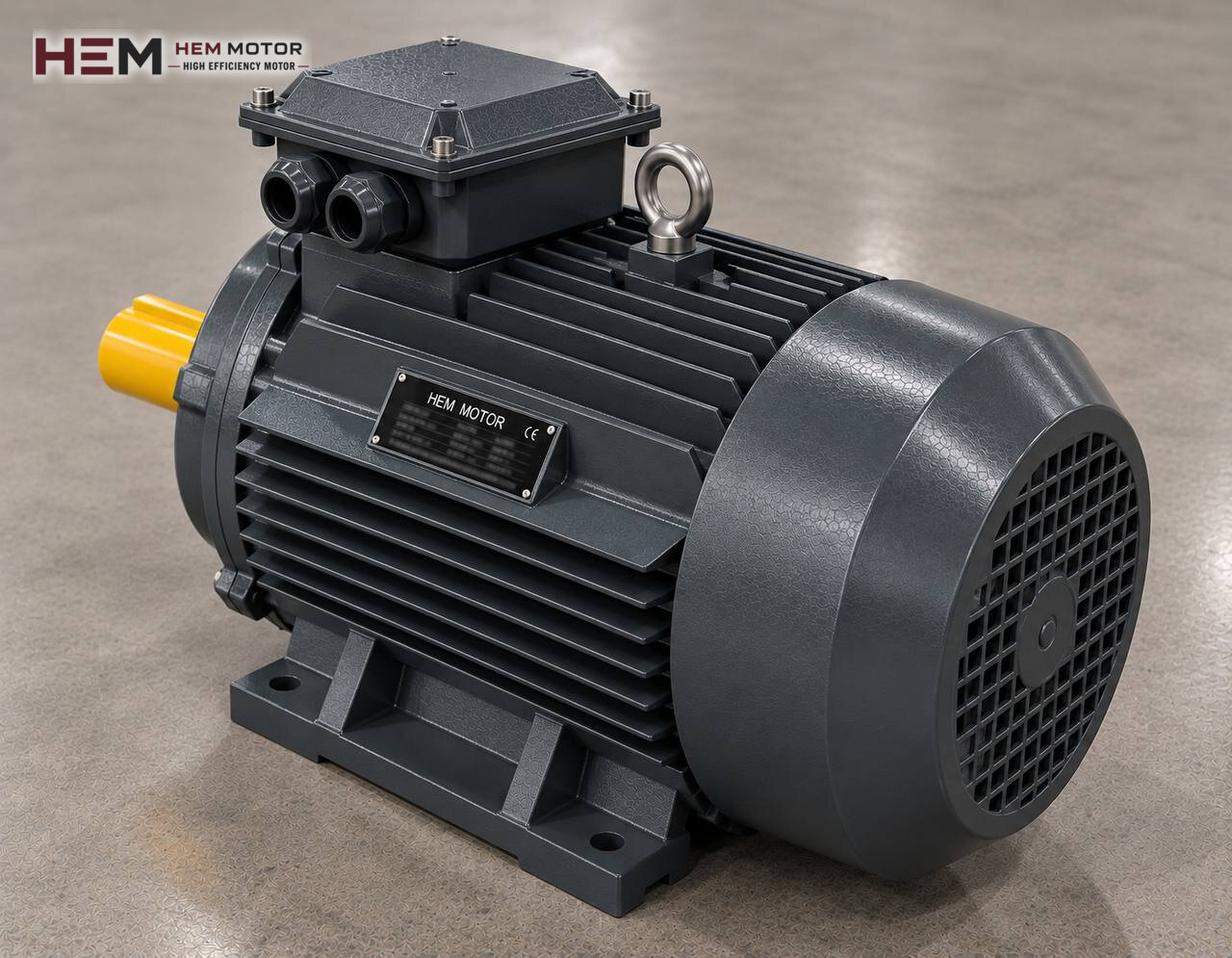
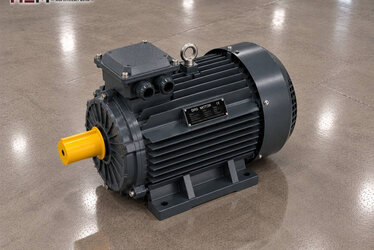
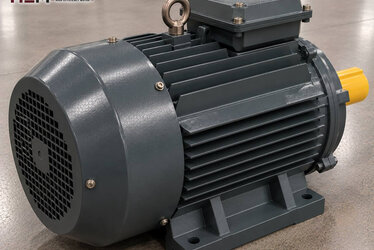
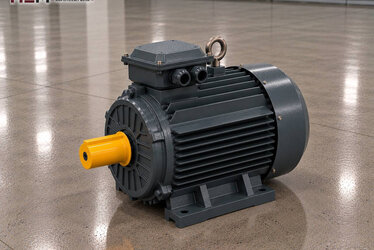
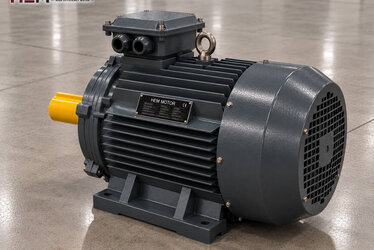
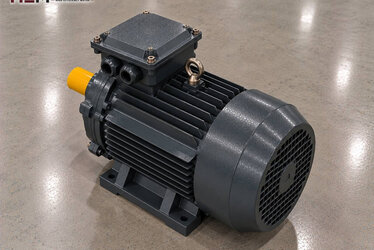
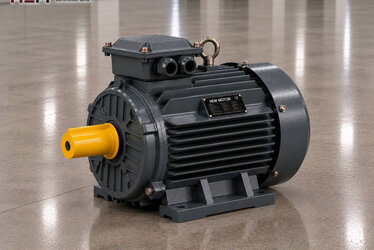
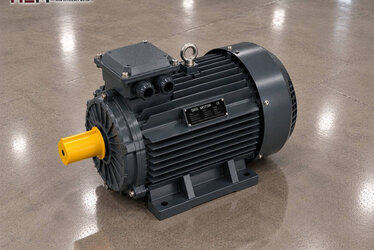
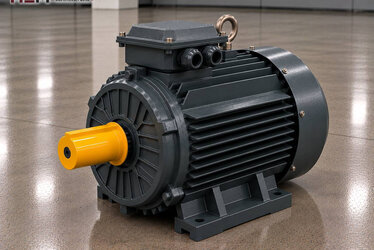
A fabric squeeze roller (mangle) is the assembly that passes wet fabric between two rollers and removes water or impregnation liquor down to a set level. It is found on padders, at the exit of washing lines, on open-width squeezing machines and on dewatering units before drying. This page describes the standard three-phase motor that turns the roller and the points to watch when selecting it; for the general framework of the sector, see the textile machinery electric motors page.

The Motor's Role and Limits in a Roller Pair
A squeeze assembly usually has two rollers, one driven and the other pressed against it. On most machines the roller surfaces are rubber-covered. The motor turns the driven roller through a gearbox; the counter roller usually turns by friction, on some machines together with it through gears.
The motor does not produce the squeezing force. The pressure that presses the rollers together comes from pneumatic or hydraulic cylinders, and pressure setting is in the machine's control system. The motor provides the torque needed to turn the roller under this pressure. If the pressure is hydraulic, the hydraulic power unit motor page is relevant for the separate motor that turns that system's pump.
The roller speed must match the rest of the line; otherwise the fabric slackens or stretches in front of the roller. On some newer lines this synchronous speed control is done with servo or machine-specific motors, with feedback from a tension (dancer) roller. A standard asynchronous motor fitted in place of a servo-driven roller does not give the same speed accuracy; the replacement decision should be made with the machine builder's drive information.
Data Needed for a Squeeze Roller Motor
The first data for a correct choice is the power and gearbox information set by the machine builder for the roller drive. Roller diameter, cover type, fabric width and the line's speed range show at what torque and speed the motor will work. The upper limit of squeeze pressure also matters; as pressure rises, the torque needed to turn the roller increases.
The nameplate of the existing motor gives power, speed and voltage. The gearbox nameplate shows ratio and output speed. Whether the motor is inverter-driven and whether there is an encoder or brake are also among the first questions to ask.
Power and Speed for a Roller Under Pressure
In a roller drive, the load comes from friction and from the resistance of the rubber cover being compressed and released under pressure. This resistance changes with squeeze pressure, roller hardness and fabric thickness. So one cannot say "this many kW is enough for a squeeze roller"; the machine builder gives the power value, and in a replacement the existing nameplate is the basis.
Motor speed is the gearbox input speed. The roller's rotational speed is at the gearbox output and much lower; line speed is calculated from this output speed and the roller diameter. Drives that need low output speed may use 6-pole motors (about 1,000 rpm synchronous) or a 4-pole motor with a higher-ratio gearbox; which suits is decided by looking at the gearbox and speed range together. 6-pole models are on the 1000 rpm electric motors page.
| Squeeze application | Factor increasing load | Motor selection criterion | Example HEM model |
|---|---|---|---|
| Padder (impregnation) roller | High pressure for even squeezing | Matching line speed, low speed with inverter | 5.5 kW 132M2-6 (968 rpm) |
| Washing line exit squeeze | Wet, heavy fabric | Gearbox input, frequent stop-start | 3 kW 100L2-4 (1,450 rpm) |
| Wide dewatering unit | Long roller, thick cover | Starting torque, pressure release sequence | 7.5 kW 160M-6 (970 rpm) |
| Tension-controlled synchronous drive | Speed correction by dancer roller | Mostly servo or builder-specific motor | Builder's drive data required |
The models in the table are examples; the final selection depends on machine data, the gearbox, the existing nameplate and mounting dimensions.
Connection to the Gearbox Input and Dimension Check
The old motor's frame code (in IEC terms, such as 132M, 160M) is the starting point of the comparison. On roller drives the motor is usually flanged to the gearbox; whether the flange is B5 or B14, the flange diameter, spigot diameter and number of holes are measured and compared with the old motor. Shaft diameter, shaft length and key size must fit the gearbox input hub.
On machines where the motor stands on a separate bracket and is connected by belt or coupling, the foot-mounted version (B3 or B35) and foot hole spacing matter. Electrical values are added to the list too: voltage, connection and current. For comparison, use the frame size table, and for the gearbox side the electric motors for gearboxes page.
Splashing Liquor, Humidity and Chemicals
The squeeze point is the wettest place on the line: liquid coming out between the rollers splashes sideways and runs into the trough below. The motors sold have IP55 frames and class F windings; this protection level is defined against water jets, but continuous splashing of squeezed liquor onto the motor, or washing the machine with pressurised water, is outside its scope. The machine side should ensure that the motor and gearbox are beside the roller, outside the splash zone or protected by a shield.
The motor's nameplate ratings apply while ambient air is at most 40 degrees (at least −15) and up to 1000 metres above sea level; if the steamy, hot zone around the padder exceeds this, write it in the order. Chemicals in the impregnation liquor can affect the terminal box gasket and frame paint. For long stops, a heater against internal condensation, and PTC or PT100 for winding monitoring, can be requested with the order.
Speed Matching, Starting and the Inverter
Most squeeze rollers are inverter-driven; when the operator changes line speed, the roller frequency is adjusted with it. Our three-phase series can be driven by a frequency inverter; the subject is explained under inverter-compatible electric motors. If the roller turns for long periods at low speed under high pressure, the motor runs slowly near full torque; since its own fan cools less, a separately powered cooling fan comes into question. If the cable between drive and motor is long, an output filter (dv/dt or sine) is asked about.
Starting is the hardest moment. A roller starting with pressure applied demands high torque because of the compressed zone of rubber and the fabric's resistance. For this reason many machines release pressure first, start the roller, then apply pressure. This sequence lies in the machine control; when selecting the motor, ask about the pressure state at start.
What to Send When Replacing a Squeeze Roller Motor
- Photo of the motor nameplate: power, speed, voltage, current.
- Gearbox nameplate and the flange connecting to the gearbox (B5 or B14).
- Roller type: padder, washing exit or dewatering unit.
- Whether pressure is pneumatic or hydraulic and whether pressure is released at start.
- Whether there is an inverter, encoder or brake.
- Whether liquid splashes onto the motor and the ambient temperature.
- Required quantity.
You can send this information via WhatsApp; the method is in the send your motor nameplate article. For the phone and WhatsApp line, use the contact page. If a brake motor is needed, state it in the order.
Products to Look at in the Shop for Roller Drives
All motors on sale can be seen together on the buy electric motors page. For heavy duty in the wet line area, see the cast iron frame electric motors category. As examples, the 3 kW 100L2-4, 5.5 kW 132M2-6 and 7.5 kW 160M-6 models can be reviewed. These are examples; suitability for the machine is confirmed separately with roller and gearbox data. Gearbox options can be seen in the bevel helical gearboxes category.
Frequently Asked Questions
Why does the motor draw more current after I increase squeeze pressure?
As pressure rises, the rubber cover is compressed more and the torque needed to turn the roller grows. If motor current approaches the rated value, compare the pressure and motor power with the machine builder's data.
Can I change the padder roller motor from 4-pole to 6-pole?
When motor speed changes, gearbox output and line speed change too. This change must be assessed together with gearbox ratio and inverter setting; changing motor speed alone upsets speed matching.
Can a standard motor be used on a tension-controlled squeeze unit?
A standard asynchronous motor is not directly compatible with synchronous control done by a dancer roller and servo drive. Some machines use an inverter-fed asynchronous motor; which one applies is clear from the machine's drive layout.
Must the motor be changed when the roller cover is renewed?
Usually not; but if a harder or thicker cover was chosen, the torque requirement may change. Monitoring motor current after the cover change is a sufficient first check.