1500 rpm is the speed of the rotating magnetic field of a 4-pole electric motor on a 50 Hz supply; 1450 rpm is the rated speed the same motor's shaft reaches at full load. The 50 rpm gap is slip. The rotor cannot produce torque unless it trails the field slightly, so the difference is not a defect but the operating condition of every asynchronous motor.
Which formula gives synchronous speed, and why is it exactly 1500?
Synchronous speed follows ns = 120 × f / p, where f is supply frequency and p is the number of poles. At 50 Hz with 4 poles, 120 × 50 / 4 = 1500 rpm.
Load is absent from the formula. So are voltage and motor power. A 2-pole winding on the same supply gives a 3000 rpm field and a 6-pole winding gives 1000 rpm, and because the pole count has to be an even whole number, the only way to get a synchronous speed between those steps on a 50 Hz network is to change the frequency itself. What the trade calls a "1500 motor" is therefore not a speed reading at all; it is the name of a pole class.
A technician reading the nameplate rarely sees 1500. The plate shows a rated value such as 1440, 1450 or 1465, and synchronous speed is worked out backwards from it: whoever reads 1450 thinks of the next synchronous step up, 1500, and whoever reads 960 thinks of 1000.
Why can the rotor never catch up with 1500 rpm?
If the rotor turned at field speed, the flux cutting the rotor bars would not change, no voltage would be induced in the bars and no torque would appear. Torque requires the rotor to follow the field from slightly behind at all times.
On no load, with the coupling removed, the rotor only overcomes bearing friction and its own fan. An optical tachometer then shows a value very close to 1500 but never equal to it. As load is applied the rotor slows a little more, bar current rises, and the motor delivers the required torque in exchange for that loss of speed.
The speed drop is where the motor "feels" its load. The mechanism is that simple.
How is percentage slip calculated, and how does it vary between models?
Slip is calculated as a percentage with s = (ns − n) / ns × 100. For a motor rated at 1450 rpm, (1500 − 1450) / 1500 × 100 ≈ 3.3%.
Rated slip of 4-pole motors falls as power rises, because the ratio of rotor resistance to rotor reactance is lower in a larger machine (general information; confirm with the machine manufacturer). The values below were calculated from the rated speeds on the product pages:
The table also shows that "1450 rpm" does not apply to every 4-pole motor. A small 0.25 kW unit drops to 1340 rpm at rated load, while the 45 kW cast iron motor runs at 1485 rpm; both belong to the same 1500 rpm class. Rated speeds for the other powers are given on each product card in the HEM Motor shop.
Prices and technical data are on the product pages; choose a model and order online.
What should be checked if the speed measured on site differs from the nameplate?
A measured speed below the rated value suggests the motor is overloaded or fed with low voltage; a speed above it means the motor is running at part load. Both cases are first confirmed by measuring current and voltage.
For the reading, a small reflective strip is stuck on the shaft end or coupling hub, the optical tachometer is held while the machine is stable under load, and within the same minute a clamp meter reads the three phase currents and a multimeter the three line voltages, all written on the same sheet. A speed figure read on its own is misleading.
In the normal operating range slip changes roughly in proportion to load. A rough load ratio comes from this: load ratio ≈ (ns − nmeasured) / (ns − nrated). Hypothetical example: a motor rated at 1450 rpm turning at 1475 rpm on site gives 25 / 50 = 0.5. The motor is at roughly half load. The estimate degrades as voltage moves away from rated; use it as general information and confirm with the machine manufacturer.
Rhythmic swinging is a separate sign. If the tachometer figure rises and falls at regular intervals and the ammeter swings with the same rhythm, a cracked rotor bar is investigated; confirming it requires motor current signature analysis.
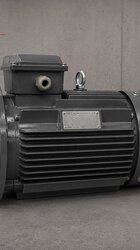
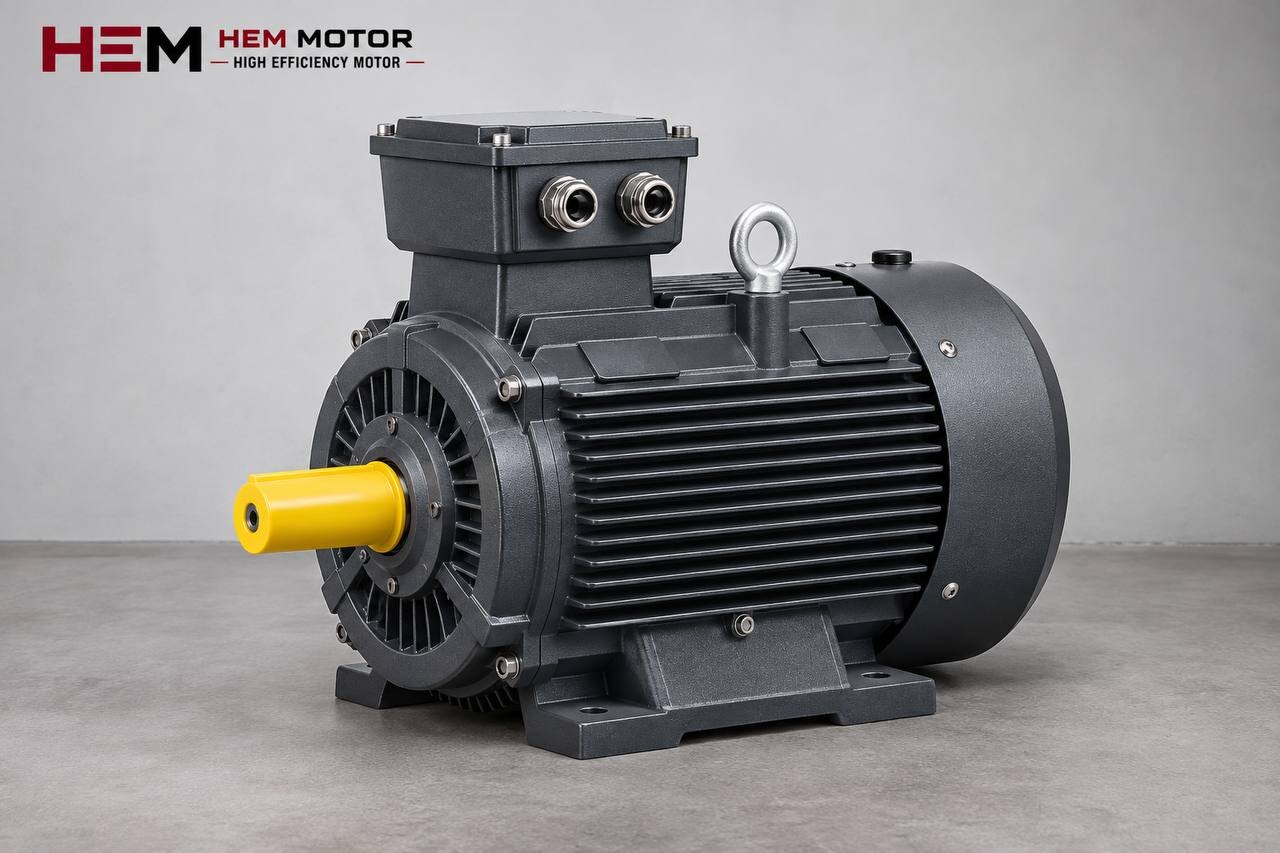
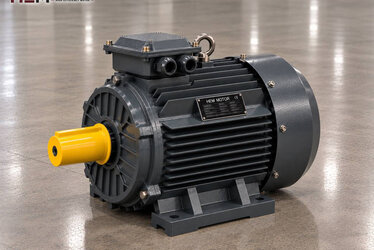
Rated speed is measured at the shaft with an optical tachometer while the machine is stable under load (representative image).
Which speed belongs in pulley, gearbox and torque calculations?
Mechanical calculations use the rated speed from the nameplate, not 1500.
Take a hypothetical belt conveyor with a 1:30 gearbox. A designer working with 1500 expects 50 rpm at the output shaft; with the motor at 1450 rpm the real value is 48.3 rpm, and this difference of about 3.3% passes straight into belt speed at the drum. In synchronised work such as filling, cut length or bottle spacing, the person doing the calibration sees that small loss at once. The electric motors for gearboxes page should be read together with this speed data when frame and flange matching is discussed.
Torque follows the same rule: T (Nm) = 9550 × P (kW) / n (rpm). For 3 kW at 1450 rpm, 9550 × 3 / 1450 ≈ 19.8 Nm, which matches the rated torque on the 100L2-4 product page. Calculated with 1500, the result would be 19.1 Nm. To compare values across powers and pole counts, the electric motor torque table is a ready starting point.
Will a new 1450 rpm motor fit where the old nameplate says 1420?
If the pole count is the same, meaning both are in the 1500 rpm class, it usually fits as far as speed goes. The 30 rpm difference shows the new motor runs with lower slip, and the driven machine turns about 2% faster.
On centrifugal pumps and fans this rise has to be taken into account. By the affinity laws flow grows with speed while absorbed power grows roughly with the cube of speed (general information; confirm with the pump or fan manufacturer). After the swap, the first job is to measure motor current once the system has settled and compare it with the rated current on the nameplate.
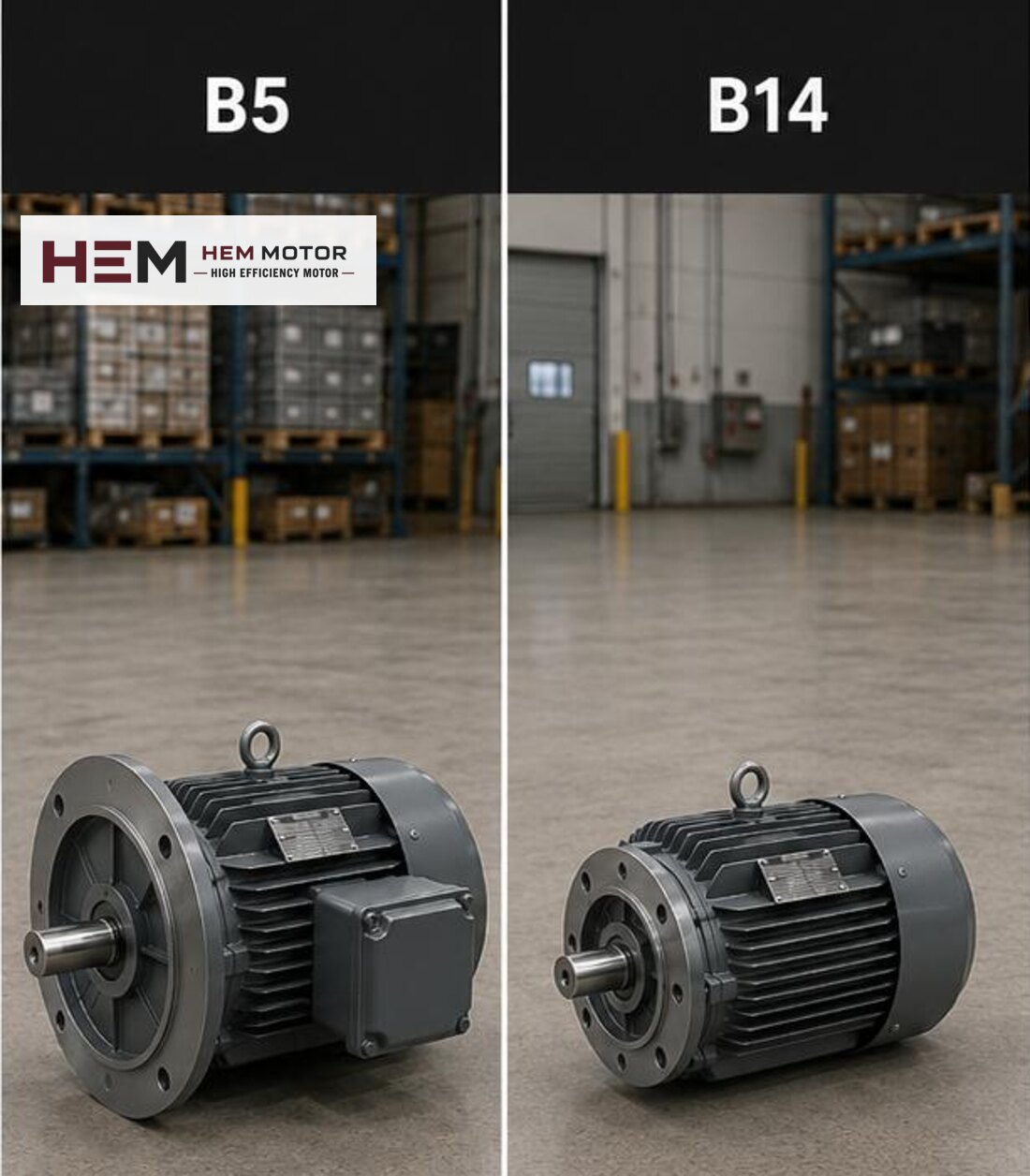
Fit beyond speed is checked separately: the IEC frame number is the first piece of compatibility information; exact fit is confirmed by comparing mounting type, shaft diameter and length, foot hole spacing, flange and electrical ratings. The 4-pole models are listed by power with their rated speeds in the electric motor shop.
Put together the speed you measured, the current and voltage values taken at the same moment and a photo of the old motor's nameplate. When you write to us with these three items through the HEM Motor contact page, we can work out together whether the slip comes from the load or from the motor and, if needed, pick a suitable power in the same pole class from the sales list.
Frequently Asked Questions
Is a motor marked 1450 on the nameplate a 1500 rpm motor?
Yes. 1450 is the rated speed and shows that the motor has 4 poles, placing it in the 1500 rpm synchronous class at 50 Hz.
Does the motor run at 1500 rpm when a frequency inverter supplies 50 Hz?
No. Slip remains at 50 Hz from an inverter and the motor runs near its rated speed depending on load; if slip compensation is enabled, speed can approach 1500.
Why is the no-load speed higher than the nameplate value?
On no load the motor only covers friction and fan losses, slip becomes very small and speed approaches 1500. The nameplate value is the speed at rated load.
Does high slip mean the motor is faulty?
Not on its own. Voltage and current are measured first; if current is above rated, the cause is usually mechanical load, and if voltage is low, the supply line is checked.
HEM Motor Models Related to This Article
The cards show example models related to the topic. A suitable motor is not chosen by power alone: compare speed, voltage, mounting, shaft and connection dimensions on the product page; if unsure, send a photo of the existing motor’s nameplate on WhatsApp.
Rated torque is the torque an electric motor can deliver continuously without overheating its winding; breakdown torque is the peak value the motor can produce for a short time, an... More Details
A six-pole electric motor pays off when the driven machine wants to turn at around 1000 rpm or slower and needs more shaft torque for the same kW. It reduces the gearbox ratio, bal... More Details
The choice is set by the shaft speed the machine needs: if the load is a centrifugal pump, fan or grinding spindle that wants about 2900 rpm directly, choose two poles; if it is a ... More Details
The pole count of an electric motor is easiest to read from the rated speed on the nameplate: on a 50 Hz supply, a speed just under 3000 rpm means 2 poles, just under 1500 means 4 ... More Details
3000 rpm is the theoretical field speed that the 50 Hz supply creates in a 2-pole electric motor and that the shaft never catches; around 2900 rpm is the speed actually measured at... More Details
An electric motor's shaft torque is found from power and speed with a single relationship: T (Nm) = 9550 × P (kW) / n (rpm). In this formula n is not the synchronous speed but the ... More Details
We use necessary and optional cookies to improve your experience, enhance content and analyse traffic. Under the GDPR, optional (analytics/marketing) cookies are only used with your explicit consent. Please choose your preference below.
Cookie Policy
 English
 Français
 Türkçe
 Español
 Русский
 العربية
 Deutsch
 Italiano