How to Check Electric Motor and Gearbox Compatibility on a Rebar Bending Machine

How to Check Electric Motor and Gearbox Compatibility on a Rebar Bending Machine

On a rebar bending machine, motor and gearbox compatibility is checked at three points: does the new motor run at the input speed the gearbox expects, do its flange and shaft physically fit the gearbox input, and is it powerful enough for the machine's frequent reversing duty? If any one of these fails, the bending table either turns at the wrong speed or the motor overheats quickly and trips the thermal relay. Below we go through the checks in the order you would carry them out on site.
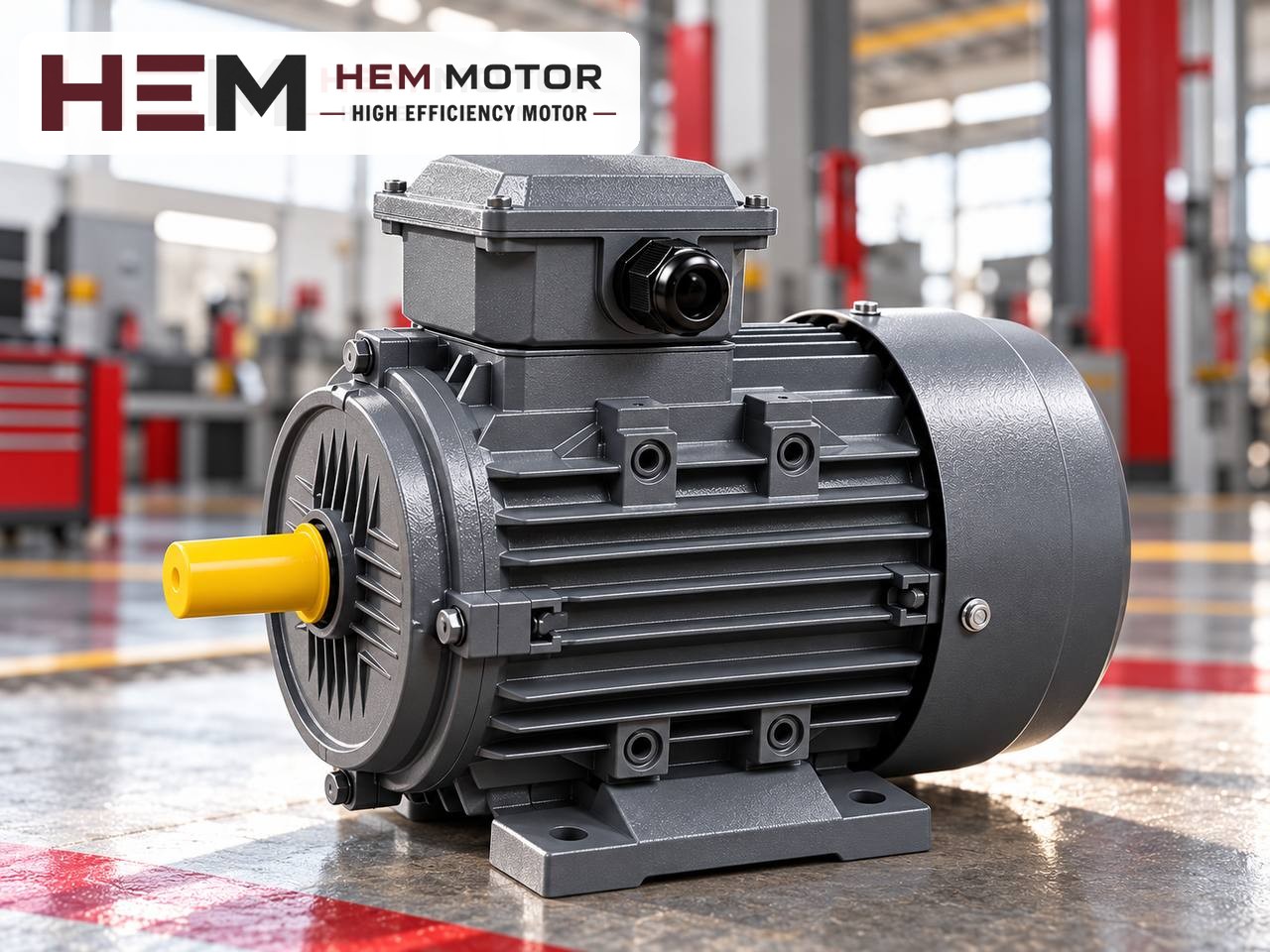
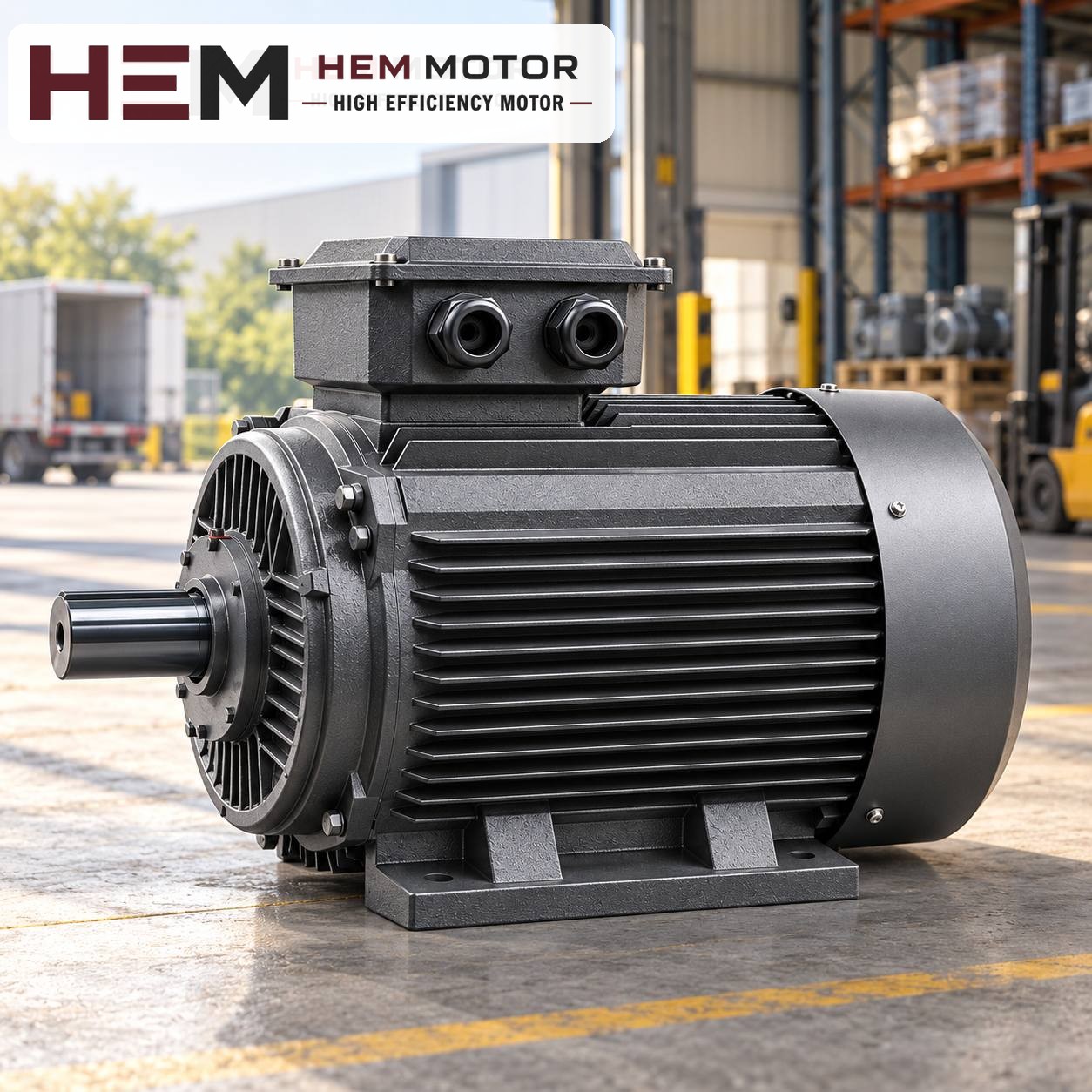
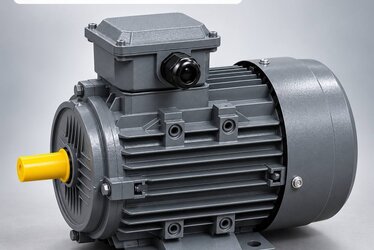
Three-phase electric motor standing on a workshop floor
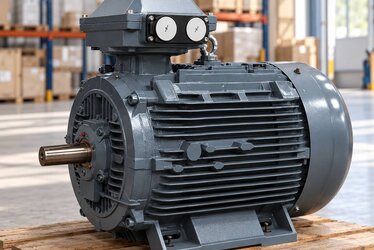
Before the motor is fitted to the gearbox, speed, flange and shaft size are compared (representative image).

How is power transmitted in a bending machine?

In most rebar bending machines, a three-phase asynchronous motor drives the bending table (the rotating disc) through a gearbox. The gearbox reduces the motor's high speed to the slow rotation of the table and multiplies the torque in the process. The force that bends the bar is not the torque the motor delivers directly but the torque at the gearbox output.

The layout used by machine builders varies. On some machines the motor is flange-mounted directly to the gearbox; on others the motor stands on its feet and power reaches the gearbox through a belt and pulleys. Some use a worm gearbox, others a helical gearbox. Before replacing the motor, identifying which layout your machine has is the basis for every check that follows.

First check: speed and gear ratio

The gear ratio is fixed; the variable that sets the table speed is the motor speed. That is why keeping the speed shown on the old motor's nameplate is essential with the new motor. The value on the nameplate is the rated speed: on a 4-pole motor you will see, for example, 1,450 rpm rather than 1,500 rpm.

The calculation below uses hypothetical values and only illustrates the method. Assume a gear ratio of 1:40:

Motor fittedRated speedTable speed (approx.)Result
4 kW, 4-pole (112M-4)1,450 rpm36 rpmThe machine's design speed is preserved
4 kW, 6-pole (132M1-6)968 rpm24 rpmBending slows down, cycle time increases
4 kW, 2-pole (112M-2)2,905 rpm73 rpmThe table turns twice as fast, angle control becomes harder

The conclusion from the table is clear: if the number of poles changes, the machine's bending speed and torque balance change. If faster or stronger bending is wanted, that is not a motor decision but a gearbox and machine design decision, and it should be discussed with the machine builder.

Second check: flange, shaft and frame size

If the motor is flange-mounted to the gearbox, most of the compatibility question is about dimensions. Check the following in order:

  • IEC frame code: If the old motor's nameplate shows a frame code such as 112M or 132S, look for the same code on the new motor. Models of the same power but different speed may have different frames; at 4 kW the 4-pole model is in a 112M frame and the 6-pole model in a 132M frame.
  • Flange type: Large flange (B5) or small flange (B14)? The spigot diameter and bolt circle of the gearbox input flange must match the motor flange exactly. The same name does not mean the same dimensions.
  • Shaft end and key: The shaft diameter, shaft length and key width entering the gearbox input bore must be the same as on the old motor. A shaft thinner than the bore leaves play; a thicker one makes assembly impossible.
  • Foot mounting: In a pulley layout, the foot hole spacing and shaft height must fit the base, and the pulley diameter must stay unchanged.

At HEM Motor, B3, B5, B14, B34, B35 and vertical V1/V3/V5/V6/V15 mounting arrangements are offered according to the frame; the flange size is confirmed with the order. You can find the dimensions in the 2D technical drawings and the 2026 catalogue and compare them with your gearbox input dimensions. General information on motors fitted to gearbox inputs is on our electric motors for gearboxes page.

Third check: frequent reversing and starting load

Rebar bending is not a light, continuous load for the motor. With every bend the operator starts the motor, stops it when the table reaches the required angle and, on most machines, reverses it to bring the table back. In other words, the motor makes many starts and reversals per hour.

At every start the motor draws several times its rated current; a motor reversed while still turning sees this high current for longer. This heat build-up stresses the winding even when the nameplate power looks sufficient. Points to watch when replacing:

  • Do not reduce the old motor's power. Choosing a smaller motor because "we only bend light bar" speeds up overheating under frequent starts.
  • With thick bar and multiple bends, watch whether the motor hesitates at start. If it does, the problem may lie not in motor power but in gearbox wear or voltage drop.
  • Set the thermal relay to the new motor's nameplate current; do not leave the old setting as it was.
  • If reversing is done abruptly by contactors, have someone check whether a short pause is left between the two directions.

Prices and technical data are on the product pages; choose a model and order online.

Brake motors and special layouts are not the same as a standard motor

On some bending machines an electromagnetic brake sits on the motor's rear end shield so that the table stops immediately at the required angle. If your old motor has a brake, replacing it with a standard motor changes how the machine stops and the bending angle will not hold. This duty requires a special motor; it may fall outside the scope of the standard series in HEM Motor's 2026 catalogue, so ask us with the nameplate and application details.

The same applies to motors with special shafts, two-speed motors or motors with a flange specific to the machine builder. Safety functions such as the emergency stop, pedal control and guard are the machine builder's responsibility; a motor replacement must not change them.

Example models and a hypothetical replacement

The models below are standard 4-pole options matching powers commonly found on bending machines; the right power for your machine is read from the old nameplate. Review suitable HEM Motor models and current prices on the buy electric motors page.

  • 100L1-4 aluminium frame: 2.2 kW, 4 poles, 1,450 rpm, IEC 100L, 230/400 V (Δ/Y), rated torque 14.5 Nm.
  • 112M-4 aluminium frame: 4 kW, 4 poles, 1,450 rpm, IEC 112M, 400/690 V (Δ/Y), rated torque 26.3 Nm.
  • 132S-4 cast iron frame: 5.5 kW, 4 poles, 1,460 rpm, IEC 132S, 400/690 V (Δ/Y), rated torque 36 Nm. On construction sites with heavy dust and impact, a cast iron frame may be preferred.

Hypothetical example: Suppose the 4 kW, 1,450 rpm, B5 flange motor of a bending machine on a construction site has burnt out and the nameplate shows a 112M frame. A 4 kW, 4-pole model with a 112M frame and B5 flange is selected as the new motor; the flange spigot diameter and shaft diameter are compared with the gearbox input. The motor is connected in delta on the 400 V supply, the direction of rotation is tested off-load at the first start, and the thermal relay is set to the new nameplate current of 7.95 A.

Conclusion: information to send before replacement

The right motor for a bending machine is one that runs at the same speed as the old motor, fits the gearbox dimensionally and has enough power for frequent starts. For a quotation, send the following together:

  • A photo of the old motor's nameplate (power, speed, frame code, voltage)
  • Mounting arrangement: flange (B5/B14) or foot-mounted with pulleys; if flanged, the dimensions of the gearbox input flange
  • Whether the motor has a brake
  • Supply voltage and starting arrangement
  • The environment the machine works in (open construction site, closed workshop)

Send a photo of your current motor's nameplate, its speed and mounting details through the send your motor nameplate page and ask for a quotation for a suitable model. To compare models, visit our online sales page; for other questions, see our contact page.

Frequently Asked Questions

If I fit a higher-speed motor to the bending machine, will the machine run faster?

Yes, the table speed rises in proportion to the motor speed; however, the torque at the gearbox output falls and, since the machine was not designed for that speed, angle control becomes harder. Keep the old motor's number of poles.

Does increasing the motor power by one step increase bending capacity?

Capacity is mainly set by the gearbox and the machine's mechanical design. A more powerful motor can push the gearbox beyond its rated torque; a power increase should be discussed with the machine builder.

If the old motor has a brake, can I replace it with a standard motor?

This is not recommended, because the brake makes the table stop at the correct angle. A brake motor is a special motor; ask about it separately with the nameplate details.

Do the same checks apply to a single-phase bending machine?

Speed, flange and shaft compatibility are checked in the same way. On single-phase motors, the capacitor values and starting arrangement should also be read from the nameplate.

HEM Motor Models Related to This Article

The cards show example models related to the topic. A suitable motor is not chosen by power alone: compare speed, voltage, mounting, shaft and connection dimensions on the product page; if unsure, send a photo of the existing motor’s nameplate on WhatsApp.

2.2 kW 1500 rpm Aluminium Frame Electric Motor 100L1-4

100L1-4

2.2 kW · 1500 rpm

  • Aluminium frame · IEC 100L
  • 1450 rpm · IP55
  • Mounting: B3 foot; flange (B5/B14/B35) depending on frame — confirmed with the order

US$178.61 (€159.40)

View product
4 kW 1500 rpm Aluminium Frame Electric Motor 112M-4

112M-4

4 kW · 1500 rpm

  • Aluminium frame · IEC 112M
  • 1450 rpm · IP55
  • Mounting: B3 foot; flange (B5/B14/B35) depending on frame — confirmed with the order

US$241.27 (€215.32)

View product
5.5 kW 1500 rpm Cast Iron Frame Electric Motor 132S-4

132S-4

5.5 kW · 1500 rpm

  • Cast iron frame · IEC 132S
  • 1460 rpm · IP55
  • Mounting: B3 foot; flange (B5/B14/B35) depending on frame — confirmed with the order

US$339.83 (€303.28)

View product

Similar Articles