English
 Français
 Türkçe
 Español
 Русский
 العربية
 Deutsch
 Italiano

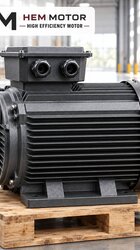
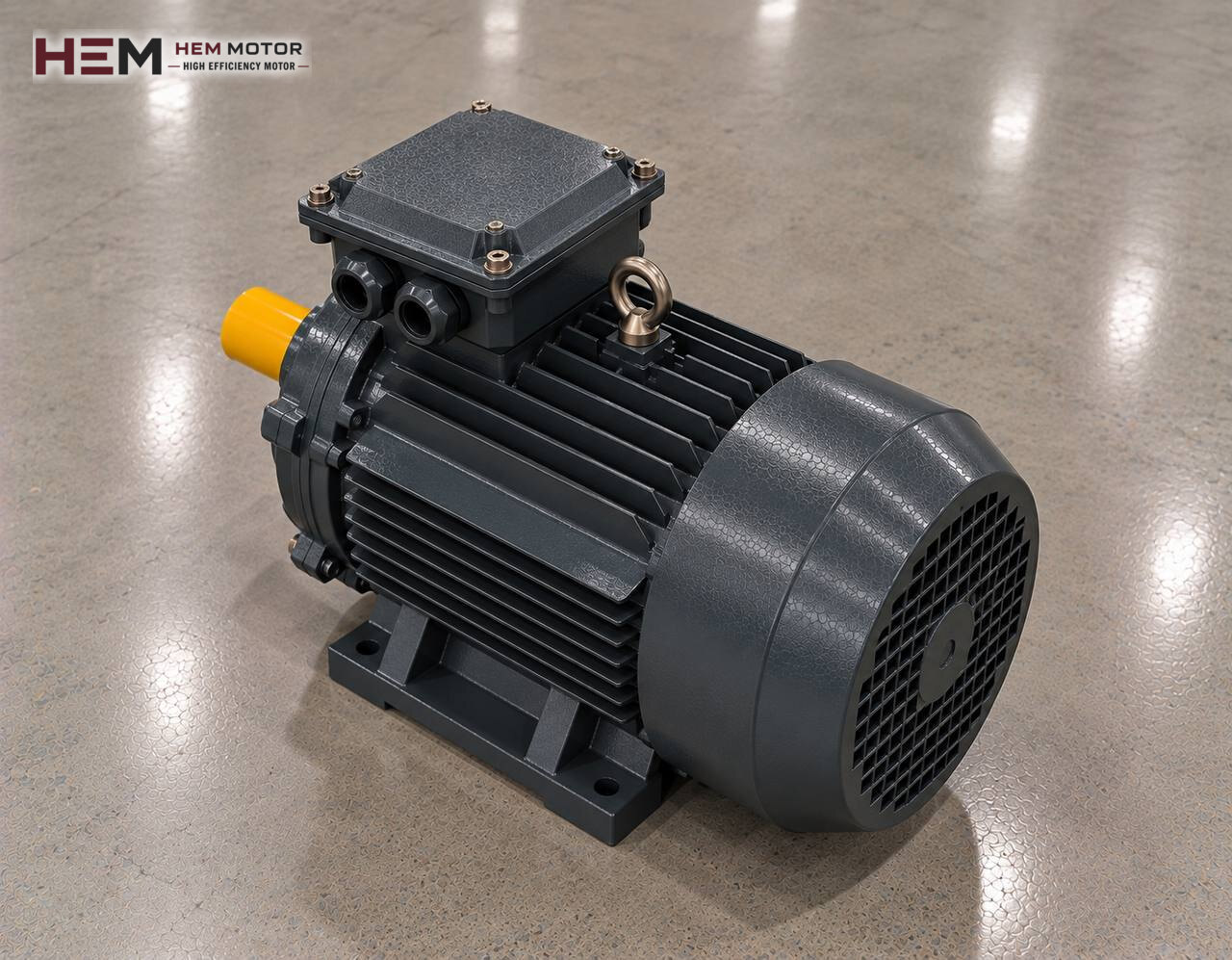

In the plastics and packaging industry, the energy cost of electric motors is reduced with a measured list that starts with the biggest consumers – the hydraulic pump motors of injection moulding machines, extruder main drives, the mould cooling chiller and granule conveying fans – then by cutting the time these drives run idle while the machine waits, adjusting speed on pumps and fans whose flow varies, and replacing motors due for renewal with the right power and efficiency class.
In this sector machines often run three shifts; so even a few kilowatts of idle running adds up to a large kilowatt-hour total by the end of the year. Below we go through the motors one by one, from the injection moulding hall to the film line and the packing department.
Where do kilowatt-hours accumulate in a plastics plant?
In a plastics processing plant electricity goes two main ways: to the heater bands that melt the plastic and to the electric motors that turn machines, pumps and fans. On the motor side the largest shares are usually the pump motors of hydraulic injection moulding machines, extruder screw drives, the chiller compressors and pumps of the mould and roll cooling water circuit, granule dryer fans and vacuum raw material conveying systems.
On the packaging side, the high-pressure compressor for blow moulding machines, winders and nip rolls on film lines, and cut-and-seal drives on bag and pouch machines stand out. Which drive to tackle first is decided not by motor power but by power multiplied by annual running hours. Mould changes, colour changeovers and weekend stops should also be included in this calculation.
| Plastics and packaging drive | When energy is wasted | Practical measure |
|---|---|---|
| Hydraulic injection moulding machine pump motor | Cooling time and open-mould waiting | Servo pump conversion or speed control, idle standby setting |
| Extruder main drive | Production below capacity, rotation during heat-up | Correct motor power, screw and screen maintenance |
| Mould cooling chiller and pump | Full flow while machines are stopped | Pressure-based pump speed, free cooling |
| Granule dryer and conveying fan | Keeps running when the hopper is full | Level control, demand-based fan speed |
| High-pressure compressor for blow moulding | Leaks and needlessly high pressure | Leak survey, pressure setting, air recovery |
Why does the pump motor of a hydraulic injection moulding machine waste energy when idle?
On a classic hydraulic injection moulding machine the pump motor turns at constant speed at every moment of the cycle. Yet apart from the injection and holding seconds, especially during the long cooling phase of thick-walled parts, the hydraulic system needs almost no flow; the pump pushes oil back to the tank through the pressure valve and this energy turns into heat. Cooling water is then spent separately to cool the heated oil.
On older machines with fixed-displacement pumps, driving the motor with a frequency converter or converting to a servo-hydraulic system reduces the loss in the idle seconds of the cycle; the suitability of the conversion and the pump selection must always be assessed with the machine builder or a hydraulics specialist. HEM Motor's three-phase motors can be used for a converter-driven pump drive; however, servo motor dynamics should not be expected. If low speed with full torque lasts long, the motor's own fan may not suffice and a separately powered fan is added; if the converter panel is far from the machine, a dv/dt or sine filter at the output is considered. Sharing these two pieces of information in the order is enough. The habit of switching off the machine's pump while waiting for a mould change or repair requires no investment at all.
What determines the power drawn by the extruder screw drive motor?
On pipe, profile, sheet and film extruders the main drive motor turns the screw through a gearbox, and the power it draws is roughly proportional to output. When the line runs far below its design capacity, for example for small-diameter pipe or thin profile, the motor turns at low load; a large induction motor's efficiency and power factor drop at low load, and the reactive energy charge may rise too.
Another factor that strains the electric motor on an extruder is screen blockage and screw-barrel wear. Pressure rises in front of a clogged screen and the motor delivers more torque for the same output; a worn screw increases backflow and demands higher speed for the same capacity. Linking the screen change interval to pressure measurement and periodically measuring screw-barrel clearance is directly an electrical matter. You can find power ranges for extruder and granulator drives on the plastic and rubber processing motors page.
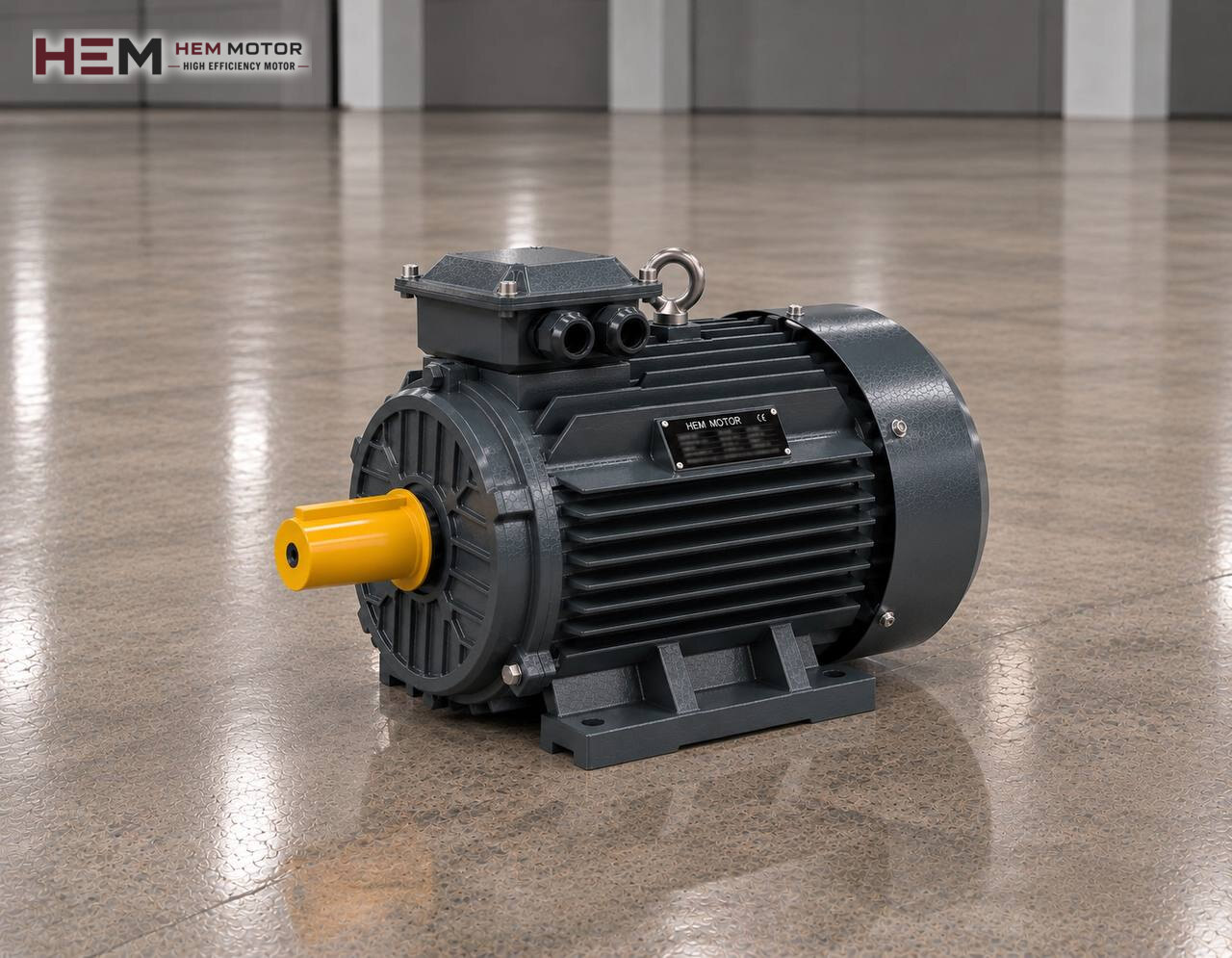
Mould cooling water: chiller, tower and circulation pump
Injection and blow moulds and extrusion calibration tanks need cooling water continuously. In many plants a central chiller and one circulation pump feed all machines; even when several machines stop, the pump keeps pumping at full flow and the excess water returns through the bypass line. Adjusting pump speed to line pressure clearly reduces consumption in shifts when machines are partly stopped and at weekends; since pump power falls quickly with speed, even small speed reductions make a difference (general information; ask the pump manufacturer for details).
It should also be remembered that not every mould needs the same low water temperature. While tower water is enough for some moulds, cooling the whole circuit with chiller water makes the compressor run unnecessarily. If free cooling via a dry cooler or tower is possible in winter when outside air is cool, the chiller compressor motor can stay off for long periods.
Why do granule dryer, vacuum conveying and granulator motors run idle?
In dryers for hygroscopic raw materials, the fan and heater often run at constant speed even when the hopper is full. Adjusting the dryer fan to the machine's actual consumption and the dew point of the outlet air reduces the consumption of both the fan motor and the heater. In central vacuum conveying systems, the vacuum pump motor may keep turning while the receivers are full; the logic between the level sensor and the pump must be set up correctly.
Granulators that grind flash and runners are often placed beside the machine and run idle all day. Controlling the granulator with a timer or sensor so that it runs only when material arrives reduces idle hours; keeping the blade gap adjusted and the blades sharp also lowers the current drawn for the same grinding work.