English
 Français
 Türkçe
 Español
 Русский
 العربية
 Deutsch
 Italiano

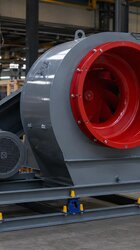
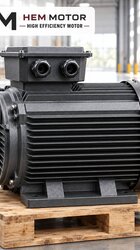
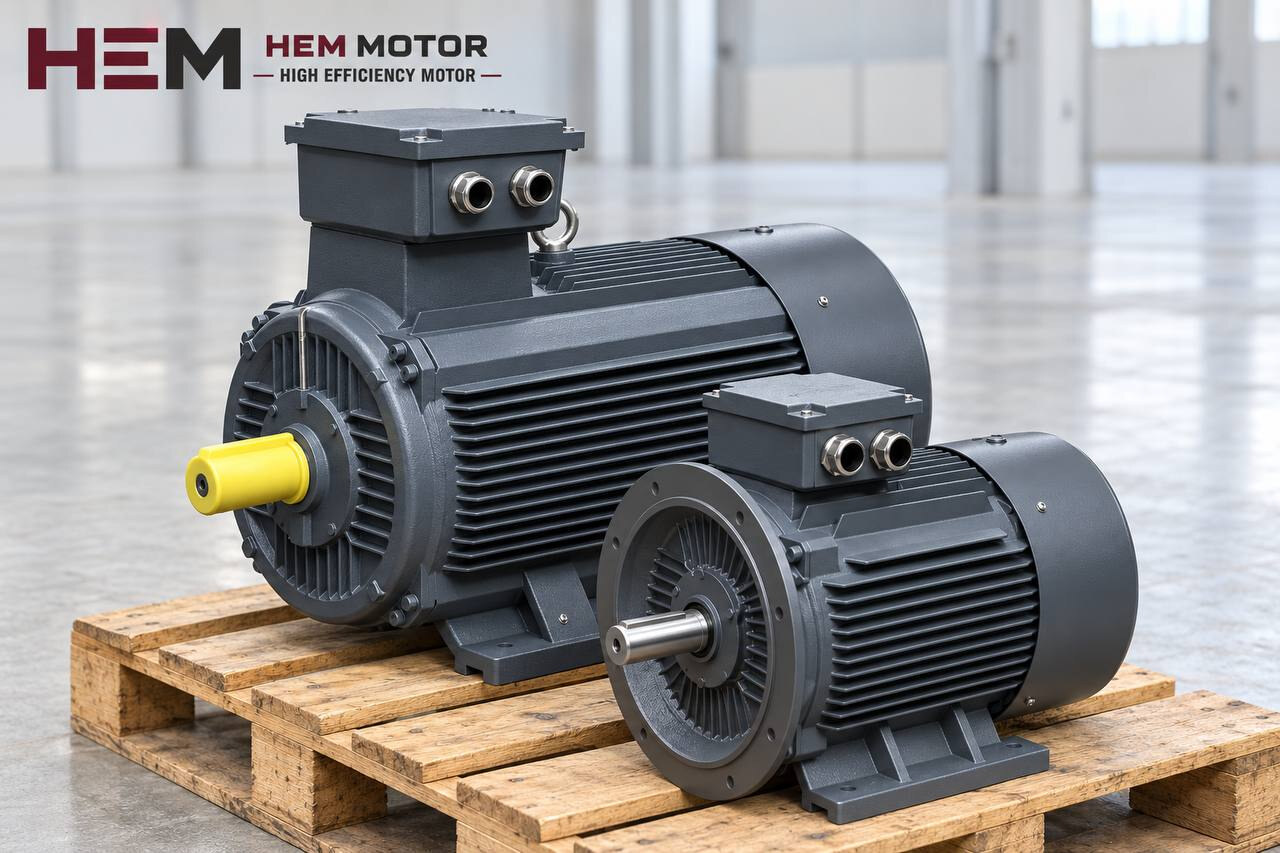

In municipal and public facilities, the move to IE3 and IE4 electric motors starts with the drives that run the most hours per year: the pumps of drinking water booster stations, the aeration blowers of the treatment plant and the circulation pumps of indoor swimming pools. On these motors, the efficiency class difference turns into thousands of kilowatt-hours every year and directly affects the electricity line in the institution's budget. Fans in service buildings that run a few hours, or fire pumps tested a few times a year, go to the bottom of the list. There, reliability outweighs efficiency.
Which drives are in a municipality's motor inventory?
Booster pumps, pressure sets and treatment blowers lead the inventory. The pump, fan and conveyor motors of service buildings also join the list.
The water and sewerage authority of a province or metropolitan municipality operates dozens of booster stations spread across scattered settlements. Pumps lifting water from the source to the reservoir, booster sets feeding the city's pressure zones and blowers at the treatment plant often run day and night; in addition, market halls, indoor sports halls, cultural centres, car parks, slaughterhouses and solid waste transfer stations enter the inventory with their own pump, fan and conveyor motors.
The first step of the decision is to collect these motors in a single list: nameplate power, number of poles, frame, year of installation and annual operating hours. At stations with SCADA records, the hour data is ready; elsewhere, panel meters or shift logs are used, because a replacement list drawn up without hour data can lead to the institution's money being spent on the motors that save it the least.
How many kilowatt-hours is the difference between IE3 and IE4 worth on a booster pump?
The IE class measures how much of the electricity passing through the meter reaches the pump shaft as work. The rest is lost as heat in the winding, the iron and the bearings, but it is still billed. The point difference between two classes looks negligible at first glance, yet on a pump that runs all year it adds up to a large number by the end of the period.
A hypothetical example: consider a drinking water pump running 8000 hours a year at 55 kW shaft power. If motor efficiency is 0.940, it draws 55 / 0.940 ≈ 58.5 kW from the grid; at 0.950 this falls to 55 / 0.950 ≈ 57.9 kW. The difference of about 0.6 kW amounts to roughly 4900 kWh over 8000 hours. The efficiency values here are only to illustrate the calculation; actual values must be taken from the catalogue data of the chosen motor.
When the same calculation is done for a sports hall ventilation fan running 1500 hours a year, the result falls to a few hundred kilowatt-hours; in public facilities, the replacement order is therefore set by hours rather than by power.
How should the efficiency class be specified in a tender?
In public procurement, the motor often comes inside a pump or fan package, and the specification simply says "electric motor". In that case the contractor may fit the lowest-cost motor. The specification should state clearly that the efficiency class will be at least IE3 according to IEC 60034-30-1, and that IE4 is required at continuously running stations.
Requesting the following information in the bid also makes evaluation easier: motor efficiency at 75 per cent and 100 per cent load, rated speed, rated current, frame number and mounting arrangement. In the EU, IE3 applies as the minimum for many motors between 0.75 and 1000 kW, and IE4 in the 75–200 kW range; the current state of ecodesign rules in Turkey should be checked before the tender (general information; confirm the regulations in force).
Where does an efficiency class upgrade pay back fastest at a treatment plant?
The fastest payback comes from the aeration blowers, which hardly ever stop all year.
The blowers supplying air to the aeration tanks of biological treatment are the machines that use the lion's share of electricity at most wastewater plants. Their speed is adjusted with a frequency converter according to dissolved oxygen measurement, and they hardly ever stop throughout the year. This is the drive where an efficiency class upgrade pays back fastest.
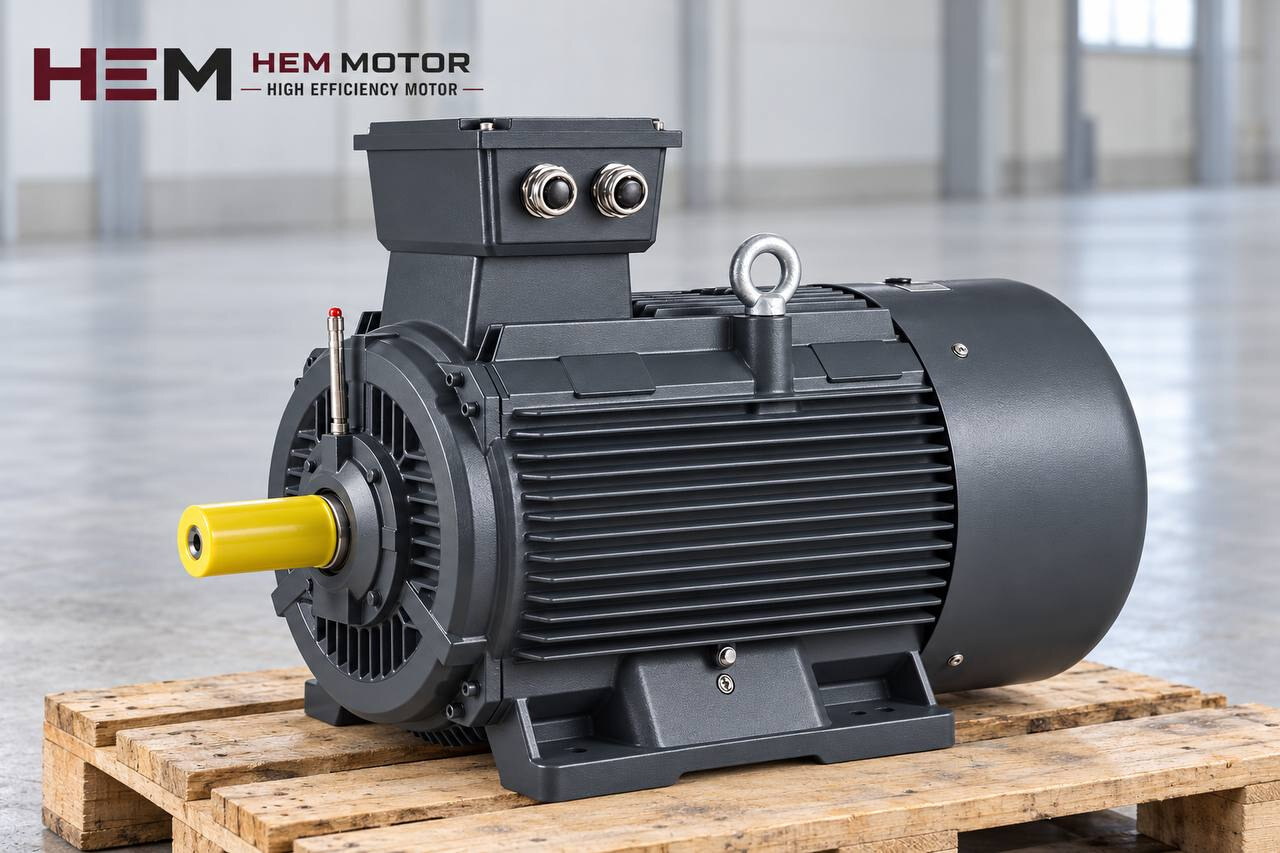
For blowers with drives, our three-phase series are suitable for speed control with a frequency converter. Drives running at full torque at low speed for long periods may need an external fan. If the cable between the drive panel and the blower building is long, a dv/dt or sine filter is considered, and this information is stated in the order. Mixers submerged in the tanks and submersible pumps on the sludge line, however, need special motors; as they may fall outside the scope of the standard series in HEM Motor's 2026 catalogue, they should be enquired about separately with nameplate and application details.
Why is the calculation different for swimming pools and service buildings?
Pool pumps run for most of the day, while service building air handling units run only during office hours.
The filter circulation pumps of an indoor swimming pool run for most of the day under water treatment rules. Humid, chlorinated air also strains the motor. These pumps can be placed near the top of the list together with the air handling unit fans of the pool building. Air handling units in municipal service buildings, by contrast, run according to office hours; with low annual hours, replacement is done when the existing motor fails.
Options for air conditioning and ventilation drives are on the ventilation electric motors page, and those for booster and circulation pumps on the pump electric motors page.