English
 Français
 Türkçe
 Español
 Русский

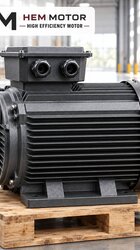
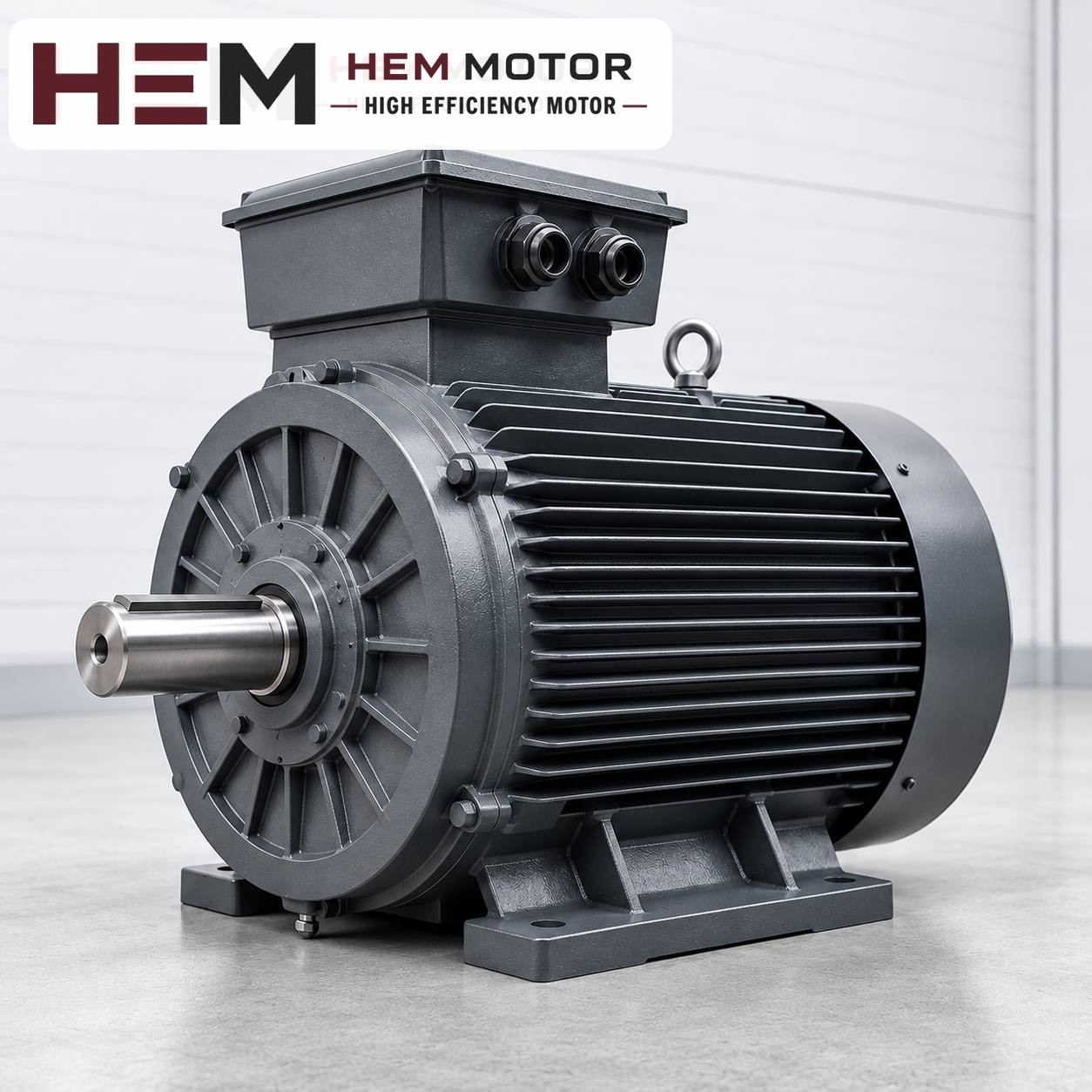

When choosing a motor for a food slicing machine, the first question is not power but the speed at which the blade turns and how that speed reaches the blade from the motor. If the cutter speed changes, cut quality, product crushing and capacity change; if the belt, gearbox or shaft connection between motor and blade does not match, even a motor of the correct power cannot be fitted to the machine. In this article we look at motor replacement on slicing machines in terms of cutter speed and mechanical fit.
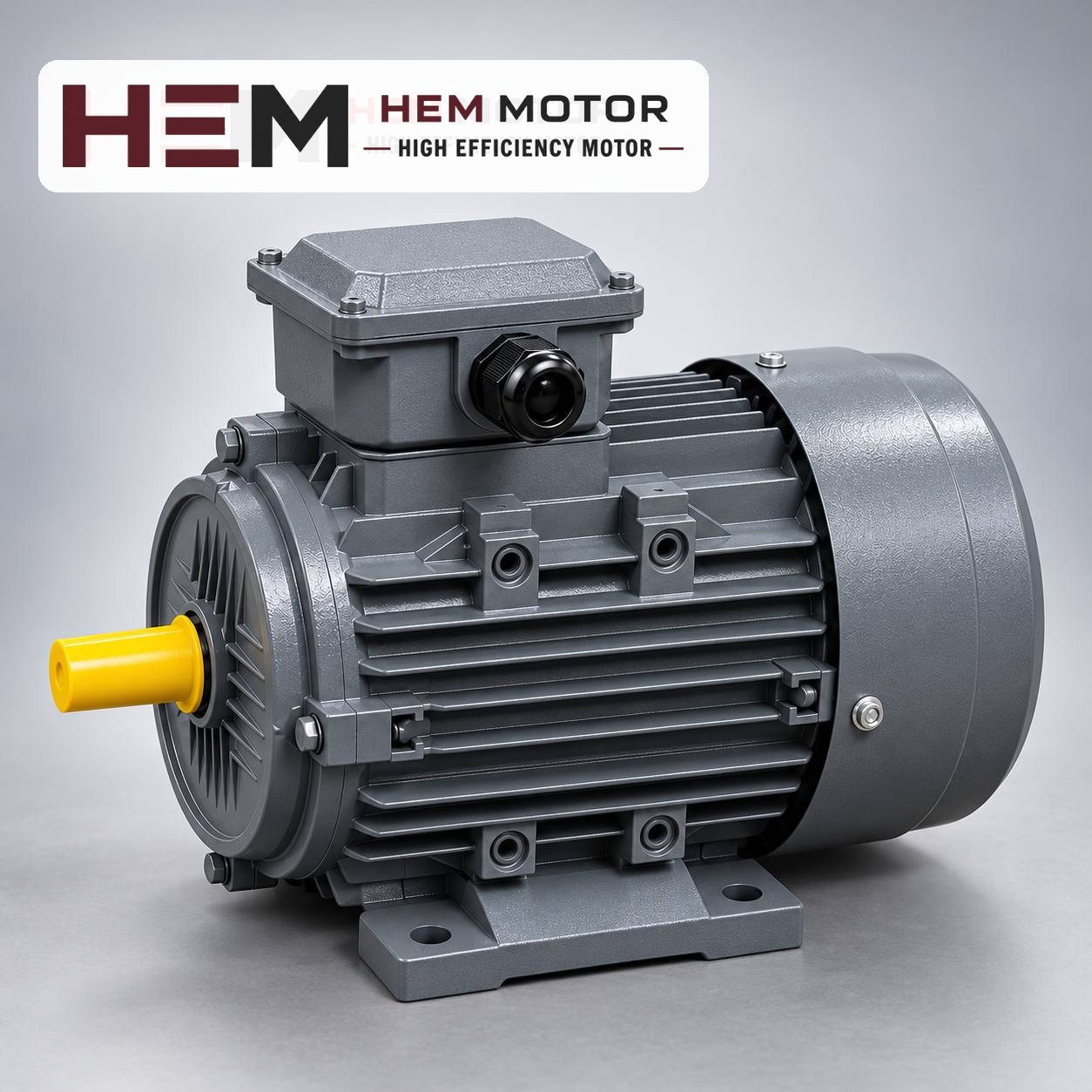
Three different drive layouts in slicing machines
The name “slicing machine” covers drive arrangements that differ greatly from one another. Before selecting the motor, you need to determine which group the machine belongs to:
- Circular blade slicers: Machines with a rotating disc blade used for deli and meat products. The blade is mostly turned via a belt or a gearbox; the motor is not on the blade shaft but in a separate place inside the housing.
- Bread and bakery slicers: They use a reciprocating frame of multiple blades or endless band blades. The motor produces linear or rotary motion via a crank-connecting rod or pulley arrangement.
- Vegetable cutting and slicing machines: Centrifugal designs that throw the product with a rotating impeller against fixed knives, or belt-fed cutting discs. Here the motor is often connected to the impeller or disc shaft by a belt or directly.
Machines that synchronise the cut with the product feed, such as high-speed portion slicers, use servo motors and special control systems. This duty requires a special motor; it may fall outside the scope of the standard series in HEM Motor's 2026 catalogue, so ask us with the nameplate and application details.
Cutter speed: why must it be kept?
The quantity that determines cut quality is the peripheral speed of the blade, that is, the distance the blade edge travels per second. Peripheral speed rises with blade diameter and speed (v = π × D × n / 60). If it falls below the design value, the blade pushes and crushes the product instead of cutting it; with soft cheese and fresh bread the difference shows immediately. If it exceeds the design value, heating, smearing with fatty products and blade vibration increase.
With a hypothetical calculation: if a 300 mm blade turns at 250 rpm, its peripheral speed is about 3.9 m/s. If a 3,000 rpm motor is fitted to the same machine instead of a 1,500 rpm one without changing the pulley ratio, the blade speed and peripheral speed double. That is why the pole count of the old motor should be kept when replacing it, and if the speed is to be changed, the pulley or gear ratio must be recalculated.
Reading the speed on the nameplate correctly
The nameplates of the 4-pole motors commonly used in slicing machines show the rated speed, not the synchronous speed: for example 1,420 rpm on the 0.75 kW 80M2-4 model and 1,445 rpm on the 1.1 kW 90S-4 model. Both belong to the “1,500 rpm motor” class; the small difference comes from slip and in practice has limited effect on blade speed in a belt-driven machine.
Mechanical fit: shaft, flange, pulley and direction
In motor replacement on slicing machines, the most frequent sticking point is mechanical. The checking order can be as follows:
- Mounting surface: Does the motor sit on a plate by its feet (B3), or is it connected by its flange to a gearbox or the machine body (B5, B14)? With a flange connection, the flange diameter, spigot and bolt circle must be the same as the old motor's; not every flange called “B14” fits another.
- Shaft end: If a pulley or pinion is fitted on the motor shaft, the shaft diameter, length and keyway must match. In designs where the blade is mounted directly on the motor shaft, or where the motor is made with a machine-specific long or threaded shaft, a standard IEC shaft does not fit; a special-shaft motor is then required.
- Belt line: If the new motor's shaft height differs, pulley alignment is lost; the belt side load increases and bearing life shortens.
- Direction of rotation: A circular blade is sharpened for one direction. On a three-phase motor, swapping two phases reverses the direction; at the first start, direction must be checked before the blade is fitted.
We do not give shaft, flange and foot dimensions in the text; you can compare them in the 2D technical drawings prepared by frame size and in the catalogue. The general rule for mounting: B3, B5, B14, B34, B35 and vertical V1/V3/V5/V6/V15 are offered according to the frame; the flange size is confirmed with the order.
Power, starting and stopping
Most slicing machines run with low-power motors. The load is determined by product hardness (frozen meat, hard cheese), cut width and the number of cuts per minute. The mass of the blade and flywheel creates a short acceleration load at start-up, but because the blade is usually started empty and the product fed afterwards, starting is not difficult.
Stopping, however, is a safety matter. The blade stopping within a certain time when the cover is opened may require a brake motor or electrical braking. This belongs to the machine manufacturer's safety design; if the old motor has a brake, it is not replaced with a standard motor without a brake, and a brake motor should be requested separately as a special motor.
If a frequency inverter is used on variable-speed slicers, the general statement on our site applies: our three-phase series are suitable for speed control with a frequency inverter; for long periods of full-torque operation at low speed a separately driven fan may be needed, and if the cable between drive and motor is long a dv/dt or sine filter is considered; these conditions are stated with the order. You can review suitable HEM Motor models and current prices on the buy electric motors page.