English
 Français
 Türkçe
 Español
 Русский
 العربية
 Deutsch
 Italiano


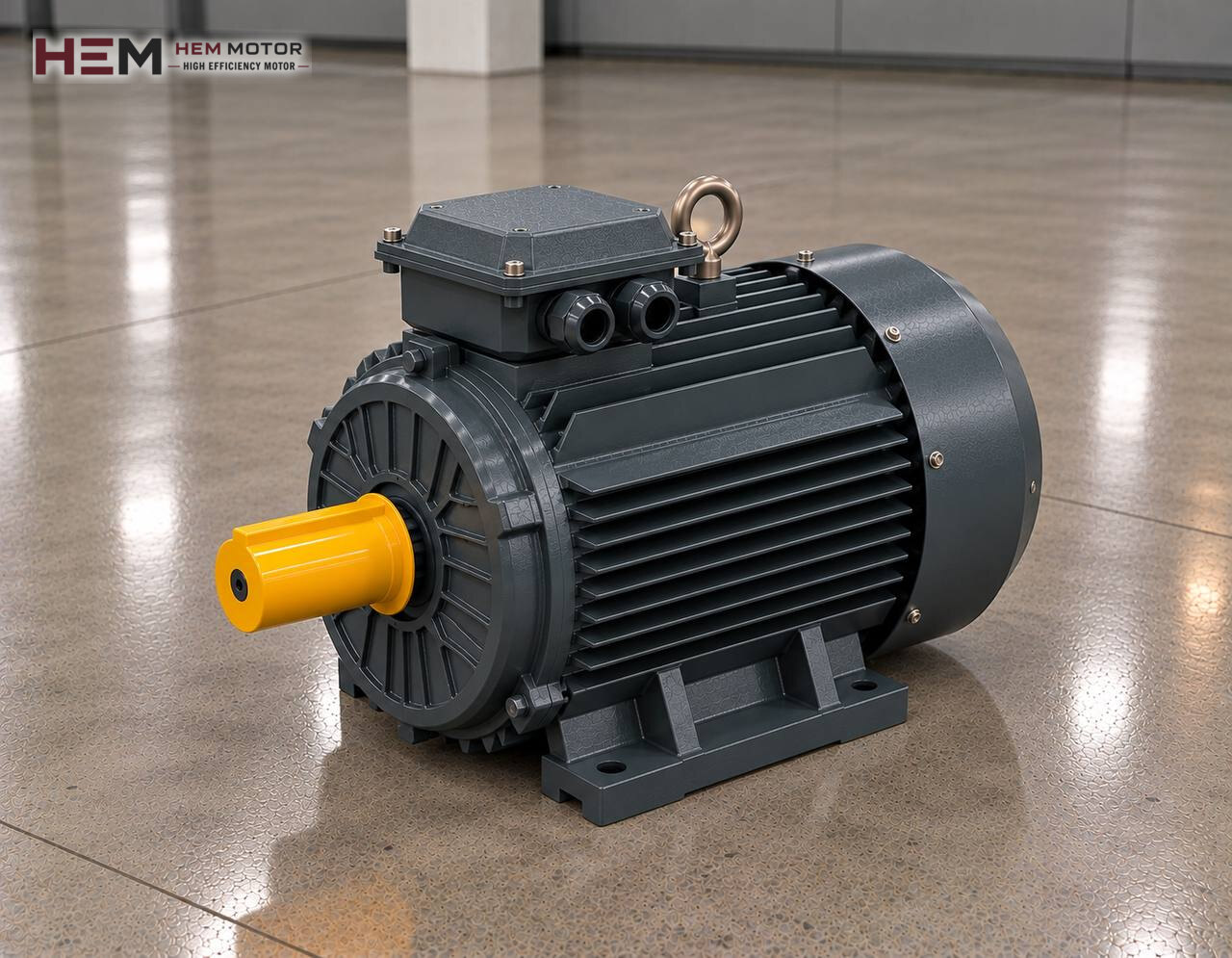

In food production facilities, an electric motor suited to harsh operating conditions is chosen first by the zone of the line where it will stand: cutting and filling areas washed with foaming detergent and pressurised water at the end of every shift, cold rooms running below zero, cooking sections with high heat and steam, or preparation rooms where flour and sugar dust hang in the air. Each zone strains the motor in a different way, and a single definition of a "food motor" does not cover them all.
Each zone is covered separately below, with what to check on the motor in that zone.
What does an electric motor face on lines washed every night?
On meat cutting, milk filling, vegetable preparation and ready-meal lines, cleaning is part of production.
At the end of the shift, conveyors, fillers and mixers are covered with foaming chemicals and then rinsed with pressurised water. Water runs over the motor frame and heads towards the shaft exit and the cover joint of the terminal box.
Our standard series comes with IP55 protection; it is protected against water jets from any direction. For areas where a strong jet is aimed directly from close range, IP56 can be requested as a special order.
A hygienic design with a stainless steel frame and smooth surfaces is a separate class; this duty requires a special motor and may fall outside the standard series in HEM Motor's 2026 catalogue, so ask us with the nameplate and application details.
Practices that extend motor life in the wet zone are: positioning the cable entry facing downwards, checking the terminal box gasket at every maintenance, and telling the washing team not to aim the hose directly at the motor's shaft seal and fan cover.
What do cleaning chemicals do to the motor paint?
Alkaline foams and acidic rinse products used in food plants can, over time, cause blistering and peeling on painted surfaces. Where the paint comes off, the frame is exposed to corrosion and a rough, dirt-holding surface forms. This harms both the motor's appearance and the hygiene audit.
The motor's placement can reduce this effect. Where possible, the motor should be located outside the product contact zone and above the splash line; on geared conveyors, care should be taken that the motor does not sit below the belt level where product passes, at the point where dripping water collects. Damaged paint surfaces should be cleaned and renewed during planned maintenance.
What really strains a motor in a cold room or blast freezer?
The real problem is less the cold itself than the condensation that forms inside the frame when the motor stops.
In cold stores, blast freezer tunnels and cold chain conveyors, motors run at low ambient temperature. During defrost or between shifts, warm, humid air touches the cold winding and leaves water droplets.
For motors in this zone, an anti-condensation heater should be considered as an order option; the heater keeps the winding slightly above ambient temperature while the motor is stopped. Measuring the insulation resistance of a motor that has stood for a long time in a cold room before restarting it is also a good habit. At very low temperatures the properties of the bearing grease also matter; the ambient temperature should be stated in the order.
What strains a motor in cooking, frying and steam sections?
Conveyors, exhaust fans and pump motors beside oven, frying and blanching lines run at high ambient temperature. Hot air lowers the motor's cooling capacity; steam condenses in the terminal box and affects the connections.
In frying sections, oil vapour also sticks to the frame and combines with dust to form an insulating layer.
The standard series comes with class F insulation. If the ambient temperature is high, a PTC sensor can be added as an order option to monitor winding temperature; a higher insulation class can also be asked about as a special order. Circulation fans in direct contact with hot gas inside the oven, however, need a special motor; such a duty may fall outside the scope of the standard series.
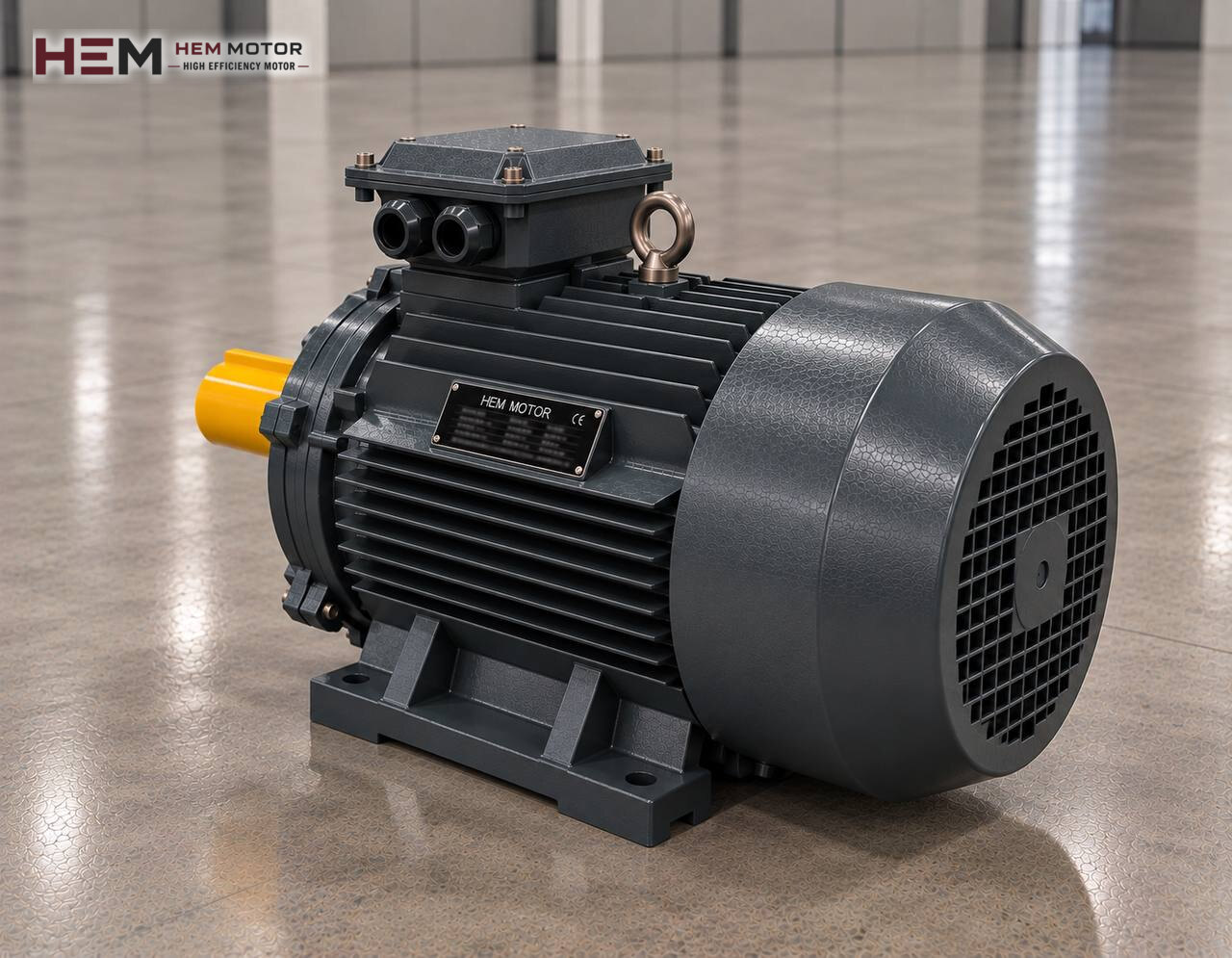
What do flour, sugar and spice dust do to a motor?
Dust clogs the fins of the motor frame and the fan cover and cuts off the cooling air.
In bakery, confectionery and spice plants, preparation rooms are full of fine dust. When sugar dust combines with moisture it forms a sticky layer that is hard to clean.
In these zones the frame needs regular dry cleaning. Areas with very high dust concentration may be classified as explosive dust atmospheres in the plant's risk assessment; in that case a special motor is needed and the decision is made according to the plant's safety report.