Food Mixing Tank Electric Motor: Product Consistency and Agitator Speed

Food Mixing Tank Electric Motor: Product Consistency and Agitator Speed

In a food mixing tank, the two quantities that determine motor power are the product's consistency (viscosity) and the speed of the agitator shaft; a motor chosen without considering both together either struggles when the consistency rises or ends up unnecessarily large. A small propeller turning fast is enough for a watery syrup, whereas a large anchor agitator turning slowly in cream, caramel or fruit filling demands much higher torque. In this article we explain how consistency and speed are reflected in motor and gearbox selection.
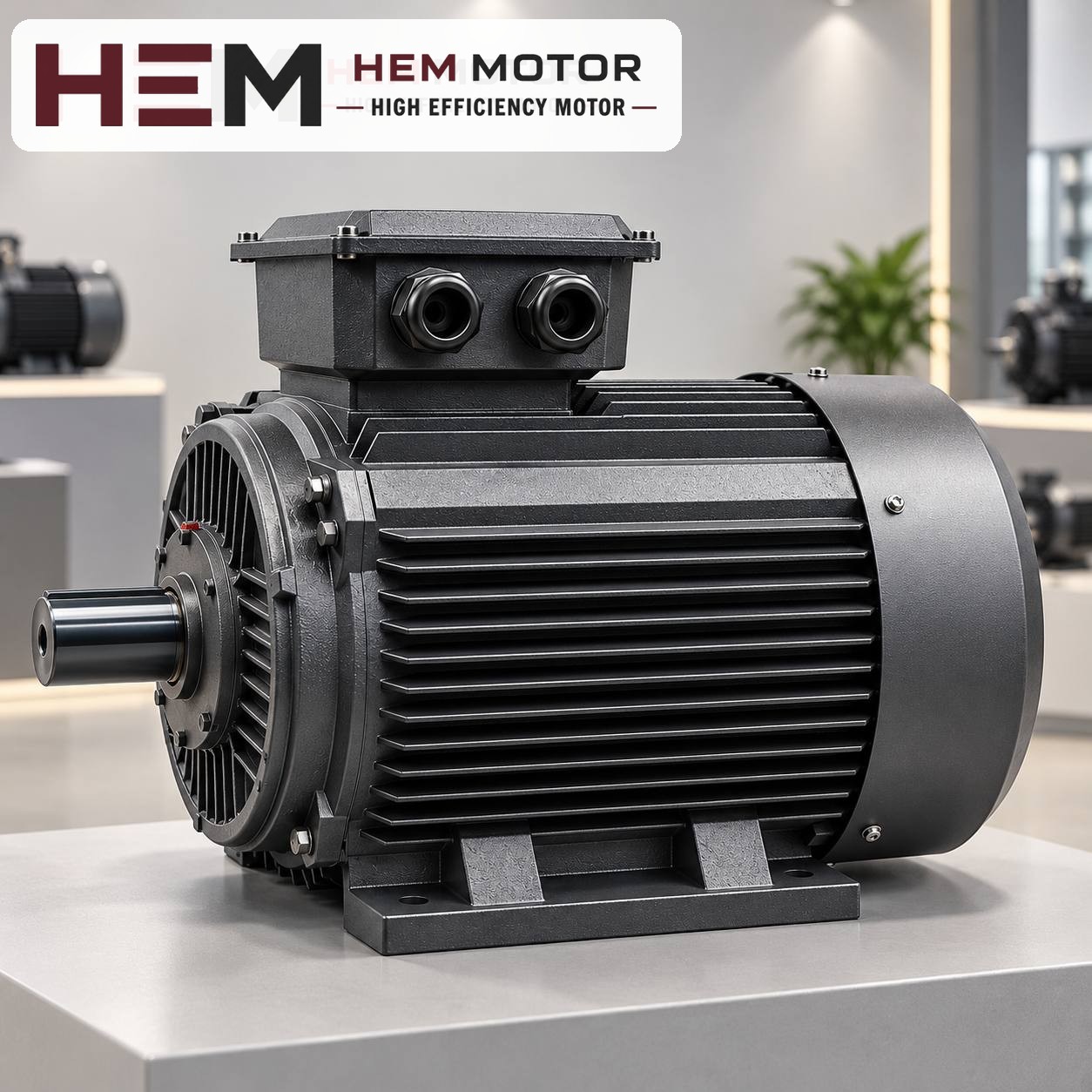
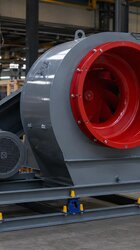
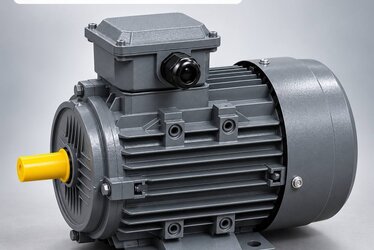
Three-phase electric motor on a grey pedestal
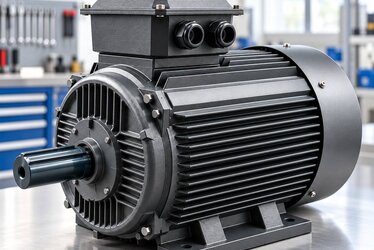
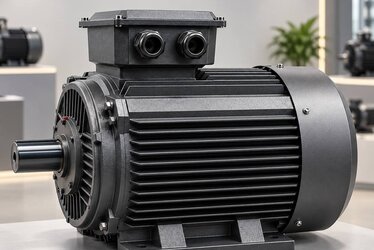
On tank agitators, the motor usually sits vertically on top of the tank together with a gearbox (representative image).

Agitator type and speed range

Tank agitators are built with different geometries according to how fluid the product is, and each works in a different shaft speed range:

  • Propeller and pitched-blade turbine: Used for products that flow like water (syrup, brine, juice, milk). They turn at relatively high speed and create axial flow in the tank. On some small tanks the motor is connected directly, without a gearbox.
  • Disc turbine and dispersion head: Used for jobs that need shear, such as dissolving powder or preparing emulsions; they can run at high speed for short periods.
  • Anchor and scraper agitator: Turns while scraping the tank wall in thick products such as cream, pudding, jam, caramel and chocolate filling. Shaft speed is low and the torque requirement high.
  • Helical ribbon agitator: Moves the product up and down in very thick, dough- or paste-like products; this is the group that runs at the lowest speeds and with the highest torque.

Type matters because the agitator speed determines the processing quality of the product. In a thick product, raising the speed does not improve homogeneity; it can damage the product structure, entrain air and quickly increase the motor load.

How do power and torque change as consistency rises?

Agitator power rises roughly with the cube of shaft speed and roughly with the fifth power of blade diameter; the density and consistency of the product act as multipliers on this relationship. In low-viscosity, turbulent flow, power depends largely on density. As viscosity increases, flow slows down, the product builds resistance in front of the blade and the power needed at the same speed rises markedly.

The practical consequence is two rules:

  • A thick product needs low speed and high torque. To deliver the same power at a lower shaft speed, the gearbox ratio grows and the gearbox output torque increases. Even if the motor power does not change, the torque capacity of the gearbox becomes decisive.
  • Consistency changes during the process. In processes such as jam cooking, caramel concentration or starch binding, the product is fluid at the start and thick at the end. The motor is chosen for the thickest moment of the process; the low current at the start is misleading.

Product temperature also changes consistency: cooling cream, chocolate or sugar syrup thickens. Restarting in the morning with product that has cooled in the tank overnight can be the heaviest moment of the day for the motor and the gearbox.

Matching the gearbox and motor speed

Agitator shaft speed is usually obtained at the gearbox output. Because the gearbox ratio is fixed, when the motor speed changes the agitator speed changes in the same proportion. That is why keeping the pole count is essential when replacing the motor on an existing tank: if a 1,000 rpm class motor is fitted in place of a 1,500 rpm class motor, the agitator slows down by about a third; in the opposite case, too much shear is applied to the product.

In a new tank project, the selection is made the other way round: first the required agitator speed and torque are set, then the gearbox ratio and the motor pole count are chosen. The same gearbox output speed can be reached with a 4-pole motor and a higher-ratio gearbox, or with a 6-pole motor and a lower-ratio gearbox. At the same power, a 6-pole motor delivers higher rated torque; for example, at 5.5 kW the rated torque of the 4-pole 132S-4 model is 36 Nm, while that of the 6-pole 132M2-6 model is 54.3 Nm.

The IEC input flange and shaft fit between gearbox and motor are checked separately. General information on gearbox applications is on the electric motors for gearboxes page. You can review suitable HEM Motor models and current prices on the buy electric motors page.

Frequency inverter for variable consistency

For products whose consistency changes during the process, it is common to adjust the agitator speed with a drive: high speed at the start for fast mixing, low speed as the product thickens. The general statement on our site applies here: our three-phase series are suitable for speed control with a frequency inverter; for long periods of full-torque operation at low speed a separately driven fan may be needed, and if the cable between drive and motor is long a dv/dt or sine filter is considered; these conditions are stated with the order.

Mixing a thick product at low speed is exactly the “full torque at low speed” case. Because the motor's own fan turns with the shaft speed, cooling decreases; if the process is long, a separately driven fan is considered. If a drive is to be used, this must be stated with the order. Details are summarised in the question on use with a frequency inverter.

Prices and technical data are on the product pages; choose a model and order online.

Mounting, environment and the hygiene limit

On tank agitators the motor usually sits with the gearbox on the tank lid, vertically with the shaft facing down. In vertical mounting (V1, etc.), unlike a horizontally running motor, the bearings also carry the load along the shaft axis; the mounting arrangement must be stated with the order. Mounting arrangements are offered according to the frame and the flange size is confirmed with the order.

Motor and gearbox on top of the tank are exposed to product vapour and washing water. HEM Motor's standard models have IP55 protection and class F insulation; the motor should not be the direct target of pressure washing. If a washable stainless, hygienic-type motor is required above the product zone, this duty requires a special motor; it may fall outside the scope of the standard series in HEM Motor's 2026 catalogue, so ask us with the nameplate and application details.

Example models

An aluminium frame may be preferred for a light drive package carried on the tank lid; a cast iron frame for vibrating, heavy mixing work. The current price is on each product page.

Hypothetical example: thermal trip towards the end in a jam tank

This example is not a real customer application. Suppose that in a scraper jam tank a 4 kW, 4-pole motor drives the agitator through a gearbox. At the start of cooking the current is around 5 A; as the product thickens it rises to 8 A, i.e. above the 7.95 A rated current of the 112M-4 model, and the thermal relay trips in the last minutes.

  • First, check whether the scraper blades rub excessively against the tank wall, and check the gearbox oil.
  • If there is no mechanical problem, there are two routes: moving the motor and, if necessary, the gearbox to the next power size, or reducing the speed with a drive in the final stage to limit torque.
  • If the speed is to be reduced, the duration of the final stage and the need for a separately driven fan are assessed together.

Conclusion and information to send for a quotation

In a food mixing tank, the motor is selected together with its gearbox so that it can deliver the torque needed at the product's thickest moment at the required agitator speed; on an existing tank, the pole count and gearbox ratio are kept. For a quotation, send the following:

  • Nameplate photos of the existing motor and gearbox (power, speed, ratio, output speed)
  • Tank volume, agitator type and products processed; duration of the thickest stage
  • Mounting arrangement (vertical shaft down, flanged, etc.) and whether a drive is used
  • Environment: steam, washing, proximity to the product zone

Review suitable models and current prices on our online sales page. Share your existing motor's nameplate photo, speed and mounting details via the nameplate submission page and request a quotation for the right model. For other questions see our contact page.

Frequently Asked Questions

Can I fit a 2-pole motor instead of a 4-pole one to speed up the agitator?

If the gearbox ratio stays the same, the agitator speed doubles and the power demand rises many times over. This overloads the motor and the gearbox and can damage the structure of a thick product; it is not recommended.

Why is a 6-pole motor preferred for thick products?

At the same power, a 6-pole motor delivers higher rated torque, and a smaller gearbox ratio is enough for the same output speed. The choice is made together with the gearbox and the torque requirement.

What should be done if the motor will not start in a tank full of cooled product?

The product should first be made fluid again by heating it in the jacketed tank. Repeatedly forcing starts strains the motor and gearbox; for a lasting solution, the starting condition is stated with the order.

Is the motor on top of the tank affected by washing?

An IP55 motor is protected against low-pressure water jets. Do not aim a pressure-washing jet directly at the motor; if a washable frame is needed in the hygienic zone, a special motor is considered.

HEM Motor Models Related to This Article

The cards show example models related to the topic. A suitable motor is not chosen by power alone: compare speed, voltage, mounting, shaft and connection dimensions on the product page; if unsure, send a photo of the existing motor’s nameplate on WhatsApp.

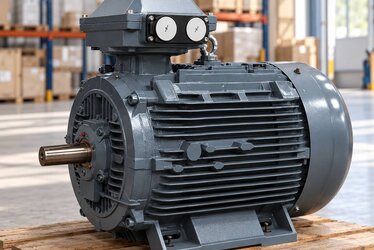
4 kW 1500 rpm Aluminium Frame Electric Motor 112M-4

112M-4

4 kW · 1500 rpm

  • Aluminium frame · IEC 112M
  • 1450 rpm · IP55
  • Mounting: B3 foot; flange (B5/B14/B35) depending on frame — confirmed with the order

US$241.27 (€215.32)

View product
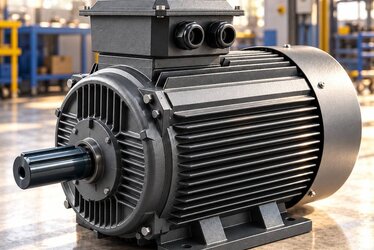
5.5 kW 1500 rpm Aluminium Frame Electric Motor 132S-4

132S-4

5.5 kW · 1500 rpm

  • Aluminium frame · IEC 132S
  • 1460 rpm · IP55
  • Mounting: B3 foot; flange (B5/B14/B35) depending on frame — confirmed with the order

US$324.39 (€289.49)

View product
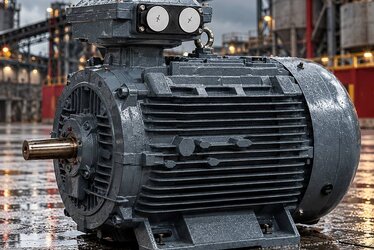
5.5 kW 1000 rpm Cast Iron Frame Electric Motor 132M2-6

132M2-6

5.5 kW · 1000 rpm

  • Cast iron frame · IEC 132M
  • 968 rpm · IP55
  • Mounting: B3 foot; flange (B5/B14/B35) depending on frame — confirmed with the order

US$420.34 (€375.13)

View product

Similar Articles