How Can the Energy Cost of Electric Motors in Agricultural Irrigation Be Reduced?

How Can the Energy Cost of Electric Motors in Agricultural Irrigation Be Reduced?

The energy cost of electric motors in agricultural irrigation is reduced by running the pump at the flow and pressure actually needed, by avoiding water pushed in vain through an oversized motor and a throttled valve, and by shifting pumping into cheaper tariff hours. Most of the bill comes not from the motor itself but from losses in the system between the well and the field; so the work should start not by replacing the motor but by measuring the pump, the pipeline and the irrigation schedule together. Below we set out these steps for the wellhead, the surface pump, and drip and sprinkler lines.

How do you calculate the kilowatt-hours an irrigation pump draws over a season?

Irrigation motors run during only a few months of the year, but in those months they run many hours a day. In cotton, maize or orchards the pump hardly ever stops in July and August.

That is why even a small efficiency difference turns into a large kilowatt-hour total by the end of the season.

A hypothetical example: if a 30 kW pump motor runs close to full load for 1,500 hours a season, the energy it draws from the grid comes to roughly 30 × 1,500 = 45,000 kWh, and a little more once motor losses are added. If the same pump runs with its valve half closed at a higher pressure than needed, part of that energy goes into the valve rather than the water. For your own calculation, it is enough to write down in a table the power on the motor nameplate, the current measured with a meter or clamp ammeter, and the seasonal running hours.

Where is energy lost between the well and the field?

In a wellhead system energy is wasted at several points. The first is running the pump far from its best efficiency point, at a flow that is too high or too low. The second is throttling the valve to balance the system; the valve turns part of the pressure produced by the pump into heat. The third is the pipeline: narrow, long lines with many bends, clogged filters and scaled-up drippers force the pump to work against higher pressure.

The fourth is the well itself. As the static water level falls towards the end of summer, the pump's head increases, the flow drops and it has to run longer to lift the same water.

To see these items together, the table below can be used as a checklist.

Loss pointSymptomFirst action
Throttled discharge valvePressure gauge high, valve half closedDetermine the real pressure need and assess impeller or speed adjustment
Clogged disc/screen filterPressure difference across the filter has grownMake backwashing more frequent
Scaled dripper, old lateralLow pressure at the end of the plot, uneven wettingAcid flushing, end-of-line flush valve
Falling well levelFlow decreases as the season goes onLevel measurement, recheck the pump's operating point
Phase imbalance, low voltageMotor heats up, current differs between phasesExamine the line and transformer condition with the distribution company

What does adjusting pump speed gain instead of throttling the valve?

In centrifugal pumps, flow varies roughly in proportion to speed, pressure with the square of speed and power drawn with the cube of speed. A small drop in speed cuts power far more. A small drop in speed therefore produces a marked reduction in the power the motor draws (general information; confirm with the pump manufacturer). In a system that irrigates a fixed plot at a single flow, the equivalent is often to have the pump impeller trimmed to the need; reaching the same result by throttling the valve wastes energy.

In systems where irrigation demand changes during the day and between plots, a frequency converter is a more flexible solution. For example, if the same pump feeds a small drip plot in the morning and a large sprinkler area in the afternoon, the drive adjusts speed according to a pressure sensor and gives each plot only the pressure it needs. HEM Motor's three-phase series are suitable for speed control with a frequency converter.

If the motor is to run for long hours at low speed and full torque, a separately powered cooling fan may be needed; if the drive panel is far from the wellhead, adding a dv/dt or sine-wave filter at the drive output is considered. Stating these two points in the order ensures the motor is prepared correctly for the site.

Why does an oversized pump motor cost more to run at low load?

A common habit in irrigation cooperatives and at field pumping stations is to buy a motor one or two sizes larger in case "the plot grows later". A large motor runs inefficiently at light load. The efficiency and power factor of an induction motor fall when its load drops well below its rating. A larger motor pumping the same water both produces more losses and draws more reactive energy from the grid.

For agricultural irrigation supply contracts, reactive energy above certain limits may be billed separately; the limits and how they are applied should be checked with the distribution company. A compensation panel reduces this charge, but the real solution is to bring the motor power closer to the pump's actual need. Compensation alone does not solve the problem. When replacement comes up, the right power is determined by adding a reasonable margin to the shaft power at the pump's operating point; you can compare candidate powers in our store using the kilowatt and speed filters.
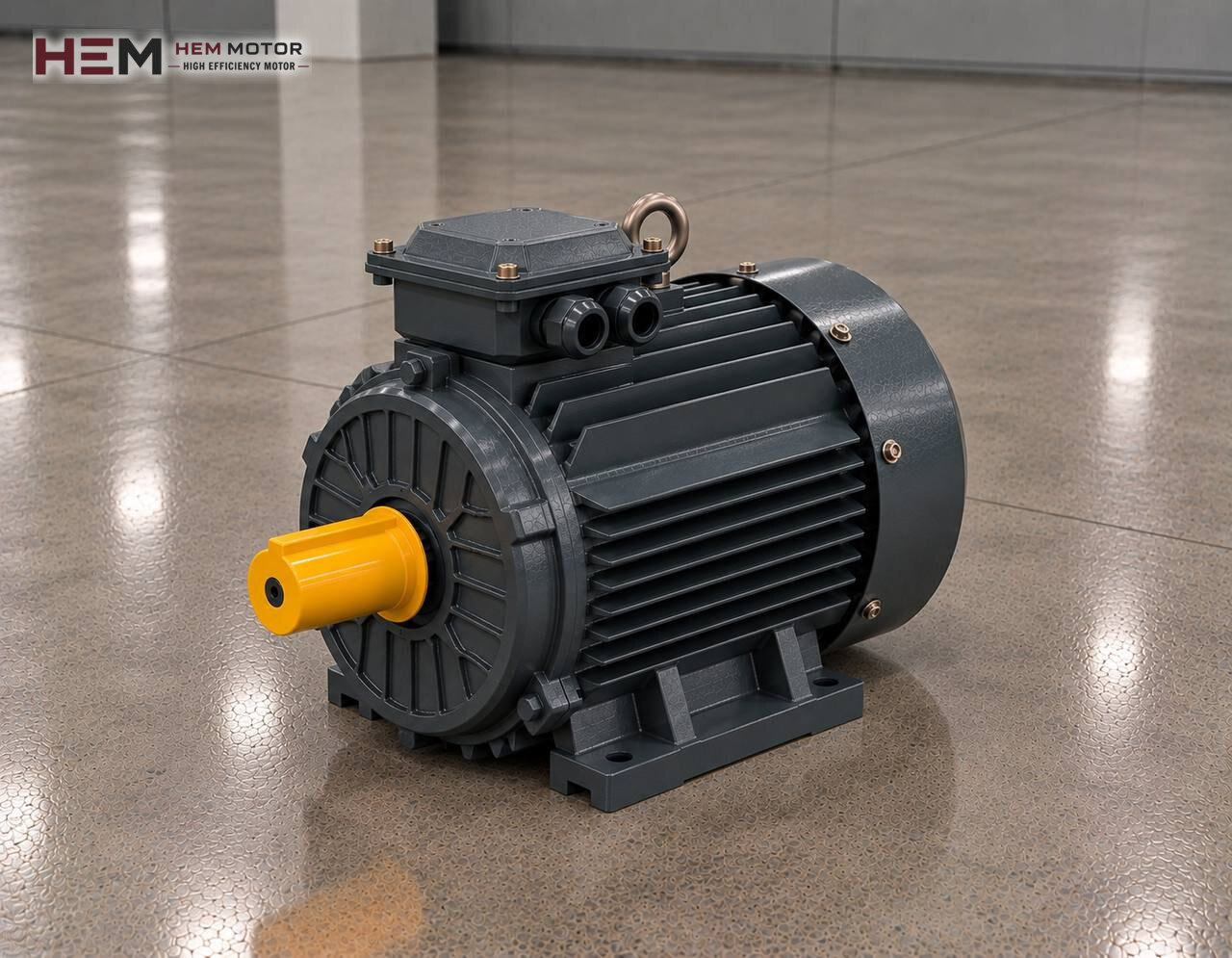

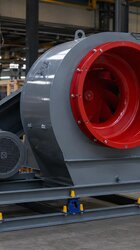
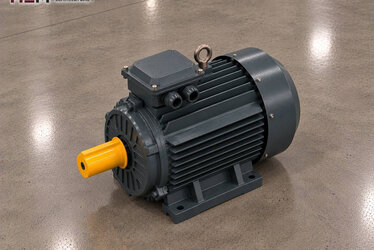
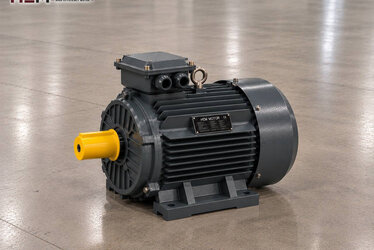
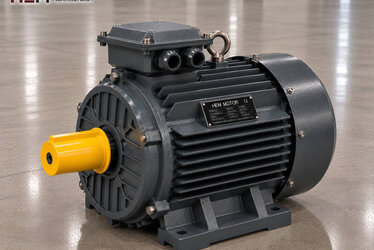
Electric motor driving a surface pump on an agricultural irrigation line
Electric motor driving a surface irrigation pump at the field edge (representative image).

Prices and technical data are on the product pages; choose a model and order online.

How do the night tariff and plot sequence lower pumping costs?

For farms on a multi-rate tariff, the hours in which the pump runs matter as much as the motor's efficiency. Pumping at night costs less. Because the crop's need in drip irrigation can be shifted somewhat during the day, it is often possible to move most irrigation into night hours. Lower evaporation at night also means water is used more efficiently in sprinkler systems.

On a well feeding several plots, opening the plots in sequence rather than all valves at once helps the pump stay in its efficient operating zone. Open the valves one after another. In systems with storage, a pond or reservoir filled at night allows daytime distribution with only a small transfer pump. This arrangement gives more consistent results when it is set up with a timer-based controller instead of opening and closing valves by hand.

Which motor and efficiency class suit a well motor and a surface pump?

A submersible well motor is a special motor; surface pumps run on standard three-phase motors. Submersible pump motors used in deep wells are designed to work under water; this duty requires a special motor and may fall outside the standard series in HEM Motor's 2026 catalogue, so you can consult us with the existing motor's nameplate and the well data. The deep well pump motor page explains the general framework of this application. Centrifugal pumps standing on the surface, booster sets, filter backwash pumps and transfer pumps from a reservoir, on the other hand, run with standard three-phase motors.

For these surface pumps an IE3 class motor is often a reasonable baseline; on farms with high annual running hours where the electricity cost is decisive, IE4 or IE5 class options can also be considered. The motors come with IP55 protection and class F insulation.

A simple shelter that protects the field-side motor from direct sun and from splashing irrigation water prevents water from entering the terminal box and the frame from overheating. Foot-mounted B3 or flange-mounted B5 and B35 arrangements are common for pump connection; mounting and flange size are settled in the order according to frame size. For general pump selection, see the pump electric motors page.

Sample electric motors for irrigation pumps

The models below are examples chosen according to powers commonly found on surface irrigation pumps. The exact power and speed should be confirmed with the pump manufacturer using the pump's characteristic curve and the system head.

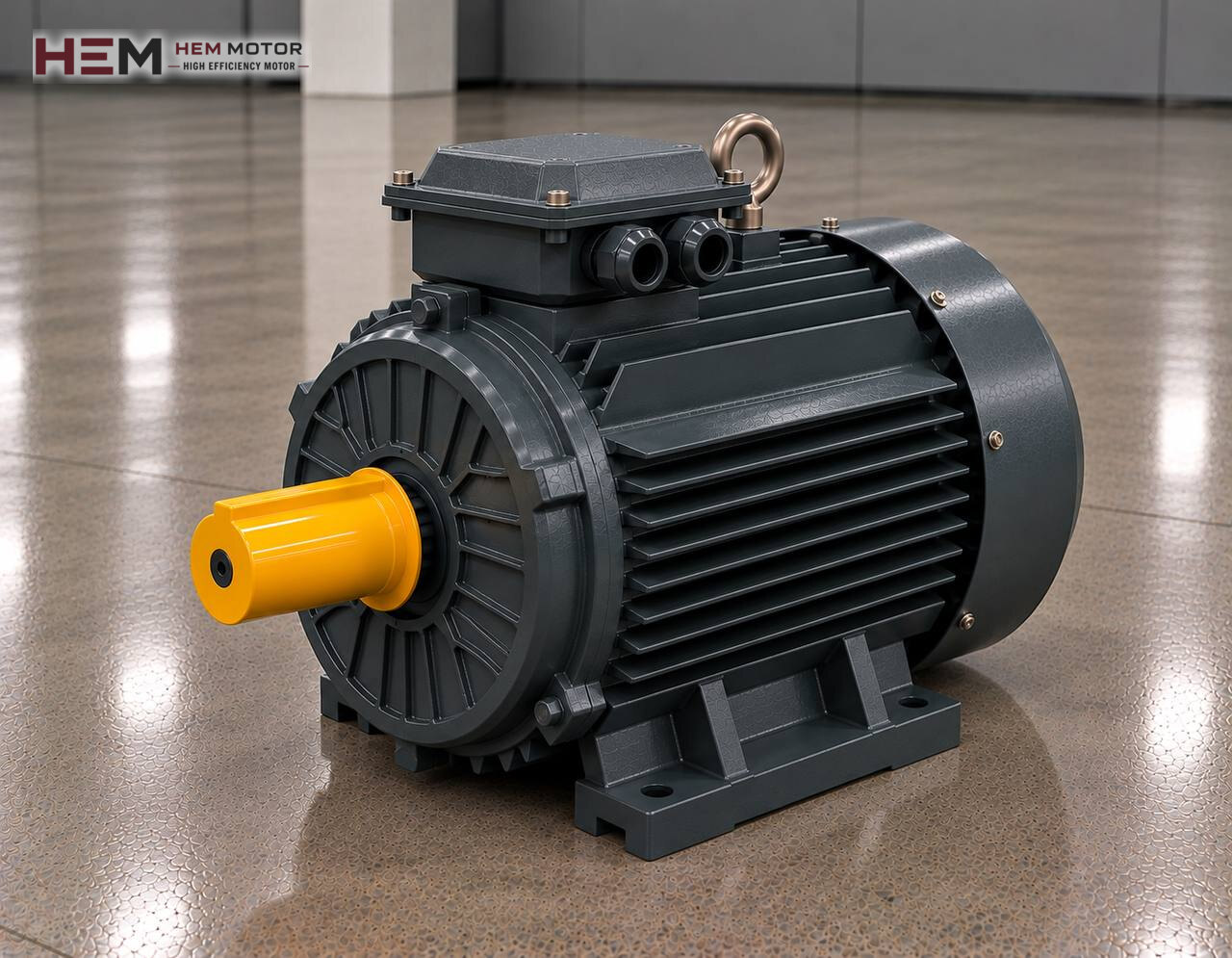
  • For a centrifugal pump feeding a cooperative-scale sprinkler line, the 30 kW 200L1-2 can be considered; it has a cast iron frame, runs at a rated speed of 2960 rpm and is supplied at 400/690 V.
  • For the drip irrigation pump of a medium-sized orchard, the 15 kW 160M2-2 is a suitable candidate; its rated speed is 2945 rpm.
  • For a reservoir transfer or filter backwash pump, the 5.5 kW cast iron 132S1-2 may be considered; its rated speed is 2930 rpm.

Which measurements before the season reveal energy losses?

Before the irrigation season opens, noting for each pump the nameplate power, measured current, discharge pressure, valve position and filter pressure difference quickly shows which well is wasting energy. These measurements come before any motor replacement.

If you also want to see the other drives on the farm alongside agricultural machinery, the agricultural machinery motors page is a guide. You can find the counterpart of a pump motor that needs replacing on the electric motor purchase page by power and speed. For a wellhead motor whose nameplate has faded in the sun, follow the steps for finding an equivalent from the nameplate and share photos of the pump and connection; let us settle on the motor of the right power together before the season begins.

Frequently Asked Questions

Where should energy saving on an irrigation pump start?

First, discharge pressure, valve position and filter pressure difference should be measured. If the pump runs with a throttled valve, impeller trimming or speed control is assessed before replacing the motor.

Does it make sense to fit a frequency converter to every irrigation pump?

At constant flow a drive may be unnecessary. In single-plot systems with a constant flow need, a correctly sized pump and impeller are often enough; a drive makes a difference in systems where demand changes during the day and between plots.

Can a surface pump be used instead of a submersible pump motor?

This depends on the water level in the well and the pump's suction capacity. Deep wells need a submersible pump and this duty calls for a special motor; selection requires consultation with the well depth and flow data.

Why does reactive energy increase on an irrigation motor?

When the motor runs well below its rated load, the power factor drops and reactive energy increases. Choosing a motor of the right power and a suitable compensation arrangement reduce this problem.

HEM Motor Models Related to This Article

The cards show example models related to the topic. A suitable motor is not chosen by power alone: compare speed, voltage, mounting, shaft and connection dimensions on the product page; if unsure, send a photo of the existing motor’s nameplate on WhatsApp.

30 kW 3000 rpm Cast Iron Frame Electric Motor 200L1-2

200L1-2

30 kW · 3000 rpm

  • Cast iron frame · IEC 200L
  • 2960 rpm · IP55
  • Mounting: B3 foot; flange (B5/B14/B35) depending on frame, confirmed with the order

US$1,248.51 (€1,142.66)

View product
15 kW 3000 rpm Cast Iron Frame Electric Motor 160M2-2

160M2-2

15 kW · 3000 rpm

  • Cast iron frame · IEC 160M
  • 2945 rpm · IP55
  • Mounting: B3 foot; flange (B5/B14/B35) depending on frame, confirmed with the order

US$559.25 (€511.84)

View product
5.5 kW 3000 rpm Cast Iron Frame Electric Motor 132S1-2

132S1-2

5.5 kW · 3000 rpm

  • Cast iron frame · IEC 132S
  • 2930 rpm · IP55
  • Mounting: B3 foot; flange (B5/B14/B35) depending on frame, confirmed with the order

US$332.20 (€304.04)

View product

Similar Articles