English
 Français
 Türkçe
 Español
 Русский



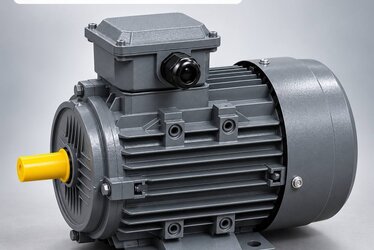
A faded 11 kW motor sits on a dealer's bench at an industrial estate. The seller plugs it in, it spins up quietly, and the asking price is less than half of a new one. Many used-motor purchases are decided on the strength of that short demonstration. Yet a motor running with no load tells you almost nothing about how it will behave once it heats up under load, or on the first cold start after a damp night.
Buying a second-hand electric motor is not automatically a mistake. Getting it right, though, means doing a few measurements before money changes hands and being clear about what job the motor will actually do for you. Those are the two halves of this article.
Decide what the motor is for
The same used motor can be a sensible buy for one plant and a poor gamble for another. What changes is the role it will play. Three roles are worth separating:
- Stopgap: a motor that keeps a machine turning for a few weeks until the proper replacement arrives. Short-term reliability is all that matters; remaining life is secondary.
- Non-critical duty: a ventilation fan or workshop machine that runs a few hundred hours a year and does not stop production when it fails. A used motor can make sense here.
- Critical or long-running drive: a motor that stops the line when it fails, or runs more than 4,000 hours a year. In this role, the unknowns of a used motor can easily cost more than the purchase saving.
Writing the role down before you start haggling also keeps the price from doing the thinking for you. A cheap motor for a critical line still has to answer every question on the list.
What to check at the bench
If the seller agrees, the whole inspection takes about half an hour. You need a clamp meter, a multimeter and a 500 V insulation tester (megger).
Nameplate and housing
A legible nameplate comes first: power, voltage, current, speed and, ideally, the efficiency class. You can estimate the rating of a motor with a missing plate from its frame size, but the same frame is used for several power and pole combinations, so the estimate can be wrong. Weld repairs on the housing, a cracked foot, a broken end shield or re-drilled mounting holes all suggest the motor had a hard life.
Shaft and bearings
Turn the shaft by hand. It should rotate smoothly and quietly with no tight spot. Push it radially and axially to feel for play. A deformed keyway, rub marks from a coupling or a slightly bent shaft point to previous operation on a misaligned drive. Replacing bearings is cheap; a worn bearing seat in the end shield is not.
Winding resistance and insulation
Remove the links in the terminal box and measure the resistance of each phase winding. The three readings should be very close; a clear difference points to shorted turns or a loose connection. Then test each phase to earth at 500 V. A low reading does not always mean a dead winding: motors that have sat in damp storage often recover after drying. How to judge the readings is covered in our article on insulation resistance and megger testing.
No-load run
Connect the motor for its nameplate voltage, run it without load and clamp each phase. The three currents should be similar. After a few minutes, listen for bearing noise, feel for vibration and check how warm the bearing housings get. An unusually high no-load current compared with the nameplate can indicate a motor that was rewound carelessly at some point.
What no inspection will reveal
Even a thorough check leaves questions open. Winding insulation ages a little every time it overheats, and that ageing cannot be measured from outside. The motor may have tripped on overload several times or run for years with dust-clogged fins. None of that has to show up in the megger reading you take at the bench.
Rewind history is the second unknown. Depending on the quality of the work, a rewound motor can end up less efficient than it was originally. The technical side of that decision is discussed in rewind the motor or buy a new one. If the seller cannot say whether the motor has been rewound, it is safer to assume it has.
The third is efficiency class. Many older motors carry no IE code at all. Running a used motor inside a plant usually raises no legal issue, but cases such as used motors brought in from outside the market for the first time can be treated differently. That distinction is explained in how IE3 and IE4 rules affect existing plants.