English
 Français
 Türkçe
 Español
 Русский
 العربية
 Deutsch
 Italiano


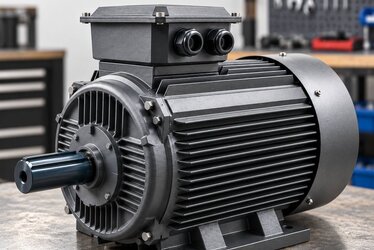
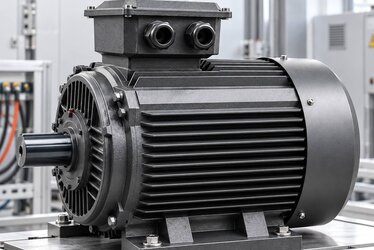
An electric motor usually has two bearings: one in the front end shield on the shaft side and one in the rear end shield on the fan side. On many motors the bearing number is printed on the nameplate; if not, it can be read on the outer ring or on the shield of the bearing itself. Replacement timing is set by symptoms rather than by the calendar: if the character of the noise has changed, if the bearing area is clearly hotter than the rest of the frame or if vibration has increased, the cause should be found before the motor is dismantled.
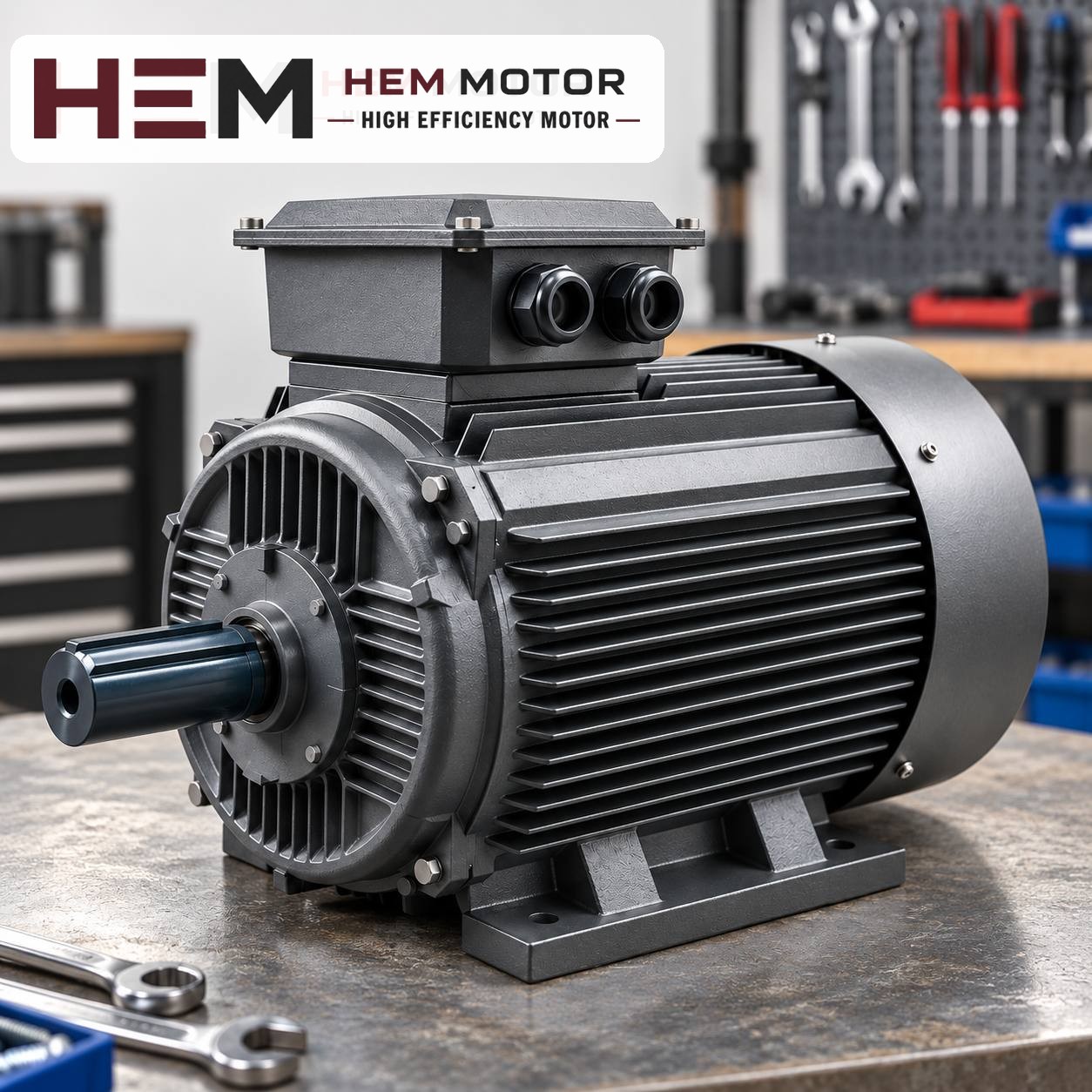
Front bearing, rear bearing: where is each and what load does it carry?
Technical documents abbreviate the shaft side as DE (drive end) and the fan side as NDE (non-drive end). The drive-end bearing takes most of the force coming through the pulley, coupling or pinion, which is why it is usually the first to wear in belt drives. The non-drive-end bearing works under lighter load but helps keep the rotor in its axial position. In many designs a wave washer on this side preloads the bearing slightly to take up play.
The bearings sit in housings machined into the end shields. The part that people in the field call the "bearing cover" or end cap is in fact the shield carrying this housing. If the outer ring has started to turn inside the housing, the bore becomes polished and oval, and a new bearing fitted into such a shield soon suffers the same fate. During replacement, checking whether the housing is scored, shiny or loose is therefore at least as important as the bearing itself.
How do you read the bearing number?
There are three places to look for the number: the motor nameplate (some manufacturers list the front and rear bearing on separate lines), the bearing itself and the manufacturer's catalogue. At HEM Motor, bearing types are listed separately for the drive end and the fan end, by frame size and number of poles, in the 2026 technical and product catalogue. Even if the nameplate has worn off, the IEC frame number and the number of poles are a sufficient starting point for looking it up.
To show how the reading works, take a number such as "6205-2Z C3". This is only an example, not the bearing of a particular model:
- 6: Single-row deep groove ball bearing. It is the most common type in small and medium-power motors.
- 2: Dimension series. Bearings of the 62 and 63 series exist with the same bore; the 63 series is larger and has a higher load capacity. Both fit the shaft, but only the correct series fits the housing.
- 05: Bore code. As a general rule, codes from 04 upwards are multiplied by 5 to give the bore diameter in millimetres.
- 2Z or 2RS: Bearing closed on both sides. Z means a metal shield, RS a rubber seal. These bearings are greased at the factory and take no grease from outside.
- C3: Internal clearance larger than normal. It is common in motor bearings that run warm; fitting a bearing without a clearance suffix in place of one marked C3 can cause heating and noise.
The most frequent mistake is to skip the suffixes and give only the four-digit number. A part requested as "6205" may arrive as an open type, with a different seal or with a different clearance. When ordering, write the number with all its suffixes, letter for letter.
Noise, heat and vibration: when should a bearing be replaced?
Bearing life is used up not by hours but by load, speed, temperature and the state of lubrication. The same bearing may run for years in a smoothly running pump yet fatigue much sooner in a fan with a tight belt. The replacement decision is therefore based on symptoms. Your ears, your hand and a simple infrared thermometer are often enough for a first diagnosis.
| Symptom | Possible meaning | What to do |
|---|---|---|
| Even but steadily rising hum or growl | Fatigue and wear on the rolling surfaces | Close monitoring, replacement at a planned stop |
| Irregular clicking, gravel-like noise | Dirt has entered, or a ball or the cage is damaged | Replace soon, check seals and gaskets |
| High-pitched whistle or squeal | Insufficient lubrication or degraded grease | On regreasable motors, lubricate to the catalogue value; on sealed types, replace |
| Noticeable heat at the bearing | Too much grease, tight belt, axial strain, misalignment | Remove the cause first, then assess the bearing |
| Rising vibration, knocking at the coupling | Misalignment, loose base or advanced bearing damage | Check alignment and base, replace if necessary |
There is a simple way to locate the source of the noise: switch off the supply while the motor is running and listen as it slows down. If the noise disappears the moment the power is cut, the source is most likely electrical, and phase imbalance or magnetic noise is suspected. If the noise continues while the motor coasts freely, the source is mechanical: the bearing, the fan or the driven machine. Then disconnect the motor from the load and turn the shaft by hand; a rough, catching or loose feel points to the bearing.
In motors driven by a frequency inverter, electrical wear that leaves regular lines on the ring surface can also appear. In that case renewing the bearing alone is not a lasting fix; the cable, shield and earthing arrangement should also be examined.
The effect of belt tension and axial load
In a belt drive the drive-end bearing's worst enemy is excessive tension. Tightening the adjusting bolt all the way so the belt does not slip puts a constant side force on the bearing. Fitting the pulley pushed out towards the end of the shaft lengthens the lever arm of this force and increases the load the bearing sees. The pulley should sit as close to the shaft shoulder as possible, and the belt should be kept at the tension recommended by its manufacturer.
Axial load is force acting along the shaft. Helical gears, some pump impellers and, in vertical mounting, the weight of the rotor itself create this force. A deep groove ball bearing carries limited axial load; if the machine applies a noticeable push or pull to the shaft, this information should be given when ordering. In a coupled drive, two shafts that are not on the same axis also create both radial and axial strain. Measuring the alignment before connecting after a bearing change directly determines how long the new bearing will last.