Electric Motors Suited to Harsh Operating Conditions in Textile Mills

Electric Motors Suited to Harsh Operating Conditions in Textile Mills

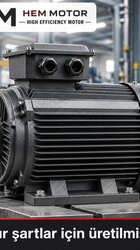
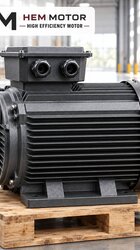
An electric motor suited to the harsh conditions of textile mills is one that can withstand, all together, the fibre and lint flying in the spinning and weaving halls, steam, hot water and chemical splashes in the dyehouse, high temperature around the stenter and uninterrupted three-shift running. In each of these departments a different factor wears the motor: clogged cooling fins in the blowroom, moisture seeping into the terminal box in the dyehouse, a heating bearing on the stenter. The right choice starts with knowing in which department of the mill the motor will turn.

Why do fibre and lint make an electric motor heat up?

Fibre and lint heat the motor because they stick like felt to the grille of the fan cover and between the cooling fins on the frame and cut off the airflow. In the cotton opening and blowroom, on carding machines and in the open-end spinning hall, fine fibre is constantly in the air. When airflow is cut off the motor heats up even when running below nameplate power. Winding insulation also weakens over time.

Fibre build-up also carries a fire risk; a layer of cotton on a hot motor frame is dangerous.

The maintenance team's weekly plan should therefore include cleaning motor frames and fan covers with compressed air or vacuum. Placing the motor too close to a wall or machine body makes cleaning difficult and speeds up fibre build-up.

What do steam, hot water and chemical splashes in the dyehouse do to a motor?

In the dyehouse, steam, hot water and chemical splashes blister the paint on the motor frame, harden the terminal box gasket and rust the cover screws. Jet and overflow dyeing machines work with powerful circulation pumps that move the hot liquor over the fabric. The floor under and around the machine is always wet; steam rises during draining and splashes occur when chemical containers are carried. The area is wet every day.

In dyehouse motors, a downward-facing cable entry, closed unused gland holes and a position where water does not collect are the basic rules. Our series' standard protection is IP55 and insulation class F; at points washed directly with a hose, IP56 can be requested as a special order.

A heater preventing internal condensation during weekend stops can also be added as an order option.

Mill departmentDominant challengeMeasure on the motor side
Blowroom, carding and open-end hallFibre and lint, fin cloggingRegular fin cleaning, cleanable layout
Jet and overflow dyehouseSteam, hot water, chemical splashesDownward cable entry, IP56 special order, anti-condensation heater
Stenter and drying machinesHigh ambient temperature, continuous runningPTC/PT100 winding sensor, well-ventilated mounting
Weaving hall air handling unitHigh humidity, year-round runningSealed terminal box, bearing monitoring
Wastewater treatmentHumidity, caustic, outdoorsCast iron frame, corrosion-resistant paint

How does the temperature around the stenter affect the motor?

In the high temperature around the stenter, the motor may not hold its nameplate rating. The stenter blows hot air over the fabric with its internal circulation fans while drying and heat-setting it. The fan motors often stand on top of or beside the machine, very close to the oven cabinet; ambient temperature is noticeably higher than in the rest of the hall. Power selection and cooling air should be assessed together with the machine manufacturer and the project engineer.

A PTC or PT100 sensor placed in the winding gives early warning of overheating on stenter fans and can be added as an order option. Fan drives turning inside the oven cabinet in the hot air stream require a special motor; this duty may fall outside the standard series in the 2026 catalogue, so consult us with the machine information.

Options for stenter exhaust and drying fans are on the fan and extractor motors page.
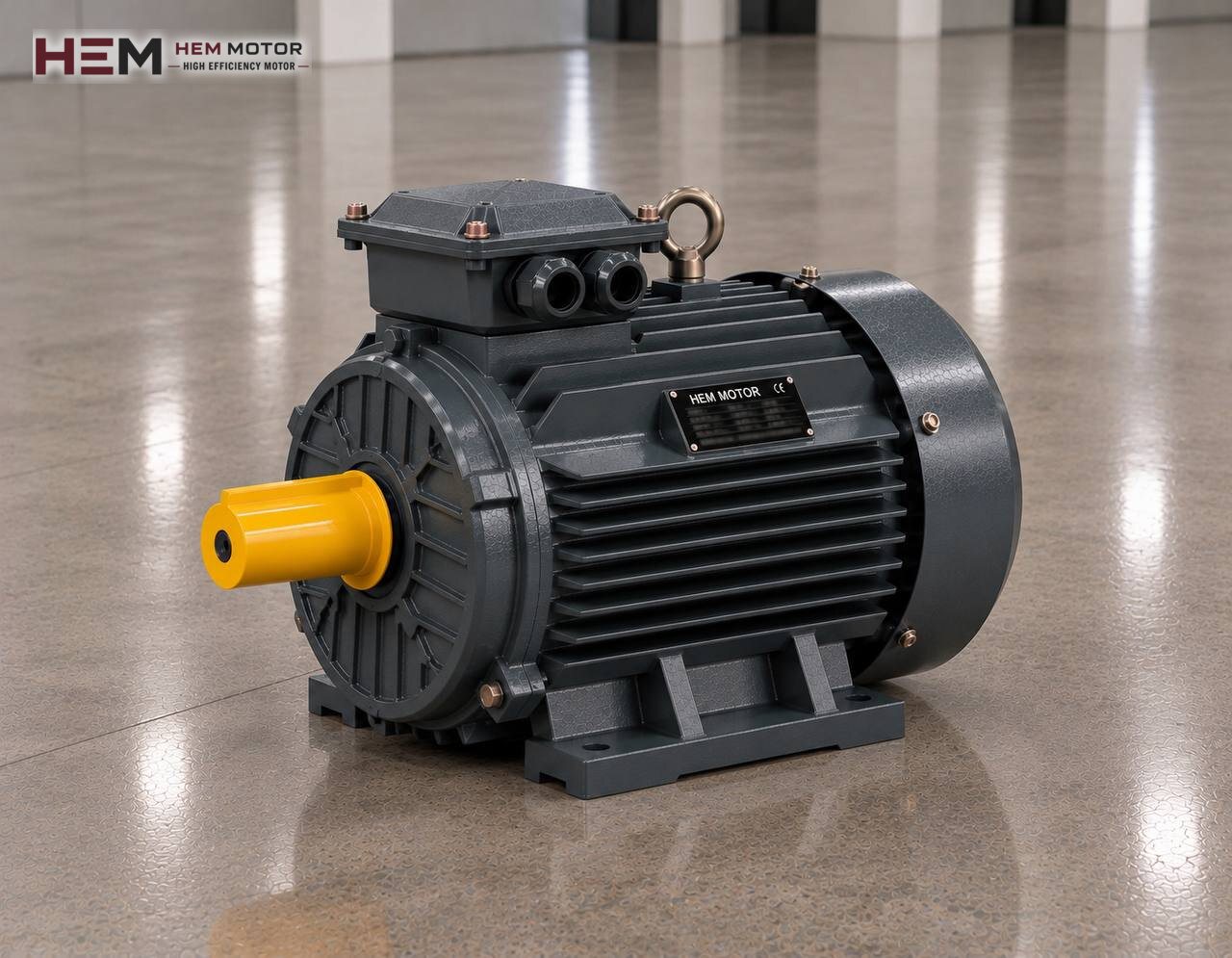
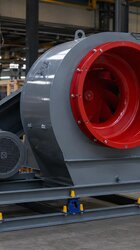
Electric motor driving the circulation pump of a fabric dyeing machine in a dyehouse
Circulation pump drive of a jet dyeing machine (representative image).

What gives up first on a motor in machines running three shifts?

On machines running three shifts, the bearing is usually the first part of the motor to give up. Ring spinning frames, looms and air handling unit fans run six or even seven days a week. There is very little rest. A change in bearing noise, a rise in frame temperature and vibration are early signs of failure; listening to and measuring them regularly prevents unplanned stops.

The back-and-forth motion of looms and the tension of belt drives also strain bearings. If belt tension is higher than necessary, bearing life shortens; pulley misalignment increases vibration. The tightness of base bolts and pulley alignment must be checked after every motor replacement.


Prices and technical data are on the product pages; choose a model and order online.

Under what conditions do the motors of the air handling unit and fibre extraction fan run?

The motors of air handling units and fibre extraction fans run all year in humid air, and extraction fans also in fibrous air. In spinning and weaving halls the air is kept at a set humidity so that the fibre does not break. Fans of dust and fibre extraction systems carry both fibrous and humid air; as the filter fills, the fan load changes.

The terminal box gasket and cover screws should be checked regularly, and insulation resistance measured before starting after a long stop. General options for textile machinery are gathered on the textile machinery electric motors page.

When do drive-fed machines need extra cooling and a filter?

On drives that turn at full torque for long periods at slow speed, as on a fabric winding machine, the motor's own fan may not be enough and a separate cooling fan is needed; if the cable between the drive panel and the motor is long, an output filter is considered. Stenter fans, winding and unrolling machines, dyeing pumps and air handling unit fans run speed-controlled on frequency converters in most plants. Our three-phase series are suitable for this kind of use.

Stating these conditions in the order ensures the motor arrives with the right equipment.

Which electric motor models can be given as examples for a textile line?

The models below are examples for common duties; the exact power should be verified with the machine manufacturer's data. Other powers and speeds can be compared in the HEM Motor shop.

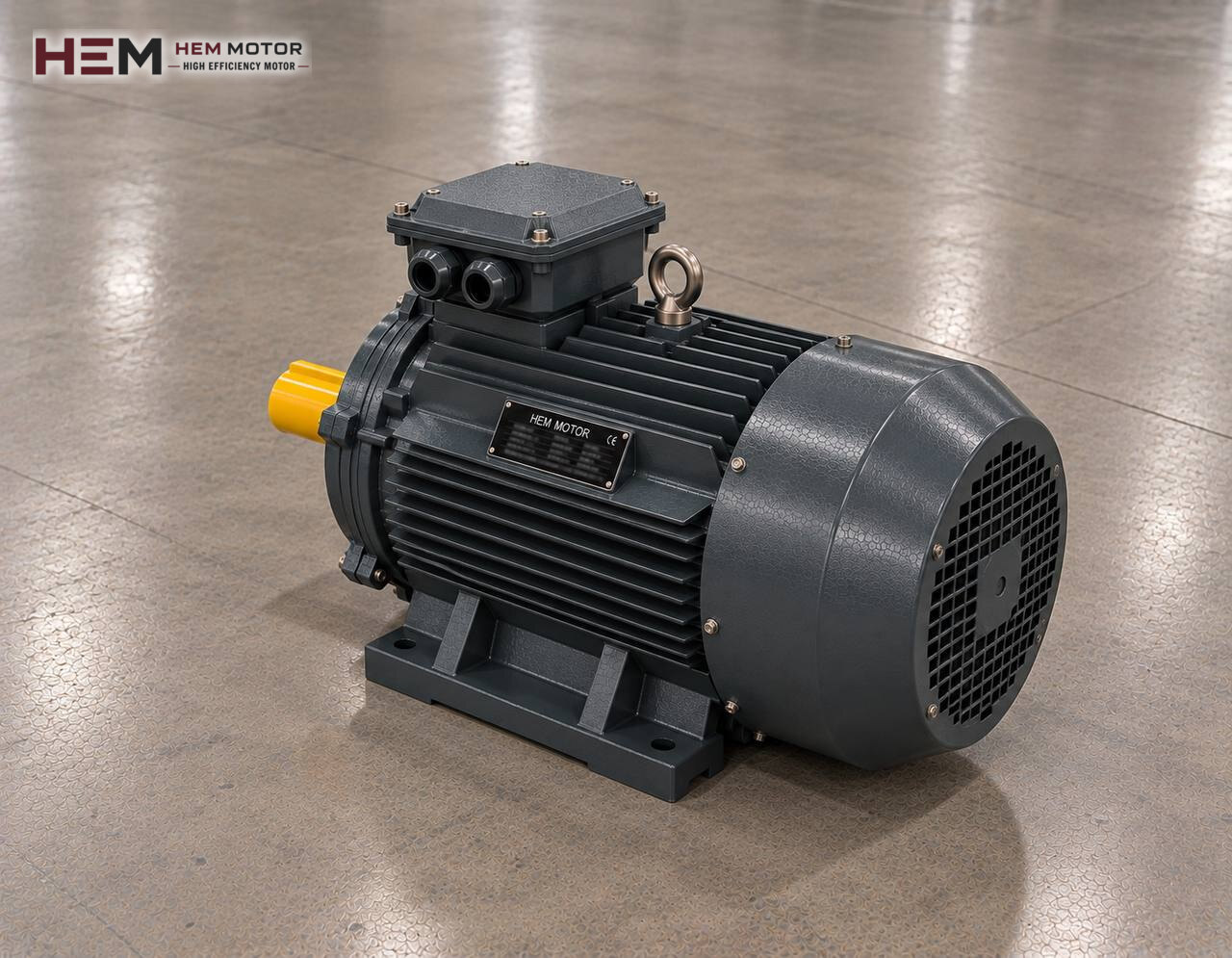
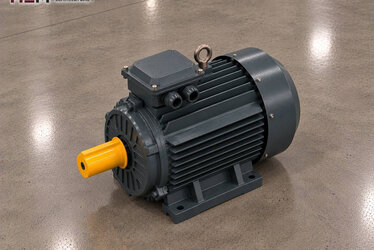
  • For the main fan of the dust and fibre extraction system, the 15 kW cast iron 160M2-2 with a rated speed of 2945 rpm can be considered; its voltage is 400/690 V.
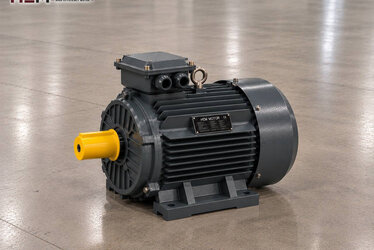
  • For a stenter circulation or exhaust fan, the 7.5 kW aluminium-frame 132M-4 may be considered; its rated speed is 1460 rpm.
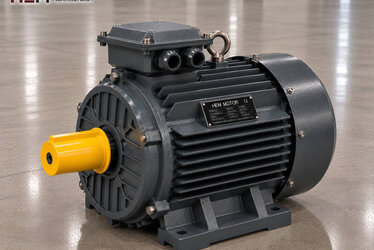
  • For the circulation pump of a small-capacity dyeing machine in the dyehouse, the 5.5 kW cast iron 132S1-2 at 2930 rpm is a suitable starting point.

Which maintenance habits extend motor life in fibrous, humid and hot halls?

In a textile mill, what extends motor life alongside the right choice is regular cleaning and listening. Both cost little. Weekly fin cleaning in the blowroom, cable entry and gasket checks in the dyehouse, winding temperature monitoring on the stenter and bearing tracking on three-shift machines move most failures into the shutdown plan.

If you send the nameplate of your stenter fan, dyeing pump or extraction fan motor using the method on the find an equivalent from the nameplate page, we will determine together the equipment suited to that department's conditions. All cast iron and aluminium-frame series are listed in our electric motor shop.

Frequently Asked Questions

Why do motors in the blowroom heat up often?

Airborne fibres stick to the fan cover and cooling fins and cut off airflow. Weekly cleaning is the most effective cure for overheating.

Is IP55 enough for the pump motor of a jet dyeing machine?

It is usually enough against splashing water; if it is washed directly with a hose, IP56 can be requested as a special order. A downward-facing cable entry also matters.

Which extra option is useful on a stenter fan motor?

A PTC or PT100 winding sensor gives early warning of overheating. Fans turning in hot air inside the oven cabinet need a special motor.

What should be checked first on a loom running three shifts?

Bearing noise, frame temperature and belt tension should be checked regularly. These signs reveal a failure before it causes a stop.

HEM Motor Models Related to This Article

The cards show example models related to the topic. A suitable motor is not chosen by power alone: compare speed, voltage, mounting, shaft and connection dimensions on the product page; if unsure, send a photo of the existing motor’s nameplate on WhatsApp.

15 kW 3000 rpm Cast Iron Frame Electric Motor 160M2-2

160M2-2

15 kW · 3000 rpm

  • Cast iron frame · IEC 160M
  • 2945 rpm · IP55
  • Mounting: B3 foot; flange (B5/B14/B35) depending on frame, confirmed with the order

US$559.25 (€511.84)

View product
7.5 kW 1500 rpm Aluminium Frame Electric Motor 132M-4

132M-4

7.5 kW · 1500 rpm

  • Aluminium frame · IEC 132M
  • 1460 rpm · IP55
  • Mounting: B3 foot; flange (B5/B14/B35) depending on frame, confirmed with the order

US$369.69 (€338.35)

View product
5.5 kW 3000 rpm Cast Iron Frame Electric Motor 132S1-2

132S1-2

5.5 kW · 3000 rpm

  • Cast iron frame · IEC 132S
  • 2930 rpm · IP55
  • Mounting: B3 foot; flange (B5/B14/B35) depending on frame, confirmed with the order

US$332.20 (€304.04)

View product

Similar Articles