English
 Français
 Türkçe
 Español
 Русский
 العربية
 Deutsch
 Italiano

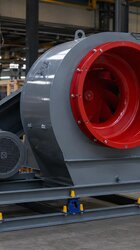
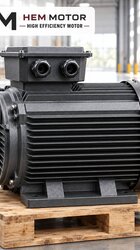
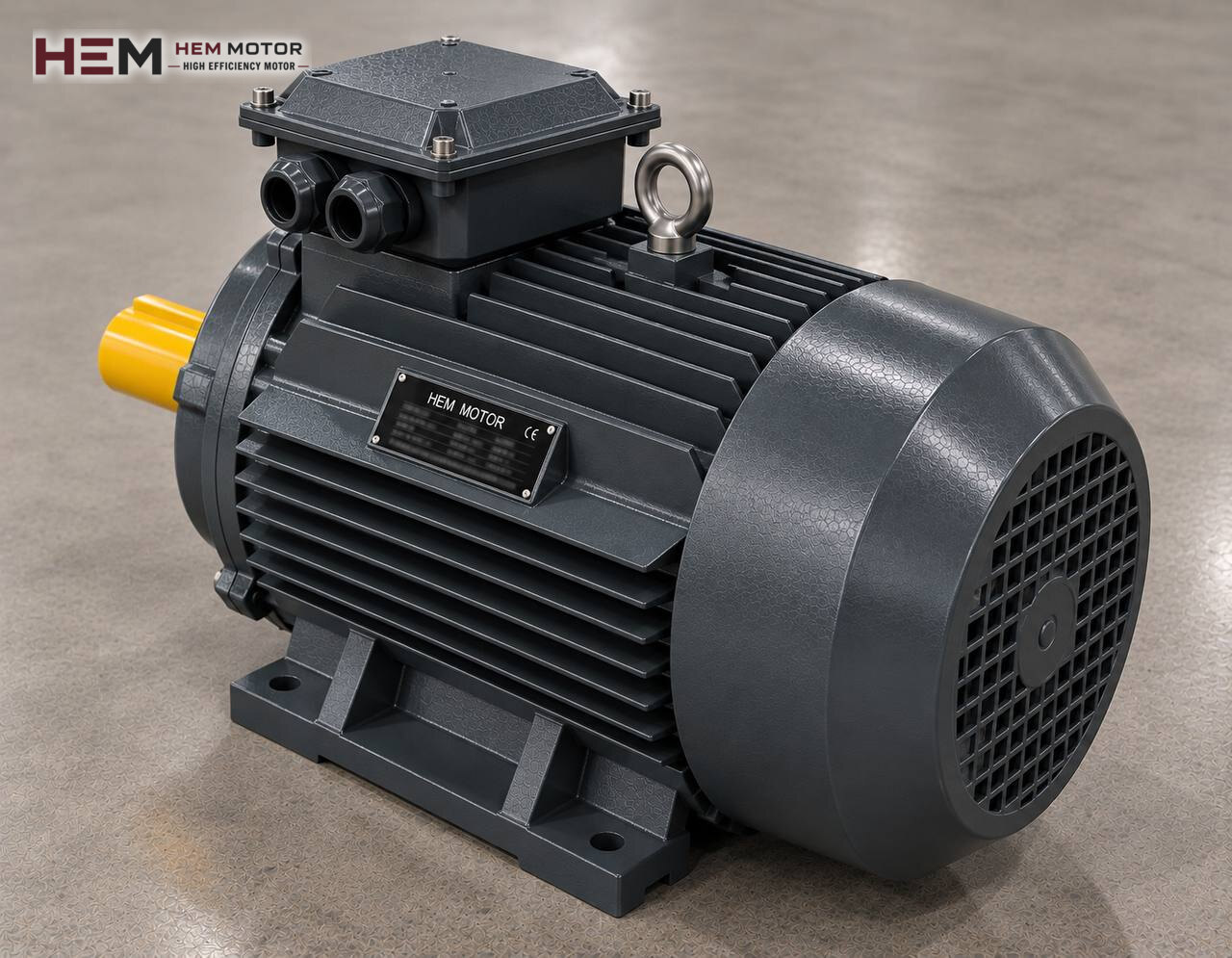

On construction sites, the yardstick for switching to IE3 and IE4 electric motors differs from a factory: most motors are fed from a generator or a temporary site panel, are dismantled and moved to another site when the project ends, and run at irregular hours over the year. That is why the switch starts with machines that work on site almost as if permanent, mobile concrete batching plants, aggregate belts, cement screw conveyors, tunnel ventilation fans and long-running dewatering pumps; short-duty machines such as rebar benders, cutters and small mixers move to the new class as their motors wear out and are replaced. When deciding, generator capacity and starting current count as much as the energy difference.
Why does an electric motor live differently on a construction site than in a factory?
In a factory a motor stays bolted to the same base for years, fed from the same panel and watched by the same maintenance technician. On a construction site the motor arrives by truck, is fixed to a frame set on bare ground, works under rain, mud and cement dust, and when the project ends it is dismantled and goes to the yard or a new site. With every removal and refit, the cable connection, coupling alignment and belt tension are set up again; this means installation quality, as much as efficiency class, determines energy consumption.
The supply side is different too. Until the grid connection arrives, many sites run on diesel generators, and generator fuel is a far more expensive energy source than grid electricity. Every reduction in a motor's losses means the generator burns less fuel or that the same generator can feed more machines. This is what gives the replacement plan its value.
Which site machine goes at the top of the replacement list?
The top of the list goes to machines that run long hours every day throughout the project with a steady load. The mixer, aggregate belts and cement screw of a mobile or fixed concrete batching plant set up on site; surface dewatering pumps drawing groundwater from large excavations; and ventilation fans blowing fresh air in tunnel and underground car park construction belong to this group. These machines sometimes run non-stop through every shift for months.
The second group includes crushing-screening plants, plaster and screed pumps, site compressors and concrete reclaimers; they run a few hours a day in a pattern that varies with load. The third group includes rebar bending and cutting machines, small concrete mixers, saws and crane auxiliaries; their running times are short and intermittent. On these machines the efficiency class difference does not show for years, and replacement can be left until failure.
How does IE class affect fuel at a generator-fed site?
As motor losses fall, the generator burns less fuel. Consider a hypothetical example: a dewatering pump drawing water from an excavation pit and requiring 11 kW at the shaft runs 20 hours a day during the first six months of the project. Take the efficiency of the existing motor as 0.89 and that of the motor under consideration as 0.91; these values are for the example, and real values should be read from the motor nameplate and catalogue. The power the motor draws from the grid or generator becomes about 12.09 kW instead of 12.36 kW; the difference is about 0.27 kW per hour and reaches about 1 MWh over six months.
If this energy comes from a generator, its equivalent is fuel in litres and depends on the generator's efficiency. When the same calculation is applied to several pumps and the batching plant's belts, the difference grows. A more important effect is the reduced generator load: with lower-loss motors, the same generator can feed one more machine. The site's own fuel consumption and generator data should be used for the calculation; this example is not a promise of savings.
Does a high-efficiency motor strain the generator at start-up?
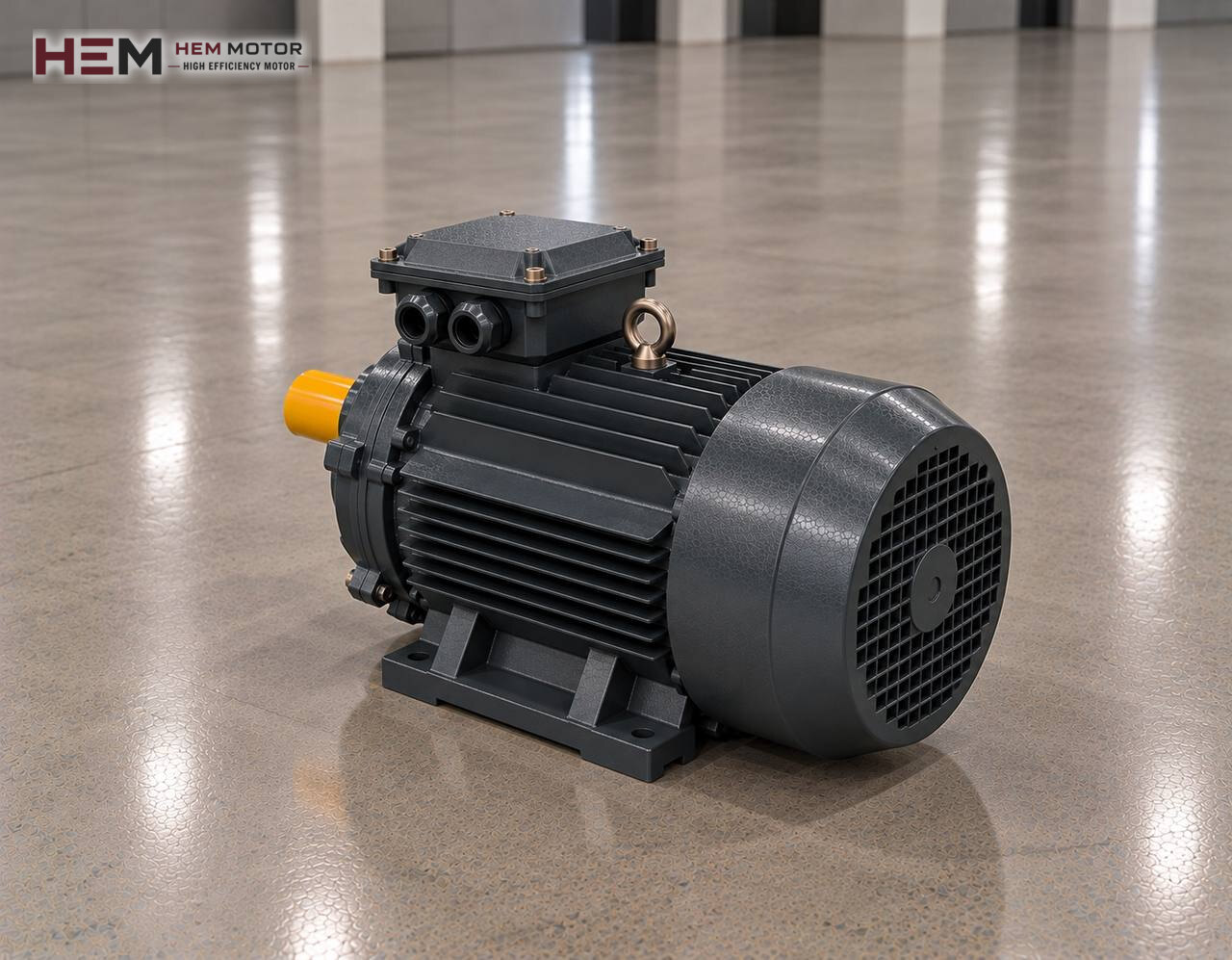
It can. In high-efficiency motors, the current drawn at first start may increase somewhat compared with the old one. In a grid-fed factory this difference often goes unnoticed; but on a generator-fed site, when a large motor comes on line directly, the voltage dips for a moment and other machines' contactors may drop out. That is why, when drives such as the batching plant mixer, a large compressor or a crusher are replaced, generator power and starting method should be reviewed together.
With star-delta starting, starting current and torque fall to roughly one third of direct-on-line values (general information; confirm with the machine manufacturer); if a full mixer or a belt covered with material cannot begin turning with this reduced torque, a soft starter or frequency converter is used instead. HEM Motor's three-phase models can be connected to a converter for speed control. If the mixer or belt is to turn slowly at full load for long periods, the motor's own fan may not suffice for cooling and a separately powered cooling fan is added; if the converter is in the site container and the motor at the far end of the site, a dv/dt or sine filter at the output is considered because of the long cable. It is enough to write these details in the order.
How are frame, connection and protection chosen for a motor that is dismantled and moved?
For a motor moved from site to site, frame material is an important choice. For batching plant and crusher drives exposed to impact, vibration and rough handling, a cast iron frame is more suitable; on lighter machines, such as rebar benders or small pump drives, an aluminium frame is sufficient. On a site exposed to dust and rain, the standard series' IP55 sealing and class F winding insulation do the job; for wash units with constant water spray, IP56 can be requested as a special order, and for motors that will sit in the yard for months between projects, an anti-condensation heater that keeps the winding dry can be added to the order.
Each time the motor is reconnected at a new site, phase sequence, whether the terminal connection is star or delta, and voltage should be checked; a motor whose nameplate reads 230/400 V and one that reads 400/690 V are connected differently to the same site panel. If an old machine's motor is to be replaced with a new one, the IEC frame number is the first piece of information; the fit is not confirmed until the distance between foot holes, shaft thickness and length, mounting arrangement and nameplate values have been compared one by one. Foot-mounted B3, flange B5 and B14, foot-and-flange B34 and B35, and vertical V1, V3, V5, V6 and V15 arrangements are available depending on frame size; the flange size is settled when ordering.