English
 Français
 Türkçe
 Español
 Русский
 العربية
 Deutsch
 Italiano

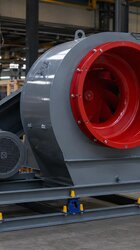
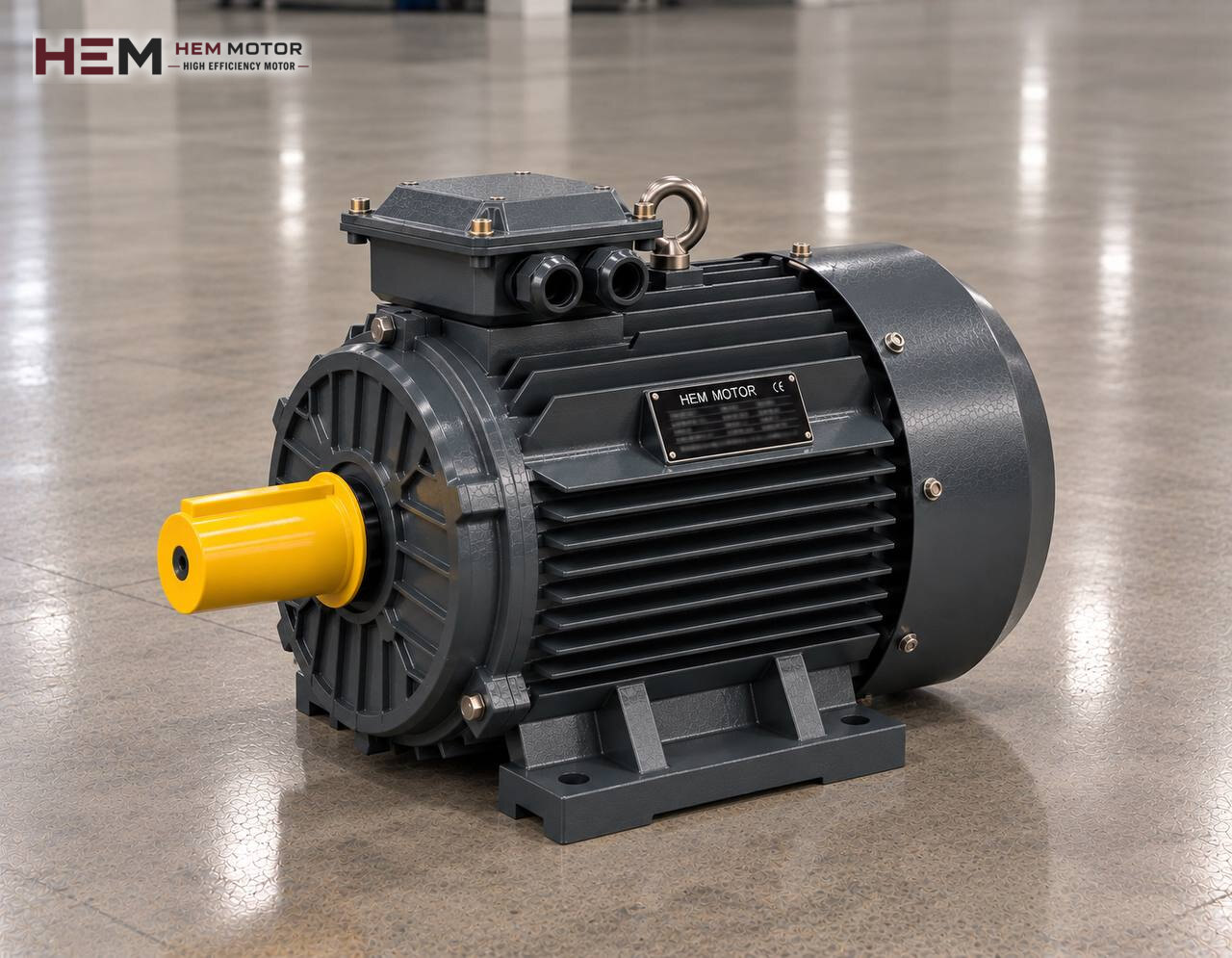

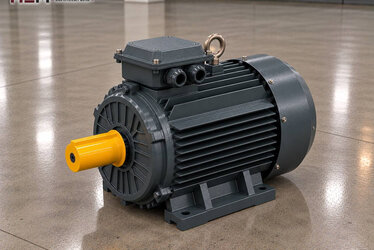
In agitators and mixers, the energy cost of the electric motor falls most in four places: shortening mixing that runs longer than the recipe requires, stopping a drum that idles while waiting for filling and discharge, adjusting speed to need for products whose viscosity changes, and bringing a motor oversized for the start down to the right power. After these come reducing gearbox and belt losses and raising the efficiency class on drives that run long hours. Below we go through each type, from the horizontal ribbon mixer to the vertical tank agitator, from the planetary mixer to the twin-shaft concrete mixer, and show where the bill grows.
Which items make up the electricity bill of a mixer?
The energy a mixer draws is not simply motor power multiplied by running time; what is in the drum, how long it is mixed and how many minutes the drive keeps turning after mixing ends decide the sum. If one of two mixers of the same power runs a few minutes longer per batch, by the end of the year the difference can reach the value of several motors.
| Mixer type | Typical use | Where energy is wasted | First point to check |
|---|---|---|---|
| Horizontal ribbon / paddle mixer | Feed, dry mortar, powder chemicals | Mixing that continues after homogeneity is reached | Batch time and sample result |
| Twin-shaft concrete mixer | Ready-mix concrete, precast | Drum turning without a load between batches | Idle running time in the automation |
| Vertical tank agitator | Paint, detergent, syrup, wastewater treatment | Constant high speed even after the product thins | Viscosity change of the product |
| Planetary mixer / kneader | Dough, paste, ceramic slurry | Heavy-stage speed during the light stage too | Speed by recipe step |
| Clay and filter mixer | Brick and tile body | Worn blades, belt slip | Blade condition and belt tension |
Is mixing time longer than the recipe requires?
In many plants the batch time stays at a value an operator extended years ago “just to be on the safe side”. Yet in dry powder and granule blends homogeneity stops improving after a certain time; the drum only consumes energy, and with some products segregation begins. The safe way to shorten the time is to compare samples taken at different times in the laboratory and write the shortest accepted time into the automation.
A hypothetical example: if the drive of a mixer in a feed mill draws 15 kW on average and the plant makes 120 batches a day, two extra minutes per batch means four hours of running a day, roughly 60 kWh. Accumulated over a year, this becomes a more visible item than the mixer itself.
How is a drum that turns while waiting for filling and discharge stopped?
Adding the logic “stop after a set time if the drum is empty and the next batch is not ready” to the automation cuts idle running hours directly. In concrete plants and other facilities producing continuous batches, the mixer often turns empty while waiting for the next batch to be weighed. The blades see less load in an empty drum. Motor, gearbox and belt losses continue, however, and so does wear.
A balance must be kept here: stopping and starting too often heats the motor with starting current. The number of starts per hour must stay below what the motor and the starting method can handle; in places such as concrete plants, where a restart with a full drum is possible, this limit matters even more.
Models suited to plant drives are grouped on the concrete plant electric motors page.
How is agitator speed adjusted for a product whose viscosity changes?
Speed is lowered as the product thins; if the impeller turns at constant speed, more power than necessary is spent in the thin phase. In vertical tank agitators the product changes consistency during the batch: paint thickens when pigment is added, syrup thins as it warms, and sludge in treatment thickens over time. In turbulent flow the power an agitator draws rises steeply with speed, so a small drop in speed brings a marked fall in power (general information; confirm with the agitator manufacturer).
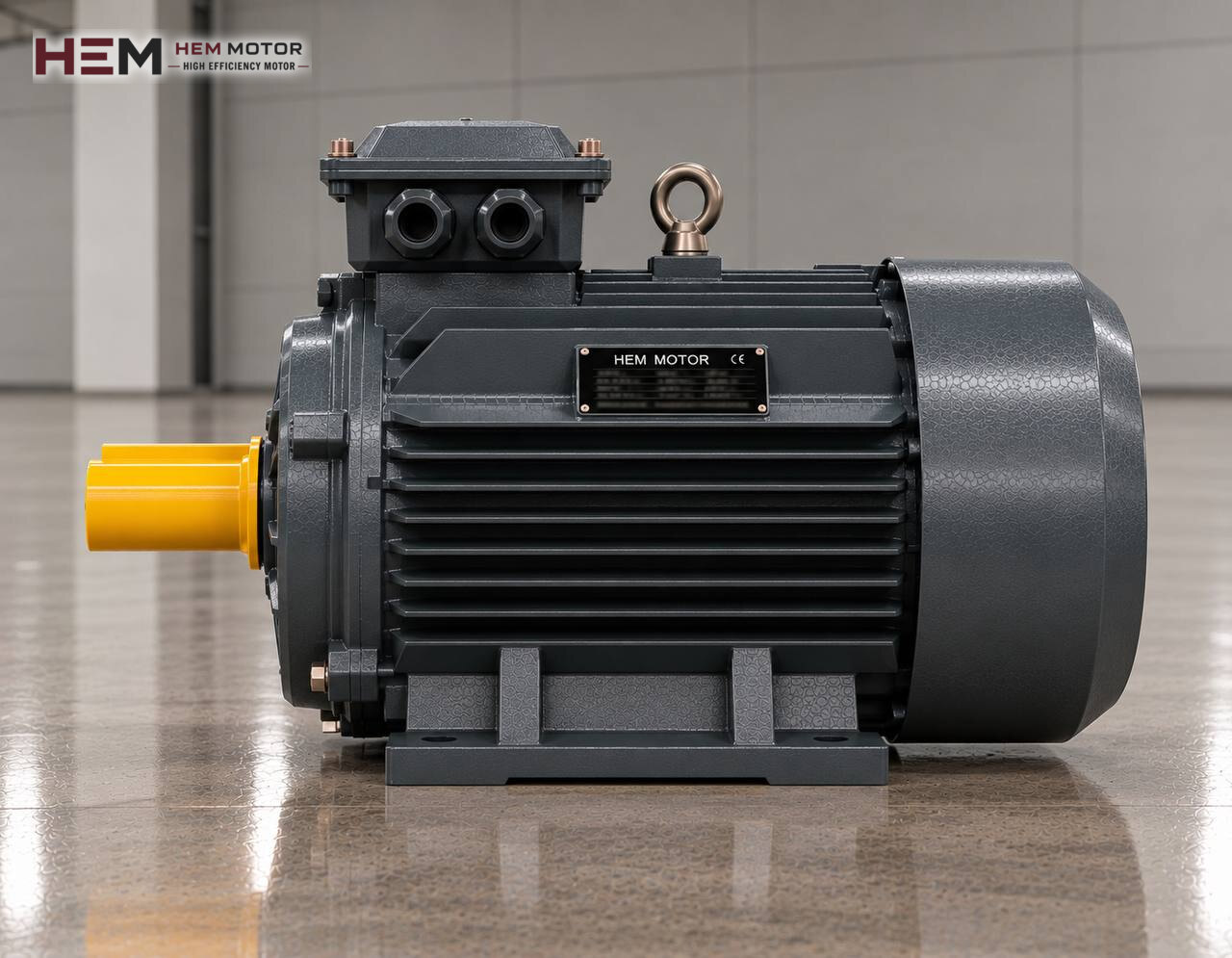
The way to make this adjustment is a frequency converter. Our three-phase models are suitable for speed adjustment when fed from a drive. If the agitator will turn slowly at full torque for hours, the motor's own fan on the shaft may not keep the frame cool; in that case an independent cooling fan is added. If the drive panel is far from the tank, fitting a dv/dt or sine-wave filter on the motor cable is considered. Simply state the speed range and cable length with your order.
Why does an electric motor oversized for the start cost more at low load?
Mixer motors are often chosen one or two sizes larger out of concern that “it must start with a full drum”. The start is secured. The motor, however, runs below half its rated power for most of the shift. In this region both efficiency and power factor fall; reactive power drawn from the grid rises and the compensation panel is loaded more heavily.
The right power is found by measurement. Current is logged through a batch and the load in the heaviest stage and the average load are read separately. If the start is heavy, the answer may be a soft starter or a drive rather than a larger motor. A change in power should always be made with the mixer manufacturer's approval.