How to Lower the Energy Cost of Electric Motors in Power Plant Auxiliary Systems?

How to Lower the Energy Cost of Electric Motors in Power Plant Auxiliary Systems?

The way to lower the energy cost of electric motors in power plant auxiliary systems is to make pumps and fans that keep running at full capacity even when the plant is at part load follow the load, and to measure and manage the plant's own internal consumption. Cooling water pumps, cooling tower fans, combustion air and flue gas fans, condensate pumps, fuel and ash handling belts and compressed air compressors consume part of the electricity the plant generates before it ever reaches the grid. Every kilowatt-hour of internal consumption is a kilowatt-hour that cannot be sold. Efficiency in auxiliary drives therefore feeds directly into sales revenue.

Why is auxiliary consumption the hidden item in power plant economics?

In a factory the electric motor is a cost added to the bill. In a power plant it is deducted from the gross value of the electricity produced. In thermal plants, biomass and waste heat facilities and geothermal plants, auxiliary systems run continuously and their annual operating hours are far above those of most industrial sites. Apart from a short maintenance outage, the cooling water pump or flue gas fan hardly ever stops.

A hypothetical example: if the power drawn from the grid by a pump drive running 8,000 hours a year falls by 1 kW, annual internal consumption drops by 8,000 kWh and that energy stays available for sale. Applying the same logic to dozens of auxiliary motors, every improvement that looks small turns into a visible line in the annual generation table.

For plant operators, an energy study starts by listing how many hours each drive runs and at what load.

Auxiliary systemTypical electric motor dutyLoad characterApproach that lowers cost
Main cooling waterLarge centrifugal or split case pumpVaries with season and plant loadPump staging, speed control
Cooling towerGear-driven axial fanDepends on air temperatureAdjusting fan count and speed to the weather
Boiler combustion air and flue gasCentrifugal fanVaries with plant loadSpeed control instead of dampers
Condensate and feed line auxiliariesMultistage pumpContinuous, variable at part loadCorrect power and efficiency class
Fuel and ash handlingBelt conveyor, screwIntermittent, risk of running emptyAutomation that stops an empty belt

Why does the cooling water pump still draw full power when the plant is at part load?

Fixed-speed pumps keep delivering the same flow even when the plant sheds load. Many plants ramp up and down during the day according to grid demand. When the turbine runs at half load, the cooling water needed by the condenser also falls, and the surplus water is either throttled with a valve or circulated needlessly. Either way the electric motor does wasted work.

According to the pump affinity laws, flow is proportional to speed while absorbed power varies roughly with the cube of speed (general information; confirm with the pump manufacturer). Lowering the speed slightly therefore consumes far less power than throttling the valve. In systems with several parallel pumps, staging the number of pumps to the load first and then applying speed control to a single pump is often a sensible starting point.

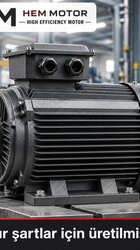
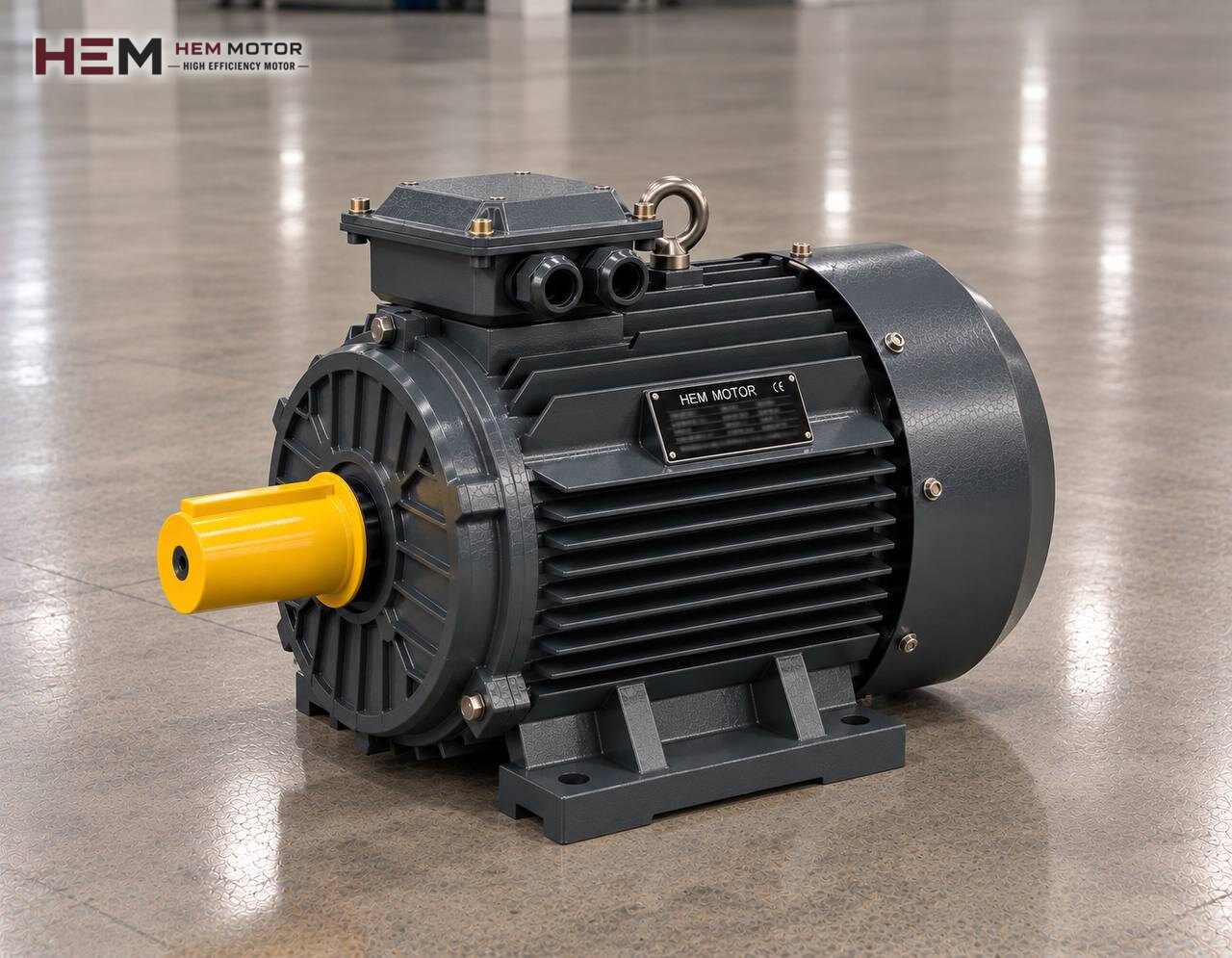
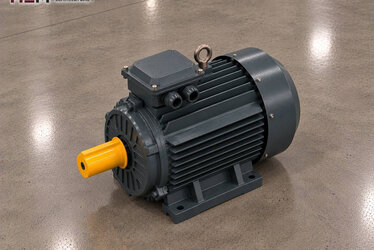
As an example of the larger powers usable on a cooling water line, the 315S-4 cast iron frame electric motor rated at 110 kW and 1488 rpm can be mentioned; the pump's actual shaft power should be taken from the manufacturer's curve.
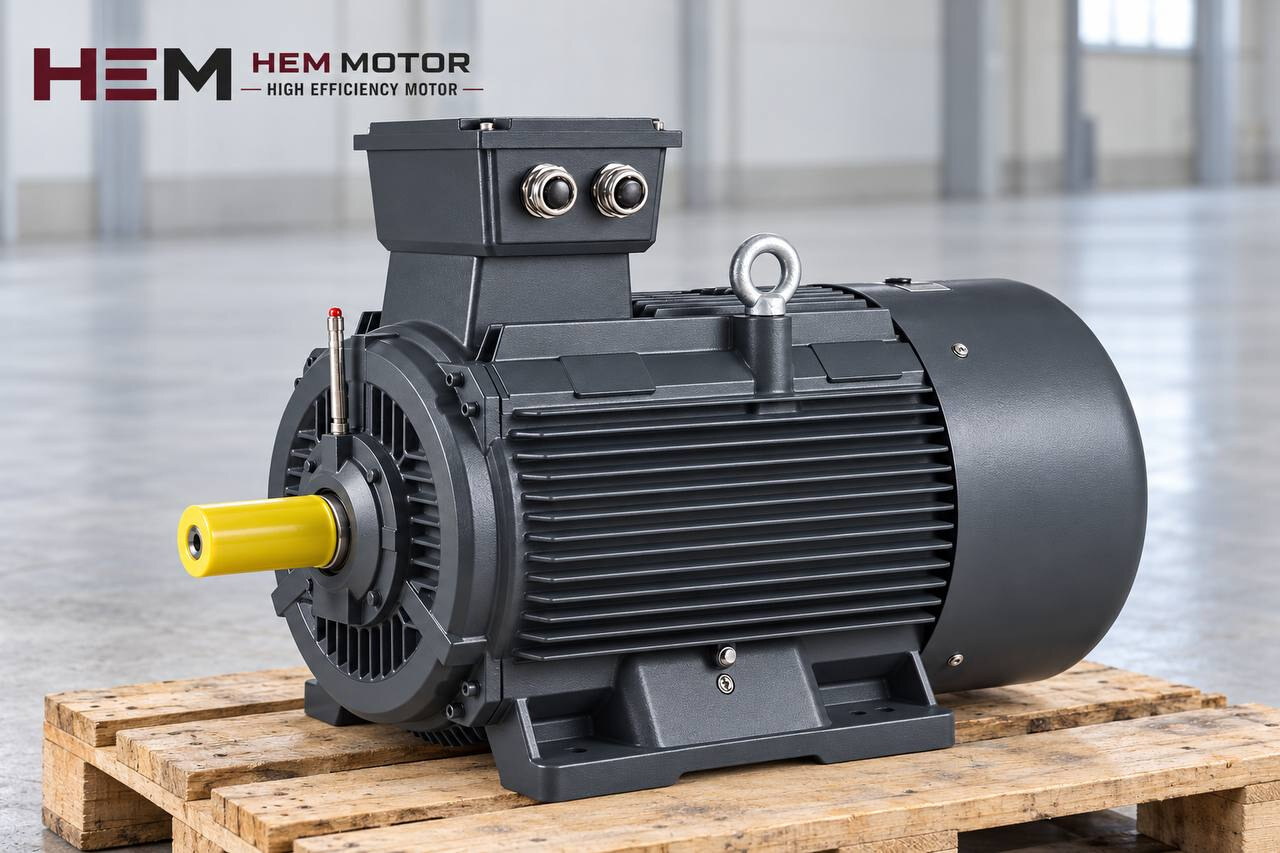
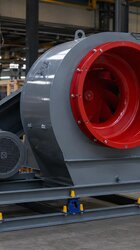
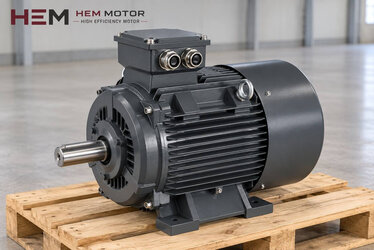
Electric motor driving a split case cooling water pump
Electric motor on a split case pump drive (representative image).

How are cooling tower fans run according to air temperature?

A control that measures water temperature and brings fans in stage by stage or reduces their speed ties the tower's electricity use to the real needs of the weather. In a wet cooling tower, the fan's job is to draw enough air for the water to reach the required temperature. On winter nights and cool spring mornings this air demand is much lower than at midday in summer. Even so, in many towers the fans run all year at fixed speed and all at once.

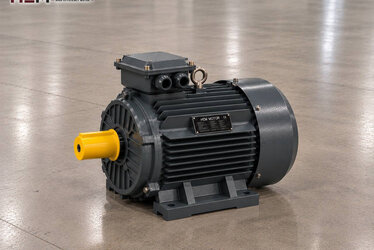
Tower fans usually turn a large-diameter propeller through a gearbox. The air they work in is constantly humid and misty. The electric motor's protection class, terminal box gasket and the anti-condensation heater option for long stops are as important here as energy. For a medium-sized tower cell, the 250M-6 electric motor rated at 37 kW and 985 rpm can be considered as an example; the gearbox ratio and propeller power should be obtained from the tower manufacturer.

How expensive is throttling boiler fans with dampers?

A fan throttled by a damper runs at full speed. The electric motor keeps drawing high power although the flow has dropped. Forced draft (FD) and induced draft (ID) fans adjust air and gas flow according to boiler load. In older plants this adjustment is made with inlet vanes or outlet dampers; the damper blocks part of the air. Linking speed to load with a frequency converter clearly reduces internal consumption, especially in periods when the plant runs at part load for long stretches.

Our three-phase series are suitable for speed control with a frequency converter. If the fan has to run at full torque at very low speed for long periods, the motor's own fan may be insufficient and a separate fan should be considered; if the cable between the drive and the motor is long, a dv/dt or sine filter is evaluated. Stating these conditions in the order avoids surprises at commissioning.

You can compare suitable powers for boiler and tower fans by speed and frame in our electric motor store.

Prices and technical data are on the product pages; choose a model and order online.

How do oversized auxiliary motors increase internal consumption?

In power plant projects auxiliary drives are often sized with an added safety margin; over the years, revisions can reduce the real load of the pump or fan even further. An electric motor running at half its rated power loses both efficiency and power factor. The reactive power burden grows as well. Once a current and power log is taken, the motor's load ratio becomes clear. For drives that consistently show low load, moving down one power size or trimming the pump impeller can be considered.

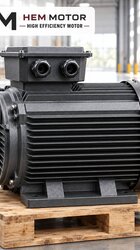
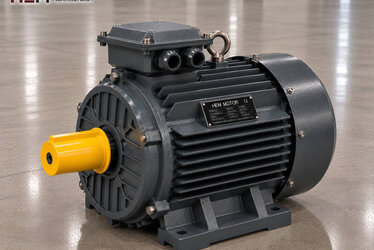
Continuously running medium-power pumps such as condensate and chemical dosing pumps are good candidates for this review. An example model in this class is the 180M-4 cast iron frame electric motor rated at 18.5 kW and 1470 rpm. When replacing, the IEC frame number is the first reference; an exact match is confirmed by comparing mounting type, shaft diameter and length, foot hole distance, flange and electrical values.

On which auxiliary drive does an efficiency class upgrade make sense?

An efficiency class upgrade makes most sense on drives that run all year. The difference between the IE3, IE4 and IE5 efficiency classes gains meaning from how many hours a year and at what load the motor runs. Cooling water pumps, tower fans and flue gas fans, which run almost without interruption in a power plant, are the drives that show the fastest return on a class upgrade. On standby pumps or emergency drives that run a few hundred hours a year, the same investment takes a long time to pay back.

When deciding, the motor's failure count and rewinding history should also be taken into account. An old motor that has been rewound several times often can no longer deliver its nameplate efficiency. General information about the cast iron frame series is available on the cast iron electric motors page. Drives that will operate in explosive atmosphere zones with coal dust or gas require a special motor; such duties may fall outside the standard series in HEM Motor's 2026 catalogue, so consult us with the nameplate and zone information.

Which motors run idle in fuel, ash and compressed air systems?

If coal or biomass feed belts keep turning while the bunker is full, if ash screws run without material, or if the instrument air compressor stays loaded because of leaks, these drives are silently added to internal consumption. A simple automation that stops the belt with a level sensor, a leak survey and a review of the compressor pressure setting stop this loss. None of the three needs investment.

When every drive is checked for whether it really needs to be running at that moment, many auxiliary motors left on out of shift habit come to light. This review is the first step to take before any major equipment replacement.

How is the auxiliary system energy plan tied to the overhaul schedule?

Measurement results, the fans to receive speed control and the pumps to be upgraded in efficiency class should be written into the next overhaul list now. In power plants, major changes can usually only be made during planned overhaul outages. Matching the power and frame list of drives to be replaced during the overhaul with the models in the store in advance makes it easier to finish the work without extending the outage.

To evaluate together which pump or fan motor is a candidate for speed control and which for a power correction, you can reach us through our contact page with the existing nameplate data and measurement records.

Frequently Asked Questions

Does adding a frequency converter to the cooling water pump pay off in every plant?

It usually does if the plant runs at part load for long periods or if cooling demand changes markedly with the seasons. On a drive that runs continuously at full load the gain remains limited; the decision should be based on measured data.

Why is moisture a problem for the cooling tower fan motor?

Because the tower environment is constantly misty, condensation forms inside the motor during stops and insulation resistance drops. A sound terminal box gasket and the anti-condensation heater option for long stops reduce this risk.

Is it safe to move the flue gas fan motor down one power size?

Only if the fan's power at its heaviest operating condition has been measured or confirmed by the fan manufacturer. Power should not be reduced without taking into account the boiler's full-load demand and starting conditions.

Which auxiliary motors have priority for an efficiency class upgrade?

Cooling water pumps, tower fans and boiler fans that run most of the year have priority. On rarely used standby and emergency drives the return on investment takes a long time.

HEM Motor Models Related to This Article

The cards show example models related to the topic. A suitable motor is not chosen by power alone: compare speed, voltage, mounting, shaft and connection dimensions on the product page; if unsure, send a photo of the existing motor’s nameplate on WhatsApp.

110 kW 1500 rpm Cast Iron Frame Electric Motor 315S-4

315S-4

110 kW · 1500 rpm

  • Cast iron frame · IEC 315S
  • 1488 rpm · IP55
  • Mounting: B3 foot; flange (B5/B14/B35) depending on frame, confirmed with the order

US$4,769.39 (€4,365.04)

View product
37 kW 1000 rpm Cast Iron Frame Electric Motor 250M-6

250M-6

37 kW · 1000 rpm

  • Cast iron frame · IEC 250M
  • 985 rpm · IP55
  • Mounting: B3 foot; flange (B5/B14/B35) depending on frame, confirmed with the order

US$2,017.12 (€1,846.11)

View product
18.5 kW 1500 rpm Cast Iron Frame Electric Motor 180M-4

180M-4

18.5 kW · 1500 rpm

  • Cast iron frame · IEC 180M
  • 1470 rpm · IP55
  • Mounting: B3 foot; flange (B5/B14/B35) depending on frame, confirmed with the order

US$856.68 (€784.05)

View product

Similar Articles