English
 Français
 Türkçe
 Español
 Русский

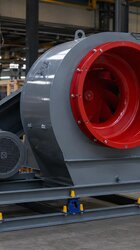
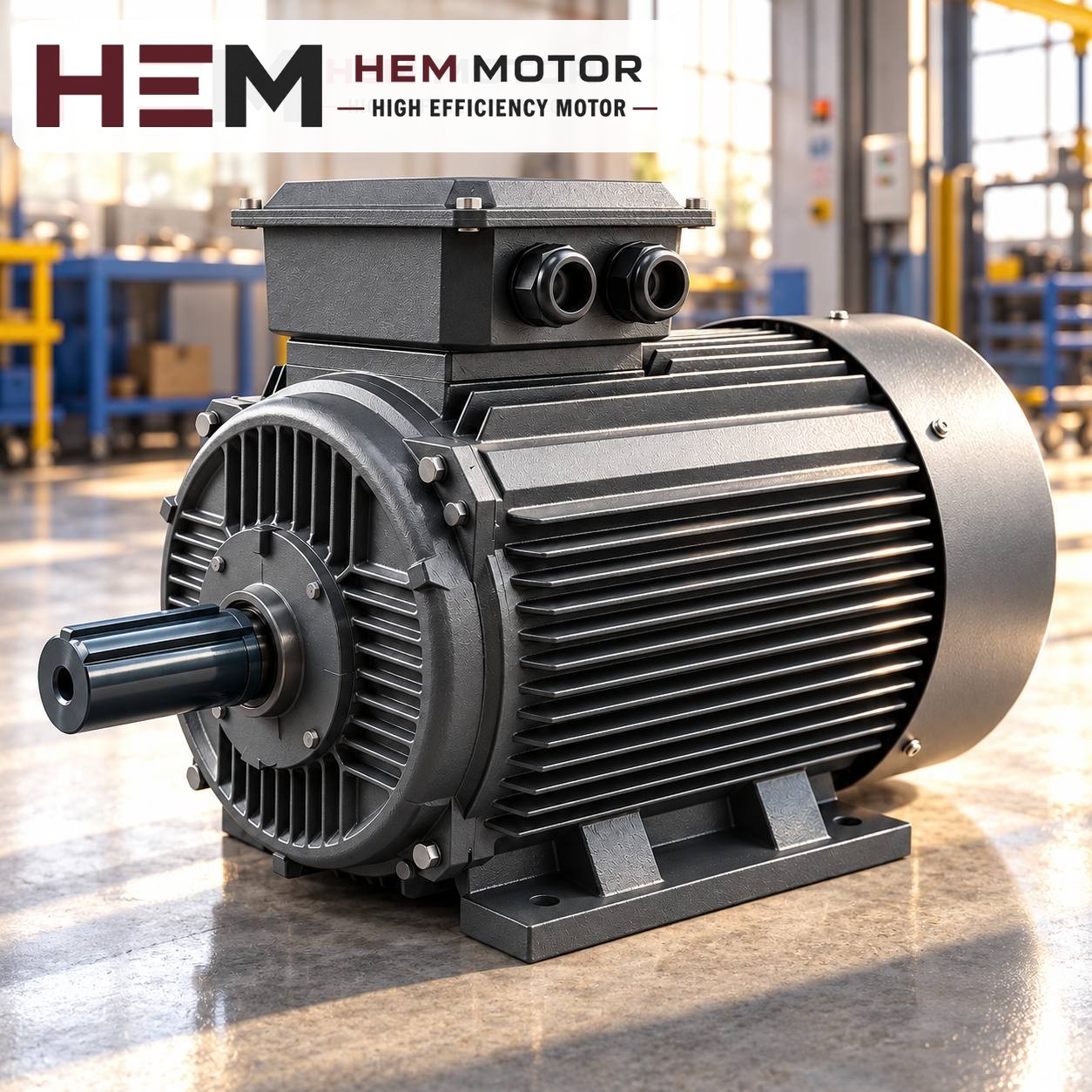

On the squeezer of a plastic washing line, the motor drives a slow-turning screw through a gearbox, and its hardest moment is the start, when it tries to turn a screw that is full of wet, compacted material. Two questions therefore come first in the selection: with which motor speed and gearbox ratio is the screw speed reached, and can the motor deliver enough torque at start to turn a full screw? Power only makes sense once these two questions are answered.
A squeezer and a centrifugal dryer are not the same load
Two different machines are used on a washing line to dry the material separated from the water, and from the motor's point of view they have nothing in common. Before ordering, it must be clear which one is involved.
- Screw squeezer: compresses thin washed material such as film and bags inside a conical barrel with a screw and forces the water out under pressure. The screw turns slowly and the torque is very high; the motor is usually 4 or 6-pole and connected through a gearbox.
- Centrifugal (friction) dryer: the rotor turns at high speed and throws water against a screen by centrifugal effect. The load comes mostly from mass inertia; the motor is usually belt-driven and the speed is high.
This article focuses on the first group, the screw squeezer. With a centrifugal dryer, accelerating a heavy rotor at start-up is the problem; with a squeezer, the problem is a stopped screw locked in by material.
The speed chain: motor, gearbox and screw
The squeezer screw turns at a few tens of revolutions per minute. This low speed is reached by reducing the motor speed through a gearbox, which increases torque by the same ratio. The basic rule in a motor replacement is that if the gearbox ratio does not change, the pole count of the motor should not change either.
For example, with a hypothetical 1:20 gearbox, a 4-pole motor running at 1,485 rpm turns the screw at about 74 rpm. If a 6-pole motor running at 985 rpm is fitted to the same gearbox, the screw drops to about 49 rpm. When the screw slows down, capacity falls, the material stays longer in the barrel and the degree of compression changes. A change in pole count is therefore not just a motor decision but one that also changes the process.
Even if the pole count stays the same, if the power is to be increased, the permitted input power and output torque of the gearbox must be checked. When the motor is larger, the torque transmitted to the gearbox at the moment of a jam is also larger; the weak link then becomes the gears or the coupling rather than the motor.
Why is the starting load so high?
During normal operation there is a continuously flowing, relatively uniform material inside the screw. When the line stops unexpectedly, the wet film remains compacted in the screw; the water drains, the material cools and sticks to the barrel. At the next start the motor has to break this plug.
- Power cut or emergency stop: the screw stops full; the start is at its heaviest.
- Long standstill: material left in the barrel becomes denser, and resistance to the first turn increases in the cooled zones.
- Feed imbalance: if the belt or feed screw sends too much material, the screw is overloaded even while running and the motor current jumps.
The torque an induction motor can deliver at start is a certain multiple of its rated torque, and this ratio is given in the motor catalogue. If the full screw exceeds this value, the motor cannot turn, the current stays high and the protection trips. In this case the right solution is usually not a larger motor, but an operating procedure that empties the screw before starting and a suitable starting method.
Choosing the starting method according to the starting load
On a squeezer, the starting method directly determines whether the start succeeds. The table below shows general tendencies; the final decision is made with the machine builder's data and the actual starting conditions on site.
| Method | Effect on starting torque | What to watch on a squeezer |
|---|---|---|
| Direct-on-line | Delivers the motor's full starting torque | The supply and panel must carry the high starting current |
| Star-delta | Torque in star drops to about one third | May not turn a full screw in star; an empty-start procedure is needed |
| Soft starter | Torque falls as voltage falls | Limits current but may struggle to break a blocked screw |
| Frequency inverter | High torque can be provided at low speed | The drive is sized for the starting current |
If a frequency inverter is to be used, the general statement on our website applies: our three-phase series are suitable for speed control with a frequency inverter; for long periods of full-torque operation at low speed an external fan may be needed, and if the cable between drive and motor is long a dv/dt or sine filter is considered. Details are on the inverter FAQ page.
If you have the power and speed of your existing motor at hand, review suitable HEM Motor models and current prices.