English
 Français
 Türkçe
 Español
 Русский
 العربية
 Deutsch
 Italiano

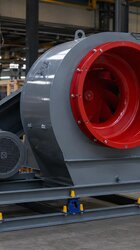
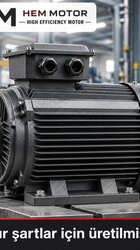

In a paper and board mill, the energy cost of electric motors is cut most effectively by adjusting the flow of pumps, vacuum units and fans that run day and night through speed rather than throttling with valves or dampers, by resizing oversized motors to their real load, and by moving to a higher efficiency class on motors with long running hours. A paper machine has hundreds of motors from stock preparation to the reel, yet a few dozen large motors make up most of the bill. Below, the line is followed to show how to find those motors and which step makes sense on each.
Which electric motors use the most electricity on a paper machine?
In a mill producing recycled board, the flow runs from bales dropped into the pulper, through stock cleaning and refining, dewatering on the wire and presses in the wet end, drying on the cylinders, to winding onto reels. In this flow the largest loads are usually the pulper rotor, the refiners, the main feed pump known as the fan pump, the vacuum pumps and the dryer section hood fans.
What these motors have in common is that they hardly ever stop while the machine is running. On a motor turning three shifts for most of the year, a small improvement in efficiency or load point equals many times more kilowatt-hours than on an intermittently running conveyor. An energy study should therefore start not from the number of motors but from the product of power and running hours.
| Machine | Load character | Typical energy loss | Priority step |
|---|---|---|---|
| Fan pump and stock pumps | Continuous, variable flow | Throttling with a valve | Flow control with a frequency inverter |
| Vacuum pumps | Continuous, nearly constant | Higher vacuum than needed, air leaks | Checking vacuum level and leaks |
| Hood and exhaust fans | Continuous, varying with the season | Throttling with a damper | Speed control, adjustment based on humidity measurement |
| Pulper rotor | Intermittent, heavy starting | Idling | Filling sequence and idle waiting time |
| Refiner | Continuous, high power | Running at full speed while empty | Process setting, load point monitoring |
| Bale and reel conveyors | Intermittent | Running with no product | Stopping by sensor |
Why is energy wasted on a stock pump throttled with a valve?
On stock and fan pumps, flow changes constantly with paper grammage and machine speed. In many mills the pump turns at full speed and excess flow is held back by throttling a valve in the discharge line. In that case the motor also spends electricity on the pressure lost across the valve.
On a centrifugal pump, flow is proportional to speed while the power drawn varies roughly with the cube of speed; a small drop in speed gives a marked reduction in power (general information; confirm with the pump manufacturer). Adjusting flow through speed with a frequency inverter makes it possible to leave the valve fully open and turn only as fast as needed. On lines with frequent grammage changes, this step is usually the investment that pays back fastest. The valve stays open, the motor slows down.
Our three-phase series are suitable for speed control with a frequency inverter. On pumps and fans the load drops with speed, so extra cooling is rarely needed. However, if the motor will run at low speed with full torque for long periods, an external fan may be required. If the drive panel is in the MCC room and the motor at a distant point under the machine, a dv/dt or sine filter is considered depending on the cable length. Simply state these conditions in your order.
You can find options for pump applications on the pump electric motors page.
Which setting makes a difference on the vacuum system and hood fans?
Vacuum in the wire and press section is needed to remove water from the paper; but the level is often set for the heaviest grade and left there. At light grammage, a higher vacuum than needed both wastes electricity and wears the wire and felts. Leaks in the vacuum line also make the pump draw air for nothing.
The hood fans of the dryer section exhaust humid air and bring heated fresh air in. When fan flow is held constant with a damper, the same amount of air is moved in winter and summer. Measuring the humidity inside the hood and adjusting fan speed accordingly reduces both the fan motor's consumption and the steam spent heating the air.
Details on motor selection for fan applications are on the fan and extractor motors page.
Why does an oversized electric motor cost more to run?
During machine speed-up and capacity expansion projects in paper mills, motors are often chosen with a generous margin. Later the process changes and the motor stays in place. In an induction motor running below half its rated power, efficiency and power factor drop; more current is drawn from the grid for the same work.
The way to find out is measurement. The current and power drawn by the motor are recorded for a week and compared with the nameplate values. In a hypothetical example, if a pump motor with a 90 kW nameplate runs constantly at around 40 kW, moving down one rating can be considered once the pump duty point is also verified.
At replacement, the IEC frame number on the nameplate is the first clue; shaft, flange, foot holes and mounting type must also be compared, because at a lower rating the frame may also shrink and the base may need adapting.
We offer horizontal B3, B5, B14, B34 and B35 and vertical V1, V3, V5, V6 and V15 arrangements depending on the frame, and we verify the flange size together with you in the order. Dimension data are available on the technical drawings page.