An electric motor suited to the harsh conditions of a metalworking shop is one chosen to withstand cutting-fluid mist, conductive grinding dust, stray currents from the welding area and frequent reversing of the machine tool: an IP55-protected motor whose insulation is class F.
To find it, first note where the machine stands in the shop, which panel feeds it and how many times a day it stops and starts. Two motors of the same kilowatt rating will last very differently if one runs inside a CNC enclosure and the other beside a welding bench.
How does coolant mist and splashing emulsion get into the terminal box?
On lathes, milling machines and grinders, the water-based emulsion used as cutting fluid forms a fine mist around the chuck spinning at high speed. The trouble usually starts in the terminal box. This mist settles on the motor frame at the back of the machine, leaves a sticky film between the cooling fins and gradually creeps in around the cable gland. Emulsion collecting in the terminal box produces a greenish oxide layer on the connection terminals and, eventually, a loose contact.
A standard IP55 frame copes easily with the splashing inside a machine tool; the problem is usually a motor facing the coolant jet and a gland left loose.
The terminal box should be turned so the cable entry points towards the floor, a gland with a sound seal should be used and the motor should not sit directly in front of the coolant jet. If the machine is cleaned with pressurised water, IP56 protection can be considered as a special order.
What do grinding dust and fine swarf do to a motor?
Conductive metal dust opens a leakage path, and a heap of swarf cuts off the cooling air. Unlike wood dust, metal dust conducts electricity. Fine iron particles from surface grinding, cylindrical grinding and abrasive belts are drawn in through the fan cowl grille and stick to the frame surface and around the terminal box. Combined with moisture, this conductive dirt can create a leakage path between the connection terminals.
Long, stringy swarf is another problem: a heap of chips piling up behind a lathe covers the motor fan cowl and cuts off the cooling air.
The motor then heats up even when it is not fully loaded. Keep a gap between the point where the chip conveyor discharges and the motor air inlet, and during weekly cleaning brush and vacuum the fan cowl rather than blowing it with an air gun; an air gun can push dust into the bearing seal.
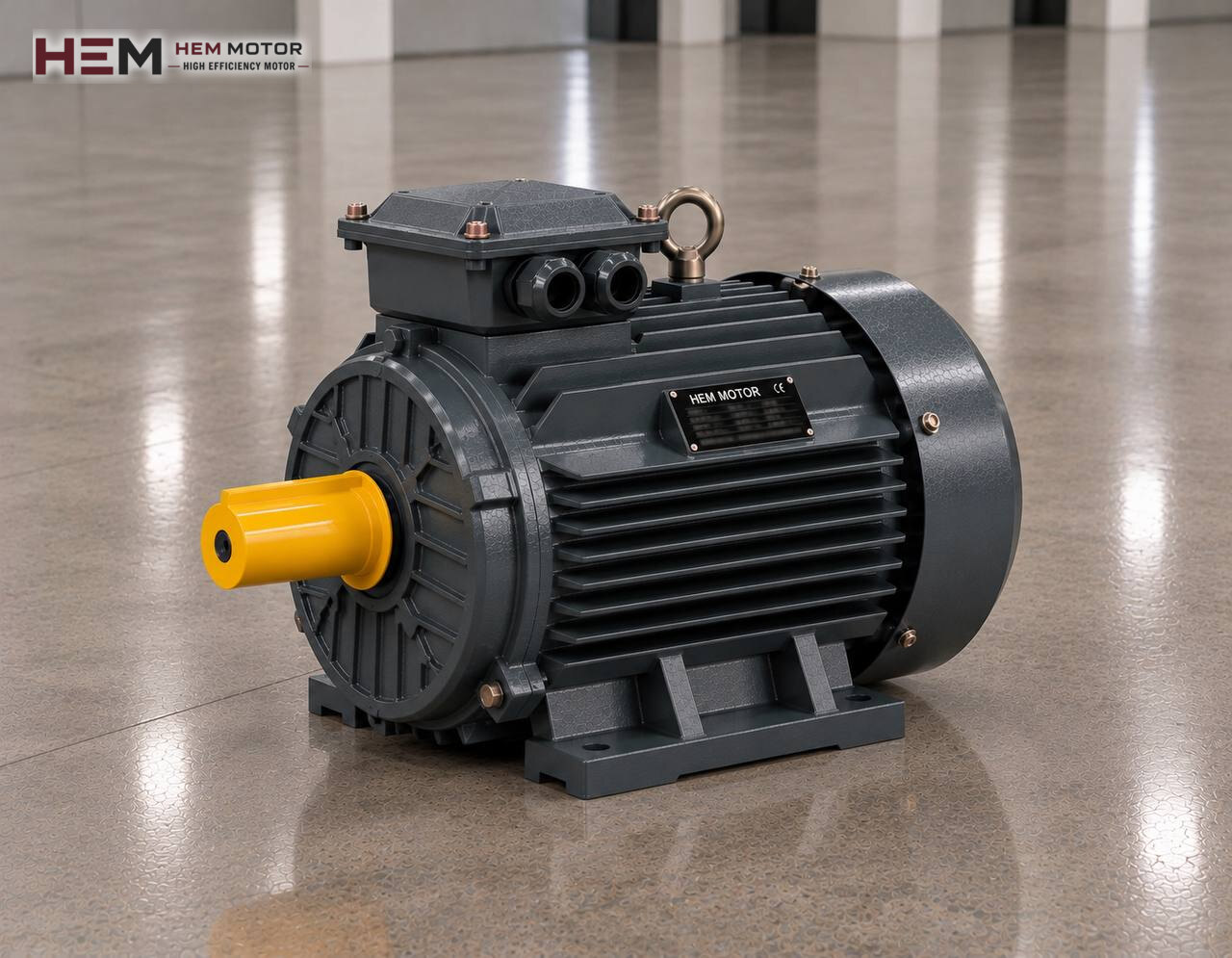
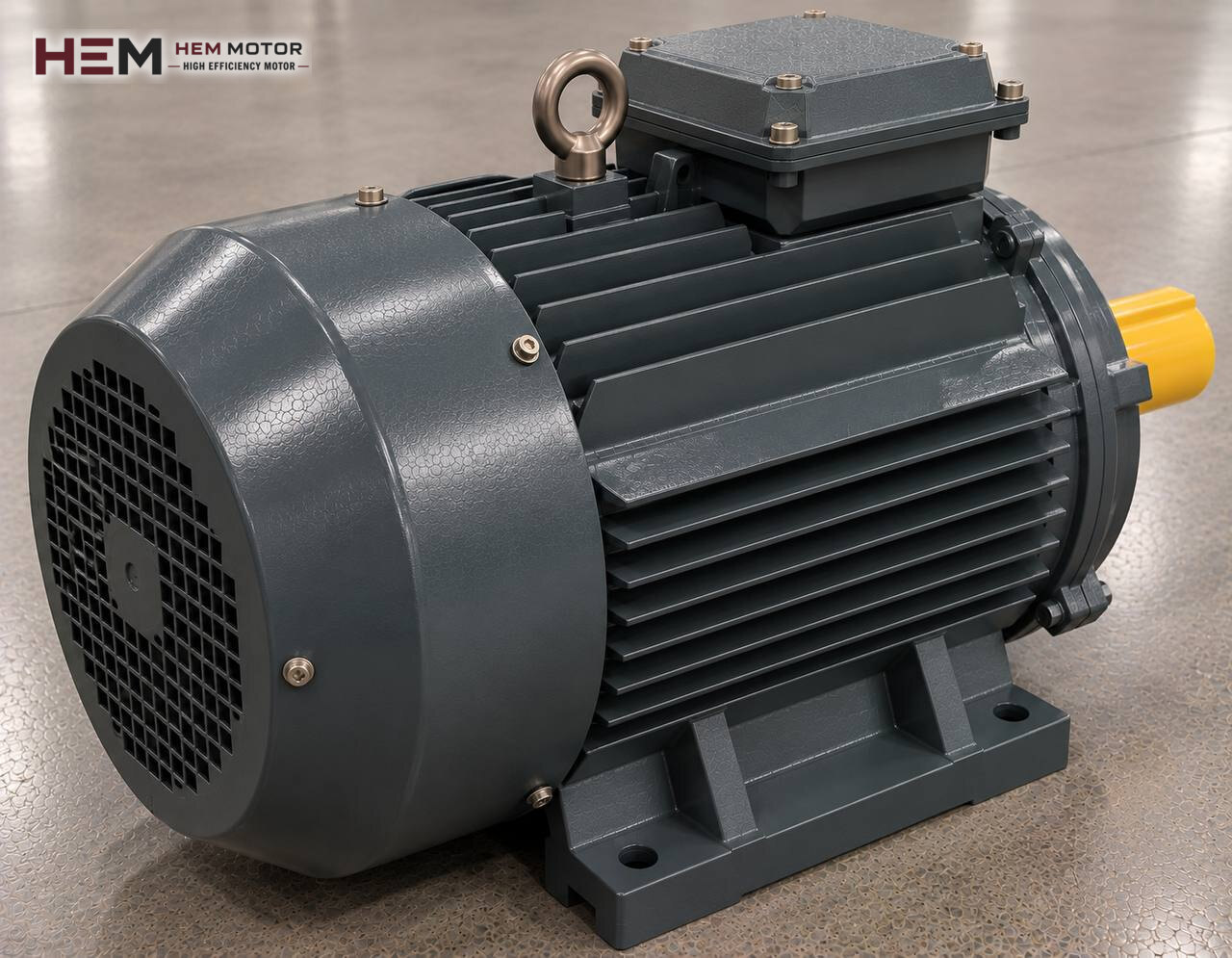
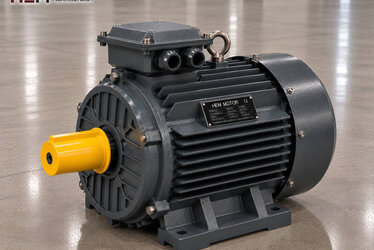
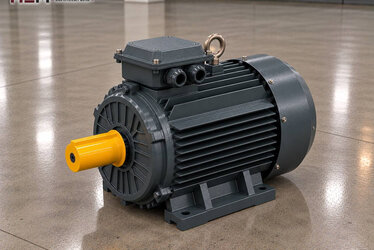
Electric motors driving metalworking machines such as lathes and milling machines (representative image).
How do return current and spatter damage the motor next to the welding bench?
A misplaced earth clamp sends welding current through the bearings, and spatter melts the plastic parts. In workshops the earth clamp of a welding set is sometimes attached not to the workpiece but to the machine frame or a nearby steel structure. The welding current then looks for the easiest route and can pass into the motor shaft, then through the bearings into the earthing line. The bearing cannot carry this current. Small arc marks forming in the bearing raceways turn into a hum and a vibration you can feel by hand within a few months.
The remedy is simple but needs constant attention: the earth clamp must always go on the part being welded, the motor frame earth conductor must be sound and welding benches should be kept in a separate zone from machine-tool motors.
Welding spatter can also melt the plastic parts of the fan cowl and the cable sheath; a simple sheet-metal shield is enough protection for motors close to the bench.
Why is the motor strained on lathes that reverse constantly, guillotines and press brakes?
On a lathe every reversal, and on a press or guillotine every cut, loads the motor heavily for a moment. On a conventional lathe the operator keeps reversing the spindle while cutting threads; each time the spindle reverses, a current close to the initial starting current flows through the winding for a moment. Repeated hundreds of times a day, this cycle keeps the winding temperature higher than the nameplate rating suggests. For such machines, leaving a margin in power or handing the reversing over to a frequency inverter can be considered.
On mechanical guillotine shears and eccentric presses the motor drives a flywheel; at the moment of cutting the flywheel slows down and the motor is loaded to bring it back up to speed. This shock load loosens the foot fixings and pulley bolts.
On hydraulic press brakes the motor turns the pump and the load rises with pressure at the moment of bending. On both machines, periodic checks of the motor base and pulley alignment matter as much as the motor choice itself.
Prices and technical data are on the product pages; choose a model and order online.
What awaits the motor on a winter morning in an unheated shop?
Condensation forms on the cold frame, and thickened oil adds load to the motor at the first start. Many small workshops in industrial estates are not heated at night. When the shutter opens, damp air pours in. In winter, when the shutter goes up in the morning and mild, damp outside air flows in, condensation forms on the inner surfaces of the cold motor frame.
The winding insulation absorbs the moisture and the insulation resistance may read low at the first start. The risk is greater for the motor of a standby machine that has not run for weeks.
For motors that stand idle for long periods, an anti-condensation heater inside the winding can be requested with the order. In addition, gearbox and hydraulic oil that thicken in the cold put extra load on the motor at the first start; letting the hydraulic unit idle for a few minutes to warm up protects both the winding and the pump.
How do welding sets fed from the same panel affect the motor?
As welding sets cut in, line voltage drops and the thermal protection of a motor starting at that moment may trip. When several welding sets, a plasma cutting unit and a compressor in a workshop are fed from the same main panel, the line voltage dips momentarily each time they switch on. At low voltage an induction motor draws extra current through its winding to carry the load. If a loaded hydraulic press or compressor tries to start at exactly that moment, the thermal overload may trip.
For this reason, when the motor list is prepared, the panel feeding each machine, the cable length and the large consumers running at the same time should be reported to the panel engineer.
The engineer derives the cable cross-section and motor protection from these data. Remember that star-delta starting reduces starting current and torque to roughly one third; on machines that start under load this method may not be enough (general information; confirm with the machine manufacturer).
Shop condition
Machine most affected
Practical measure
Coolant mist
CNC lathe, milling machine, grinder
Cable entry facing down, sound gland, IP56 special order if needed
Conductive grinding dust
Surface grinder, abrasive belt
Brush and vacuum cleaning, no mounting near the extraction point
Welding return current
Machines near the welding bench
Earth clamp on the part, sound earthing, sheet-metal shield
Frequent reversing
Conventional lathe, threading
Power margin or frequency inverter
Winter condensation
Machines in unheated areas
Anti-condensation heater option, insulation test
Example electric motor models for harsh shop conditions
In the shop the frame casting also affects the choice. For motors that take shocks beside a press or under a machine, the rigidity of a cast iron frame pays off; for light duties an aluminium frame is enough. The models below are only starting examples; power and speed must be confirmed with the machine manufacturer's data. Other power and pole options can be filtered in our electric motor store.
For a pillar drill, band saw or chip conveyor, the 1.5 kW cast iron frame 90L-4; rated speed 1445 rpm, voltage 230/400 V.
For a medium-size lathe or universal milling machine, the 4 kW 112M-4; it runs at a rated speed of 1450 rpm, voltage 400/690 V.
For a press brake or hydraulic press unit, the 7.5 kW 132M-4; rated speed 1460 rpm.
What should the shop supervisor watch for in layout and ordering?
Mounting type, frame dimensions, drive conditions and the shop environment should be stated together in the order. Machine-tool motors are mostly foot- or flange-mounted; depending on frame size, B3, B5, B14, B34, B35 and vertical V1, V3, V5, V6, V15 arrangements are available, and the flange size is finalised at the order stage.
The IEC frame number of the removed motor is a good starting point; however, whether the new motor will fit the machine cannot be stated until the shaft, foot holes, flange and nameplate data have been compared side by side. Dimensions are given in the 2D technical drawing files.
Our three-phase series can be driven by a frequency inverter. If a milling machine or lathe will take heavy cuts at low speed for long periods, the motor's own fan may not be enough and a separately powered cooling fan is added; if the cable between drive and motor is long, a dv/dt or sine filter comes into play. Stating these points with the order is enough.
Add conditions such as oil mist, dust and welding to the same list; when you share the nameplate and terminal connection of the failed machine-tool motor via the find an equivalent from the nameplate page, we will determine the right frame for the machine together. If the replacement list is long, you can compare the options in order of kilowatts on the HEM Motor sales page.
Frequently Asked Questions
Is IP55 enough for a motor inside a CNC machine?
Against emulsion mist and splashing, IP55 is sufficient on most machines. If the machine is washed with pressurised water, the IP56 special-order option can be considered.
Can a welding set damage a machine-tool motor's bearings?
If the earth clamp is attached in the wrong place, welding current can pass through the motor shaft and bearings. Always clamping it to the part being welded breaks this current path.
Is it right to clean grinding dust with compressed air?
Compressed air can push conductive dust into the bearing seal and the terminal box. The fan cowl and fins should be cleaned with a brush and a vacuum.
What should be done with a motor standing in an unheated shop?
The insulation resistance of a motor that has not run for a long time should be measured before the first start. Motors of machines that often stand idle can be ordered with an anti-condensation heater.
HEM Motor Models Related to This Article
The cards show example models related to the topic. A suitable motor is not chosen by power alone: compare speed, voltage, mounting, shaft and connection dimensions on the product page; if unsure, send a photo of the existing motor’s nameplate on WhatsApp.
When choosing an electric motor for a feed dosing screw, the real goal is for every turn of the screw to carry the same amount at low flow; to achieve this, before moving on to mot... More Details
When choosing electric motors for a corrugated board line, two groups are thought about separately: the main drives that carry line speed and the many auxiliary drives around them.... More Details
In a rubber compound mixer the electric motor carries two loads at once: the continuous torque from the high viscosity of the compound and the impact peaks that occur every batch a... More Details
On a scrap metal separation belt the electric motor is chosen by the shaft power the belt load requires and by the type of magnet unit; a magnetic head pulley adds load to the belt... More Details
An electric motor for a PET bottle crusher works, in wet crushing, against a steadier load that the water cools and lubricates, and in dry crushing against a harsher, impact-heavy ... More Details
On a cable granulator the motor carries two separate loads: the continuous cutting load as the knives on the cutting rotor chop the cable, and the sudden impacts caused by cable bu... More Details
We use necessary and optional cookies to improve your experience, enhance content and analyse traffic. Under the GDPR, optional (analytics/marketing) cookies are only used with your explicit consent. Please choose your preference below.
Cookie Policy
 English
 Français
 Türkçe
 Español
 Русский
 العربية
 Deutsch
 Italiano