In logistics and warehousing facilities, the energy cost of electric motors is cut fastest by stopping conveyor and sorter lines that run empty when no orders are coming in, by running evaporator fans and compressors in cold stores according to real demand, and by replacing oversized drives with correctly sized models of a higher efficiency class. These three steps start with changes to the operating routine before the motor itself is replaced. Where the savings lie depends on how many hours a year each drive runs.
Which drives consume electricity in a distribution centre?
In a dry goods warehouse most of the motor load is in material flow: telescopic conveyors at the goods-in docks, roller and belt lines in the picking area, spiral elevators, the sorter and dispatch belts after packing. Added to these are the hydraulic units of the dock levellers, high-speed spiral doors, roof ventilation fans and the compressed air compressor. Most load sits in flow.
In a cold chain warehouse the picture changes; here the bulk of the bill comes from refrigeration compressors, condenser fans and evaporator fans inside the rooms. These motors run every hour of the day, and the environment they work in multiplies the importance of efficiency.
Before starting an energy plan, listing how many hours a year each drive runs shows by itself where to focus.
Drive
Operating pattern
Typical loss
First step
Roller picking line
On throughout the shift
Zones running with no cartons
Zone-based sleep mode
Sorter and dispatch belt
Wave-by-wave intensity
Idling between waves
Photocell standby, speed steps
Cold room evaporator fan
Continuous day and night
Full speed when thermostat is satisfied
Speed control, door discipline
Refrigeration and air compressor
Continuous, variable load
Unloaded running, leaks
Pressure and leak check
Dock hydraulic unit
Short and infrequent cycles
Pump idling
Timed shut-off
How are rollers that run empty between order waves stopped?
In e-commerce warehouses the order flow comes in waves during the day; between morning picking and the afternoon courier cut-off, part of the lines carry very few cartons. Yet in many facilities the conveyors are switched on at the start of the shift and run at full speed until its end. Every metre of empty belt keeps drawing electricity to cover the motor's friction and gearbox losses.
A belt turning with no cartons burns power for nothing.
Dividing the line into zones and fitting a photocell to each zone makes that zone stop a few minutes after cartons stop arriving. On accumulating roller lines this logic is already part of the design; on older continuously driven lines a simple timer and sensor can be added.
The standby delay of a zone going to sleep should be set from site observation so that it does not start too often; otherwise the gain is paid for with starting heat and motor life.
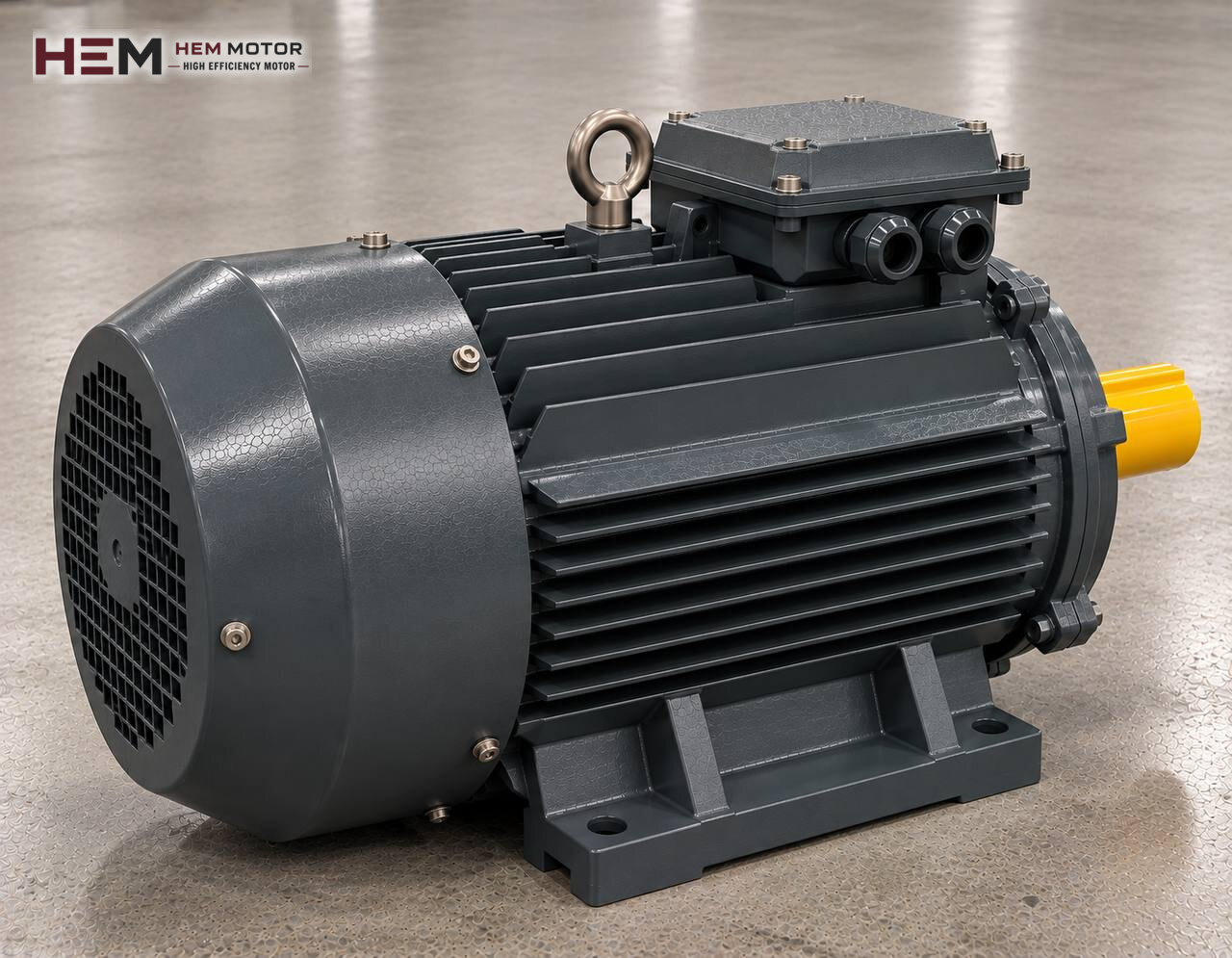
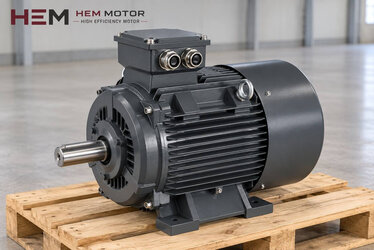
Telescopic conveyor drive at the goods-in and dispatch dock (representative image).
When do the evaporator fan and compressor run more than needed in a cold store?
In most facilities the evaporator fans in a cold room keep turning at full speed even after the room has reached its set temperature. Since all the heat produced by the fan motor stays inside the room, it returns as an extra load on the refrigeration system; the fan therefore costs both its own electricity and the refrigeration cost of the heat it gives off. Reducing fan speed once the thermostat is satisfied cuts this double loss (general information; confirm with the refrigeration system designer). The fan costs twice.
Door discipline is also a direct motor load. A blast-freezer door left open during forklift traffic draws in humid, warm air; frosting on the evaporator increases, defrosts become more frequent and the compressor runs longer.
Shortening the closing time of high-speed doors, strip curtains and a door-open alarm are low-cost measures that can be taken without changing the motor. Cleaning condenser coils left in the sun on the roof also directly affects discharge pressure and compressor energy.
Where do hidden consumers such as dock levellers, high-speed doors and compressors use energy?
An idling dock pump and a compressor left on at weekends are the most common hidden consumers. The hydraulic pump of a dock leveller does work for only a few seconds at each vehicle docking; however, with some controls the pump motor keeps idling to hold pressure. In a cross-dock centre with dozens of docks, these small motors add up to a noticeable load. Adding a timed shut-off to the control is a simple and effective fix. Small motors add up.
The compressed air compressor in a warehouse is usually installed for packing machines and door mechanisms and is left running at weekends too. Line leaks make the compressor cut in frequently without any real demand. Weekend shut-down, a leak survey and lowering outlet pressure to the level really needed are the most direct ways to shorten the motor's running hours.
Prices and technical data are on the product pages; choose a model and order online.
Why do oversized roller and belt motors cost more to run?
Warehouse lines are usually designed for the heaviest carton and full occupancy; in real operation the belts mostly run lightly loaded. The efficiency and power factor of an induction electric motor fall when it runs well below its rated power. As a result the motor both loses more active power and draws more reactive power from the grid, which strains the power factor correction panel. Light load cuts efficiency.
During replacement, measuring the running current of the existing motor with a clamp meter over several shifts reveals the real load. If the current is consistently low, a smaller power can be considered; however, the starting load must be taken into account separately on drives such as inclined belts and spiral elevators. Cable and protection values must be recalculated by the panel engineer according to the new power, cable length and starting method.
On which warehouse drives do efficiency class and speed control pay back?
The difference between the IE3, IE4 and IE5 efficiency classes becomes meaningful in proportion to how many hours a year the motor runs. Cold store compressors, condenser fans and main dispatch lines running three shifts are therefore first in line for the move to high-efficiency models. On a dock pump that runs a few hundred hours a year the payback of a class upgrade takes a long time; here shortening running time is more effective. Running hours decide it.
On variable loads such as fans and pumps, when speed is reduced the power demand falls much faster than in proportion to speed (general information; confirm with the equipment manufacturer); condenser and evaporator fans are therefore good candidates for a frequency inverter. Our three-phase series are suitable for speed control with an inverter; if the motor is to turn at low speed with full torque for long periods a forced-ventilation fan may be required, and if the motor cable is long a dv/dt or sine-wave filter is considered; this information should be stated in the order. Fans are the first candidates.
Which electric motors can be example choices for warehouse lines?
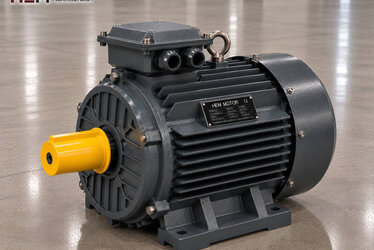
The 80M2-4 for short lines, the 100L1-4 for telescopic conveyors and the 132M-4 for condenser fans are good examples. The aluminium frame models below were chosen according to power ranges common in logistics facilities; the actual power should be confirmed with the line manufacturer's calculation:
For short roller picking zones and light carton belts, the 0.75 kW 80M2-4 can be considered; its rated speed is 1420 rpm and its voltage is 230/400 V.
For a telescopic conveyor or long dispatch belt drive, the 2.2 kW 100L1-4 can be used; its rated speed is 1450 rpm.
For a cold store condenser fan or medium-sized compressor, the 7.5 kW 132M-4 can be considered; its rated speed is 1460 rpm and its voltage is 400/690 V.
You can compare other powers and speeds in our electric motor shop. Options for in-warehouse flow are on the handling systems electric motors page, and belt drives on the conveyor belt electric motors page. For a model replacing an existing motor, the IEC frame number is the first piece of information; compatibility is verified by comparing mounting type, shaft diameter and length, foot holes, flange and electrical values. B3, B5, B14, B34, B35 and vertical V1/V3/V5/V6/V15 mountings are offered depending on the frame; flange size is confirmed with the order.
How is the warehouse energy plan linked to the shift and season calendar?
The plan is built by separating campaign weeks from quiet months. In logistics the load also fluctuates through the year; during campaign periods and the weeks before holidays the lines run at full capacity, while in quiet months some of them run almost empty. If measurement, zone-based stopping, cold room door discipline and replacement of high-hour motors are sequenced according to this calendar, investment starts with the drive that will save the most. Once you have listed the conveyor and fan motors to be renewed, you can match them by power among the aluminium and cast iron options in the shop. If you photograph the nameplates of the motors on the line and send them to us, we will assess them together with the running current you measured and propose a more suitable power and efficiency class.
Frequently Asked Questions
Does stopping conveyor zones frequently wear out the motor?
If the standby delay is set too short, the number of starts rises and the winding heats up. A delay of a few minutes, set by observation on site, gives a balanced result for both energy and motor life.
Does reducing evaporator fan speed in a cold room put the product at risk?
Air distribution and temperature uniformity must be maintained. Speed control should be set together with the refrigeration system designer and monitored with in-room temperature records.
Does it make sense to convert all motors in the warehouse to class IE4?
Not on every drive. It makes sense on compressor, fan and main line motors that run many hours a year; on rarely used dock pumps, shortening running time first gives faster results.
How can I tell whether a belt motor is oversized?
Measure the running current over several shifts and compare it with the rated current on the nameplate. If the current is consistently well below it, a smaller power can be considered, taking the starting load into account.
HEM Motor Models Related to This Article
The cards show example models related to the topic. A suitable motor is not chosen by power alone: compare speed, voltage, mounting, shaft and connection dimensions on the product page; if unsure, send a photo of the existing motor’s nameplate on WhatsApp.
When choosing an electric motor for a feed dosing screw, the real goal is for every turn of the screw to carry the same amount at low flow; to achieve this, before moving on to mot... More Details
When choosing electric motors for a corrugated board line, two groups are thought about separately: the main drives that carry line speed and the many auxiliary drives around them.... More Details
In a rubber compound mixer the electric motor carries two loads at once: the continuous torque from the high viscosity of the compound and the impact peaks that occur every batch a... More Details
On a scrap metal separation belt the electric motor is chosen by the shaft power the belt load requires and by the type of magnet unit; a magnetic head pulley adds load to the belt... More Details
An electric motor for a PET bottle crusher works, in wet crushing, against a steadier load that the water cools and lubricates, and in dry crushing against a harsher, impact-heavy ... More Details
On a cable granulator the motor carries two separate loads: the continuous cutting load as the knives on the cutting rotor chop the cable, and the sudden impacts caused by cable bu... More Details
We use necessary and optional cookies to improve your experience, enhance content and analyse traffic. Under the GDPR, optional (analytics/marketing) cookies are only used with your explicit consent. Please choose your preference below.
Cookie Policy
 English
 Français
 Türkçe
 Español
 Русский
 العربية
 Deutsch
 Italiano