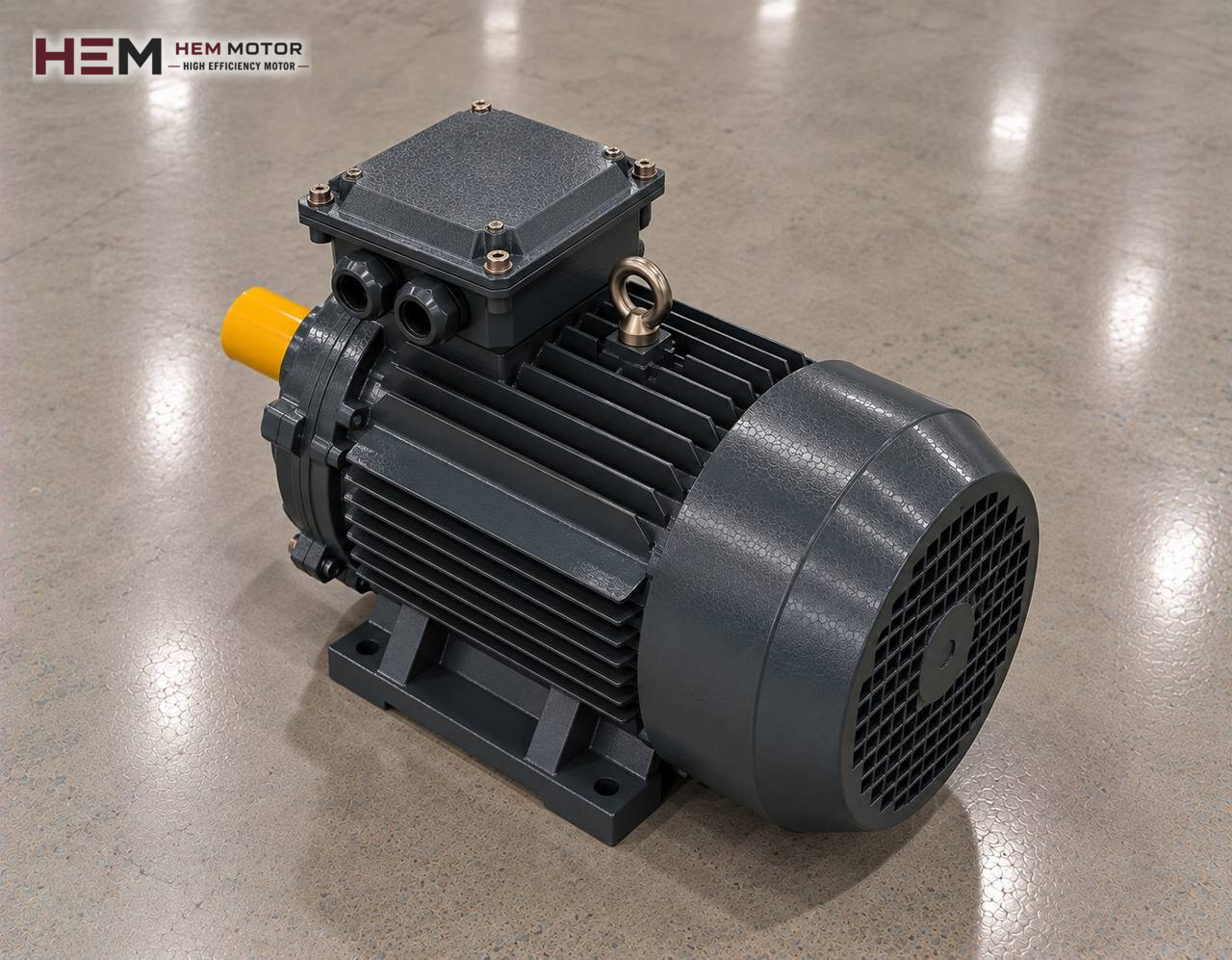
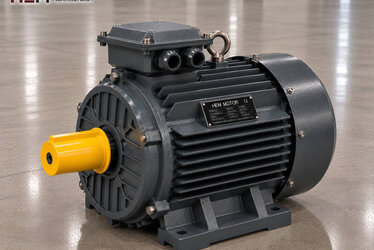
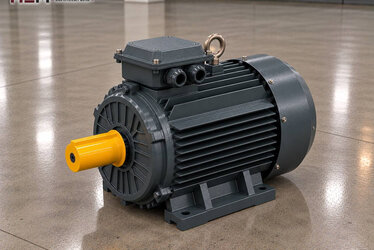
In dairy plants, switching to IE3 and IE4 electric motors makes sense when it starts with the motors that run the longest hours: the pumps of the chilled water and glycol circuit, refrigeration compressors and condenser fans, raw milk reception pumps, the homogeniser and CIP cleaning pumps. These motors turn day and night for most of the year; the effect of a higher efficiency class is felt most here. Replacing the motor of a filling machine that runs a few hours a week sits at the bottom of the priority list.
Where is electricity spent in a dairy plant?
From the moment raw milk is loaded onto the tanker and arrives at the plant, it is continuously cooled, heated and cooled again. At reception the milk passes through a plate cooler and is pumped into silos; in pasteurisation it is first heated, then rapidly cooled; in yoghurt and cheese operations, incubation and ripening rooms are kept at a constant temperature. At every step of this cycle, pumps move the liquid and compressors move the refrigerant. That is why pumps and compressors hardly ever stop.
A large share of electricity consumption therefore goes to the refrigeration plant, chilled water pumps and condenser fans. Process machines such as silo agitators, the separator and the homogeniser form the second large group. Packaging and filling lines run with short and variable loads.
What does the efficiency class tell you, and what does it not?
IE classes are steps defined in IEC 60034-30-1 that show how much of the electrical power the motor converts into shaft power. IE3 is premium and IE4 super premium efficiency; IE5 is above that. A higher class means fewer losses for the same shaft power; losses turn into heat inside the motor. Lower losses mean a cooler motor.
The efficiency class does not by itself determine the motor's durability, degree of protection or insulation class. HEM Motor series are offered in IE3, IE4 and IE5 efficiency classes; standard equipment is IP55 protection and class F insulation. Which model is ordered in which class becomes clear at the quotation stage; power and speed options are listed on the store page.
Which motors should the transition start with?
Start with the powerful motors that run the longest hours. A dairy plant may have hundreds of motors; replacing them all at once is neither necessary nor practical. The sensible way is to rank motors by annual running hours and power. A motor that is both powerful and runs long hours goes to the top of the list.
Priority
Motor group
Operating character
1
Chilled water and glycol pumps, condenser fans, cooling tower fan
All year, almost continuous
2
Silo agitators, raw milk reception and transfer pumps
Long hours every day
3
Homogeniser, separator, CIP pumps
Throughout the production shift
4
Filling, capping and packaging drives
Short, variable, frequent stop-start
This ranking also makes it easier to decide to replace a failed motor with one of a higher efficiency class instead of the same type. When a motor in the first two groups fails, ordering its replacement as IE3 or IE4 can be made a sensible default. Filling line drives can wait.
Why should the pump and the drive be considered together in the chilled water circuit?
Because replacing the motor does not remove the energy wasted at the valve. In most plants, the pumps of the chilled water and glycol circuit run at full speed and throttle flow with a valve. In that case, raising only the motor's efficiency class does not remove the energy wasted in the valve. A frequency converter that adjusts pump speed to demand can have a bigger effect when considered together with the efficiency class change (pump affinity laws; general information, confirm with the machine manufacturer).
Our three-phase series are suitable for speed control with a frequency converter. If the pump will run at low speed with full torque for long periods, an external fan may be needed; if the cable between drive and motor is long, a dv/dt or sine filter is considered; these conditions should be stated in the order. More information on pump drives is on the pump electric motors page.
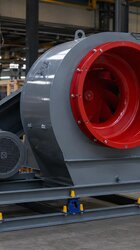
Milk cooling tank agitator drive (representative image).
Prices and technical data are on the product pages; choose a model and order online.
How does a new motor withstand washing, humidity and cold in a dairy plant?
Whatever its efficiency class, the motor must withstand the dairy environment. The reception area and process hall go through CIP and exterior washdown every day; cold rooms and the chilled water plant have condensation problems. These conditions should also be stated when ordering the new motor.
Standard IP55 protection is enough for most process areas; where a strong water jet is aimed from close range, IP56 can be requested as a special order.
An anti-condensation heater for cold, humid areas and a PTC sensor embedded in the winding for compressor and pump motors running continuously under high load are order options. If a stainless steel frame motor is required in hygienic zones in direct product contact, that duty needs a special motor and may fall outside the scope of the standard series.
What should be compared when the new motor replaces the old one?
Compare the frame number, shaft, foot holes, flange and electrical values. When the efficiency class goes up, the motor's internal design can change; so when the new motor replaces the old one, the dimensions need to be compared one by one. The IEC frame number is the first piece of information on compatibility; exact compatibility is confirmed by comparing mounting type, shaft diameter and length, foot hole spacing, flange and electrical values. Sending the motor's nameplate and a connection photo speeds up this comparison.
In dairy plants, pump motors are mostly B3 foot-mounted or B35 foot-and-flange, while agitator motors are vertical. B3, B5, B14, B34, B35 and vertical V1/V3/V5/V6/V15 are offered according to frame; the flange dimension is confirmed in the order. The packaging machinery electric motors page also offers guidance for drives on the packaging side.
Which models suit common duties in a dairy plant?
The models below are examples for duties at the top of the transition list; the efficiency class is specified in the order.
For a small transfer pump feeding milk to the plate cooler, or a CIP return pump: the 2.2 kW, 2-pole aluminium frame 90L-2 (2895 rpm, 230/400 V).
For a raw milk reception pump or CIP supply pump: the 4 kW cast iron 112M-2 (2905 rpm, 400/690 V).
For the large chilled water pump of the refrigeration plant or a condenser fan: the 30 kW, 4-pole 200L-4 (1475 rpm, 53.8 A at 400 V).
Other power ratings and pole counts are listed in the HEM Motor store.
How do you tie the transition to a one-year plan?
Spread the replacements over quieter months and the refrigeration plant's maintenance shutdown. Production in dairy plants varies with the season; milk supply rises in spring and summer and falls in winter. Spreading motor replacements over quieter periods and timing them with the refrigeration plant's maintenance shutdown makes it possible to complete the transition without disrupting production. A rule of replacing every failed motor with one of a higher class can also be a natural part of the plan.
If you share the plates of the motors on chilled water pumps, compressors and silo agitators through the find-an-equivalent-from-the-nameplate page, we will assess, together with their running hours, which motors should be renewed as IE3 or IE4. You can also filter the other models on your transition list by power and speed in our product store.
Frequently Asked Questions
Which motors in a dairy plant should move to IE4 first?
Chilled water and glycol pumps, condenser fans and cooling tower fans running continuously all year are the first candidates. Filling and packaging drives that run for short periods can be left to the end of the list.
When the efficiency class goes up, does the motor fit exactly in the old place?
That cannot be said without comparing dimensions. The IEC frame number is the first piece of information; shaft, foot holes, flange and electrical values should be confirmed with the nameplate and photos.
Is replacing only the motor enough on a chilled water pump?
If the pump is throttled with a valve, speed adjustment with a frequency converter should be considered together with the motor replacement. The decision is made according to the pump curve and circuit demand.
Does a high-efficiency motor in a washed process hall need extra options?
Standard IP55 is enough in most cases; if there is a strong close-range jet, IP56 can be requested as a special order. An anti-condensation heater can be added in cold, humid areas.
HEM Motor Models Related to This Article
The cards show example models related to the topic. A suitable motor is not chosen by power alone: compare speed, voltage, mounting, shaft and connection dimensions on the product page; if unsure, send a photo of the existing motor’s nameplate on WhatsApp.
When choosing an electric motor for a feed dosing screw, the real goal is for every turn of the screw to carry the same amount at low flow; to achieve this, before moving on to mot... More Details
When choosing electric motors for a corrugated board line, two groups are thought about separately: the main drives that carry line speed and the many auxiliary drives around them.... More Details
In a rubber compound mixer the electric motor carries two loads at once: the continuous torque from the high viscosity of the compound and the impact peaks that occur every batch a... More Details
On a scrap metal separation belt the electric motor is chosen by the shaft power the belt load requires and by the type of magnet unit; a magnetic head pulley adds load to the belt... More Details
An electric motor for a PET bottle crusher works, in wet crushing, against a steadier load that the water cools and lubricates, and in dry crushing against a harsher, impact-heavy ... More Details
On a cable granulator the motor carries two separate loads: the continuous cutting load as the knives on the cutting rotor chop the cable, and the sudden impacts caused by cable bu... More Details
We use necessary and optional cookies to improve your experience, enhance content and analyse traffic. Under the GDPR, optional (analytics/marketing) cookies are only used with your explicit consent. Please choose your preference below.
Cookie Policy
 English
 Français
 Türkçe
 Español
 Русский
 العربية
 Deutsch
 Italiano