How Can the Energy Cost of Electric Motors in Conveyor and Handling Systems Be Reduced?

How Can the Energy Cost of Electric Motors in Conveyor and Handling Systems Be Reduced?

On conveyor and handling lines, the electric motor's energy bill grows most because of belts running empty, motors chosen larger than necessary, mechanical parts with increased friction and old motors with low efficiency. The way to cut the cost is first to measure when and with how much load the belt runs, then to reduce losses starting with the mechanics, and only last to choose the motor and drive accordingly. Below we look at belt, screw, chain and bucket elevator drives separately and explain which step pays off where.

Where does a handling line really consume electricity?

The energy drawn by a handling line is not spent only on moving material forward. It also covers the belt's own weight, friction in the roller bearings, losses in the gearbox teeth, lifting material on an inclined line and the motor's own internal losses. A long belt running empty keeps using a considerable share of its loaded energy while carrying nothing at all.

Conveyor typeWhere the energy goesTypical wasteFirst action
Belt conveyorRoller friction, belt weight, inclineRunning for hours with no materialIdle-stop logic, seized rollers
Screw conveyorMaterial sliding inside the troughWorn flights, trough left fullFill ratio, hanger bearing check
Roller and chain conveyorChain and sprocket frictionDry chain, over-tight chainLubrication plan, chain tension
Bucket elevatorLifting material verticallyContinuous running with half-full bucketsFeed pattern, bucket fill

So the first goal is not to change the motor but to see what the motor is working against. Reading the current a few times during a shift with a clamp meter shows how much each belt draws when idle. Idle current shows the waste directly.

Why does an empty belt keep writing the bill?

In many plants the line is switched on in the morning and off in the evening. Even when the feed stops in between, the belts keep turning. The collecting belt at the end of a packaging line, the long belt to the stockpile in a crushing plant or the intermediate conveyors in a feed mill can stand empty for long periods during the day.

As a hypothetical example, if the feed is active only half the time on a two-shift line, the belts draw electricity for the rest of the time just to overcome their own friction.

A simple solution is to install a sensor that detects material on the belt and a timer that counts the idle time. If no material arrives for a set period, the belt stops, and it starts again by itself when the feed resumes. The point to watch is the number of starts. Too short a waiting time lifts the motor many times an hour and heats the winding. The waiting time should be chosen according to the line's flow and the hourly start limit recommended by the machine maker.

On sequential lines, the stop and start order also matters. On starting, the belt at the end of the line should move first; on stopping, the feeder at the very beginning should stop first; otherwise material piles up at transfer points and the belt has to make a heavy start fully loaded.

How do seized rollers and dry chains tire the motor?

On a belt conveyor, even a single carrying roller that does not turn rubs the belt over itself, produces heat and raises the drive motor's current. The motor pays for this friction with extra current. Because long lines have hundreds of rollers, a few seized ones can go unnoticed. Finding the hot or stationary roller by touch on a weekly walk is a far cheaper remedy than upsizing the motor.

Belt tension is reflected directly in energy too. A belt that is tighter than necessary strains the pulley bearings, while a slack belt slips and wears on the drive pulley.

On chain and roller conveyors, a chain running dry increases friction on the sprockets; on a line without regular lubrication the motor draws a little more current every day.

On screw conveyors, worn flights spin the material inside the trough instead of pushing it forward. The motor keeps turning while the material stays where it is. Dry hanger bearings and material setting solid in the trough raise the motor load in the same way. Keeping the fill ratio at the level recommended by the maker protects both efficiency and flight life.
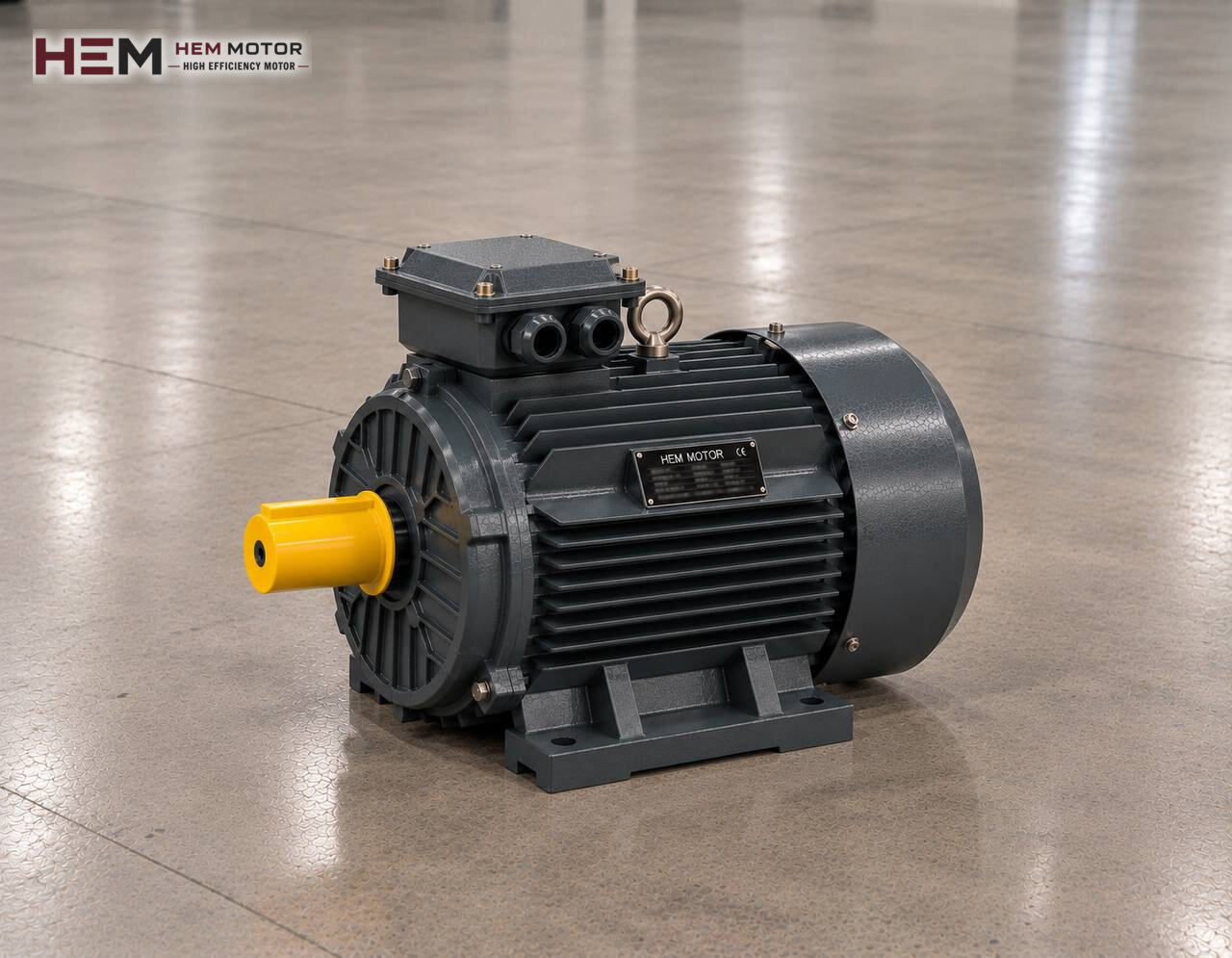
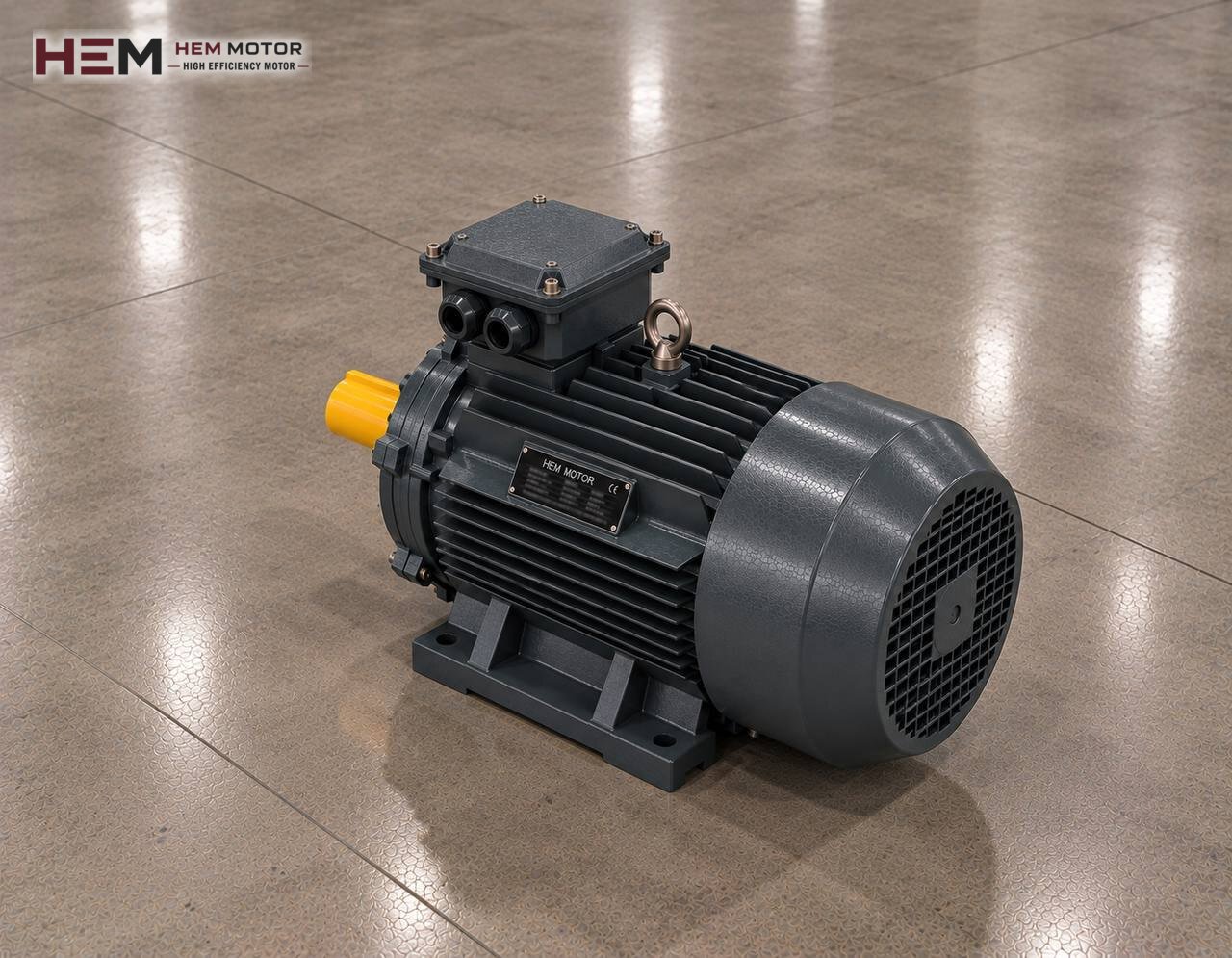
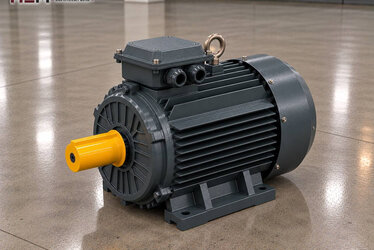
Three-phase electric motor driving a belt conveyor through a gearbox
Geared electric motor driving a belt conveyor (representative image).

Why does an oversized conveyor electric motor cost so much?

In conveyor projects, motor power is often chosen one or two steps larger in case capacity grows later. Induction motors, however, run with lower efficiency and power factor when they work well below their rated load (general information; confirm from the motor data). Fitting a 7.5 kW motor to a belt that really needs 4 kW and you pay for the loss of that difference every hour.

The right power is found by calculating belt length, incline, the amount of material carried, belt speed and starting conditions together. On an existing line, the most practical way is to measure the current at full load and at idle and compare it with the nameplate value. If the current stays far below the nameplate value all the time, it makes sense to consider one power step lower when the motor is due for replacement; but if there is a heavy starting condition, this decision should be made together with the machine maker.

You can compare models of suitable power and speed by filtering them by power and frame on our electric motor purchase page.


Prices and technical data are on the product pages; choose a model and order online.

What do efficiency class and gearbox choice change on long lines?

Conveyor motors usually run for many hours a day, often for most of the year. With this operating profile, the motor's efficiency class becomes far more decisive than the initial purchase cost. The more hours it runs, the wider the efficiency gap grows. HEM Motor offers options in IE3, IE4 and IE5 efficiency classes; which class makes sense should be assessed knowing the annual operating hours and the line's load pattern.

The gearbox in front of the motor also enters the calculation. Worm gearboxes, although compact, produce more loss than helical and bevel-helical gears. On an old line, reviewing the type and condition of the gearbox rather than renewing only the motor can make a bigger difference to overall drive efficiency.

The type and level of gearbox oil matter just as much.

For motors that will be combined with a gearbox, flange and shaft compatibility come first. Models for connection to gearboxes are gathered on the electric motors for gearboxes page.

On which handling lines does speed control pay off?

On lines whose flow varies during the day, such as a filling line with fluctuating feed or a sorting belt, slowing the belt to match the flow instead of running it at full speed can reduce both energy and wear. A frequency converter also provides a soft start; the belt, coupling and gearbox are protected from the starting shock.

Our three-phase series are suitable for speed control with a frequency converter. Because a belt conveyor carries full load even at low speed, if the motor is to run slowly with full torque for long periods its own fan's cooling may not be enough; in that case a separate fan may be needed. If the cable between the panel and the conveyor drive is long, a dv/dt or sine filter should be considered. These conditions are stated in the order.

On a line with constant flow that always runs full, speed control does not always bring a gain. The drive has losses of its own. Cable cross-section and protection values are determined by the panel engineer knowing motor power, cable length, starting method and ambient temperature.

Which electric motors suit conveyor drives?

Conveyor drives most often use 4-pole motors, that is 1500 rpm synchronous speed, together with a gearbox. For example:

  • For short and medium belt conveyors, sorting belts and packaging lines, the 4 kW cast iron frame 112M-4; rated speed 1450 rpm, voltage 400/690 V.
  • For screw conveyors and medium-length belts, the 7.5 kW aluminium frame 132M-4; rated speed 1460 rpm.
  • For long, inclined belts and bucket elevators, the 18.5 kW cast iron frame 180M-4; rated speed 1470 rpm.

Other ratings for belt drives are on the conveyor belt electric motors page, and options for elevators and other conveyors on the handling systems electric motors page. Mounting compatibility starts with the IEC frame number. It is confirmed by comparing mounting type, shaft dimensions, foot holes and flange.

Where should energy saving start?

The fastest return usually comes from steps that need almost no investment, such as idle stopping and roller and chain maintenance. Measure first, invest later. Investment in motors and drives should follow, based on measured current values. For drives to be renewed, you can review power and speed options in our list of conveyor-ready models. If you share the nameplate of the motor you plan to replace, the belt length and incline via the WhatsApp line on our contact page, we will pin down the power and frame that suit your line together; calling us by phone is also possible.

Frequently Asked Questions

Does stopping an idle conveyor belt harm the motor?

Not if the waiting time is chosen sensibly. Too short a waiting time increases the hourly number of starts and heats the winding; so the time should be set taking the line's flow and the maker's start limit into account.

How can I tell whether my conveyor motor is oversized?

If the current you measure at full load is constantly far below the rated current on the nameplate, the motor may have been chosen too large. Before deciding, also review the starting conditions and any capacity increase expected in future.

Why does the current on a screw conveyor rise over time?

The most common causes are worn flights, dried-out hanger bearings and material building up inside the trough. Replacing the motor without fixing these will not reduce the load.

Does it make sense to fit a frequency converter to every conveyor?

No; it is useful on lines with variable flow, while on lines running constantly at full load and fixed speed the gain may be limited. Take the drive's own loss and cost into account as well.

HEM Motor Models Related to This Article

The cards show example models related to the topic. A suitable motor is not chosen by power alone: compare speed, voltage, mounting, shaft and connection dimensions on the product page; if unsure, send a photo of the existing motor’s nameplate on WhatsApp.

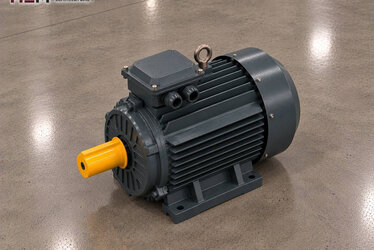
4 kW 1500 rpm Cast Iron Frame Electric Motor 112M-4

112M-4

4 kW · 1500 rpm

  • Cast iron frame · IEC 112M
  • 1450 rpm · IP55
  • Mounting: B3 foot; flange (B5/B14/B35) depending on frame, confirmed with the order

US$249.49 (€228.34)

View product
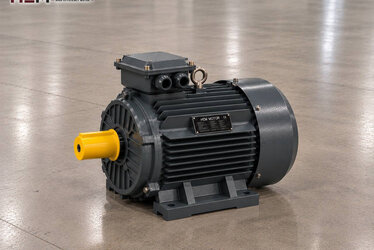
7.5 kW 1500 rpm Aluminium Frame Electric Motor 132M-4

132M-4

7.5 kW · 1500 rpm

  • Aluminium frame · IEC 132M
  • 1460 rpm · IP55
  • Mounting: B3 foot; flange (B5/B14/B35) depending on frame, confirmed with the order

US$369.69 (€338.35)

View product
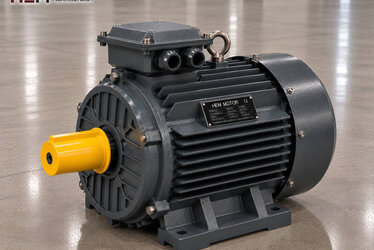
18.5 kW 1500 rpm Cast Iron Frame Electric Motor 180M-4

180M-4

18.5 kW · 1500 rpm

  • Cast iron frame · IEC 180M
  • 1470 rpm · IP55
  • Mounting: B3 foot; flange (B5/B14/B35) depending on frame, confirmed with the order

US$856.68 (€784.05)

View product

Similar Articles