Choosing an Electric Motor for a Bucket Elevator and Order Information

Choosing an Electric Motor for a Bucket Elevator and Order Information

A bucket elevator carries bulk material vertically upwards in buckets attached to a belt or chain. The drive motor sits in the head section, and its load comes from lifting the weight of the material in the buckets against gravity. This is the fundamental difference between an elevator and a horizontal conveyor: when the motor stops, the loaded buckets want to run back, and at start-up the motor has to lift the full column from zero speed. In this article we explain what information is needed when choosing an elevator motor, why the device that prevents run-back should not be confused with the motor, and what you should send with your order.
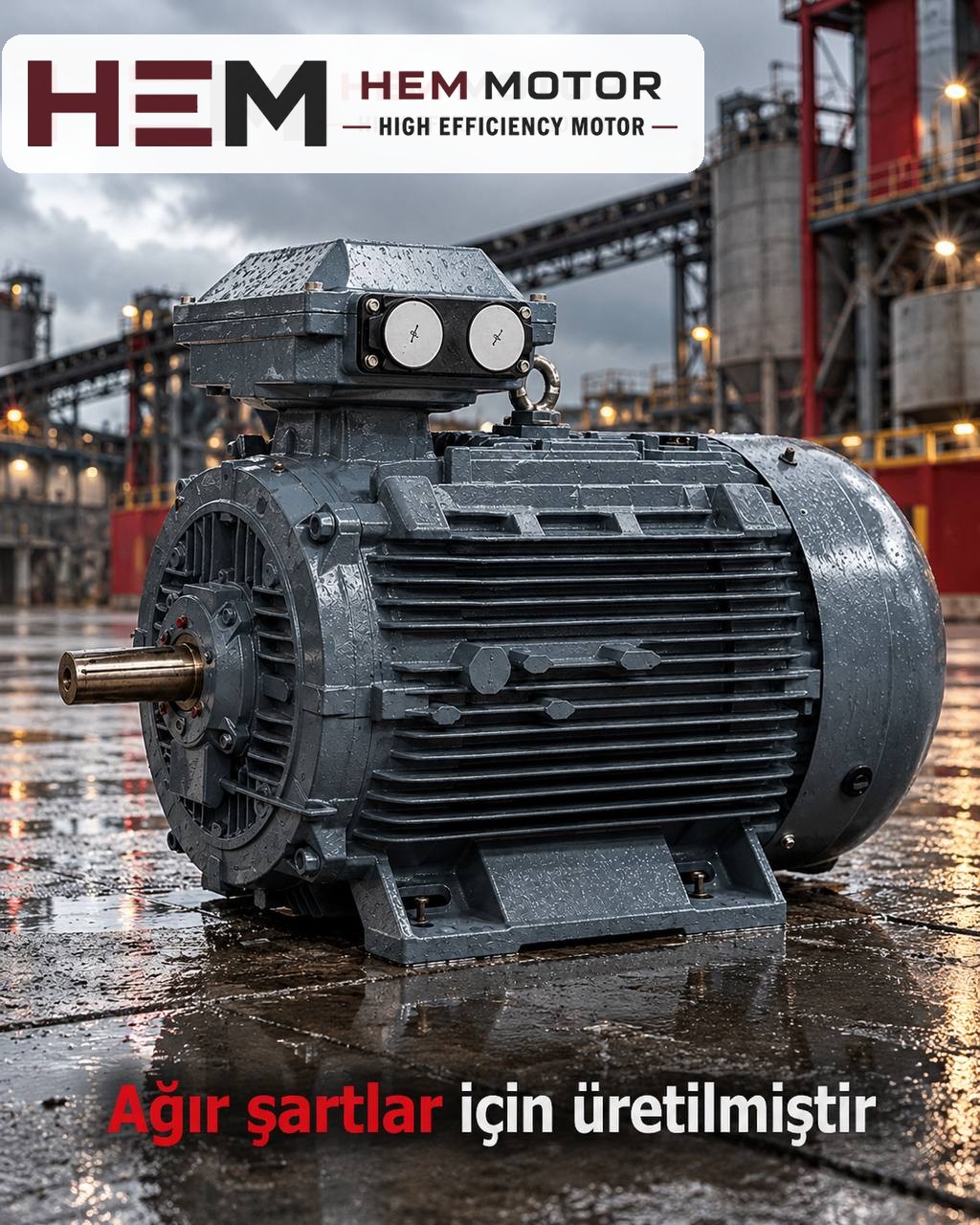
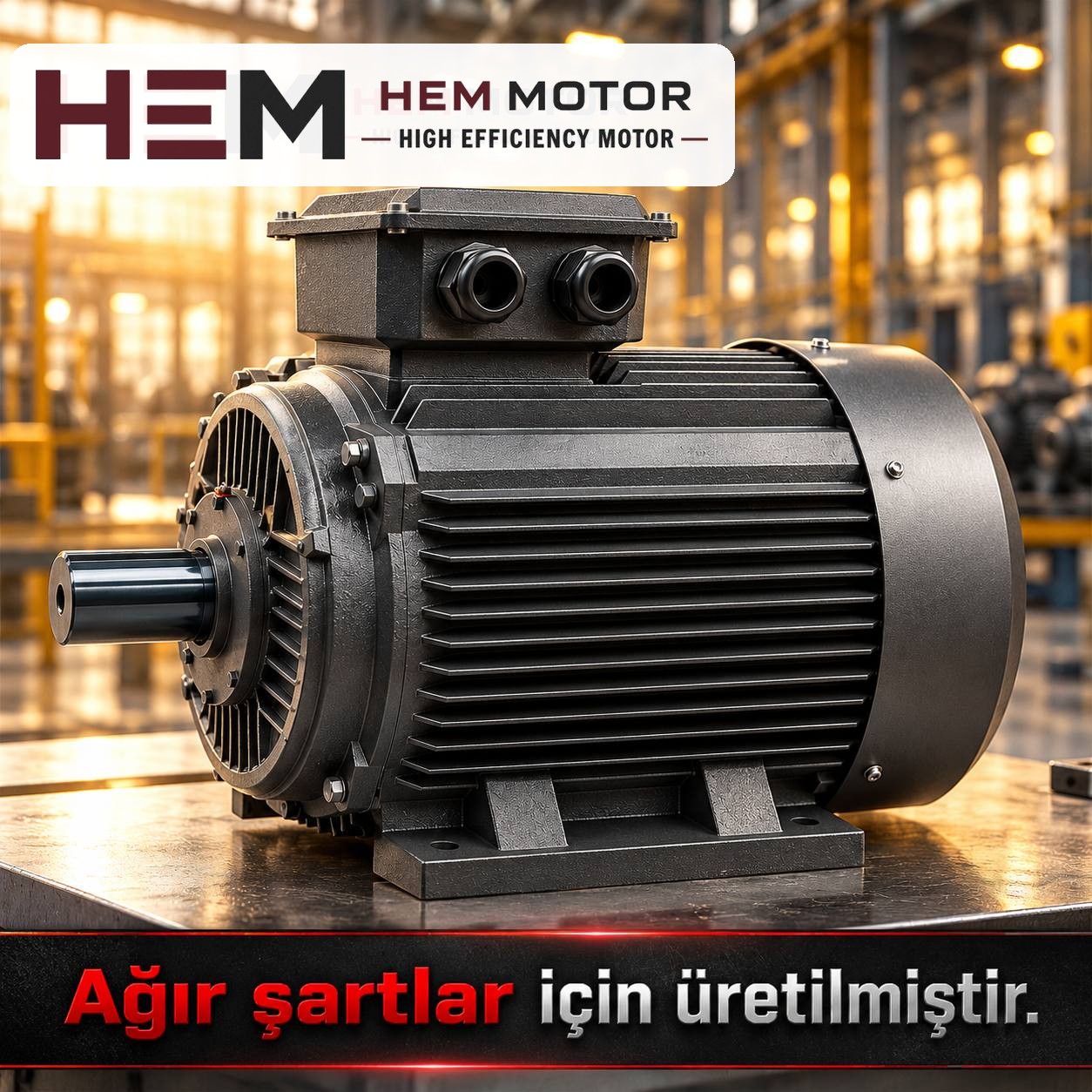
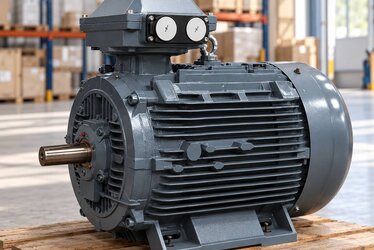
Cast iron three-phase electric motor in a factory setting
The motor at the elevator head works at a dusty, elevated point; the frame and maintenance access matter for this reason (representative image).

Why is elevator load different?

On a horizontal conveyor the motor mainly overcomes friction; the material is not lifted. On a bucket elevator, however, most of the power is spent lifting the material in the buckets over the height of the elevator. As capacity and height increase, the power required grows almost in direct proportion. On top of this there is a digging resistance in the boot section where the buckets scoop up material, as well as friction in the belt or chain, the pulleys and the bearings.

For this reason we do not give a general rule for elevator motors such as "this many kW for an elevator of this height". The power is calculated from the hourly capacity, lifting height, bulk density of the material, bucket type and speed, and this calculation belongs to the elevator manufacturer. If the motor is being replaced on an existing elevator, the reference is the nameplate of the old motor that ran without problems.

Watch out for capacity increases

A common cause of motor problems on elevators is capacity being increased over time: larger buckets are fitted, the feed is speeded up or a denser material is handled. The load grows while the motor stays the same. If the old motor is overheating or tripping its thermal relay, check whether such changes have been made before choosing a new motor.

Backstop and brake: not the motor's job

When power is cut to a loaded elevator, it runs backwards because of the weight of the full buckets on the rising leg. This run-back causes material to pile up in the boot and damages the buckets and the belt. To prevent it, elevators use a backstop; this element is usually inside the reducer or on the head shaft.

A standard three-phase asynchronous motor does not prevent run-back on its own. If on the existing elevator the anti-run-back function is in the motor itself, i.e. the motor has a brake or a special motor with a built-in backstop is used, this is not equivalent to a standard motor; a special motor is needed and must be enquired about separately with the nameplate and technical details. When replacing the motor, clarify the following:

  • Is the backstop in the reducer, on the head shaft or in the motor?
  • Does the old motor's nameplate show additional information such as brake voltage or braking torque?
  • If the reducer stays unchanged, is the backstop's direction of rotation compatible with the new motor's connection? If the motor is connected in reverse, the backstop locks the motor; this is why checking the direction at first start-up is critical.

Loaded starts and starting method

When the elevator stops, the buckets remain full and at start-up the motor has to lift this load immediately. In addition, material accumulated in the boot can make it harder for the buckets to scoop at start-up. Together, these two factors make an elevator start heavier than continuous running.

  • Direct-on-line starting: Common at small and medium power; the motor delivers its full starting torque.
  • Star-delta: Lowers the starting torque to about a third. When starting with a full column the motor may not accelerate in star; this method should be preferred only if the elevator is emptied before stopping or the calculation allows it.
  • Frequency inverter: Provides a smooth, high-torque start. Our three-phase series are suitable for speed control with a frequency inverter; for long periods at low speed with full torque an external fan may be needed, and if the cable between drive and motor is long a dv/dt or sine filter is considered; these conditions are stated with the order. On elevators the distance between the head and the panel is often long; state the cable length with the order.

In operation, the most effective measure is to cut the feed and empty the buckets before stopping the elevator. Emergency stops are an exception; the motor and starting method should be assessed for a loaded start after an emergency stop.


Prices and technical data are on the product pages; choose a model and order online.

Motor connection and operating environment

At the elevator head the motor usually works together with a reducer. Three arrangements are common: a flange connection where the motor's B5 flange seats on the reducer input, an arrangement where the motor is fixed by its feet to a bracket and drives the reducer through a coupling, and a belt and pulley drive. At HEM Motor, B3, B5, B14, B34, B35 and vertical arrangements are offered according to the frame; the flange size is confirmed with the order. Compare shaft and flange dimensions with the 2D technical drawings.

In terms of environment, the elevator head is dusty and often outdoors or at the top of an enclosed tower. Therefore:

  • IP55 protection is against dust and water splashes; in open installations exposed to direct rain the top of the motor should be protected by a canopy, without blocking the air intake of the fan cover.
  • Dust accumulating on the motor's cooling fins leads to overheating; periodic cleaning should be planned.
  • Explosive dust atmospheres such as grain and flour may require special conditions; in that case, state your plant's zone classification before ordering, and whether a standard motor is suitable will be assessed separately.
  • Replacing a motor at a high point requires a crane or a platform; the rigidity of a cast iron frame is an advantage on vibrating heads, but the handling plan must be made from the start.

Example models

The models below are taken from the cast iron series and from different power classes seen on elevator drives. All are 4-pole (1,500 rpm synchronous), IP55 and class F insulated. The power required should be determined from the elevator data.

ModelPowerRated speedIEC frameVoltageRated current (400 V)Rated torque
100L2-43 kW (4 HP)1,450 rpm100L230/400 V (Δ/Y)6.02 A19.8 Nm
160L-415 kW (20 HP)1,465 rpm160L400/690 V (Δ/Y)27.3 A97.8 Nm
200L-430 kW (40 HP)1,475 rpm200L400/690 V (Δ/Y)53.8 A194.2 Nm

The 3 kW model is rated 230/400 V and is connected in star on a 400 V supply; it is therefore not suitable for star-delta starting. The 15 kW and 30 kW models are rated 400/690 V and run in delta on a 400 V supply. General information for elevators and other vertical handling equipment is on the handling systems electric motors page.

Hypothetical example: renewing the motor on a grain elevator

This section is an example for explanation, not a real application. Suppose that at a grain facility the 15 kW, 4-pole, 160L-frame motor at the head of a medium-height bucket elevator is to be replaced because of a winding failure. The reducer has a backstop, and the motor is connected to the reducer by a B5 flange.

  • Since the backstop is in the reducer, a standard motor is suitable; the candidate model is the 160L-4.
  • The flange spigot diameter and hole circle are measured on the old motor and confirmed with the order; the shaft diameter and length are checked against the reducer input.
  • Before the first start-up, the direction of rotation is checked with the motor uncoupled from the reducer; if it is reversed, two phases are swapped. This way the backstop is not loaded in the wrong direction.
  • If the plant is subject to a dust zone classification, this information is shared before ordering.

Information to send with your order

  • A photo of the old motor's nameplate (power, speed, voltage, frame size; brake information too, if any)
  • Elevator height, capacity and the material carried
  • Location of the backstop (reducer, head shaft or motor)
  • Type of connection and mounting arrangement (B5 flange, B3 foot-mounted, B35, belt drive)
  • Starting method, cable length between panel and motor, and supply voltage
  • Environment: outdoors, dust level, zone classification if any

Review suitable models and current prices on the buy electric motors page. To ask about the right model using the nameplate details of your elevator motor, send a photo of the nameplate; if a special drive arrangement is involved, share the technical details via our contact page.

HEM Motor Models Related to This Article

The cards show example models related to the topic. A suitable motor is not chosen by power alone: compare speed, voltage, mounting, shaft and connection dimensions on the product page; if unsure, send a photo of the existing motor’s nameplate on WhatsApp.

3 kW 1500 rpm Cast Iron Frame Electric Motor 100L2-4

100L2-4

3 kW · 1500 rpm

  • Cast iron frame · IEC 100L
  • 1450 rpm · IP55
  • Mounting: B3 foot; flange (B5/B14/B35) depending on frame — confirmed with the order

US$202.54 (€180.76)

View product
15 kW 1500 rpm Cast Iron Frame Electric Motor 160L-4

160L-4

15 kW · 1500 rpm

  • Cast iron frame · IEC 160L
  • 1465 rpm · IP55
  • Mounting: B3 foot; flange (B5/B14/B35) depending on frame — confirmed with the order

US$673.81 (€601.33)

View product
30 kW 1500 rpm Cast Iron Frame Electric Motor 200L-4

200L-4

30 kW · 1500 rpm

  • Cast iron frame · IEC 200L
  • 1475 rpm · IP55
  • Mounting: B3 foot; flange (B5/B14/B35) depending on frame — confirmed with the order

US$1,227.13 (€1,095.13)

View product

Similar Articles